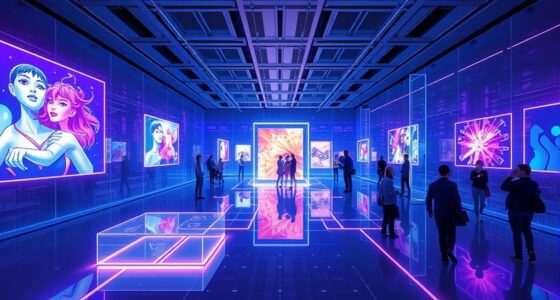

Emotional narrative art in digital media uses visual symbols, colors, and composition to evoke feelings and build personal connections. You’ll notice how lighting, textures, and motion enhance storytelling, guiding your emotional responses. Interactive elements deepen your engagement, making stories more immersive and memorable. Recognizing symbolism helps you understand complex themes and prompts a stronger emotional connection. Continue exploring to uncover how these visual cues create powerful, layered storytelling experiences that resonate deeply with you.
Key Takeaways
- Visual symbolism in digital media evokes deep emotional responses beyond the literal subject matter.
- Lighting, color, and motion manipulation enhance storytelling and emotional engagement.
- Interactive and layered elements allow viewers to interpret symbols personally, deepening emotional impact.
- Digital formats enable complex, subtle symbolism that fosters a stronger creator-viewer connection.
- Recognizing visual symbolism enriches understanding and appreciation of emotional narratives in digital art.

Have you ever looked at a piece of art and felt a deep emotional connection? That moment of resonance often comes from more than just the subject matter; it’s rooted in how the artist uses visual symbolism to evoke feelings and thoughts. In emotional narrative art, every element—colors, shapes, and composition—serves a purpose to deepen your understanding of the story and stir your emotions. When you encounter these works, you’re not just observing; you’re engaging in a silent dialogue, where each visual cue carries meaning beyond its surface. This use of visual symbolism creates layers of emotional resonance that pull you into the narrative, making the experience personal and memorable.
In digital media, artists have a powerful toolkit to enhance this emotional connection. They can manipulate lighting, textures, and motion to amplify the emotional resonance of their storytelling. For example, a digital painting might use stark contrasts and muted tones to evoke feelings of despair, or bright, vibrant colors to inspire hope. Animation and interactive elements further deepen your immersion, allowing you to explore different facets of a story at your own pace. As you navigate through these digital narratives, the visual symbolism becomes more apparent and impactful, guiding your emotional response and helping you empathize with the characters and themes. The flexibility of digital media also means artists can experiment more freely with symbolism, layering subtle cues that might be overlooked in traditional art but become clear through motion or interaction.
Emotional narrative art in digital media thrives on the connection it fosters between creator and viewer. When you experience a piece, you’re invited to interpret the symbols and motifs, forming your own understanding of the story. This active engagement makes the emotional resonance even stronger because it’s personalized. The digital format allows artists to craft stories that are dynamic, multi-sensory, and deeply affecting, pulling you into worlds where your feelings are intertwined with visual storytelling. Whether it’s a short animated clip, an interactive digital installation, or a richly illustrated digital comic, these works harness visual symbolism to communicate complex emotions and stories in ways that resonate deeply and linger long after you’ve experienced them. Additionally, understanding the concept of visual symbolism can help you better appreciate the layers of meaning embedded in digital art.

Framed Drawing Techniques: Mastering Ballpoint Pen, Graphite Pencil, and Digital Tools for Visual Storytelling
As an affiliate, we earn on qualifying purchases.
As an affiliate, we earn on qualifying purchases.
Frequently Asked Questions
How Does Emotional Narrative Art Influence Viewer Perception?
Emotional narrative art influences your visual perception by creating strong emotional resonance that draws you into the story. It guides your focus, making you interpret scenes with empathy and understanding. Through compelling visuals and storytelling techniques, it shapes how you perceive characters and events, deepening your emotional connection. This heightened emotional engagement makes the artwork more memorable and impactful, allowing you to experience the narrative on a personal level.
What Tools Are Commonly Used to Create Emotional Digital Stories?
Did you know that 85% of viewers say color influences their emotional response? To craft emotional digital stories, you use tools like interactive techniques, which engage your audience actively, and color psychology, which evokes specific feelings. These elements help you shape perception and deepen connection. Combining these tools allows you to create compelling narratives that resonate emotionally, making your digital storytelling more impactful and memorable.
Can Emotional Storytelling Be Effective Across Different Cultural Contexts?
Yes, emotional storytelling can be effective across different cultural contexts when you focus on universal themes that resonate globally. By understanding cultural nuances, you can tailor your stories to connect deeply with diverse audiences. You should use relatable characters and emotions, ensuring your message transcends cultural boundaries. This approach helps your digital media evoke empathy, making your stories impactful regardless of cultural differences.
How Do Artists Measure Emotional Impact in Digital Media?
You measure emotional impact in digital media by observing audience engagement and analyzing their reactions. Use color psychology to see how different hues evoke specific feelings, then gather feedback through comments, likes, or shares to gauge emotional responses. You can also track metrics like time spent on content and emotional tone in user interactions, helping you understand how effectively your storytelling resonates across diverse viewers.
What Are Future Trends in Emotional Narrative Art Development?
You’ll see future emotional narrative art thrive with AI integration, making stories more personalized and impactful. Don’t worry about technology replacing creativity; it enhances it. Immersive experiences will deepen emotional engagement, allowing you to feel connected on a whole new level. As artists harness these tools, expect richer, more interactive stories that evoke genuine emotions and redefine storytelling in digital media.

10.1’’ Smart Digital Calendar – Interactive Touch Screen, HD Display, Wall Mountable Family Organizer with Chore Chart, To-Do Lists & App Sync for Home & Office, Warm Mothers’s Day Gift, Gift for Her
【Easy WiFi Setup & App Integration】Simply plug it in, connect to Wi-Fi, activate, and sync. The smart calendar…
As an affiliate, we earn on qualifying purchases.
As an affiliate, we earn on qualifying purchases.
Conclusion
As you immerse yourself in emotional narrative art, remember it’s more than just images or stories—it’s a mirror reflecting your own feelings back at you. Like a lighthouse guiding ships through darkness, it illuminates the depths of human experience. So, embrace these digital stories; they’re not just art but a journey into your soul. Let them ignite your empathy and inspire your own storytelling, for in this digital age, emotion is the most powerful language we share.
Visual Art Decor 4 Pieces Retro Left and Right Brain Advantage Canvas Poster Inspiration Motivation Education Science Canvas Prints Wall Art Gallery Modern Office Wall Decor Ready to Hang (12inchx16inchx4 Pieces)
Size:12inchx16inchx3 Pieces (30cmx40cmx3 Pieces)
As an affiliate, we earn on qualifying purchases.
As an affiliate, we earn on qualifying purchases.

The Ladies' Midnight Swimming Club: An emotional story about finding new friends and living life to the fullest from the Kindle #1 bestselling author
As an affiliate, we earn on qualifying purchases.
As an affiliate, we earn on qualifying purchases.