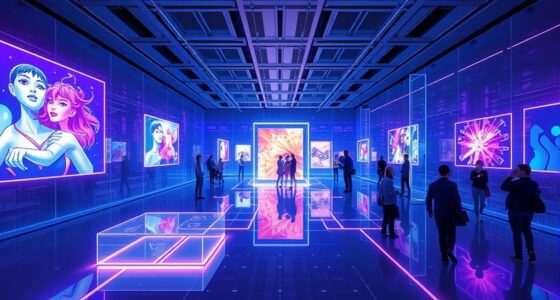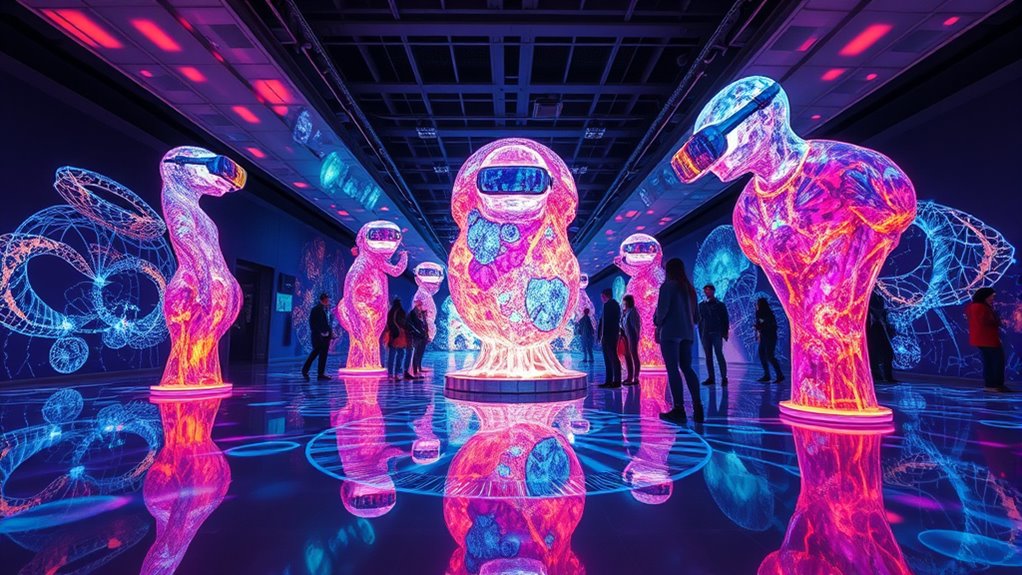

VR art galleries offer immersive exhibitions that let you explore masterpieces from around the world without leaving your home. You can walk through virtual spaces, zoom in on intricate details, and experience artworks from multiple perspectives. These digital galleries remove geographical barriers, making art accessible to everyone. They also provide personalized experiences and social features to connect with others. Keep exploring to discover how VR is transforming the way you enjoy and interact with art.
Key Takeaways
- VR art galleries eliminate geographical barriers, providing global access to immersive art exhibitions from home.
- Virtual tours allow users to explore expansive, interactive gallery spaces with high-resolution artwork details.
- Digital curation enhances engagement through multimedia elements, immersive narratives, and thematic displays.
- Personalization features enable tailored virtual exhibitions focused on specific artists, styles, or themes.
- Social functionalities facilitate real-time interaction and shared experiences with friends or fellow art enthusiasts worldwide.
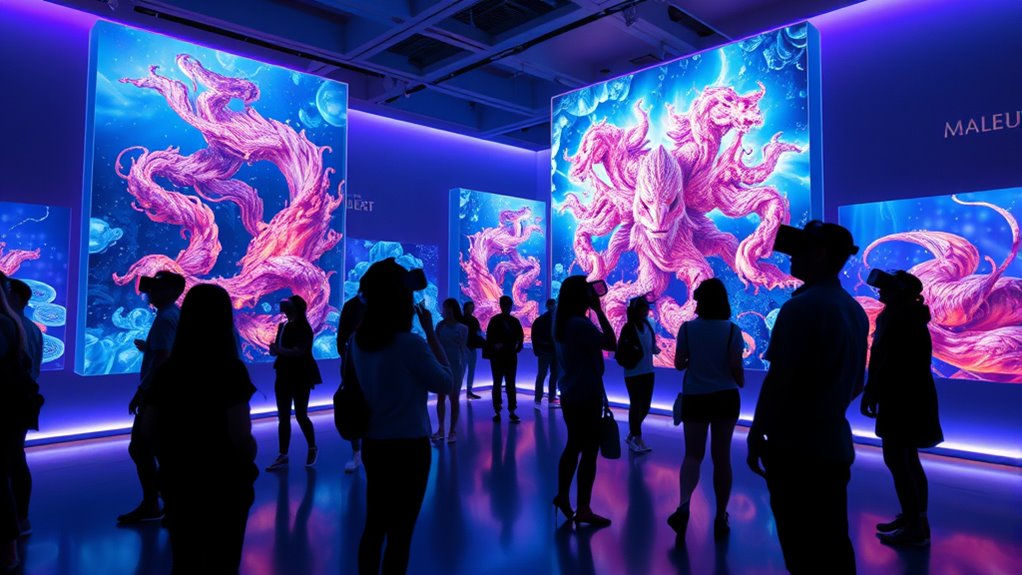
Have you ever wondered how technology is transforming the way we experience art? With the rise of VR art galleries, you’re now able to immerse yourself in exhibitions from anywhere in the world. These virtual spaces eliminate geographical barriers, giving you access to masterpieces that once required travel or expensive tickets. Thanks to digital curation, curators can create dynamic, interactive displays that adapt to your interests and preferences, offering a personalized art journey unlike anything in traditional galleries. Instead of static walls and limited viewing angles, you can explore artworks from multiple perspectives, getting closer to details that might be missed in a physical setting.
Experience art from anywhere with immersive VR galleries and personalized, interactive exhibitions that break down physical barriers.
Virtual tours are a core feature of VR art galleries, allowing you to walk through expansive virtual spaces as if you’re physically there. You can navigate through rooms filled with diverse collections, observe artworks in high resolution, and zoom in on intricate details with just a click or a glance. The immersive nature of VR makes you feel as though you’re stepping inside a real gallery, yet you enjoy the convenience of at-home access. This experience is especially beneficial for those who might not have the means or opportunity to visit renowned museums in person.
Digital curation plays a vital role in shaping these virtual exhibitions. Curators craft immersive narratives around collections, integrating multimedia elements like audio guides, videos, and interactive displays. This layered approach enriches your understanding and engagement, making art more accessible and engaging. You’re not just passively viewing art; you’re actively interacting with it, exploring its context and significance at your own pace. The ability to tailor displays to your interests means you can focus on certain artists, styles, or themes, creating a deeply personalized experience.
Moreover, VR art galleries foster a sense of community and shared experience. Some platforms allow you to visit exhibitions simultaneously with friends or other art enthusiasts around the world. You can discuss pieces in real-time, share insights, or simply enjoy the atmosphere together, despite being miles apart. This social aspect enhances the appeal of virtual galleries, bridging the gap between physical and digital experiences. Additionally, digital curation ensures that these virtual exhibitions are thoughtfully organized, making the navigation more intuitive and engaging for users.
VR art gallery headset
As an affiliate, we earn on qualifying purchases.
As an affiliate, we earn on qualifying purchases.
Frequently Asked Questions
What Equipment Is Needed to Access VR Art Galleries?
To access VR art galleries, you’ll need a compatible VR headset that meets the VR headset requirements, such as Oculus Quest, HTC Vive, or Valve Index. Make sure your headset is compatible with your computer or console. Additionally, you’ll need motion controllers that work with your device, enabling you to navigate and interact with exhibits. Confirm your space is clear so you can move freely and enjoy the immersive experience fully.
How Do VR Galleries Compare to Physical Art Exhibitions?
VR galleries offer a unique experience by emphasizing digital curation and innovative spatial design, allowing you to explore art in a virtual environment. Unlike physical exhibitions, they provide accessibility from anywhere and often feature interactive elements. You can immerse yourself in curated digital spaces, experiencing artworks in ways physical galleries can’t match. However, physical exhibitions provide tangible interaction and real-world atmosphere, making both formats valuable depending on your preferences.
Are VR Art Galleries Accessible to People With Disabilities?
Yes, VR art galleries are becoming more accessible to people with disabilities. They often incorporate visual accessibility features like adjustable text sizes and color contrasts, making it easier for visually impaired users. Additionally, adaptive technology, such as voice commands and haptic feedback, helps users navigate and enjoy the exhibits comfortably. This inclusivity allows more people to experience art in immersive ways, regardless of physical or sensory limitations.
Can VR Art Galleries Host Live Artist Interactions?
Absolutely, VR art galleries can host live exhibition events with virtual artist interactions. You’ll experience real-time conversations, Q&A sessions, and even live demonstrations from artists across the globe. These virtual artist interactions make the exhibition feel lively and engaging, bringing a sense of community to digital space. So, if you’re seeking dynamic, interactive art experiences, VR galleries are perfect for attending live artist events from the comfort of your home.
What Are the Costs Associated With Visiting VR Art Galleries?
The costs of visiting VR art galleries depend on several factors. You might face subscription fees if the platform requires a membership, and there could be costs for specific exhibitions or premium content. Equipment expenses, like a VR headset and compatible device, also play a role. Overall, the total cost factors include subscription fees, one-time purchases, and hardware investments, making it essential to contemplate these before diving into virtual gallery experiences.
virtual reality art exhibition
As an affiliate, we earn on qualifying purchases.
As an affiliate, we earn on qualifying purchases.
Conclusion
As you step into the world of VR art galleries, you find yourself gently embraced by a new era of exploration. These immersive spaces softly invite you to lose yourself in creative wonders, offering a seamless blend of reality and imagination. With each virtual visit, you cultivate a deeper connection to art’s subtle whispers, opening your mind to endless possibilities. Embrace this evolving journey, and let the digital canvas inspire your soul in the most graceful way.
high resolution VR headset
As an affiliate, we earn on qualifying purchases.
As an affiliate, we earn on qualifying purchases.
VR headset for art viewing
As an affiliate, we earn on qualifying purchases.
As an affiliate, we earn on qualifying purchases.