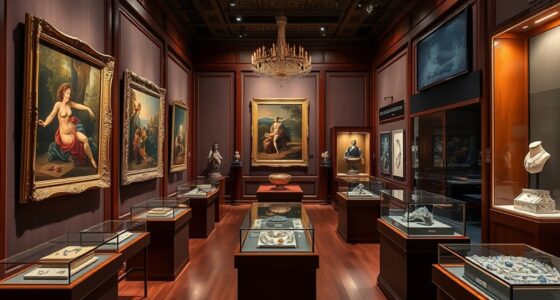
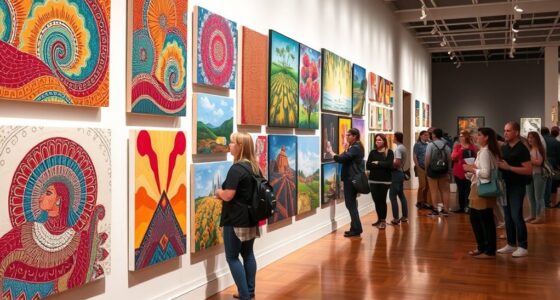
Government policies play a pivotal role in shaping the global art trade by setting export and import restrictions, especially for cultural heritage. Laws often require permits for moving artworks across borders, which can delay or prevent sales and exhibitions. Understanding these regulations helps you navigate compliance and avoid legal issues. If you keep exploring, you’ll discover how cultural heritage laws and government approvals impact art transactions worldwide and how to manage these challenges effectively.
Key Takeaways
- Government policies, including export restrictions, regulate the international movement of artworks to protect cultural heritage.
- Cultural heritage laws classify certain artworks as patrimony, requiring permits for export and limiting global circulation.
- Compliance with laws prevents legal penalties, fines, and confiscation of culturally significant art pieces.
- Export restrictions can delay or block art sales and exhibitions across borders, impacting artists and collectors.
- Understanding legal resources and government approval processes helps navigate international art trade restrictions effectively.
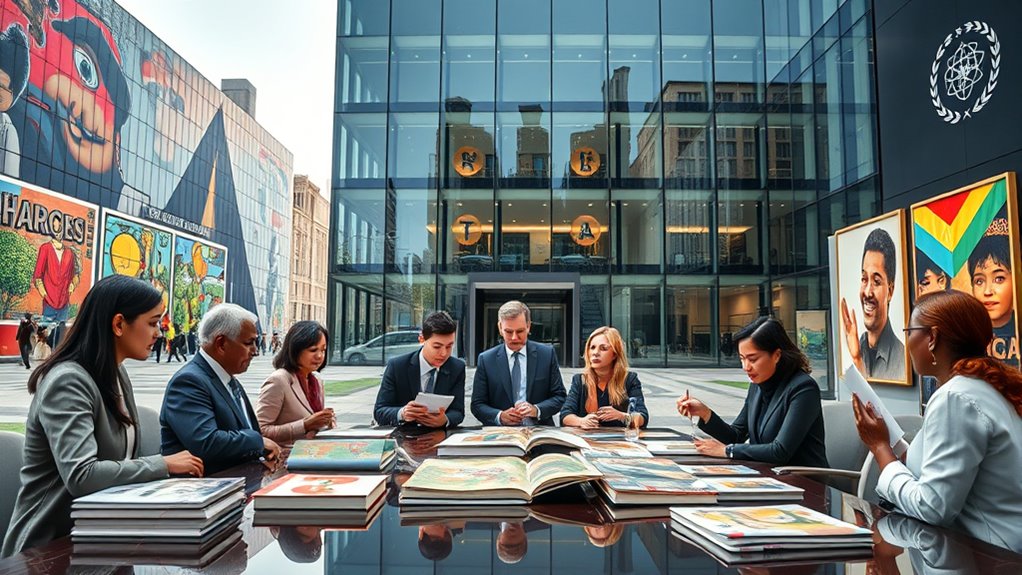
Government policies play a essential role in shaping the global art landscape, influencing everything from funding and censorship to international collaborations. When it comes to art export restrictions, these laws can considerably impact your ability to move artwork across borders. Some countries impose strict export restrictions on cultural artifacts to protect their national heritage, making it challenging for artists and collectors to share pieces internationally. If you’re an artist seeking to showcase your work abroad or a collector wanting to acquire pieces from other countries, understanding these restrictions is imperative. Certain artworks, especially those deemed cultural property, may require special permits or may be completely barred from export, which can delay or prevent international exhibitions and sales.
Cultural heritage laws further complicate this landscape by safeguarding national identity and historical artifacts. These laws often classify specific artworks or objects as part of a country’s cultural patrimony, meaning they cannot be exported without government approval. For you, this means that even if you own a piece with meaningful cultural value, you might face legal obstacles in sending it overseas for exhibitions or sales. These laws are designed to prevent looting, illegal trafficking, and the loss of cultural identity, but they can also restrict the global circulation of art. If you’re involved in international art transactions, staying informed about these laws helps you avoid legal issues and guarantees compliance. Failure to adhere to these regulations can lead to hefty fines, confiscation of artwork, or even criminal charges. Additionally, understanding how cultural heritage laws are enforced can help you develop strategies to navigate export restrictions effectively.
Frequently Asked Questions
How Do Export Restrictions Impact International Art Sales?
Export restrictions can considerably slow down international art sales by limiting access to certain artworks. You might face delays or increased costs due to art market regulations, making transactions more complicated. Cultural exchange agreements can help ease these restrictions, but if they’re not in place, buying and selling across borders becomes tougher. As a result, your ability to trade art globally is hindered, affecting both artists and collectors alike.
What Are the Tax Implications for Cross-Border Art Transactions?
When engaging in cross-border art transactions, you’ll face tax implications like customs duties and potential VAT. You should consider art valuation carefully, as it influences the amount of duties you pay. Accurate valuation guarantees you’re not overcharged or undercharged, preventing legal issues. Be aware that customs duties vary by country, so researching specific regulations helps you plan costs better and avoid surprises during import or export processes.
How Do Visa Policies Influence Art Exhibitions Abroad?
Visa policies directly impact your ability to participate in international art exhibitions. Stricter visa requirements can hinder artist mobility, making it harder for you to showcase your work abroad. Conversely, relaxed policies promote cultural exchange, allowing you to attend events, collaborate with international artists, and expand your network. Understanding these policies helps you navigate the process smoothly and seize opportunities that foster global connections and artistic growth.
Are There Policies Supporting Emerging Artists Globally?
Think of global policies supporting emerging artists as a bridge over turbulent waters. You’ll find that many countries now offer cultural funding and simplified artist visas to nurture talent. These policies act as lifelines, making it easier for emerging artists to showcase their work internationally. By easing entry barriers and providing financial support, governments are actively investing in the future of art, opening doors for new voices to be heard worldwide.
How Do Anti-Money Laundering Laws Affect Art Trade?
Anti-money laundering laws considerably impact the art trade by enforcing stricter art market regulation and compliance standards. You must verify the identities of buyers and source of funds, which can slow transactions and increase costs. These laws aim to prevent illicit activities, but they require you to stay updated on regulations to avoid legal penalties. Ultimately, compliance helps protect the integrity of the art market and fosters trust among collectors and dealers alike.
Conclusion
Understanding government policies is essential if you want to navigate the complex world of global art trade. Recent data shows that over 65% of international art transactions are impacted by import-export regulations and cultural heritage laws. By staying informed, you can better anticipate challenges and seize opportunities in this dynamic market. Remember, adapting to policy changes isn’t just smart—it’s vital for successfully trading art across borders.