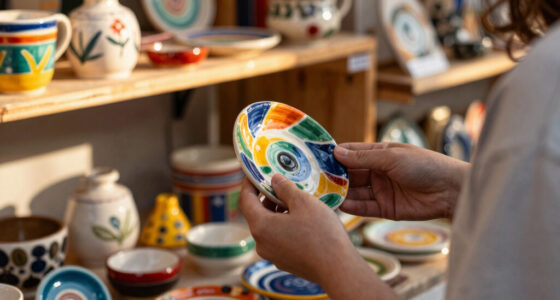
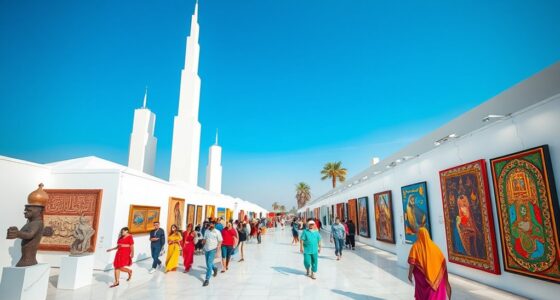
Emerging art hubs in Africa and Latin America are rapidly transforming global culture through vibrant street art, indigenous tradition revival, and expanding market infrastructure. As urban centers embrace murals and graffiti for social commentary, local artists reconnect with ancestral techniques to create unique voices. Growth in galleries, online platforms, and community projects boost recognition and foster innovation. If you stay with us, you’ll uncover more about these dynamic regions shaping the future of the art world.

Get art and craft supplies delivered free with Prime
- Fast, free delivery on millions of items
- Prime Video, Amazon Music and more included
- Member-only deals all year
Key Takeaways
- Africa and Latin America are emerging as vibrant centers for contemporary and indigenous art, gaining international recognition.
- New art infrastructure like galleries, online platforms, and exhibitions boost visibility for local artists.
- Street art and community-led projects are transforming urban landscapes into cultural dialogues.
- Artists are blending traditional motifs with modern techniques, creating unique, globally relevant narratives.
- These regions are becoming influential cultural hubs, challenging stereotypes and fostering innovation in the global art scene.
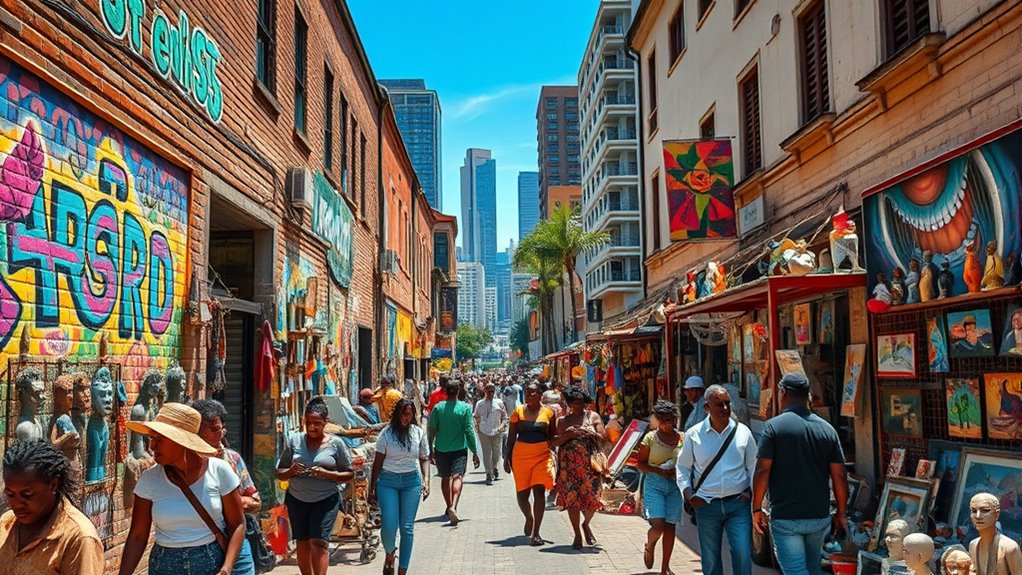
Have you noticed how vibrant art scenes are blossoming in Africa and Latin America? It’s hard to ignore the surge of creativity fueling these regions, transforming once-overlooked cities into dynamic hubs for artists and collectors alike. One of the most striking developments is the rise of contemporary street art, which has become a powerful voice for communities seeking to express social issues, cultural identity, and resistance. Walls that once served as blank canvases now burst with murals and graffiti, blending bold colors and provocative imagery that draw international attention. This form of street art isn’t just about aesthetics; it’s about storytelling, activism, and reclaiming public spaces for dialogue. As you explore these emerging hubs, you’ll notice how street art has become a catalyst for community engagement, often serving as a bridge between local traditions and global art trends.
Alongside this urban explosion, there’s a notable Indigenous art revival sweeping through these regions. Artists are reconnecting with ancestral traditions, revitalizing indigenous techniques, and integrating them into contemporary practices. This movement is more than an aesthetic choice; it’s a reclaiming of cultural identity and a statement against erasure. You’ll see Indigenous motifs woven into paintings, textiles, and sculptures, echoing stories passed down through generations. The revival also encourages younger artists to explore their roots and challenge Western-centric narratives that have historically dominated the art world. What’s exciting is how this blend of tradition and innovation creates fresh, compelling voices that resonate both locally and internationally. It’s not just about preserving heritage—it’s about evolving it for modern audiences, making indigenous art more accessible and relevant. Additionally, advances in art market infrastructure are providing new opportunities for artists to gain recognition and reach wider audiences beyond their local communities.
These art scenes are supported by a new generation of galleries, pop-up exhibitions, and online platforms that spotlight emerging talents. You might find yourself discovering artists who are pushing boundaries, combining contemporary street art with indigenous motifs or using digital media to expand storytelling. The energy is contagious, and the opportunities for collaboration are growing. Local communities are increasingly involved, seeing art not just as decoration but as a tool for social change, economic development, and cultural pride. As you follow these trends, you’ll realize that Africa and Latin America are becoming essential centers of innovation and cultural dialogue, breaking free from stereotypes and showcasing their unique narratives. The future of these emerging art hubs looks promising, fueled by authentic voices enthusiastic to share their stories with the world.
As an affiliate, we earn on qualifying purchases.
Frequently Asked Questions
How Do Local Economies Influence Emerging Art Hubs?
Local economies play a pivotal role in shaping emerging art hubs. When there’s strong local investment, it fuels the development of cultural infrastructure like galleries, studios, and event spaces. This creates a vibrant environment where artists thrive and audiences grow. You’ll find that thriving economies attract more support, making these hubs more sustainable and culturally rich, ultimately positioning them as influential centers in the global art scene.
What Role Do Government Policies Play in Art Market Growth?
Governments act as the wind beneath an art hub’s wings, fueling growth through incentives that attract artists and collectors. Regulatory frameworks serve as the sturdy foundation, ensuring stability and trust within the market. When policies encourage innovation and protect creative rights, they transform a city into a vibrant canvas of opportunity. Your success hinges on these policies, which shape the landscape, turning potential into a flourishing art community.
How Accessible Are These Hubs to International Collectors?
You’ll find that these hubs are increasingly accessible to international collectors, thanks to expanding art fair accessibility and digital platforms. Many organizers actively promote international engagement, making it easier for you to connect with local artists and galleries. While some regions still face logistical challenges, overall, these hubs are becoming more welcoming, offering opportunities for international collectors like you to discover unique artworks and build meaningful relationships in a vibrant, growing art scene.
What Are the Biggest Challenges Faced by New Art Hubs?
You face hurdles like limited cultural funding that hampers growth, making these hubs feel like tiny islands in a vast ocean. Building strong local artist communities is tough without consistent support, and infrastructure issues can slow progress. Overcoming these challenges requires dedicated investment and collaboration. With more resources and engagement, these hubs can flourish into vibrant centers of creativity, rivaling the world’s biggest art scenes.
How Is Digital Technology Transforming These Emerging Markets?
Digital technology transforms these markets by expanding access and visibility. You can now showcase art through virtual galleries, reaching global audiences without physical limitations. Social media influence helps you build a following, promote artists, and generate sales more effectively. This digital shift empowers you to overcome traditional barriers, fostering growth and recognition in emerging art hubs. Embracing these tools gives you a competitive edge and connects you to a worldwide art community.
As an affiliate, we earn on qualifying purchases.
Conclusion
As you explore these vibrant art hubs blossoming across Africa and Latin America, you’re witnessing a cultural tapestry woven with bold colors and untamed energy. These regions are not just emerging—they’re bursting with creative fire, like sparks igniting global art landscapes. Keep your eyes open; you’re standing at the threshold of a renaissance where every brushstroke and sculpture tells a story waiting to captivate the world’s imagination. The future of art is unfolding right before you.
As an affiliate, we earn on qualifying purchases.
As an affiliate, we earn on qualifying purchases.
Columbus Day / Indigenous Peoples' Day Picks
long weekend sales
As an affiliate, we earn on qualifying purchases.