
Geopolitical tensions can severely restrict how art moves across borders, affecting cultural exchange, market values, and international collaborations. During conflicts, you might notice fewer exhibitions, rise in local or regional art markets, and increased political influence over artworks. Governments often seize or limit access to cultural assets, while underground and digital channels emerge to bypass restrictions. These tensions reveal how art reflects political struggles and resilience, and exploring further uncovers the deeper ways geopolitics shape the art world today.
Key Takeaways
- Geopolitical tensions restrict cross-border art movement, leading to decreased international exhibitions and circulation.
- Political conflicts cause seizure or restriction of artworks, limiting access and transfer across borders.
- Art themes shift towards nationalism, resistance, and resilience, reflecting and responding to geopolitical struggles.
- Digital platforms and underground exchanges emerge as alternative channels for art sharing amid restrictions.
- Art valuation fluctuates regionally, with increased local demand and reduced international market stability.
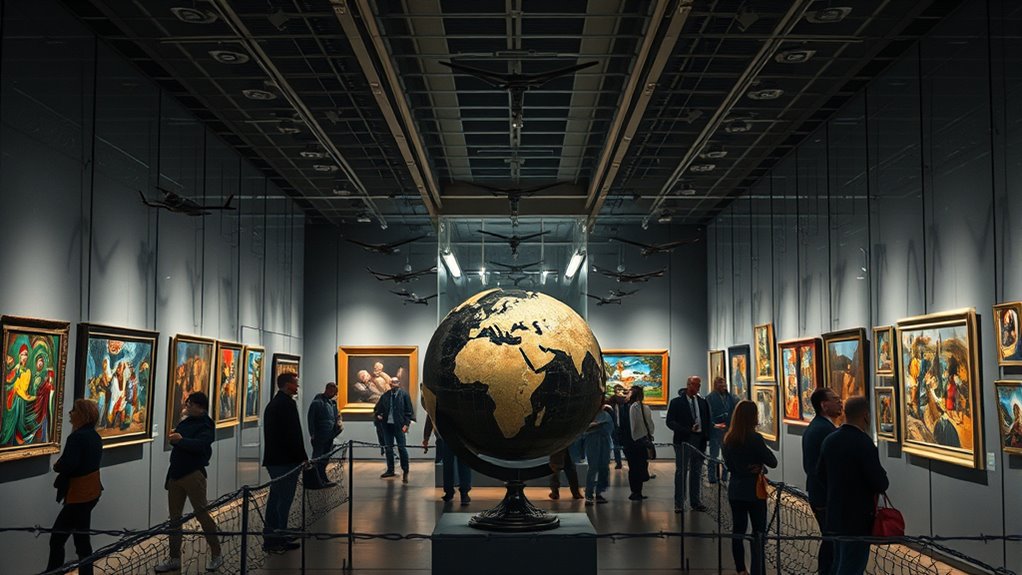
Geopolitical tensions often influence the art world more profoundly than people realize, shaping the themes, value, and movement of artistic expression. When conflicts and diplomatic disputes arise, they don’t just stay confined to politics—they ripple through the art scene, affecting how artworks are created, viewed, and exchanged. One of the most noticeable effects is on cultural exchange. During tense times, countries might impose restrictions on the movement of art and artists, limiting cross-border collaborations and exhibitions. Conversely, some tensions spark a desire to preserve or showcase cultural identity, leading to a surge in artworks that reflect national pride, historical struggles, or political critique. These shifts influence the themes artists explore, often emphasizing resistance, resilience, or the scars of conflict. As a result, the art becomes a powerful tool for dialogue or protest, shaping the narrative of a nation’s identity in turbulent times.
The art market also feels the weight of geopolitical tensions. When diplomatic relations sour, the flow of art across borders slows, causing disruptions in the circulation of key pieces and collections. Auction houses, galleries, and collectors become more cautious, often shifting focus to local or regional markets to avoid uncertainties. This can inflate the value of certain artworks within specific regions, while devaluing international sales. Conversely, political conflicts may also create rare opportunities for certain artworks to gain prominence. For example, works that highlight themes of resistance may see increased demand among collectors sympathetic to those causes, influencing their prices and desirability. Additionally, governments might seize or restrict access to artworks, using cultural assets as political leverage or protection, which further complicates the art market’s dynamics. Furthermore, the circulation of art is also affected by precious metals and other assets that serve as alternative investments during uncertain times, shifting the focus away from traditional art markets.
In these turbulent times, the art world becomes a battleground for influence and identity. Cultural exchange diminishes when countries tighten borders or impose censorship, but it can also evolve into a form of subtle diplomacy—artists and institutions find ways to navigate restrictions, fostering underground or virtual exchanges that transcend physical barriers. Meanwhile, the art market adapts, with some players retreating and others seeking new avenues, such as digital sales and online exhibitions, to keep circulation alive. Ultimately, geopolitical tensions serve as both a barrier and a catalyst, reshaping how art is shared, valued, and understood across borders. You see, in this complex web, the art world mirrors the geopolitical landscape—fragile yet resilient—highlighting the deep connection between politics, culture, and creative expression.

Attelite Clear Acrylic Display Case,Display Storage Box Countertop with Magnetic Door,Stackable Dustproof Protection Showcase for Action Figures,Collectibles
Size: External size 14.1'' * 8.6'' * 10.4'';Internal size; 13.5''*8''*9.8''
As an affiliate, we earn on qualifying purchases.
As an affiliate, we earn on qualifying purchases.
Frequently Asked Questions
How Do Sanctions Specifically Affect Art Trade Routes?
Sanctions directly impact art trade routes by imposing trade restrictions that limit the movement of artwork between countries. You’ll encounter customs delays more frequently, as authorities scrutinize shipments to guarantee compliance. These restrictions can halt or slow down the transfer of art, making it harder for galleries, collectors, and artists to participate in international exchanges. Consequently, the flow of art becomes more complicated, costly, and uncertain, affecting the global art market.
What Countries Are Most Impacted by Art Import Restrictions?
You’re caught in a storm where countries like Russia, China, and Iran face strict art import restrictions, clouding their cultural diplomacy efforts. These nations struggle to diversify their art markets, limiting international exchanges and growth opportunities. When sanctions hit, it’s like a dam breaking, blocking art flow and stifling cultural dialogue. Such restrictions threaten their ability to showcase and preserve unique artistic identities, making it harder to build bridges through art.
How Do Geopolitical Tensions Influence Art Pricing Globally?
Geopolitical tensions cause art prices to fluctuate due to market volatility, making it harder for you to predict value changes. These tensions also hinder cultural exchange, limiting opportunities for artists and collectors to connect, which can suppress demand and lower prices. Conversely, restricted circulation of certain artworks can increase their rarity, potentially raising prices for specific pieces. Overall, geopolitical issues create uncertainty, impacting global art pricing dynamics markedly.
Are Digital Art Platforms Also Affected by Geopolitical Conflicts?
The chaos of geopolitical conflicts can shake digital art platforms to their core. You might find that digital art and platforms censorship become more intense, as governments and authorities try to control what’s shared online. These conflicts can lead to restrictions, bans, or censorship, making it harder for artists and collectors to access or showcase digital art freely. So, yes, digital art platforms are definitely affected by geopolitical tensions.
What Role Do International Organizations Play in Mitigating These Effects?
International organizations play a key role by promoting cultural diplomacy and diplomatic mediation to ease tensions that disrupt art circulation. You can see them facilitating dialogues, establishing agreements, and supporting cross-border collaborations, which help protect artists and cultural exchanges. Their efforts foster understanding and trust, ensuring that geopolitical conflicts don’t entirely block the flow of art, and maintaining global cultural connectivity even during times of tension.

Conservation Mounting for Prints and Drawings
As an affiliate, we earn on qualifying purchases.
As an affiliate, we earn on qualifying purchases.
Conclusion
As you navigate the shifting landscape of geopolitics, remember that art is like a delicate bridge—connecting cultures despite turbulent waters. When tensions rise, this bridge may wobble or momentarily falter, but its core remains resilient. Your role is to keep the pathways open, ensuring that creativity continues to flow freely across borders. By doing so, you help transform turbulent storms into opportunities for understanding, turning a fractured world into a mosaic of shared human expression.
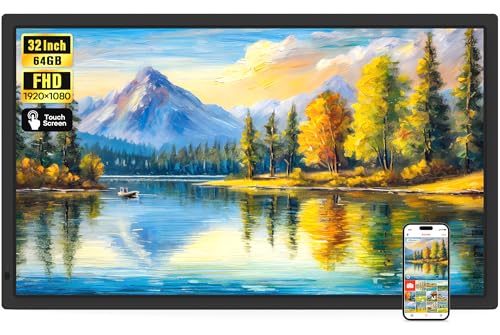
Frameo 32" Extra Large Digital Picture Frame WiFi 64GB, 1920 x 1080 FHD IPS Touch Screen Electronic Photo Frames, Wall Mounted, Auto-Rotate, Support USB and SD Card, Share Photos Videos Instantly
Share Photos and Videos Instantly Via "Frameo" APP: This 32-inch extra-large digital picture frame uses 2.4G+5G dual WiFi…
As an affiliate, we earn on qualifying purchases.
As an affiliate, we earn on qualifying purchases.
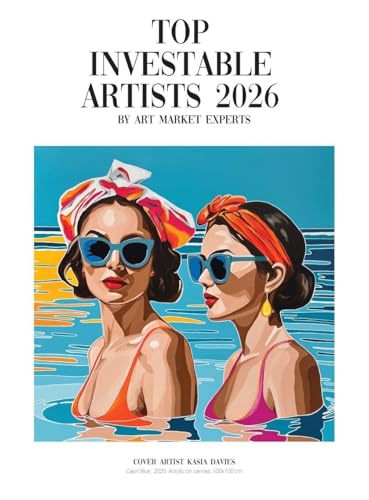
Investable Artists 2026: The Definitive Guide for Collectors, Investors and Art Professionals
As an affiliate, we earn on qualifying purchases.
As an affiliate, we earn on qualifying purchases.