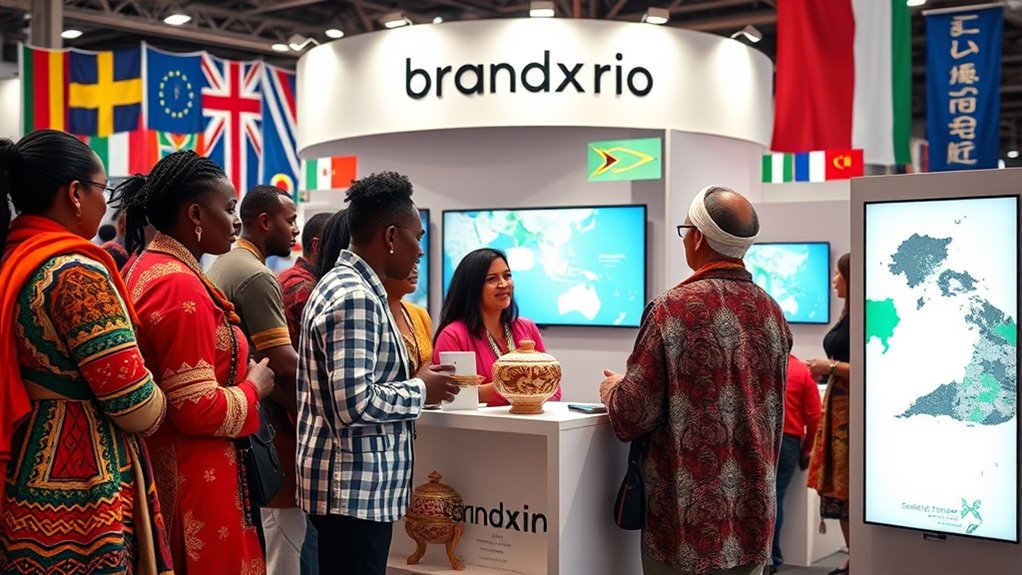

To succeed in cross-cultural collaborations at international fairs, focus on understanding and respecting different customs, communication styles, and norms. Use simple language, visual aids, and translation tools to bridge language gaps. Show genuine interest in other cultures through learning basic phrases and observing social cues. Building trust, practicing patience, and being adaptable help foster strong partnerships. Keep exploring these strategies to enhance your global connections and maximize your fair experience.
Key Takeaways
- Building trust through genuine cultural interest and respectful communication enhances cross-cultural collaborations.
- Adapting communication styles and using visual aids mitigate language barriers at international fairs.
- Learning basic greetings and customs demonstrates respect, fostering stronger international partnerships.
- Cultural sensitivity improves negotiation outcomes and turns diverse perspectives into innovative solutions.
- Developing cultural intelligence helps navigate different social cues, strengthening global networks and collaboration success.

International fairs have become vibrant platforms where diverse cultures come together, fostering collaboration and innovation across borders. As you participate in these dynamic environments, you quickly realize that communication is both an asset and a challenge. Language barriers can hinder your ability to connect effectively, making it crucial to approach interactions with patience and adaptability. Using simple language, visual aids, or translation tools can bridge gaps and help you convey your ideas clearly. Remember, it’s not just about words; understanding context and tone is equally important. Showing genuine interest in others’ cultures and backgrounds demonstrates cultural sensitivity, which fosters trust and respect. Being aware of cultural nuances—such as greeting customs, gestures, or negotiation styles—can make a significant difference in building meaningful relationships. When you approach interactions with an open mind and a respectful attitude, you create an environment where collaboration flourishes.
You’ll find that cultural sensitivity extends beyond language. It involves recognizing and valuing the diverse perspectives that each participant brings to the table. For instance, some cultures prioritize indirect communication or may avoid direct confrontation, which can be misinterpreted if you’re unaware. By observing and listening attentively, you gain insights into different cultural norms, allowing you to adapt your approach accordingly. This awareness helps prevent misunderstandings and shows your respect for their traditions and customs. When engaging with international partners, take the time to learn about their cultural practices; this effort not only smooths interactions but also demonstrates your commitment to genuine collaboration. Developing Cultural Intelligence can further enhance your ability to navigate these interactions successfully.
In practice, cultivating cultural sensitivity helps you navigate varied social cues and etiquette, making negotiations more effective. It encourages you to be flexible, patient, and empathetic—traits that are essential in building long-lasting partnerships. When language barriers are present, a willingness to learn basic phrases or greetings in your counterparts’ languages can go a long way. It shows your respect and appreciation for their culture, which can break down barriers and foster camaraderie. Remember, successful cross-cultural collaboration is rooted in mutual understanding, which begins with being mindful of the subtle differences that shape communication styles and behaviors. By embracing these principles, you position yourself to turn diverse perspectives into innovative solutions, ultimately strengthening your global network and expanding your opportunities at international fairs.
translation device for international fairs
As an affiliate, we earn on qualifying purchases.
As an affiliate, we earn on qualifying purchases.
Frequently Asked Questions
How Do Language Barriers Impact Collaboration Success at International Fairs?
Language barriers can hinder collaboration success at international fairs by causing misunderstandings and miscommunications. You might struggle with language translation, making it harder to convey ideas clearly. Non-verbal cues, like gestures and facial expressions, become essential, but they can also be misinterpreted across cultures. To succeed, you should focus on effective language translation tools and pay close attention to non-verbal cues, fostering clearer communication and stronger partnerships.
What Are the Best Practices for Respecting Cultural Differences?
You should prioritize cultural awareness by researching your partners’ customs and traditions before meetings. Respect etiquette considerations, like appropriate greetings and gift-giving, to build trust. Listen actively and show genuine interest in their perspectives. Avoid assumptions or stereotypes, and adapt your communication style accordingly. By demonstrating sensitivity and understanding, you foster respectful relationships, paving the way for successful cross-cultural collaborations at international fairs.
How Can Technology Facilitate Cross-Cultural Teamwork Effectively?
You might think technology doesn’t bridge cultural gaps, but it actually does—especially with virtual reality and AI translation. Virtual reality immerses team members in each other’s environments, fostering understanding. AI translation breaks language barriers instantly, enabling smoother communication. Together, these tools create a seamless collaboration experience, making cross-cultural teamwork more effective. Embrace these innovations to build stronger, more connected international partnerships and guarantee everyone’s voice is heard.
What Are Common Challenges Faced During International Fair Collaborations?
During international fair collaborations, you often face challenges like language barriers, time zone differences, and cultural misunderstandings. Building trust is essential, so focus on transparent communication and consistent follow-through. Negotiation strategies should be adaptable, respecting cultural norms and expectations. You might also encounter differing business practices, requiring patience and flexibility. Overcoming these hurdles helps foster effective partnerships, ensuring collaboration thrives despite diverse backgrounds.
How Is Cultural Sensitivity Measured and Improved in International Settings?
To measure cultural sensitivity, you assess your cultural awareness and intercultural competence through feedback, self-reflection, and performance in diverse settings. You can improve these skills by actively learning about other cultures, engaging in intercultural training, and practicing open-minded communication. Regularly seeking feedback helps you identify growth areas, while ongoing education and real-world interactions deepen your understanding and foster respectful, effective collaboration across cultures.
visual aids for cross-cultural communication
As an affiliate, we earn on qualifying purchases.
As an affiliate, we earn on qualifying purchases.
Conclusion
By embracing cross-cultural collaborations at international fairs, you open yourself to new perspectives and innovative ideas. These partnerships break down barriers, foster understanding, and create unique opportunities for growth. So, why not step out of your comfort zone and connect with diverse voices? After all, isn’t the magic of global fairs in the shared stories and fresh collaborations that emerge? Embrace the diversity—you might just find your next big breakthrough.
basic language phrasebook for business travel
As an affiliate, we earn on qualifying purchases.
As an affiliate, we earn on qualifying purchases.
cultural sensitivity training tools
As an affiliate, we earn on qualifying purchases.
As an affiliate, we earn on qualifying purchases.