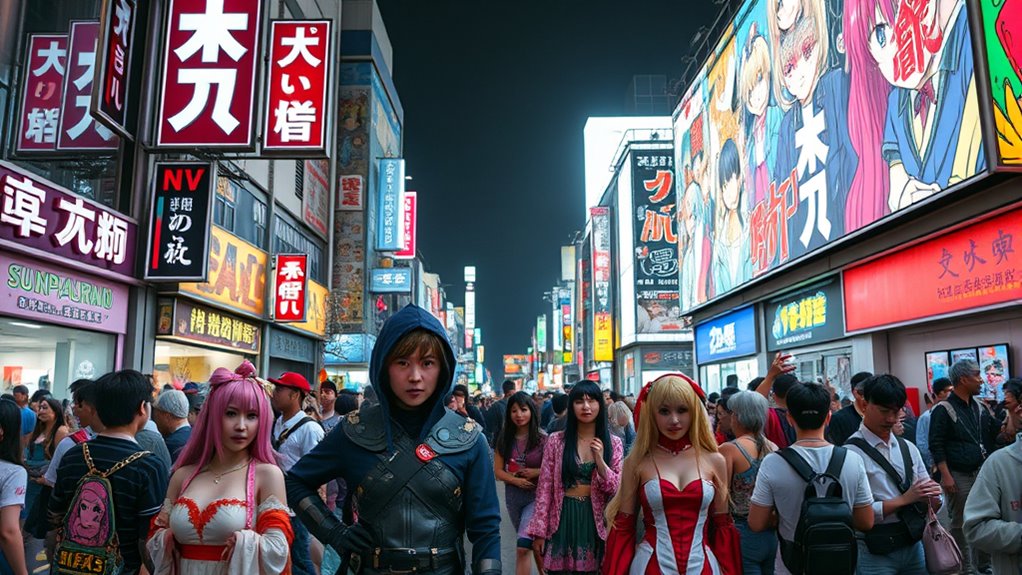

Manga’s rise to global pop culture fame started with anime that introduced Japanese stories worldwide. Fans translated manga into many languages, creating a passionate community and spreading interest. Digital platforms and social media made it easier to access and share manga instantly, fueling its popularity. Official translations and international events further solidified its presence. If you explore more, you’ll see how these elements work together to keep manga thriving around the world.
Key Takeaways
- Anime adaptations introduced manga stories worldwide, sparking initial interest and curiosity among international audiences.
- Fan translations (“scanlations”) bypassed language barriers, building a dedicated global manga community.
- Digital platforms and social media facilitated instant access, discussion, and sharing of manga worldwide.
- Official translations and licensing expanded manga’s availability, normalizing it within mainstream pop culture.
- Cultural activities like cosplay and conventions fostered deeper engagement, integrating manga into global entertainment.

Have you ever wondered how manga, a Japanese comic art form, has become a worldwide phenomenon? It’s a story of cultural exchange, dedicated communities, and the power of visual storytelling. When manga first arrived outside Japan, it wasn’t immediately embraced globally. Instead, it gradually gained momentum through the influence of anime—animated adaptations of manga that brought these stories to life on screens worldwide. Anime influence played a vital role in expanding manga’s reach because many fans first encountered these stories through animated series that aired internationally, often dubbed or subtitled in multiple languages. This exposure sparked curiosity and led viewers to seek out the original manga, fueling global demand.
But it wasn’t just official translations that helped spread manga; fan translations, also known as “scanlations,” greatly contributed to its international rise. Fans around the world took it upon themselves to translate manga chapters, making these stories accessible long before official translations arrived. These community-driven efforts created a grassroots movement that bypassed language barriers and helped build a dedicated international fanbase. Through fan translations, manga became more than just Japanese comics; it became a shared cultural experience across borders. These translations fostered discussion, allowed fans to connect deeply with the characters, and created a sense of community among readers who shared a passion for manga. The widespread availability of manga through these efforts also helped shape the global manga culture, which is supported by the digital distribution platforms that have made access even easier. Additionally, the international fan community actively promotes and sustains interest in manga through online forums and fan events, further cementing its place in global pop culture. These platforms have facilitated the rapid dissemination of manga, enabling fans everywhere to enjoy new releases immediately and seamlessly.
The accessibility provided by fan translations also influenced publishers and creators. As demand grew, publishers began investing in official translations, recognizing the potential for global markets. This shift led to a surge in licensed manga releases across different languages, making manga more mainstream outside Japan. The influence of anime and fan translations also contributed to the development of a global manga culture, where fans could discuss theories, cosplay, and attend conventions that celebrate Japanese pop culture. Social media platforms amplified this effect, enabling fans to share their favorite manga and anime content instantly, further fueling the worldwide phenomenon. Moreover, the rise of digital distribution platforms has made manga even more accessible, removing geographical barriers and allowing fans everywhere to enjoy new releases immediately.
Ultimately, manga’s journey into global pop culture is shaped by a combination of anime influence, which introduced the stories visually, and fan translations, which democratized access and fostered international communities. Both elements worked hand-in-hand, bridging language gaps and creating a vibrant, interconnected fanbase. Today, manga is woven into the fabric of global entertainment, influencing artists, writers, and pop culture enthusiasts everywhere. Its rise is a proof of the power of storytelling combined with passionate communities that refuse to let language or borders stand in the way of sharing stories they love.
Frequently Asked Questions
How Did Manga Originally Gain Popularity Outside Japan?
You see, manga originally gained popularity outside Japan through dedicated manga fan communities that shared and discussed titles online and offline. International licensing played a vital role, making manga accessible in different languages and regions. As fans embraced manga, publishers expanded licensing efforts, fueling its growth globally. These communities and licensing efforts created a feedback loop, helping manga reach new audiences and establishing its presence in worldwide pop culture.
What Are the Most Influential Manga Genres Worldwide?
You’ll find that the most influential manga genres worldwide include shonen, seinen, shojo, and josei, reflecting genre evolution and demographic diversity. Shonen appeals to young boys, while shojo targets young girls. Seinen and josei cater to adult audiences, showcasing mature themes. These genres shape global preferences, inspiring adaptations in anime, comics, and fashion, proving manga’s versatile influence across different cultures and age groups.
How Does Manga Influence Western Comic Book Styles?
You see how manga influences Western comic book styles through its unique artistic techniques and panel layouts. You notice that Western artists adopt manga’s dynamic action scenes, expressive characters, and dramatic shading. You also observe how panel layouts become more varied and creative, mimicking manga’s flow and pacing. This cross-pollination enriches Western comics, giving them fresh energy and storytelling depth, making the art form more engaging for diverse audiences.
What Role Do Anime Adaptations Play in Manga’s Global Success?
Anime adaptations play a vital role in manga’s global success by expanding its reach through animation impact. They introduce diverse audiences to manga stories, making them more accessible and engaging. Localization strategies guarantee cultural nuances resonate worldwide, helping fans connect deeply. As you watch anime, you see how these adaptations elevate manga’s popularity, turning it into a global phenomenon that captures hearts across different cultures and markets.
How Are Manga Publishers Adapting to Digital Consumption?
Think of manga publishers as sailors steering digital seas; they adapt by harnessing digital platforms to reach new shores. You see, they’re transforming traditional print into online formats, apps, and webcomics, making it easier for readers to engage anytime, anywhere. This shift boosts reader engagement, ensuring manga remains accessible and relevant. By embracing this digital wave, publishers keep their stories flowing and their audiences growing worldwide.
Conclusion
As you flip through the vibrant pages of manga, you’re transported to worlds alive with color and energy. This art form has woven itself into the fabric of global pop culture, transforming quiet stories into roaring phenomena. You can almost hear the buzz of conventions and the ripple of fans sharing their passion. Manga’s rise is like a sweeping wave, leaving behind a trail of inspiration, creativity, and a universe where imagination knows no borders.