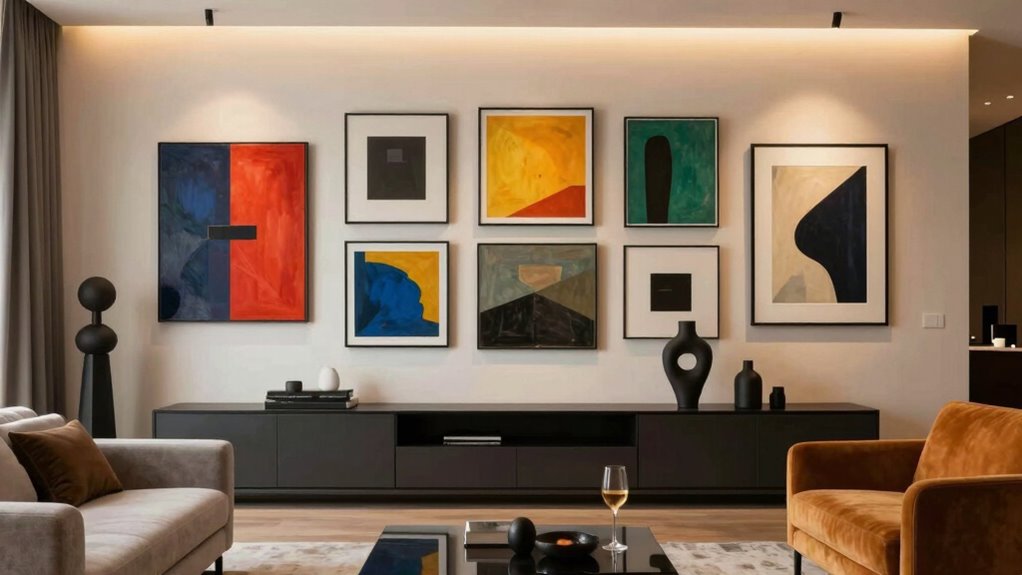

To set up your home gallery with the viewing distance rule, you should position your artwork at a distance that’s about 1.5 to 2.5 times its diagonal size. Larger pieces need more space, while smaller ones can be viewed closer. Proper spacing, height, and lighting also matter for a balanced look. Keep these principles in mind to create a cohesive display that maximizes appreciation—if you keep exploring, you’ll discover how to perfect your setup even more.

Get art and craft supplies delivered free with Prime
- Fast, free delivery on millions of items
- Prime Video, Amazon Music and more included
- Member-only deals all year
Key Takeaways
- Measure artwork size and set the optimal viewing distance at 1.5 to 2.5 times the diagonal length for best appreciation.
- Hang art at eye level, aligning with seated or standing viewer height for comfortable viewing.
- Arrange lighting carefully with adjustable fixtures to highlight artwork without causing glare or eye strain.
- Ensure proper spacing and visual balance by distributing artworks evenly and grouping related pieces for harmony.
- Avoid overcrowding walls, hanging pieces too high or low, and ignoring wall color to maintain a cohesive, professional gallery look.
artwork hanging measurement tool
As an affiliate, we earn on qualifying purchases.
As an affiliate, we earn on qualifying purchases.
Why Viewing Distance Matters When Hanging Art
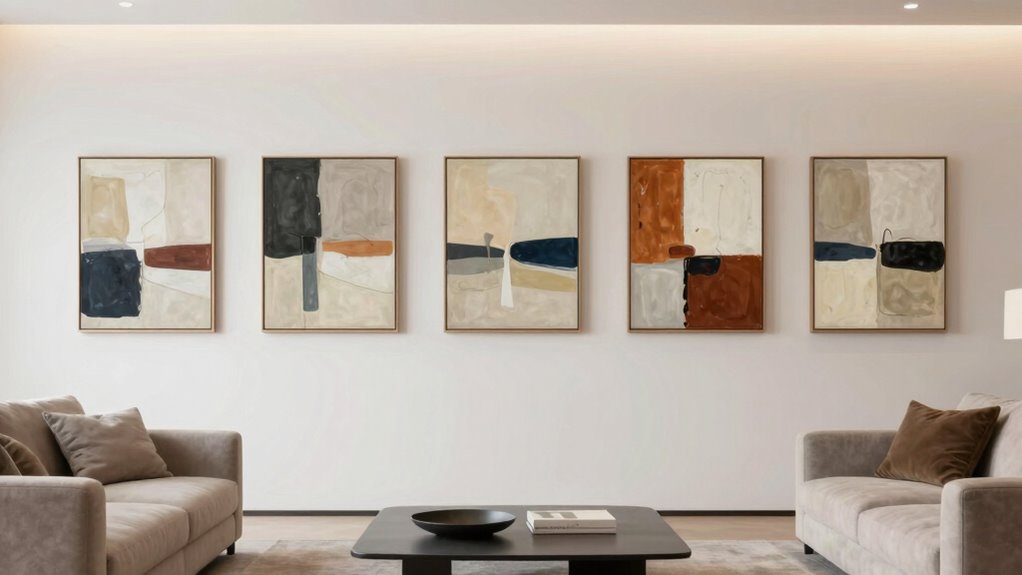
Understanding the appropriate viewing distance is essential when hanging art because it directly affects how well you can appreciate the piece. Proper art placement ensures that viewers can see details clearly without straining their eyes or losing interest. When positioning artwork, consider the ideal distance that allows you to take in the entire piece comfortably. This distance also influences how gallery lighting interacts with your art; good lighting enhances details and colors, but if you’re too close or far, the effect diminishes. Additionally, safety precautions should be taken to ensure your artwork is securely hung and won’t pose hazards. Being aware of the standard viewing height can help optimize the overall viewing experience. Proper spacing and art placement are crucial for creating a balanced and engaging display. Adjusting the appropriate viewing distance based on the artwork’s size and style can significantly maximize visual impact, ensuring your artwork is enjoyed as intended, highlighting its beauty and craftsmanship for anyone who walks into your home gallery.
adjustable gallery lighting fixtures
As an affiliate, we earn on qualifying purchases.
As an affiliate, we earn on qualifying purchases.
What Factors Affect How Far You Should Stand From Your Art
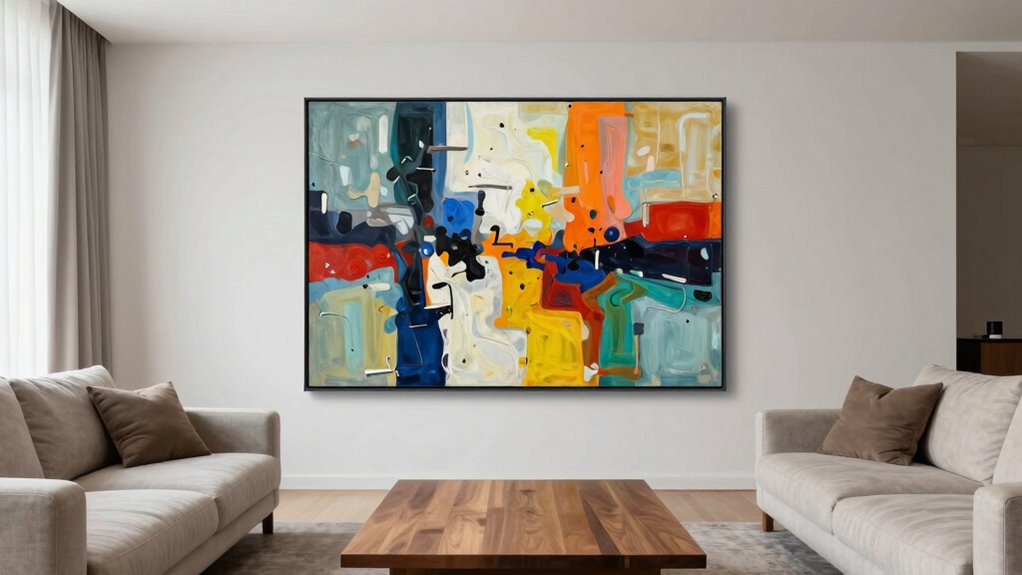
Several factors influence how far you should stand from your artwork to fully appreciate it. Art placement plays a key role; larger pieces often require a greater distance for proper viewing, while smaller works can be enjoyed from closer up. The size and scale of the art affect the ideal viewing distance, ensuring you see details without losing overall aesthetic balance. Your room’s lighting and furniture arrangement also matter, as they can create glare or distractions that alter how you perceive distance. Additionally, your personal preferences and the room’s purpose influence how close or far you stand—aiming for a comfortable viewing experience that highlights the piece’s details and harmony within the space. Considering these factors helps you optimize art placement for maximum impact.
As an affiliate, we earn on qualifying purchases.
How to Measure the Ideal Viewing Distance for Your Gallery
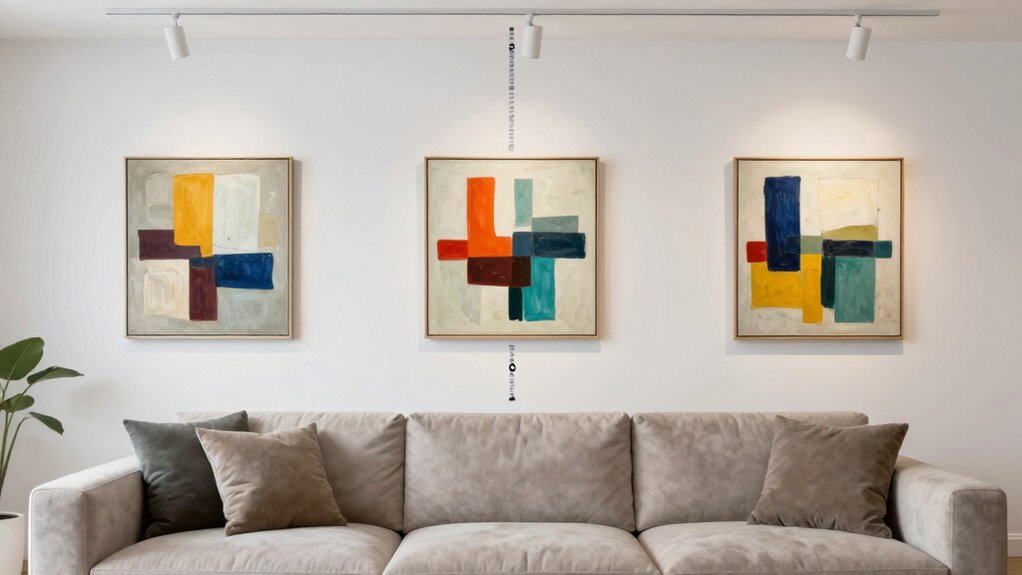
To find the best viewing distance, start by measuring the wall space where your art will hang. Then, use that measurement to calculate an ideal distance based on the size of each piece. This approach guarantees your gallery feels comfortable and visually balanced. Considering design principles can also help ensure your setup enhances the overall aesthetic. Additionally, understanding wall surface types can influence how you position and illuminate your artwork for optimal visual impact.
Measuring Wall Space
Measuring wall space is a crucial step in creating an effective home gallery, as it guarantees your artwork is displayed at the ideal viewing distance. Start by evaluating the available wall measurements, noting the width and height where you plan to hang your pieces. Accurate wall measurements help determine the maximum size of art you can display without overcrowding or leaving too much empty space. Consider the layout, including any furniture or architectural features, to ensure proper art placement. Use a tape measure or a laser measure for precision. This step helps you visualize how your artwork will fit within the space and ensures that each piece can be viewed comfortably from the intended distance. Proper wall measurements are essential for a balanced, cohesive gallery setup and for practicing media literacy by understanding how space impacts visual perception.
Calculating Optimal Distance
Determining the ideal viewing distance is essential to creating a comfortable and visually balanced home gallery. To do this, consider the size of your artwork and the surrounding space. A good rule of thumb is to sit about 1.5 to 2.5 times the diagonal length of your art away for optimal viewing. Use this table to visualize how distance relates to art placement:
| Artwork Size | Recommended Distance | Gallery Lighting Tips | Visual Comfort Level |
|---|---|---|---|
| Small (up to 24″) | 3-6 feet | Focused, soft lighting | Cozy but clear |
| Medium (24-48″) | 4-8 feet | Even, balanced lighting | Comfortable |
| Large (over 48″) | 6-12 feet | Highlighted, accent lighting | Dramatic |
Adjust based on room size and lighting, ensuring viewers can appreciate details without strain.
As an affiliate, we earn on qualifying purchases.
How to Adjust Your Wall Setup for Proper Viewing Distance
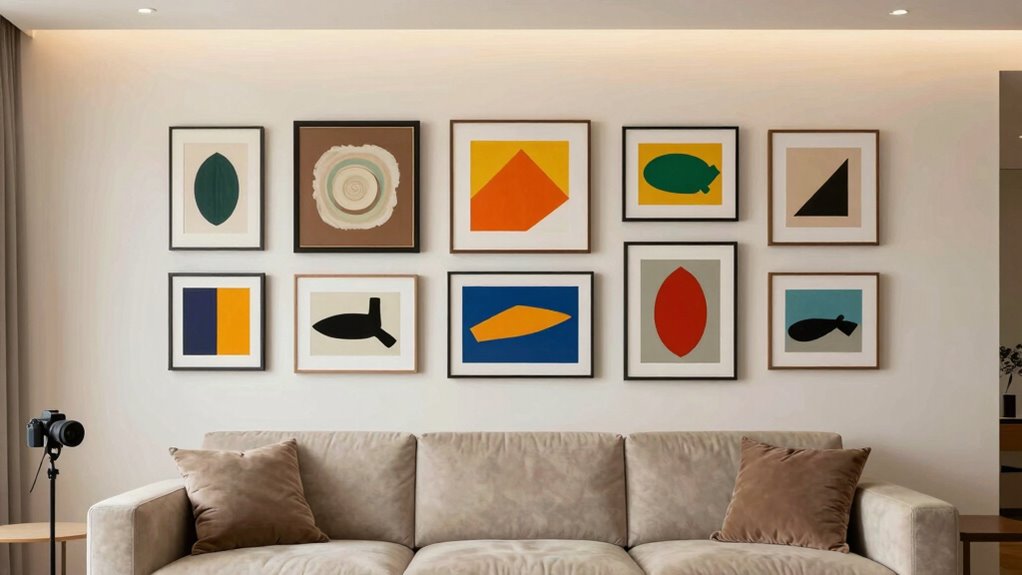
Start by measuring the available wall space to see what fits comfortably. Then, determine a viewing distance that feels natural for you, ensuring it’s neither too close nor too far. Finally, adjust the artwork to create a balanced and inviting display that encourages easy viewing from the chosen distance.
Measure Wall Space
Before positioning your TV or artwork, it’s essential to evaluate the available wall space to guarantee your setup looks balanced and feels comfortable. Measure your wall carefully, noting the total width and height. This helps determine the ideal size for art placement and prevents overcrowding or empty areas. Use a tape measure to get accurate wall measurements, ensuring your chosen pieces fit well within the space. Consider the placement height for art to complement your viewing position, and leave enough room around your TV or artwork for visual balance. Proper wall measurements help you visualize the overall setup, making adjustments easier before hanging. This step ensures your gallery feels intentional and harmonious, creating a welcoming environment for your viewing experience.
Determine Comfortable Distance
To guarantee your wall setup offers a comfortable viewing experience, you need to find the right distance between your seating and the TV or artwork. This ensures ideal art placement and wall height, preventing strain or distortion. Consider these steps:
- Measure the size of your art or TV and multiply by 1.5 to 2.5 to get the ideal viewing distance. This calculation helps optimize the visual clarity and overall viewing experience.
- Adjust the wall height so artwork is at eye level when seated, typically 57-60 inches from the floor.
- Position seating so viewers are within the calculated distance, avoiding too close or too far.
- Test the setup by sitting in your usual spot and confirming the image or art feels natural without requiring excessive head movement or squinting.
- Remember that proper viewing distance can also help reduce eye strain and improve overall comfort during extended viewing periods.
Adjust for Visual Balance
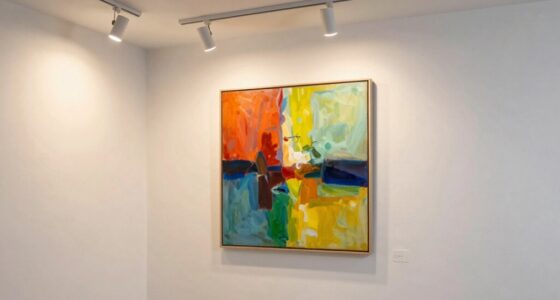
Once you’ve determined the ideal viewing distance, it’s important to fine-tune your wall setup to achieve visual harmony. Start by evaluating your art placement, ensuring pieces are at eye level when seated or standing naturally. Proper spacing between artworks prevents clutter and creates a balanced look. Group related pieces together to form a cohesive display, which enhances visual harmony. Adjust the height of your art so that the focal points align with your line of sight at the chosen distance. Remember, symmetry and proportion matter; uneven spacing or mismatched sizes can disrupt the overall balance. Additionally, considering art placement guidelines can help you optimize your wall arrangement for the best visual impact. By carefully considering art placement and maintaining proportional relationships, you’ll create a gallery that feels inviting and visually pleasing from your ideal viewing spot.
Common Mistakes to Avoid When Arranging Your Art Gallery
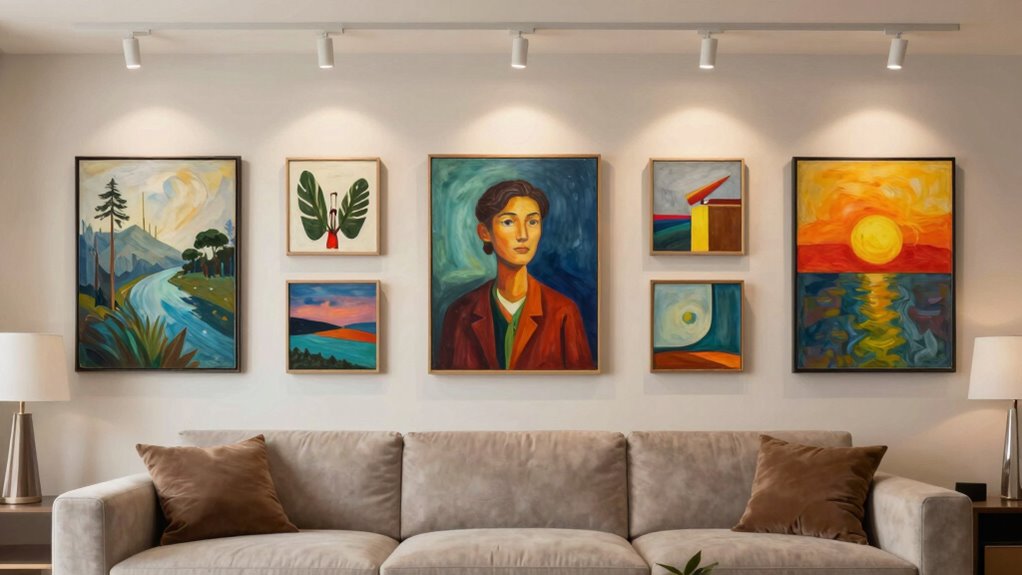
When arranging your art gallery, it’s easy to fall into common pitfalls that can diminish the impact of your display. First, avoid poor art placement; hanging pieces too high or low disrupts visual flow. Second, ignore your wall color—clashing hues can overshadow your artwork. Third, don’t overcrowd walls; too many pieces cramp the space and overwhelm viewers. Fourth, neglect proper spacing between artworks, which can make the display look chaotic. Keep in mind that wall color influences how art stands out, so choose hues that complement your pieces. Proper art placement and thoughtful wall color choices ensure your gallery feels cohesive and inviting, avoiding mistakes that can distract or diminish the art’s effect. This keeps your collection looking polished and professionally curated.
Tips for Creating a Balanced and Harmonious Wall Display

Creating a balanced and harmonious wall display begins with understanding how to distribute visual weight evenly across the space. Start by planning your canvas placement, ensuring larger pieces are spaced to avoid overwhelming the wall. Mix different frame styles—sleek, ornate, minimalist—to add visual interest without chaos. Keep the spacing between artworks consistent, which helps create a cohesive look. Consider the size and orientation of each piece; pairing vertical and horizontal works can add rhythm. Symmetry often works well for formal settings, while asymmetry can create a dynamic, modern feel. Remember, the goal is to achieve a sense of unity, so balance bold with subtle pieces, and vary frame styles thoughtfully to enhance harmony.
How Lighting and Furniture Influence Viewing Experience
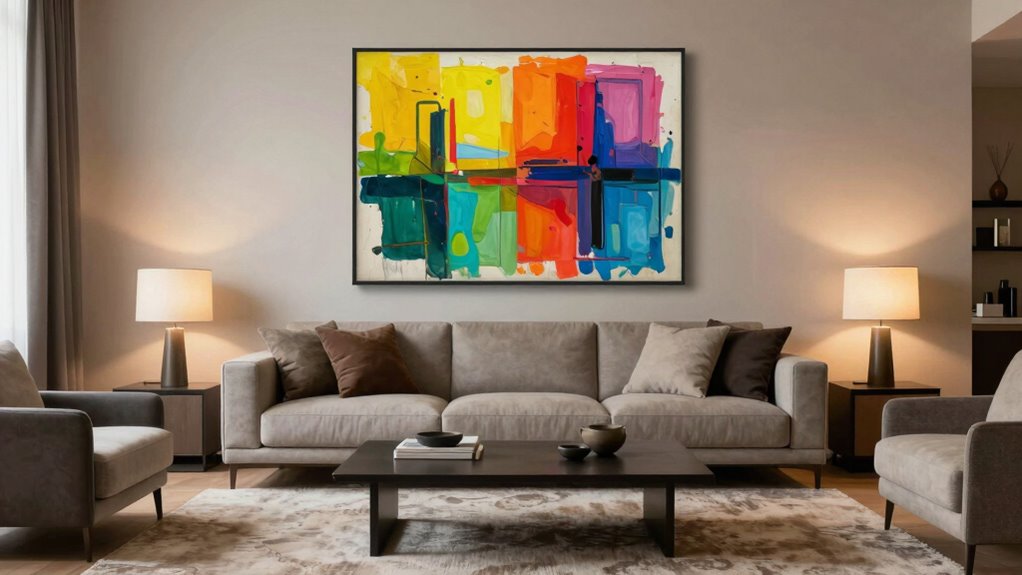
Lighting and furniture play crucial roles in shaping how you experience your wall gallery. Proper art lighting highlights your pieces, drawing attention and enhancing colors. Strategic furniture placement creates a comfortable viewing environment and prevents obstructions. To optimize your setup, consider these points:
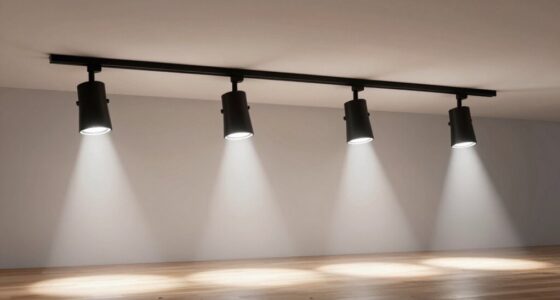
- Use adjustable art lighting to focus on key artworks without glare.
- Position furniture to allow clear sightlines, avoiding blocking important pieces.
- Keep furniture away from direct sunlight to prevent fading.
- Choose lighting that complements the room’s ambiance and showcases your collection.
- Be mindful of visual perception dynamics, as the arrangement of lighting and furniture can influence how viewers interpret and connect with the artwork. Additionally, understanding spatial awareness helps in creating an optimal layout that feels natural and engaging. Incorporating air quality considerations ensures that your gallery remains a healthy space for viewing and appreciation. Maintaining proper air circulation can also help preserve your artwork and enhance the overall viewing comfort. Paying attention to lighting placement can significantly improve the overall harmony of your gallery setup.
These elements influence your overall viewing experience, making your gallery inviting and engaging. Thoughtful lighting and furniture placement ensure you can appreciate each piece fully, creating a harmonious balance in your home gallery.
How to Fine-Tune Your Gallery Based on Lighting and Furniture

To fine-tune your gallery, start by evaluating how your lighting and furniture choices work together to highlight your artwork and create a comfortable space. Proper lighting can emphasize your art style and showcase frame selection, while furniture placement influences viewing angles. Consider adjusting lighting angles or adding dimmers to reduce glare and enhance details. Select furniture that complements your artwork without overwhelming it. Use the table below to guide your adjustments:
| Lighting & Furniture Aspect | Tips |
|---|---|
| Art Style & Frame Selection | Match frames to your art style for cohesion. |
| Lighting Intensity | Use softer lighting for delicate pieces. |
| Furniture Placement | Keep seating and tables at ideal viewing distances. |
| Light Positioning | Avoid direct reflections on artwork. |
Additionally, pay attention to the lighting layout to ensure even illumination across your gallery space. Understanding the artwork display principles can further help you optimize your setup for both aesthetics and comfort.
Frequently Asked Questions
Can the Viewing Distance Rule Be Different for Large and Small Artworks?
Yes, the viewing distance rule can differ for large and small artworks. You should consider artwork size and your viewer perspective to find the ideal distance. Larger pieces benefit from being viewed from farther away, so details aren’t lost, while smaller artworks require closer proximity for full appreciation. Adjust the distance based on size to enhance your viewing experience and guarantee each piece is enjoyed to its fullest potential.
How Does Wall Color Impact the Perception of Artwork Distance?
Think of your wall color as a magic lens that shapes how you see your artwork’s distance. Bright, warm hues make your art appear closer, like a friendly handshake, while cool, dark shades push it back, creating depth. Wall color influences artwork perception by enhancing or softening visual cues, so choose carefully to craft the atmosphere you want, whether intimate or expansive.
Is There an Ideal Height for Hanging Art Relative to Viewing Distance?
You should hang art so that its center is at eye level, about 57 to 60 inches from the floor, which enhances ideal art placement. This height works well regardless of viewing distance, ensuring viewers can appreciate details comfortably. Use framing techniques that complement your artwork and wall color, creating a cohesive look. Adjust the height slightly if your ceiling is unusually high or low, but prioritize viewer comfort for best results.
How Do Room Size and Shape Influence Optimal Viewing Distance?
Imagine your room as a cozy theater where every seat has a perfect view. Room size and shape directly influence your artwork placement and ideal viewing distance. In a small space, keep art closer to create an intimate focal point emphasis, while larger rooms allow for more distance, enhancing details. Adjust your artwork spacing based on room dimensions to guarantee each piece commands attention without overwhelming or underwhelming the viewer.
Should Lighting Placement Change Based on the Chosen Viewing Distance?
Yes, lighting placement should change based on your chosen viewing distance. Adjusting the lighting enhances art visibility and guarantees even illumination without glare or shadows. For closer distances, use focused, softer lighting to highlight details. At greater distances, opt for broader, ambient lighting to evenly illuminate the artwork. Proper lighting placement creates a balanced viewing experience, making your gallery more inviting and visually appealing from any distance.
Conclusion
Remember, getting your gallery setup right enhances how you experience art. Don’t worry if it takes some trial and error—you can visualize your space with a simple mock-up or tape to see if your pieces feel balanced and inviting. By paying attention to viewing distance, lighting, and furniture placement, you’ll create a harmonious display that invites admiration. Trust the process, and soon your walls will showcase a curated, comfortable art experience.
Halloween Picks
halloween
As an affiliate, we earn on qualifying purchases.