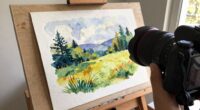
For shooting flat art without distortion, a copy stand is usually your best choice. It offers a stable, flat platform and adjustable arms that keep the artwork perfectly aligned and minimize vibrations. Tripods are more versatile but can struggle with leveling and stability, which may result in skewed images. To get sharp, true-to-color results, setting up correctly is key. If you want detailed tips, keep exploring—more essential advice awaits.
Key Takeaways
- Copy stands provide a stable, flat platform that minimizes vibrations and perspective distortion during flat art photography.
- Tripods offer flexibility for larger or oddly shaped artworks but may struggle with precise alignment and stability.
- For the best no-distortion results, use a copy stand with adjustable height and arms to keep the camera directly above the artwork.
- Proper lighting and level setups are essential regardless of equipment choice to prevent glare, shadows, and skewed images.
- Copy stands are generally superior for flat art, ensuring consistent, distortion-free images through stable support and precise positioning.

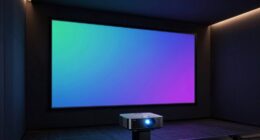
AAJK ALR Projector Screen, 4K Movie Projector Screen 16:9 HD Foldable Anti-Crease Portable Projector, Movies Screen for Home Theater Outdoor Indoor Support (120in Pro)
【Watch What You Want, When You Want!】 Remember when you could only really use your projector at night?...
As an affiliate, we earn on qualifying purchases.
What Are the Challenges in Flat Art Photography?
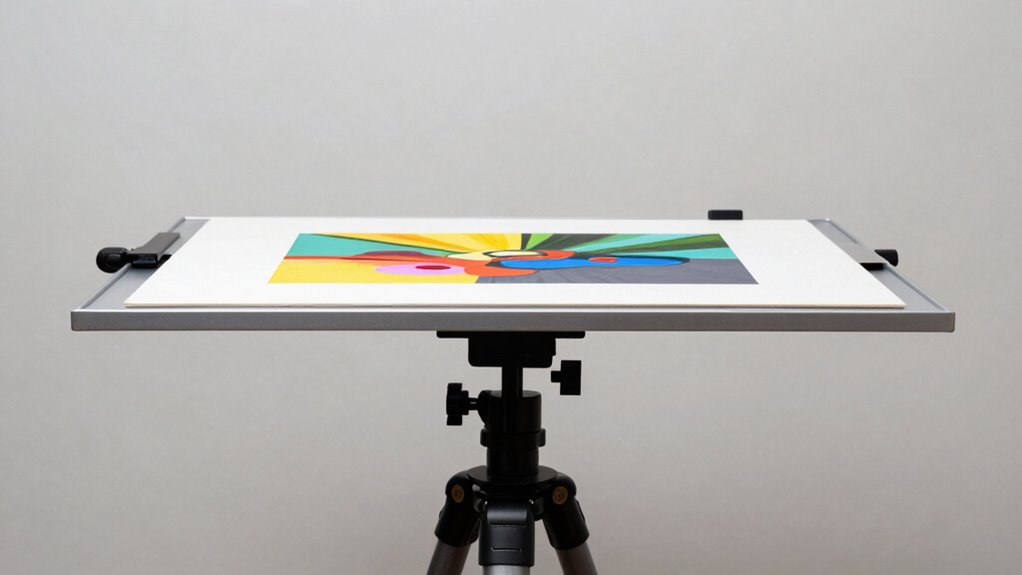
Flat art photography presents unique challenges because capturing the true colors, textures, and details of artwork demands precision and stability. Your lighting setup plays an essential role in avoiding glare and shadows that can distort colors or obscure details. You need even, diffuse lighting to accurately represent the artwork without reflections or hotspots. The choice of camera lens is equally important; a macro or prime lens with minimal distortion ensures sharp focus across the entire piece. Any inconsistency in lighting or lens quality can lead to color inaccuracies, uneven textures, or distortion. Stability is key—failing to keep the camera steady can result in blurry images or skewed perspectives. Proper color accuracy is crucial for producing true-to-life, detailed photographs of flat artwork. Additionally, using a copy stand or tripod can greatly enhance stability and alignment, reducing the risk of distortions and ensuring consistent framing for high-quality results. Ensuring proper camera setup and calibration can further improve the fidelity of your images. Incorporating image stabilization techniques can also help maintain clarity and sharpness during shooting, especially in longer exposures. Moreover, utilizing calibration tools can help ensure consistent color reproduction across multiple images.
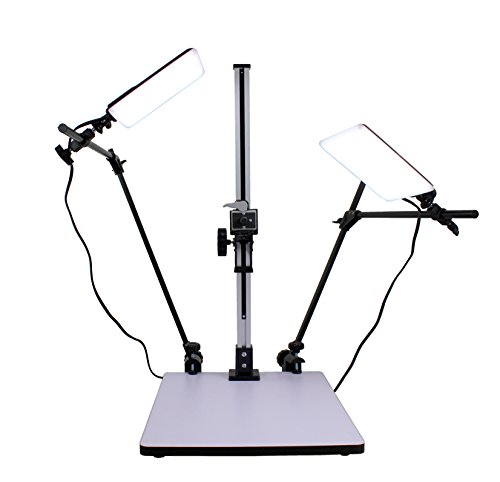
Albinar High Load 28 inch Copy Macro Stand with 15.75 inch x 19 inch Base, Quick Release Mount and Two Daylight Spectrum 5600K 16W LED Lights
Copy/Macro Stand with adjustable camera mount between 8" and 28", 15.75"x19" base with 2 LED 5600K 16W Lights
As an affiliate, we earn on qualifying purchases.
Copy Stand vs. Tripod: Which Is Better for Flat Artwork?
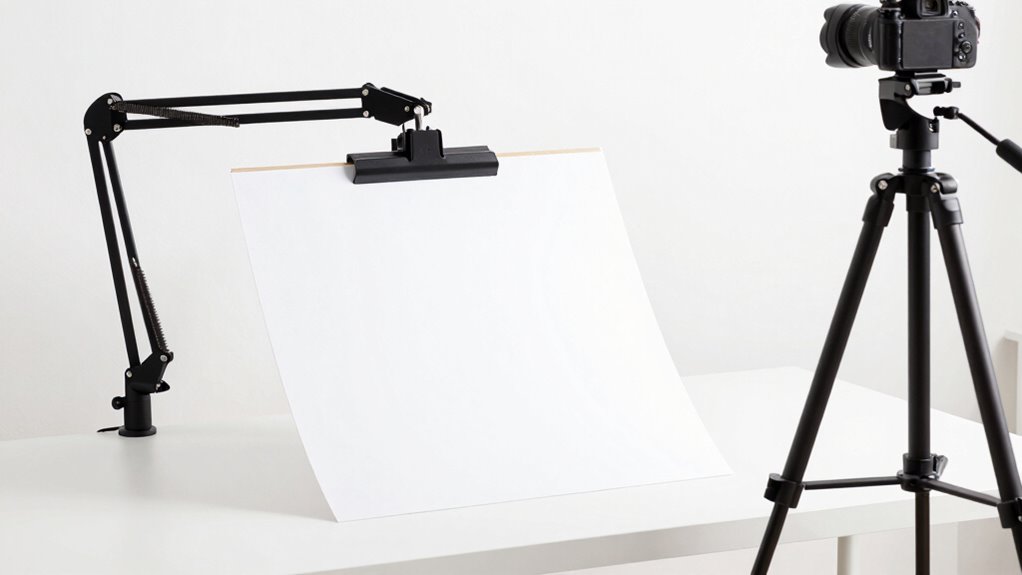
Copy Stand vs. Tripod: Which Is Better for Flat Artwork?
When choosing between a copy stand and a tripod for flat artwork, consider which offers better stability and support to keep your pieces steady. Ease of adjustment is also important so you can quickly position your camera without hassle. Additionally, think about image quality and potential distortion, as the right choice can minimize unwanted effects and produce clearer results. Incorporating proper positioning and support into your setup can help you understand the importance of proper positioning and support, ensuring stability for flat artwork and optimal image clarity. Pay attention to adjustability features, as they can significantly impact your ability to capture images efficiently and with precision. Selecting equipment with versatile mounting options can further enhance your setup’s flexibility and effectiveness.
Stability and Support
Although both copy stands and tripods aim to provide stability, their support mechanisms differ considerably, affecting how well they hold flat artwork. Copy stands typically feature a vertical column with adjustable supports to keep artwork flat and steady, making them ideal for stability considerations when photographing delicate or flat items. Tripods, on the other hand, offer support options through three adjustable legs, but may struggle with uneven surfaces or heavier loads, risking slight movement. For flat artwork, stability is vital to prevent blur or distortion. A copy stand’s dedicated support system ensures the artwork remains perfectly still, reducing vibrations. While tripods are versatile, they might not offer the same level of support necessary for precise, distortion-free images of flat art. Additionally, rigid support structures are crucial for maintaining image clarity and preventing unintended movement during shooting.
Ease of Adjustment
Adjusting your equipment quickly and accurately is essential when working with flat artwork, and both copy stands and tripods offer different advantages in this regard. Copy stands typically feature smooth, adjustable arms and precise height controls that enhance camera ergonomics, making fine adjustments easier. They allow you to lock in specific angles and heights, streamlining your workflow. Tripods, on the other hand, often provide versatile head movements and quick height changes, but may require more time to achieve perfect positioning. When adjusting lighting setups, copy stands usually facilitate stable, consistent placements, reducing the need for readjustments. Overall, copy stands are designed for straightforward, precise adjustments, making them more user-friendly for flat artwork photography. Tripods excel in flexibility but may be less efficient for rapid, accurate repositioning. Additionally, the adjustability features of copy stands contribute to faster setup times and improved image quality. The ease of use of copy stands also minimizes user fatigue during extended shooting sessions. Furthermore, the ability to make precise adjustments quickly can save valuable shooting time and result in more consistent results.
Image Quality and Distortion
The choice between a copy stand and a tripod can considerably impact the image quality and potential distortion in your flat artwork photography. Proper lens calibration guarantees sharp, accurate images, which is essential for detailed artwork. Copy stands typically offer a stable platform directly above your piece, reducing the risk of distortion caused by uneven angles. Tripods, on the other hand, may introduce slight tilts if not perfectly leveled, leading to perspective issues. Lighting consistency is also critical; a copy stand often allows for more controlled, even lighting, minimizing shadows and glare. Making sure your camera remains steady and correctly calibrated helps you capture high-quality images with minimal distortion, preserving the artwork’s true appearance. Both tools can produce excellent results when used correctly, emphasizing stability and calibration.

Cosmo Copy Stand, Mini 500, a Compact Tool with a Floating Magnet Board for Digitizing Old Photos with Your High-Pixel Camera or Smartphone Instead of Scanning. Made in The USA
Compact & Durable Design: The Cosmo Mini 500 is a sturdy, portable copy stand with an integrated phone...
As an affiliate, we earn on qualifying purchases.
How to Set Up a Copy Stand or Tripod for Perfect Results
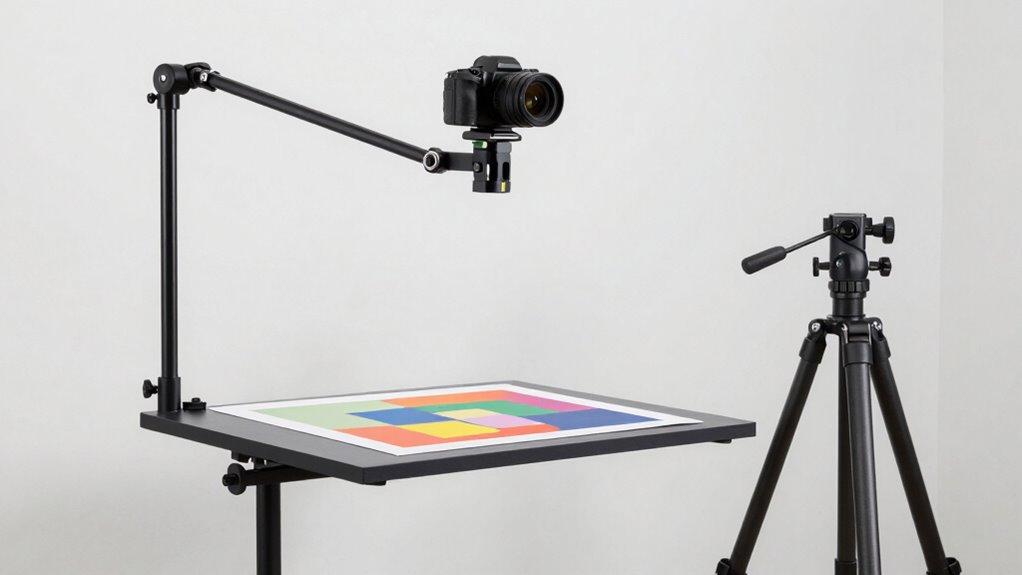
To get perfect results, start by adjusting the height precisely so your artwork is positioned correctly under the camera. Make sure the camera is aligned directly above the subject for sharp, distortion-free images. Fine-tuning these details guarantees your setup captures every detail accurately.
Precise Height Adjustment
Achieving sharp, distortion-free images hinges on setting the right height for your copy stand or tripod. To ensure accuracy, maintain height consistency by adjusting your equipment carefully. Consider weight considerations: a heavier, stable stand reduces movement and vibrations that can blur your shot. Use a level to verify your setup’s height precisely. Keep your camera directly aligned with your artwork to avoid skewed perspectives. When adjusting, move slowly and lock in the height firmly before shooting. This prevents accidental shifts. Remember, small changes in height can affect composition and focus, so precision matters.
| Stability | Height Adjustment | Image Quality |
|---|---|---|
| Heavy base | Fine-tuning | Sharpness |
| Vibration-free | Consistent | Distortion-free |
| Secure locks | Accurate | Clarity |
Optimal Camera Positioning
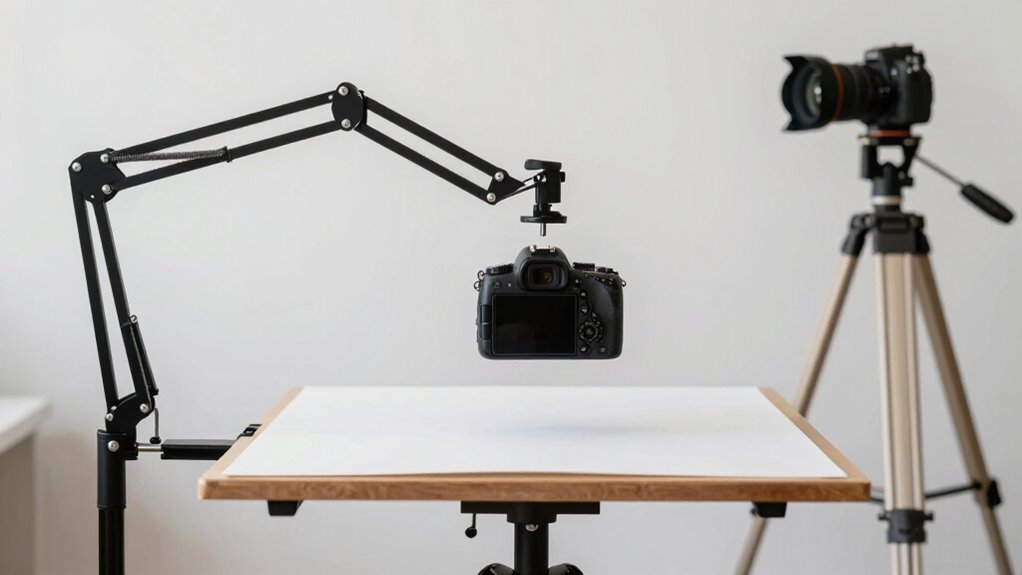
Making sure your camera is perfectly positioned is essential for capturing clear, accurate images of your artwork. Start by aligning your camera directly above your piece, maintaining a perpendicular angle to avoid distortion. Adjust your lighting setup so that light is evenly distributed, minimizing shadows and glare. Choose a neutral background that contrasts with your artwork to ensure clean edges and easy editing. Use a tripod or copy stand with adjustable height and tilt to fine-tune your shot. Keep the camera lens parallel to the artwork to prevent skewing. Consistent lighting and a simple background help produce sharp, undistorted images. Take your time to compose and focus precisely, ensuring every detail of your art is captured accurately.
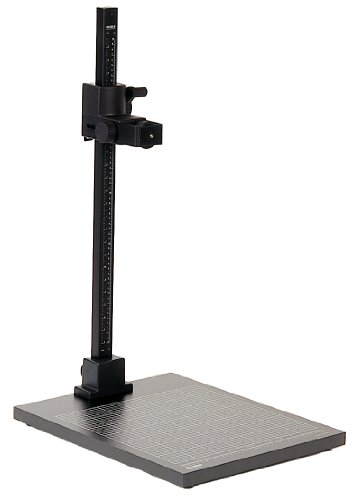
Kaiser 205411 Copy Stand RS 2-XA
Non-reflective matte gray base board with printed fine grid and inch/cm scale. Matte black anodized aluminum tubing column...
As an affiliate, we earn on qualifying purchases.
Key Features to Look for in Flat Art Photography Equipment

When selecting equipment for flat art photography, focusing on key features can make a significant difference in your results. You want gear that guarantees sharp images without distortion, while supporting your lighting techniques and camera lens choices. Look for sturdy, adjustable stands that keep your camera stable and perfectly aligned. A tripod or copy stand with a smooth, reliable height adjustment helps avoid perspective issues. Consider equipment with easy-to-use controls for precise positioning. Good lighting options, such as adjustable softboxes, enhance your lighting techniques. Additionally, choose a camera lens that minimizes distortion—macro or flat-field lenses work best. Finally, confirm your setup allows for consistent framing and easy adjustments to capture every detail flawlessly in your flat art shots. Ensuring your equipment features rigid construction can prevent unwanted movement and maintain alignment during your shoots. Paying attention to structural stability is crucial for achieving consistent, high-quality results in flat art photography. Incorporating professional-grade mounts can further improve your setup’s stability and precision. Using durable materials in your equipment can also help withstand frequent adjustments and long shooting sessions, ensuring longevity and reliability. Additionally, selecting equipment with vibration dampening features can help maintain image sharpness during critical shots.
Common Mistakes When Photographing Flat Art: and How to Avoid Them
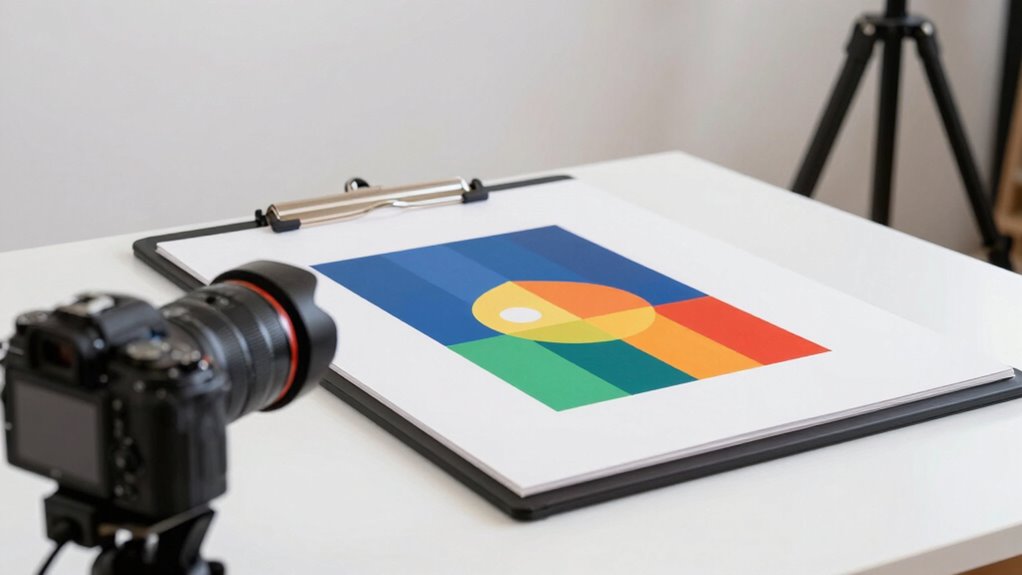
Photographing flat art can be tricky, and it’s easy to make mistakes that compromise your image quality. One common error is poor lighting techniques, which can cause glare, uneven exposure, or color shifts. To avoid this, use soft, even lighting and avoid direct flashes or harsh shadows. Another mistake is improper background selection; a distracting or reflective background can detract from your artwork. Choose a neutral, matte background that minimizes reflections and complements the art’s colors. Additionally, verify your background is smooth and free of wrinkles or textures that could distort the image. Paying close attention to lighting techniques and background selection helps you achieve a clean, professional-looking flat art photo—without distortions or unwanted reflections. Using a proper support like a copy stand or tripod can further ensure your camera remains steady and aligned, reducing the risk of distortion.
Tips for Achieving Sharp, Color-Accurate Flat Art Photos
Achieving sharp, color-accurate flat art photos requires careful attention to focus, lighting, and camera settings. Proper lighting techniques ensure even illumination and eliminate glare, while accurate color calibration guarantees true-to-life hues. To improve your results, consider these tips:
- Use diffused lighting to reduce shadows and reflections
- Apply consistent color calibration using a gray card or calibration target
- Lock your focus to prevent shifts during shot adjustments
- Set a low ISO to minimize noise and maximize sharpness
- Use a tripod or copy stand to keep the camera perfectly steady
- Incorporate mind-body healing techniques to reduce stress and enhance your focus during the shooting process.
Which Setup Is Right for Your Flat Art Photography Needs?

Choosing the right setup for your flat art photography depends on your specific needs, workspace, and budget. If you prioritize precise lighting techniques and consistent backgrounds, a copy stand offers stability and control. For larger artwork or flexible positioning, a sturdy tripod with adjustable height might suit you better. Consider these factors:
| Setup Type | Ideal Use | Key Features |
|---|---|---|
| Copy Stand | Small pieces, controlled lighting | Stable, easy to position |
| Tripod | Larger pieces, diverse angles | Versatile, adjustable height |
| Lighting | Continuous, soft or directional | Enhances background choices |
| Background | Textured, seamless, or colored | Complements your artwork |
| Space | Limited or spacious environments | Influences setup stability |
Additionally, incorporating proper lighting techniques can dramatically improve the quality of your flat art images. When choosing between a copy stand and a tripod, stability is often a decisive factor, especially for detailed or high-resolution work.
Frequently Asked Questions
Can I Use a Smartphone for Flat Art Photography?
Yes, you can use a smartphone for flat art photography, but be aware of its limitations like camera stabilization issues and smaller sensors that may affect image quality. To get sharp, distortion-free shots, use a sturdy tripod or a copy stand with your phone, and enable any stabilization features. Keep the camera perfectly aligned and steady to make sure your artwork is accurately captured without distortion.
How Does Lighting Affect Flat Art Image Quality?
Lighting plays a vital role in flat art photography by affecting image quality. You should balance artificial lighting and natural illumination to avoid shadows and glare. Use soft, even light sources to prevent harsh reflections and color distortion. Natural light brings authenticity, but controlled artificial lighting ensures consistency. Adjust your lighting setup carefully, so the artwork’s details and colors are accurately captured, resulting in a clear, high-quality image.
Is Post-Processing Necessary for Flat Art Photos?
Post-processing is absolutely essential for flat art photos—you can’t skip it! Without it, your images might have dull colors or uneven lighting. You’ll want to do color correction to make the hues pop and background removal to get that perfect, clean look. Think of it as giving your artwork a professional polish, ensuring every detail stands out vividly and perfectly, making your images truly mesmerizing.
What Lens Focal Length Is Ideal for Flat Artwork?
For flat artwork, a focal length around 50mm to 100mm is ideal because it minimizes distortion and offers a natural perspective. Choose a lens with a good lens choice that provides a sharp image and allows you to control depth of field effectively. This focal length ensures you capture all details clearly without glare or warping, making post-processing easier and your artwork look true to life.
How Do I Prevent Glare and Reflections on Shiny Surfaces?
To prevent glare and reflections on shiny surfaces, you should use glare reduction techniques and reflection control methods. Position your lights at angles that minimize direct reflections, such as using diffused lighting or softboxes. Adjust your camera’s angle slightly to avoid capturing glare spots, and employ polarizing filters to further cut down on reflections. These steps help you achieve clear, distortion-free images without unwanted shiny surface reflections.
Conclusion
Choosing between a copy stand and a tripod is like picking the right brush for a masterpiece—you want precision and clarity. By understanding your needs and avoiding common pitfalls, you’ll capture flat art with the sharpness and color accuracy it deserves. With the right setup, your photos will shine brighter than the sun on a clear day, showcasing every detail with a clarity that’s almost tangible. Now, go turn your art into a perfect digital masterpiece!