
To capture dynamic movement in motion photography, use a slow shutter speed to create intentional blur of moving subjects while keeping static backgrounds sharp. Practice panning by smoothly moving your camera in sync with your subject—this keeps your subject sharp and background streaked with motion. Combining these techniques can produce lively, energetic images. Keep experimenting with timing and equipment, and you’ll discover exciting ways to bring motion to life in your shots.
Key Takeaways
- Use slow shutter speeds (1/30 to 1/125 sec) to blur motion while keeping static parts sharp.
- Practice panning by smoothly moving the camera with the subject’s movement during exposure.
- Focus on the subject beforehand and maintain steady camera movement for sharpness and dynamic background blur.
- Combine slow shutter with panning to convey energy, speed, and liveliness in your images.
- Utilize equipment like tripods with smooth heads and refine technique through practice for optimal results.

Have you ever wondered how photographers capture dynamic scenes filled with movement? It’s a fascinating blend of skill, timing, and the right camera settings. One of the most effective techniques for conveying motion is using a slow shutter. When you set your camera to a slow shutter speed, you allow more light to enter the lens over a longer period, which can blur moving subjects while keeping static backgrounds sharp. This creates a sense of speed and energy, making your images feel alive and vibrant. But mastering this technique requires more than just dialing down your shutter speed; it’s about understanding how to control the movement within your frame.
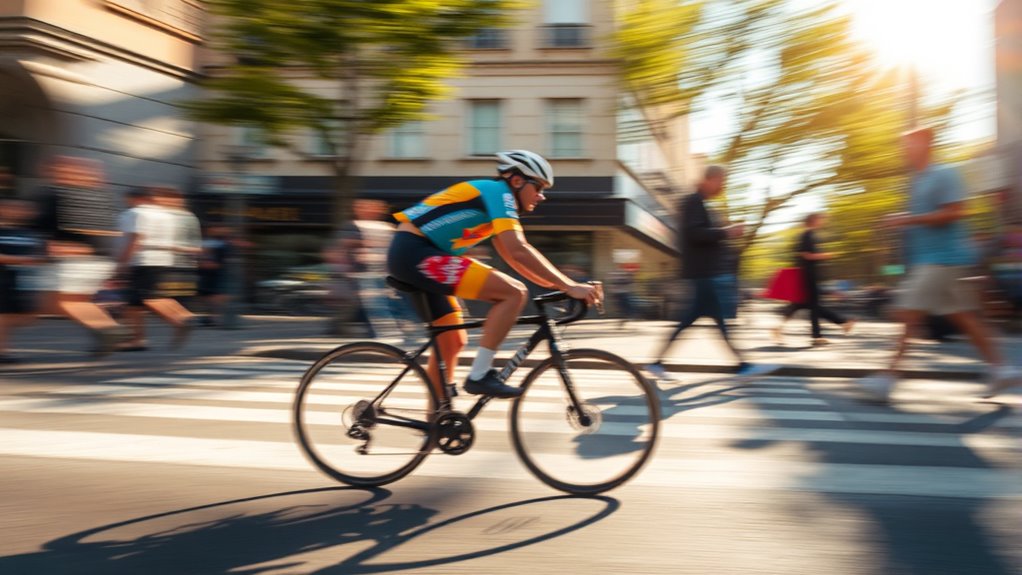
Panning techniques are especially useful when trying to capture fast-moving subjects like racing cars, cyclists, or athletes. Instead of freezing motion entirely, panning involves following the subject’s movement with your camera while maintaining a steady motion. As you do this, you keep the moving subject relatively sharp, while the background streaks into a blur that emphasizes speed. To succeed with panning, you need to select the right shutter speed—often somewhere between 1/30 and 1/125 of a second, depending on the speed of your subject—and practice smooth, continuous motion. The key is to move your camera horizontally along with your subject’s movement, which requires a steady hand and good timing.
Using a slow shutter in conjunction with panning can produce stunning results. For example, you might set your camera to a shutter speed of 1/60 second and follow a cyclist as they zoom past you. By moving your camera smoothly in sync with the cyclist, you’ll capture a crisp subject with a beautifully blurred background, conveying a strong sense of motion. This technique can be tricky at first, because it demands both precise timing and consistent panning. But with practice, you’ll develop an intuitive feel for how much to move your camera and when to release the shutter.
To improve your panning shots, consider using a tripod with a head that allows smooth movement or practicing handheld panning in open spaces. It’s also essential to focus on your subject beforehand and pre-focus if possible, so you don’t waste time adjusting focus during the shot. Remember, the goal is to keep the subject sharp while the surroundings blur, creating a dynamic image that captures the energy of movement. Additionally, understanding your camera’s features, such as suction power and cleaning modes, can help you select equipment suitable for capturing fast-paced scenes in motion photography. With patience and practice, you’ll find that combining slow shutter techniques and panning opens up a world of exciting possibilities in motion photography.
![QILOVE Global Shutter USB Camera – 800P Monochrome Ultra High Speed 640fps Camera [120/210/420fps Modes] – Manual Focus 2.8-12mm CS Lens – Compatible with Raspberry Pi, Linux, Mac & Windows](https://m.media-amazon.com/images/I/41fGP66nenL._SL500_.jpg)
QILOVE Global Shutter USB Camera – 800P Monochrome Ultra High Speed 640fps Camera [120/210/420fps Modes] – Manual Focus 2.8-12mm CS Lens – Compatible with Raspberry Pi, Linux, Mac & Windows
【Adjustable High Speed 120-640fps Recording】Supports 160×120@640fps/MJPEG format, can clearly record extreme motion such as ballistic trajectories and fluid…
As an affiliate, we earn on qualifying purchases.
As an affiliate, we earn on qualifying purchases.
Frequently Asked Questions
What Camera Settings Are Best for Capturing Motion?
To capture motion, set a fast shutter speed, around 1/500s or higher, to freeze movement or a slower one for intentional motion blur. Use autofocus techniques like continuous AF to keep moving subjects sharp. Pay attention to framing composition to position your subject dynamically within the shot. Adjust settings based on your scene, balancing shutter speed and aperture, so you get clear, energetic images that convey motion effectively.
How Do Lighting Conditions Affect Motion Photography?
Lighting conditions can subtly influence your motion photography by affecting lighting contrast and ambient brightness. When lighting contrast is high, it emphasizes textures and movement details, but might cause harsh shadows. In lower ambient brightness, your camera needs a faster shutter speed to freeze motion clearly. Bright conditions allow for more flexibility, while dim environments challenge you to balance exposure and motion clarity, ultimately shaping the mood and sharpness of your images.
What Are Common Mistakes to Avoid in Motion Shots?
You should avoid cluttered backgrounds and poor subject composition that distract from your motion shot. Keep your focus sharp on the subject, ensuring it stands out clearly. Watch out for background distractions like moving objects or bright lights that can take attention away. Use a fast shutter speed to freeze movement, and frame your shot thoughtfully to highlight the action. These tips help create dynamic, compelling motion images.
Which Lenses Are Ideal for Dynamic Movement?
When capturing dynamic movement, you should use a versatile zoom lens like a 24-70mm, perfect for adjusting focal length quickly. For example, a photographer panning a race car benefits from a fast shutter speed combined with a zoom lens to follow the action smoothly. Panning techniques work best with lenses that allow quick adjustments, helping you freeze motion or create a sense of speed through motion blur.
How Can I Improve Focus During Fast-Paced Action?
To improve focus during fast-paced action, guarantee tripod stability to prevent camera shake and maintain sharpness. Use a fast shutter speed, ideally 1/1000 second or higher, to freeze motion effectively. Continuously follow your subject with autofocus, and consider burst mode to capture multiple shots quickly. These techniques help you stay sharp and focused, even in rapid movements, resulting in clear, dynamic images.

Neewer Camera Panoramic Panning Base with Style Plate, 3/8-inch Screw Aluminum Alloy Panorama Ball Tripod Head with Bubble Level for Tripod Monopod DSLR Cameras, Load Capacity 22 LBS
COMPATIBILITY: Max Load Up to 22.05 lbs/ 10 Kilograms, 3/8 inch screw hole on the bottom for your…
As an affiliate, we earn on qualifying purchases.
As an affiliate, we earn on qualifying purchases.
Conclusion
As you explore motion photography, you’ll realize it’s more than just capturing movement—it’s about freezing fleeting moments that unexpectedly reveal stories. Sometimes, a sudden burst of action aligns perfectly with your camera’s timing, making each shot feel like a fortunate coincidence. Embrace these spontaneous moments, because it’s in those unexpected captures that true magic happens. So keep your camera ready—because you never know when a perfect, serendipitous shot will unfold right before your eyes.

5K Digital Camera – 80MP WiFi Cameras for Photography – UHD Fast Autofocus Vlogging Camera for YouTube with 3" 270° Flip Screen – Travel Video Camara for Beginner with 18X Zoom, 32GB Card, Lens Hood
📷【5K UHD & 80MP Video Camera】This digital camera supports 5K UHD video recording and 80MP high-resolution photos, capturing…
As an affiliate, we earn on qualifying purchases.
As an affiliate, we earn on qualifying purchases.
Neewer Camera Panoramic Panning Base with Style Plate, 3/8-inch Screw Aluminum Alloy Panorama Ball Tripod Head with Bubble Level for Tripod Monopod DSLR Cameras, Load Capacity 22 LBS
COMPATIBILITY: Max Load Up to 22.05 lbs/ 10 Kilograms, 3/8 inch screw hole on the bottom for your…
As an affiliate, we earn on qualifying purchases.
As an affiliate, we earn on qualifying purchases.