In today’s digital age, selfies have revolutionized portraiture by turning it into an everyday act of personal expression. Instead of formal paintings or professional photos, you now craft your identity through spontaneous, curated images that reflect your authentic self. This shift makes portraiture more accessible, inclusive, and reflective of your culture and values. As you explore further, you’ll see how this transformation continues to reshape how we define and present ourselves online.
Key Takeaways
- Selfies transform traditional portraiture into a personal, digital act that reflects self-perception and online identity.
- Advances in smartphone technology and filters democratize portrait creation, blending professional and casual aesthetics.
- Candid, unfiltered selfies challenge formal portrait standards, emphasizing authenticity and realness.
- Selfies actively shape personal narratives and cultural norms, influencing perceptions of beauty and success.
- The evolution fosters inclusive, diverse self-expression, redefining portraiture’s role in contemporary culture.
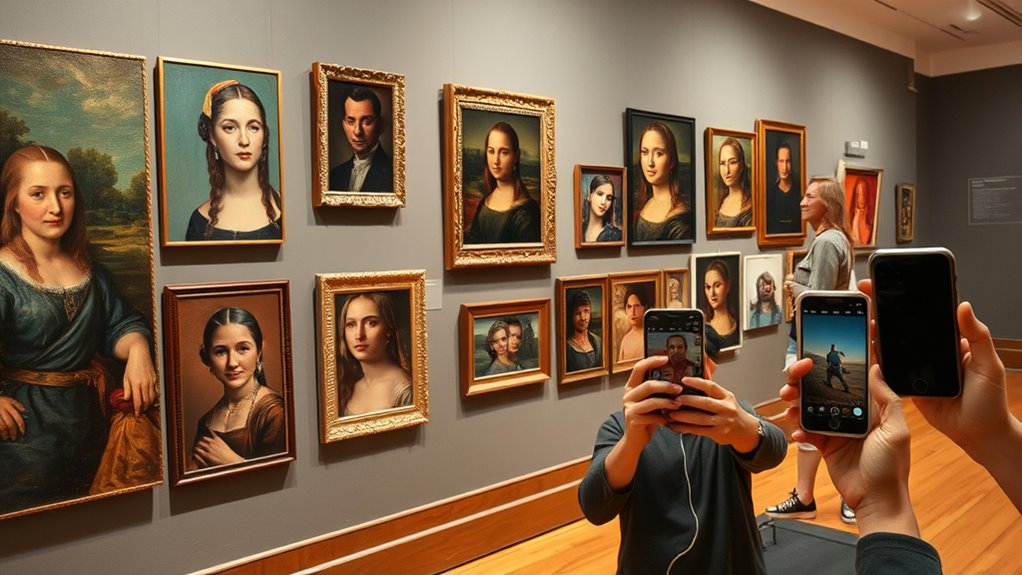
In an era dominated by smartphones and social media, taking selfies has become a universal form of self-expression. You probably do it yourself—capturing moments that reflect how you see yourself and want others to see you. This shift has transformed portraiture from traditional art forms into a personal, digital act. Your selfies aren’t just casual snapshots; they contribute to your digital identity, shaping how you present yourself online. These images are curated fragments of your personality, carefully chosen and shared to craft an authentic yet controlled version of yourself. This evolution has been driven by cultural shifts, where authenticity and immediacy are valued more than technical perfection. As technology advances, the lines between professional portraiture and casual selfies blur, enabling you to experiment with different styles, filters, and angles that suit your mood or message.
Selfies have transformed portraiture into a personal, digital act that shapes your online identity and self-expression.
Your digital identity is now an ongoing project, constantly updated through these images. Every selfie becomes part of your online persona—an extension of who you are or aspire to be. This democratization of portraiture means you no longer need a professional artist or expensive equipment; your smartphone becomes your brush, camera, and mirror all in one. As a result, portraiture has become more inclusive, allowing diverse voices and perspectives to be seen and heard. You can express your identity in ways that resonate with your cultural background, beliefs, and personal values, making your selfies a reflection of your unique story.
The cultural shifts surrounding selfies also influence how society perceives beauty, success, and authenticity. You might notice that standards are constantly evolving, influenced by viral trends and social media influencers who set new norms. These shifts challenge traditional notions of portraiture that once prioritized formal composition and idealized representations. Now, candid, unfiltered images often hold more appeal, emphasizing realness over perfection. This change empowers you to embrace imperfections and authenticity, fostering a culture where your self-image isn’t dictated solely by external standards but by how you want to portray yourself in the digital space.
In this landscape, selfies have replaced many traditional portrait conventions, turning what was once a formal, artistic pursuit into an everyday act of self-creation. You’re not just capturing an image; you’re actively shaping your narrative, molding your digital identity in response to cultural shifts. This ongoing evolution continues to redefine what portraiture means, making it more personal, accessible, and reflective of your true self.
Frequently Asked Questions
How Has Social Media Influenced Portrait Art Styles?
Social media has markedly influenced portrait art styles by encouraging you to experiment with digital manipulation, creating more stylized and eye-catching images. Viral trends push you to adopt new filters, poses, and aesthetics, making your portraits more engaging and shareable. You’re inspired to craft visuals that stand out, blending traditional techniques with digital tools, ultimately shaping a dynamic landscape where personal expression evolves rapidly alongside social media‘s influence.
What Are the Psychological Effects of Selfie Culture?
You might find that selfie culture offers a self-esteem boost, making you feel more confident and connected. However, it can also lead to social comparison, where you measure yourself against others’ curated images, sometimes feeling inadequate. This constant cycle impacts your mental well-being, fostering insecurity or superficial validation. While selfies can lift your mood temporarily, they may also deepen insecurities over time, affecting your overall psychological health.
How Do Cultural Differences Shape Modern Portraiture Trends?
You see that cultural differences shape modern portraiture by influencing how people express themselves and their identities. Cultural expression affects the themes, styles, and symbols used, creating a rich aesthetic diversity across regions. This diversity encourages artists and individuals to explore unique visual languages, blending tradition with innovation. As a result, contemporary portraiture becomes a vibrant tapestry that celebrates individual backgrounds and shared cultural narratives.
Can Selfies Be Considered Legitimate Art Forms?
You might see selfies as a legitimate art form because they showcase digital authenticity and personal expression. While some argue they lack artistic legitimacy, selfies reflect contemporary culture and creativity. You actively participate in this new form of portraiture, blurring lines between art and everyday life. Ultimately, their value depends on how you perceive authenticity and artistic intent, making selfies a valid, evolving part of modern visual culture.
What Future Technologies Might Transform Portrait Creation?
You might see future portrait creation transformed by augmented reality, letting you interact with or modify images in real time, making the experience more immersive. Digital canvases could also revolutionize how you craft portraits, offering endless possibilities for experimentation and customization. These technologies will likely blur the lines between traditional and digital art, empowering you to create more dynamic, engaging, and personalized portraits in ways we haven’t yet imagined.
Conclusion
So, in this selfie era, your face isn’t just a picture—it’s a revolution that could outshine Picasso’s masterpieces. Every tap and filter transforms you into a modern-day artist, capturing moments more vividly than paint ever could. You’re not just taking a selfie; you’re defining history, shaping the future of portraiture with every click. Your reflection is now a timeless masterpiece, and honestly, the world better brace itself for the incredible portrait revolution you’re leading!