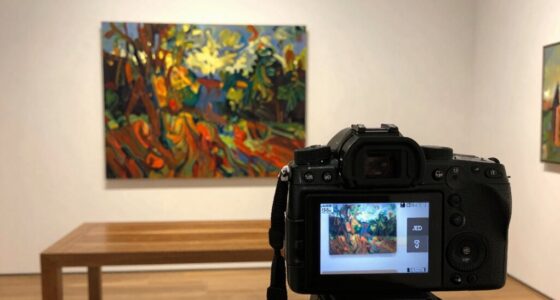
To boost your smartphone photography, explore innovative lighting by using natural light during golden hour and external accessories when needed. Apply composition rules like the rule of thirds, leading lines, and framing to create mesmerizing images. Practice adjusting angles and lighting conditions, and use editing tools to fine-tune your shots. Combining these techniques will elevate your photos from average to impressive—if you keep exploring, you’ll discover even more ways to master your smartphone camera.
Key Takeaways
- Leverage new smartphone camera features like AI-enhanced modes and multi-lens setups for innovative shots.
- Utilize external accessories such as portable lights and lenses to expand creative possibilities.
- Apply advanced editing apps to fine-tune exposure, contrast, and composition for professional results.
- Experiment with dynamic lighting techniques, including golden hour and artificial light, to enhance image quality.
- Incorporate composition rules like the rule of thirds and framing to create visually compelling photos.
Taking great photos with your smartphone is easier than you might think if you know a few simple tips. One of the most important aspects of capturing stunning images is mastering lighting techniques. Good lighting can make or break your photo, so always pay attention to how light falls on your subject. Natural light is your best friend—shoot during the golden hour just after sunrise or before sunset when the light is soft and warm. Avoid harsh midday sunlight, which can create unflattering shadows and overexposed highlights. If you’re indoors, try to position your subject near a window to utilize diffuse natural light. When natural light isn’t available, think about using your phone’s built-in flashlight or external lighting accessories to control the illumination. Experiment with different angles and intensities until you find the right balance, ensuring your subject is well-lit without harsh shadows or blown-out highlights.
In addition to lighting, understanding composition rules helps you craft visually appealing photos. The rule of thirds is a fundamental principle—you can activate grid lines on your smartphone to help you position key elements along these lines or at their intersections. This simple technique creates a sense of balance and draws the viewer’s eye naturally to your main subject. Leading lines are another powerful tool; look for roads, fences, or natural elements that guide the viewer’s gaze toward your focal point. Framing your subject with objects like arches, branches, or windows can add depth and context, making your photo more engaging. Don’t forget to think about the background—cluttered or distracting backgrounds can detract from your main subject, so choose a clean, complementary backdrop whenever possible. Additionally, understanding the contrast ratio in your scene can help you better control the dynamic range, ensuring both shadows and highlights are properly exposed and your photo maintains its vividness.
Practicing these techniques consistently will improve your smartphone photography drastically. Keep in mind that good composition and lighting are not just about following rules but about observing your environment and making creative decisions. Take your time to experiment with different settings, angles, and lighting conditions before snapping the shot. Use your phone’s editing tools or third-party apps afterward to fine-tune brightness, contrast, and cropping, but remember that a well-composed, well-lit photo from the start requires less editing. As you become more familiar with how lighting techniques and composition rules work together, you’ll find yourself capturing more striking, professional-looking images effortlessly. With patience and practice, your smartphone can become a powerful tool for creating compelling photographs that truly stand out.
Amazon Product B0DTTSPX4F
As an affiliate, we earn on qualifying purchases.
Frequently Asked Questions
How Do I Improve Low-Light Smartphone Photos Effectively?
To improve your low-light smartphone photos, start by adjusting your camera settings, like increasing exposure or ISO to let in more light. Use lighting techniques such as finding a nearby light source or utilizing a flashlight feature. Steady your phone with a tripod or stable surface to prevent blur. Also, tap on the screen to focus properly, ensuring your subject is sharp and well-lit even in dim conditions.
What Are the Best Accessories for Smartphone Photography?
You need the ultimate smartphone photography accessories to unleash your full creative potential! Invest in lens filters to transform your shots instantly—polarizers, ND filters, and macro options are game-changers. Pair them with a sturdy smartphone grip for stability and precision, making every shot sharp and dramatic. These accessories will elevate your photography from good to mind-blowingly professional, helping you capture stunning images that stand out in any crowd.
How Can I Stabilize My Shots Without a Tripod?
To stabilize your shots without a tripod, try using tripod alternatives like a sturdy surface or a bean bag to rest your phone on. You can also improve handheld stabilization by bracing your elbows against your body or leaning against a stable object. Keep a firm grip on your device, and use both hands for better control. These methods help reduce shake and produce sharper images in various shooting conditions.
Which Editing Apps Are Best for Smartphone Photos?
Your quest for perfect shots is unstoppable, and choosing the best app makes all the difference. For photo editing, apps like Adobe Lightroom and Snapseed stand out for their powerful features and user-friendly interfaces. When comparing apps, consider ease of use, editing tools, and export options. Both deliver professional results, so pick the one that fits your style. With these, your smartphone photos will truly shine!
How Do I Shoot Professional-Looking Portraits With a Phone?
To shoot professional-looking portraits with your phone, focus on good portrait lighting, like soft, natural light to highlight your subject’s features. Use the portrait mode to create a background blur that makes your subject stand out. Keep the camera steady, frame your shot well, and direct your subject to relax and express emotion. Experiment with angles and backgrounds to add variety and depth for a polished, professional look.
Amazon Product B086DX4253
As an affiliate, we earn on qualifying purchases.
Conclusion
Think of your smartphone as a magic wand, ready to transform everyday moments into mesmerizing stories. With these tips and innovations, you’re the wizard behind the lens, casting light on hidden details and framing scenes like a master artist. Just like a spellbook, your camera holds endless possibilities—so experiment, explore, and let your creativity soar. Soon, you’ll be capturing enchanting images that tell your unique story, turning ordinary shots into extraordinary memories.
Amazon Product B0038WJXIM
As an affiliate, we earn on qualifying purchases.
Amazon Product B0FHDDP3P2
As an affiliate, we earn on qualifying purchases.