Underwater photography pushes boundaries by combining cutting-edge equipment like wide-angle and macro lenses with advanced lighting tools such as strobes and underwater flashes. You focus on mastering technical settings, composition, and patience to capture vibrant marine scenes, even in challenging conditions. Innovative techniques help you reveal the hidden beauty of coral reefs and sea creatures in stunning detail. Explore further, and you’ll discover how these methods can elevate your underwater imagery to new heights.
Key Takeaways
- Innovative camera housing and lens technologies enable capturing extreme angles and deep-sea environments.
- Advanced lighting setups and color correction techniques reveal hidden details in low-visibility conditions.
- Integration of AI-powered editing tools, like lummi.ai, enhances image quality and creative possibilities.
- Pushing boundaries involves experimenting with new compositions, macro, and wide-angle shots in challenging waters.
- Continuous technical skill development and equipment upgrades expand the scope of underwater storytelling.
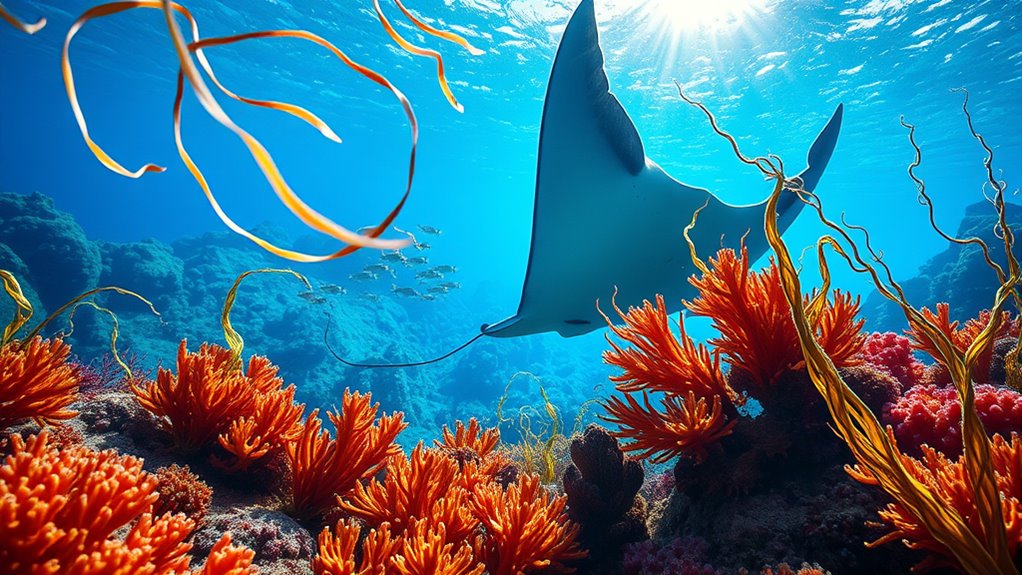
Have you ever wondered what it’s like to capture the vibrant world beneath the surface of the water? Underwater photography opens up a whole new domain of possibilities, allowing you to document marine life in its natural habitat. To do this effectively, you need the right camera equipment that’s specifically designed for underwater conditions. Unlike terrestrial cameras, underwater gear has to withstand pressure, resist corrosion, and operate seamlessly in low-light environments. When you’re diving into this world, investing in a good underwater housing for your camera is essential. It seals your equipment from water, ensuring your shots remain crisp and clear. Modern camera equipment tailored for underwater use often includes features like wide-angle lenses to capture expansive scenes and macro lenses for close-up shots of tiny marine creatures. The right combination of camera and accessories can make all the difference between a mediocre shot and a stunning image that truly captures the essence of marine life.
As you explore beneath the waves, you’ll notice that lighting plays a key role in underwater photography. Natural sunlight filters differently underwater, casting a blue hue that can obscure details. That’s where strobes and underwater flash units come into play. These tools help restore true colors and add depth to your images. With the right camera equipment, you can experiment with different lighting techniques to highlight the intricate textures of coral reefs or the delicate features of a shy fish. The challenge is to balance light and shadow, creating images that are both vibrant and true to life. As you become more familiar with your gear, you’ll learn how to adjust settings quickly, ensuring you don’t miss fleeting moments of marine activity. Additionally, understanding the contrast ratio of your equipment can significantly impact the depth and clarity of your images in such challenging conditions.
Another essential aspect of pushing boundaries in underwater photography is mastering your technique. You’ll need to develop steady hands and a keen eye for composition, especially when working in unpredictable currents or limited visibility. The more you practice, the better you’ll become at framing shots that showcase marine life’s diversity and beauty. Remember, patience is indispensable—waiting for the perfect moment can turn an ordinary scene into an extraordinary photograph. With advanced camera equipment and a bit of skill, you can push the limits of what’s possible beneath the water’s surface. Whether capturing a school of colorful fish darting through coral or a majestic sea turtle gliding gracefully, your images will tell stories that inspire and educate. Underwater photography isn’t just about taking pictures; it’s about revealing the hidden, vibrant world that most people never get to see firsthand.

OM SYSTEM Olympus PT-059 Underwater Housing for TG-Series Cameras, Metal, Black
For Tough TG-6 Digital Camera
As an affiliate, we earn on qualifying purchases.
As an affiliate, we earn on qualifying purchases.
Frequently Asked Questions
What Are the Best Waterproof Camera Models Currently Available?
You should consider the Olympus Tough TG-6 or the Nikon W300 for capturing marine wildlife and underwater compositions. These models are rugged, waterproof, and deliver sharp images even in challenging conditions. They’re perfect for exploring underwater scenes, helping you push boundaries in your underwater photography. With easy handling and excellent image quality, these cameras make it simple to document marine life and create stunning compositions beneath the surface.
How Can I Improve Underwater Lighting Techniques?
To improve your underwater lighting techniques, you should invest in quality lighting accessories like strobes and diffusers to illuminate subjects evenly. Experiment with different angles and distances to reduce shadows and enhance clarity. Additionally, apply color correction techniques using filters or post-processing software to restore natural colors lost underwater. Practice regularly, and you’ll notice your images become more vibrant, sharp, and professionally appealing.
What Safety Precautions Should I Take During Underwater Photography?
You should always prioritize safety by checking your underwater photography gear before diving to prevent malfunctions. Respect marine life conservation by maintaining a safe distance and avoiding disturbing creatures. Use a dive plan, stay within your skill level, and communicate with your buddy. Be aware of your surroundings, monitor your air supply, and avoid hazardous areas. These precautions help you stay safe and protect the underwater environment during your photography adventures.
How Do I Prevent Equipment From Fogging Underwater?
Fogging is like a storm cloud on your lens, so to prevent it, you need proper lens maintenance and a reliable waterproof housing. Before diving, apply anti-fog solution to your lens or use silica gel packs inside your housing to absorb moisture. Always keep your equipment at a stable temperature, and avoid rapid temperature changes. These steps help keep your shots crystal clear and your gear in top shape.
What Editing Software Enhances Underwater Photo Quality?
You can enhance your underwater photos with editing software like Adobe Lightroom or Photoshop. These programs excel at color correction, helping you restore the vibrant blues and greens lost underwater. They also offer noise reduction tools to minimize graininess caused by low light conditions. By fine-tuning these aspects, you’ll improve overall image clarity and color accuracy, making your underwater shots look professional and stunning.

DIVEVOLK Underwater +8 Close-up Lens, Optical Wet Lens for DIVEVOLK SEATOUCH 4 MAX housing
Fits camera housings and smartphone housing with 67mm threads
As an affiliate, we earn on qualifying purchases.
As an affiliate, we earn on qualifying purchases.
Conclusion
As you explore underwater photography, you push your limits like a diver venturing into uncharted depths. Every shot you take, every new technique you master, deepens your connection to this mesmerizing world. Just as the ocean’s mysteries are endless, so too are your creative possibilities beneath the waves. Keep pushing boundaries, and you’ll discover that, like the ocean’s depths, your potential is vast and waiting to be uncovered. Immerse yourself and let your passion lead the way.

JatureClets Professional Underwater Strobe Flash,32 Guide Number, 100m Waterproof, 1.5s Recycle Time, Diving Strobe for DSLR Camera Underwater Photography Accessories (Black)
PROFESSIONAL UNDERWATER FLASH: Features a powerful 32 Guide Number strobe for optimal underwater photography lighting
As an affiliate, we earn on qualifying purchases.
As an affiliate, we earn on qualifying purchases.

FitStill Underwater Photography Protection Kit for DJI OSMO Action 6,60M/196FT Waterproof Protective Case + Three-Color Filter + Buoyancy Handle + Magnetic Quick-Release Base, Action 6 Accessories
【DJI Osmo Action 6 Dedicated Underwater Photography Protection Kit】This underwater photography protection kit is designed specifically for the…
As an affiliate, we earn on qualifying purchases.
As an affiliate, we earn on qualifying purchases.