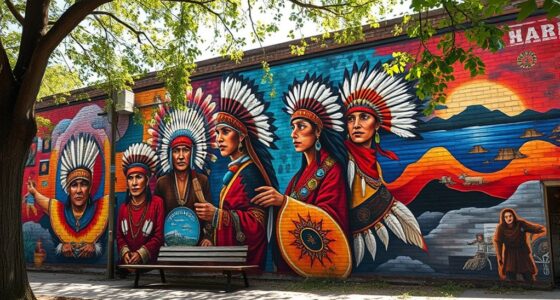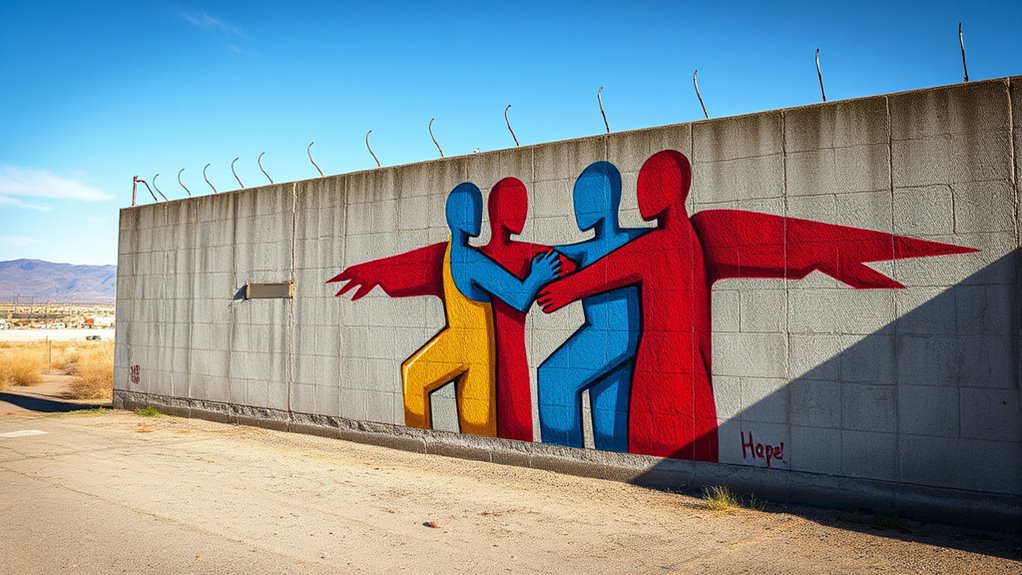

Murals at the border turn divided spaces into powerful canvases that express resistance, resilience, and cultural identity. They serve as bold visual statements for marginalized communities, challenging social injustices and inspiring dialogue. With vibrant imagery and symbolism, these murals evoke emotional responses and promote shared understanding across borders. By transforming walls into platforms for activism and hope, they show how art can spark change. If you want to explore how these murals shape voices and stories, keep exploring further.
Key Takeaways
- Murals transform border walls into powerful visual statements representing marginalized communities’ stories and shared aspirations.
- They serve as acts of resistance, challenging divisive policies and turning walls into spaces of hope and social justice.
- Murals evoke emotional responses and foster dialogue, emphasizing shared human experiences beyond language barriers.
- Symbolism and visual storytelling enhance the messages of resilience, cultural identity, and community strength.
- As platforms for activism, murals promote dialogue, mobilization, and serve as symbols of hope amid divisions.

Murals at the border transform empty walls into powerful visual statements that speak to identity, hope, and resistance. When you stand before these murals, you’re witnessing more than just colorful art—you’re experiencing a form of cultural expression that challenges boundaries and celebrates resilience. These walls become canvases for stories that might otherwise go unheard, amplifying voices from communities often marginalized or silenced. Through vivid imagery and bold symbolism, the murals communicate shared histories, aspirations, and struggles, creating a visual dialogue that transcends language barriers.
Murals transform border walls into powerful stories of resilience, identity, and hope beyond words.
As you observe these artistic works, you realize that they are deeply intertwined with political activism. Murals at the border are not just decorative; they serve as acts of defiance against policies that divide families and disenfranchise communities. They challenge authority, question social injustices, and demand change. Each brushstroke or spray of paint acts as a declaration of resistance, asserting that the people’s voices and identities matter, even in the face of systemic suppression. The murals become active protests, transforming static walls into dynamic spaces of dissent that inspire viewers to think critically about borders, migration, and human rights. Additionally, the use of visual storytelling techniques enhances their emotional and narrative power, making the messages more impactful.
What makes these murals so compelling is their ability to evoke emotional responses and spark conversations. They invite you to see beyond the physical border and recognize the shared humanity of those on either side. By blending art with activism, these murals create a space where political messages are accessible and impactful. They serve as constant reminders that borders are not only lines on a map—they are battlegrounds for cultural identity and social justice. Furthermore, incorporating color symbolism in these murals often enhances their emotional impact, conveying messages that resonate deeply with viewers. Exploring the role of symbolism in art can deepen your understanding of these visual stories and their messages.
What makes these murals so compelling is their ability to evoke emotional responses and spark conversations. They invite you to see beyond the physical border and recognize the shared humanity of those on either side. By blending art with activism, these murals create a space where political messages are accessible and impactful. They serve as constant reminders that borders are not only lines on a map—they are battlegrounds for cultural identity and social justice. These murals also serve as inspirational symbols, inspiring resilience and hope among marginalized communities.
In essence, murals at the border are more than visual art; they are acts of resistance and expressions of cultural identity. They turn divided spaces into platforms for dialogue, hope, and mobilization. When you encounter these murals, you’re witnessing a powerful reminder that art can be a catalyst for change—an enduring symbol of hope amid division and a reflection of the strength of community and cultural expression.

Paint Brushes Set of 24 Pieces Wooden Handles Brushes with Canvas Brush Case, Professional for Oil, Acrylic and Watercolor Painting
DESIGNS FOR PERFECT PAINTING: Total 24 pieces different functionals paint brushes are providing perfect experience of watercolors and…
As an affiliate, we earn on qualifying purchases.
As an affiliate, we earn on qualifying purchases.
Frequently Asked Questions
How Do Border Murals Impact Local Communities’ Perceptions?
You might notice that border murals influence how local communities see themselves and others. They can strengthen community identity by showcasing shared stories and cultural symbols. At the same time, murals shape cultural perceptions, fostering empathy or challenging stereotypes. By engaging with these artworks, you help create a sense of unity and understanding, making the community more inclusive and reflective of its diverse histories and experiences.
What Safety Measures Are Taken During Mural Creation at Borders?
Imagine a protected sanctuary where creativity flows freely. During border mural creation, safety protocols are in place to shield artists from harm, like secure scaffolding and protective gear. You’re kept safe through clear guidelines, supervision, and spotters ensuring safe working conditions. Artist protections include first aid availability and communication plans, making sure everyone stays secure while expressing powerful messages across divided spaces.
Are There Legal Restrictions on Creating Murals in Border Zones?
You should know that legal constraints often limit where you can create murals in border zones, as authorities aim to control imagery and messaging. These restrictions can restrict your artistic freedom, requiring permits or permissions before starting your work. While you can still express yourself, understanding local laws helps you avoid legal issues, ensuring your mural is both impactful and compliant with regulations in these sensitive areas.
How Do Border Murals Influence Cross-Border Cultural Exchange?
You see, border murals greatly influence cross-border cultural exchange by showcasing powerful cultural symbolism that bridges divides. They encourage artistic collaboration, fostering understanding and shared identity between communities on both sides. These murals serve as visual dialogues, breaking down barriers and promoting unity. By highlighting common values and stories, they inspire dialogue and connection, making the border a space for cultural exchange rather than division.
What Funding Sources Support Mural Projects in Divided Border Areas?
Think of mural projects as bridges waiting to be built; funding sources are the tools you need. You can tap into grant opportunities offered by government agencies, foundations, and cultural organizations. Public-private partnerships also serve as sturdy beams, blending community resources with private sector support. These combined efforts help turn blank walls into vibrant symbols of unity, fostering dialogue and understanding across divides.

Chroma Acrylic Mural Paint for Interior and Exterior Murals – Lightfast, Mixable, Hard-Wearing Vibrant Pigment, Set of 12 Minis (2896)
Set of twelve 2 oz bottles of Mural Paint
As an affiliate, we earn on qualifying purchases.
As an affiliate, we earn on qualifying purchases.
Conclusion
As you step back and reflect, you see how these murals gently bridge divides, whispering stories of hope and resilience. They remind us that even in places of separation, art can softly weave connections, offering a warm embrace across boundaries. Through vibrant colors and heartfelt messages, these murals invite us to imagine a future where understanding blooms beyond borders, fostering a sense of unity that’s as natural as a sunrise.

CSFOTO 6x13ft Forest Stream Garage Door Decorative Banner Tropical Forest Woodland Decorative Wallpaper Large Garage Door Cover Interior Decoration Mural Outdoor Picnic Photo Props
Package include: 1 piece Tropical Beach theme garage door decoration banner,and 4 pieces of 20ft rope, large enough…
As an affiliate, we earn on qualifying purchases.
As an affiliate, we earn on qualifying purchases.

Nicpro 14 Colors Large Bulk Acrylic Paint Set (16.9 oz,500 ml) Rich Art Painting Supplies, Non Toxic for Easter Eggs Rock Canvas Wood Ceramic Leather Fabric Craft, for Adult with Color Wheel
Large Bulk Acrylic Paint Set – 14 Bold Colors. This Nicpro acrylic paint set includes 14 essential shades…
As an affiliate, we earn on qualifying purchases.
As an affiliate, we earn on qualifying purchases.