
TL;DR

Get art and craft supplies delivered free with Prime
- Fast, free delivery on millions of items
- Prime Video, Amazon Music and more included
- Member-only deals all year
Halloween art and craft supplies fall into five core categories: paper crafts, decorating materials, embellishments, specialty items, and seasonal items like battery-operated tea lights and fake cobwebs. Halloween is the second-largest decorating holiday in the US after Christmas, and craft retailers stock seasonal supplies as early as July, so timing your shopping saves real money. Prioritize non-toxic, age-appropriate materials — no-carve pumpkin kits and glue sticks over carving tools and hot glue for young children.
Last October, my neighbor spent $80 on store-bought Halloween decorations. I spent $22 on craft supplies, and my porch — covered in hand-painted wooden ghosts and a garland of googly-eyed bats — got all the compliments. That’s the quiet math behind the recent DIY boom: inflation has pushed people toward handmade, and honestly, the handmade stuff looks better.
Halloween is now the second-largest decorating holiday in the US after Christmas, and it shows in the craft aisle. Stores start stocking skeletons and orange felt in July. TikTok drives entire trends — ghost garlands, “whimsigoth” décor, boo baskets — into mainstream craft rooms within weeks.
This blog article guide covers the key aspects of building your Halloween craft kit: the core supply categories, what’s safe for which ages, where to shop on a budget, and the eco-friendly swaps worth making. You’ll finish with a shopping list you can actually use.
Stock five core supply categories — paper, decorating materials, embellishments, specialty items, and seasonal extras — and you can build almost any Halloween…
Buy your supplies the week after Halloween at 50–75% off; craft chains stock seasonal aisles from July, so early shopping means full price.
A complete starter kit costs under $30 if you shop dollar stores first and skip themed all-in-one kits, which contain roughly a third of the materials their pr…
Match supplies to age: non-toxic labeled materials and large embellishments for under-fives; hot glue guns and carving tools only with adult supervision for ol…
Swap plastic glitter for biodegradable cellulose glitter — it’s the single highest-impact eco change, costing about $2 more per tube.
The 5 Core Supply Categories That Cover Almost Every Halloween Project
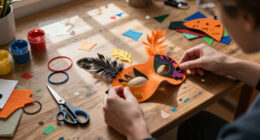
Halloween art and craft supplies break down into five core supply categories: paper crafts, decorating materials, embellishments, specialty items, and seasonal-specific extras. If you stock one or two things from each category, you can build nearly any project you see online without another store run. Think of it like a pantry — you don’t buy a new spice rack for every recipe.
1. Paper crafts. Construction paper, cardstock, crepe paper, and tissue paper in black, orange, purple, and green. Paper is the backbone of kids’ crafts: paper plate ghosts, handprint bats, toilet roll mummies. A 100-sheet Halloween pack runs about $5.
2. Decorating materials. Acrylic paint, paint pens, fabric markers, glitter, glue sticks, and a hot glue gun. Paint pens in particular deserve a shout-out — they’ve surged in popularity for no-carve pumpkin decorating, which has exploded because it’s safer and lasts longer than carved pumpkins.
3. Embellishments. Googly eyes, pom-poms, pipe cleaners, foam stickers, sequins, and ribbon. These are the details that make a project feel finished. A jar of 500 googly eyes costs around $4 and lasts years.
4. Specialty items. Felt, yarn, air-dry clay, wooden cutouts, and canvas tote bags for trick-or-treat bag decorating. A blank canvas tote turns into a personalized candy bag with fabric markers — a party activity and a favor in one.
5. Seasonal-specific supplies. Fake cobwebs, plastic spiders, battery-operated tea lights, and pumpkin carving kits. The battery-operated tea lights are the MVP here: they make mason jar luminaries safe enough for kids and reusable year after year.
Which Supplies Match Your Kid’s Age (and Which Ones Don’t)
Match supplies to age and you’ll avoid most craft disasters: toddlers need chunky, non-toxic, swallow-safe materials; preschoolers can handle glue sticks and foam stickers; kids 8 and up can graduate to hot glue and carving tools with supervision. The label to look for is ASTM D-4236 or “non-toxic” — it matters most for children under five who still put things near their mouths.
| Age | Great supplies | Avoid or supervise closely |
|---|---|---|
| 2–3 years | Finger paint, large foam stickers, chunky crayons, dot markers | Glitter, small pom-poms, sequins (choking hazards) |
| 4–6 years | Glue sticks, washable markers, paper plates, pipe cleaners, googly eyes (large size) | Hot glue gun, small beads, carving tools |
| 7–10 years | Acrylic paint, felt, yarn, no-carve pumpkin kits, decoupage | Hot glue gun with adult help, low-temp guns only |
| 11+ years | Full toolkit: hot glue, cutting machines, sewing, carving kits | Carving tools still need adult supervision |
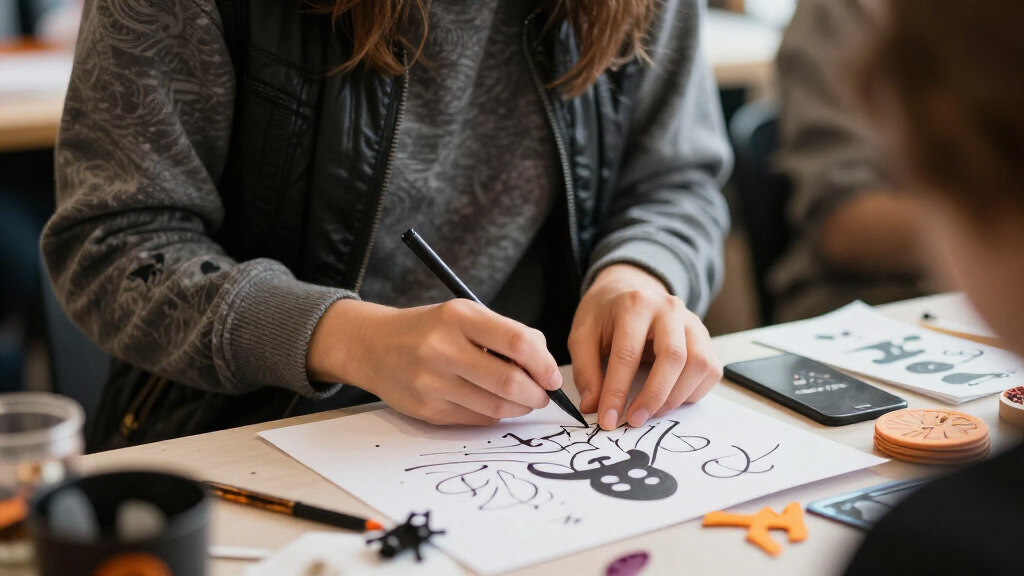
Here’s a scenario every parent knows: you set up a “quick craft” and spend the whole time intercepting the glitter jar. That’s why no-carve pumpkin kits — sticker sets, paint pens, decoupage — have grown so fast. Same festive result, zero blades.
Hot glue guns and pumpkin carving tools cause the most craft injuries every October. Adult supervision isn’t optional — it’s the whole safety plan.
How to Build a Halloween Craft Kit for Under $30
You can build a complete Halloween craft kit for under $30 if you shop dollar stores first, buy multi-packs instead of themed kits, and skip anything single-use. Dollar stores are consistently a top budget source for craft supplies — seasonal paper, ribbons, plastic spiders, and stickers are often $1.25 each versus $4–6 at craft chains.
- Start at the dollar store. Grab seasonal cardstock, stickers, ribbon, and fake cobwebs. Budget: $8–10.
- Buy one multi-purpose embellishment set. A combo pack of googly eyes, pom-poms, and pipe cleaners covers a dozen projects. Budget: $5.
- Add washable paint or paint pens. One set handles pumpkins, wooden cutouts, and canvas totes. Budget: $6–8.
- Get battery-operated tea lights. A pack of 12 costs about $6 and works for mason jar luminaries every year.
- Shop your recycling bin. Toilet rolls, jar lids, and cereal boxes are free mummy and monster material.
The trick is resisting themed all-in-one kits. A “$19.99 Halloween craft kit” often contains $6 worth of supplies in festive packaging. The same money buys triple the materials à la carte.
Where and When to Shop for the Best Prices
The best selection of Halloween craft supplies appears in July and August, when Michaels, Hobby Lobby, and JOANN roll out seasonal aisles — but the best prices appear the week after Halloween, when everything hits 50–75% off. Buying for next year on November 1st is the single biggest money-saver in seasonal crafting.
Craft chains stock early because Halloween is the second-largest decorating holiday in the US after Christmas — the demand justifies three-plus months of shelf space. But early stocking works against you at checkout. If you buy felt in August, you pay full price. Buy it in November, and that same felt is clearance-priced.
- Dollar stores (Dollar Tree, Dollar General): best for stickers, paper, ribbon, and plastic bugs
- Michaels / JOANN / Hobby Lobby: best selection of felt, paint, wooden cutouts, and blank canvas totes — use their app coupons, which rotate 40–50% off weekly
- Amazon: best for bulk buys like 1,000-count googly eyes or class-size paint sets
- Post-holiday clearance: best overall value, if you can wait 11 months
One real example: a teacher I know supplies craft parties for 30 kids. She buys her entire next-year stock every November 2nd and estimates it saves her 60% annually — roughly $70 on a $115 classroom budget.
Eco-Friendly Swaps That Actually Work
The fastest-growing corner of Halloween crafting is sustainable supplies: biodegradable glitter, recycled felt, and reusable decorations. Traditional glitter is microplastic — it never breaks down and washes straight into waterways — so swapping it is the highest-impact change you can make.
The good news: eco swaps now perform almost as well as the originals. Biodegradable glitter made from plant cellulose costs about $2 more per tube and sparkles nearly identically. Recycled felt has gone from scratchy to soft enough for garlands and ornaments. And a switch from real candles to battery-operated tea lights eliminates both drips and fire risk.
- Swap plastic glitter for cellulose-based biodegradable glitter
- Swap synthetic felt for recycled-fiber or wool felt
- Swap one-use decorations for fabric garlands and painted wooden cutouts that store flat
- Swap foam shapes (non-recyclable) for cardstock and cardboard shapes
Storage is the other half of sustainability. A single plastic bin with lids kept flat and paint bottles upright means your wooden ghosts and canvas totes survive to haunt another year. Wrapping garlands around cardboard tubes prevents the tangled-spaghetti problem that makes people rebuy what they already own.
3 Beginner Projects You Can Make Tonight
Three projects dominate beginner Halloween crafting because they need three supplies or fewer and take under 30 minutes: ghost garlands, no-carve painted pumpkins, and mason jar luminaries. All three rank among the most-searched Halloween craft ideas, and all three are TikTok favorites for a reason — high impact, low skill floor.
Ghost garland: Cut ghost shapes from white cardstock or felt, glue on black paper eyes, and clip them to twine with mini clothespins. Total cost: about $4. Hang it across a mantel and it instantly reads “decorated” without a single trip to a big-box store.
No-carve painted pumpkin: One small pumpkin, one set of paint pens. Draw a whimsigoth moons-and-stars pattern, or let kids turn it into a monster with pom-pom hair and googly eyes. No blades, no rotting in four days — painted pumpkins last weeks longer than carved ones.
Mason jar luminaries: Paint a clean jar with translucent orange or purple paint, add a spooky face with a marker, and drop in a battery-operated tea light. Line three or four along a walkway and the glow does all the work. This is also the go-to classroom and party craft — jars are free, and tea lights come in cheap multipacks for groups of 20–30 kids.
Frequently Asked Questions
Where can I buy cheap Halloween craft supplies?
Dollar stores are the best budget source — seasonal stickers, paper, ribbon, and plastic spiders typically cost $1.25 each versus $4–6 at craft chains. Amazon wins for bulk multipacks, and craft stores like Michaels and JOANN offer rotating app coupons worth 40–50% off. The cheapest option of all is post-holiday clearance, when seasonal supplies drop 50–75%.
What Halloween crafts are safe for toddlers?
Toddlers do best with finger paints, chunky crayons, dot markers, and large foam stickers — all labeled non-toxic (ASTM D-4236). Avoid glitter, small pom-poms, sequins, and anything bead-sized due to choking risk. No-carve pumpkin decorating with stickers is a great toddler alternative to carving.
What are easy no-carve pumpkin decorating ideas?
No-carve decorating has surged in popularity because it’s safer and the pumpkin lasts weeks longer. Use paint pens for patterns and faces, sticker sets for quick designs, or decoupage with tissue paper and mod podge. Add googly eyes and pom-poms for monster versions.
How do I store Halloween crafts to reuse next year?
Use one plastic bin: store garlands wrapped around cardboard tubes to prevent tangling, keep paint bottles upright with lids tight, and stack flat items like painted wooden cutouts between sheets of newspaper. Fabric decorations and battery-operated tea lights survive years of reuse with this method.
What supplies work for a classroom Halloween party of 25–30 kids?
Buy in bulk: washable paint sets, large googly-eye multipacks, and sticker sheets from Amazon or warehouse stores. Mason jar luminaries with battery-operated tea lights are a favorite group project since jars are often free and tea lights come in cheap 12-packs. Budget roughly $1–1.50 per child.
Conclusion
Build the kit, not the single project. Five supply categories, one storage bin, one post-Halloween clearance run — that’s the entire system. Everything else is just choosing which ghost to make this year.
Come November 1st, when the orange aisles go half-price, ask yourself one question: wouldn’t next October’s you love a fully stocked craft bin that cost a fraction of this year’s?
Fall Picks
fall essentials
As an affiliate, we earn on qualifying purchases.