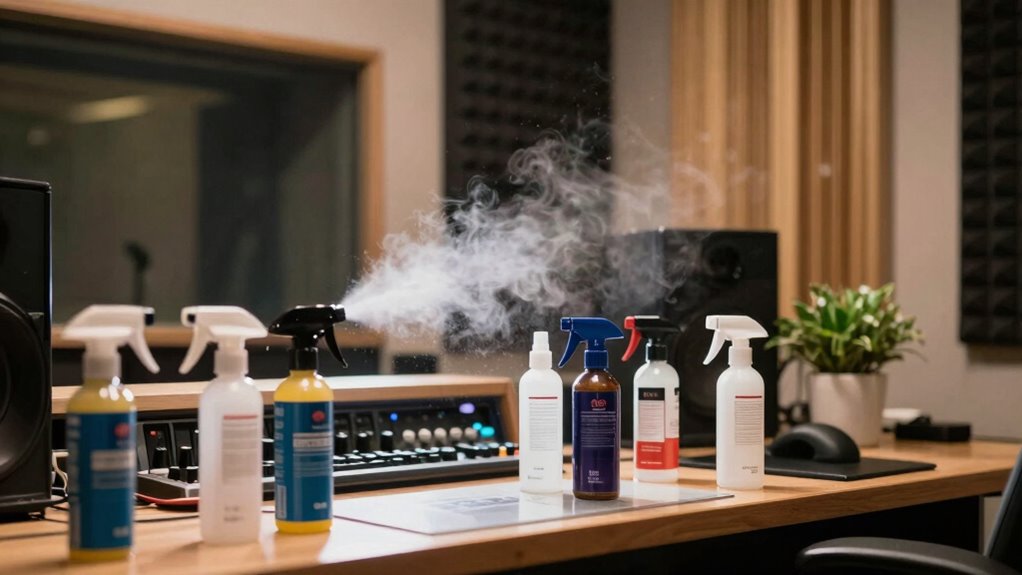

To guarantee good air quality in your home studio, especially if you use sprays, start by monitoring odors and using air quality sensors to detect pollutants. Improve ventilation with fans and keep filters clean, while choosing low-VOC or natural products for sprays. Organize your space to reduce dust and improve airflow, and consider installing air purifiers. Regular maintenance and testing help keep your environment safe—explore detailed steps to create a healthier, safer workspace.
Key Takeaways
- Regularly monitor air quality with sensors to detect VOCs, particulates, and fumes, especially after using sprays.
- Ensure proper ventilation by maintaining clean filters, clear vents, and promoting cross-ventilation to reduce airborne pollutants.
- Choose natural or low-VOC sprays, limit usage, and spray in well-ventilated areas to minimize chemical buildup.
- Use air purifiers near spray zones and control humidity to reduce VOC emissions and improve overall air quality.
- Maintain a clutter-free workspace, inspect ventilation systems regularly, and consider professional testing for persistent air quality issues.
Why Air Quality Matters in Your Home Studio
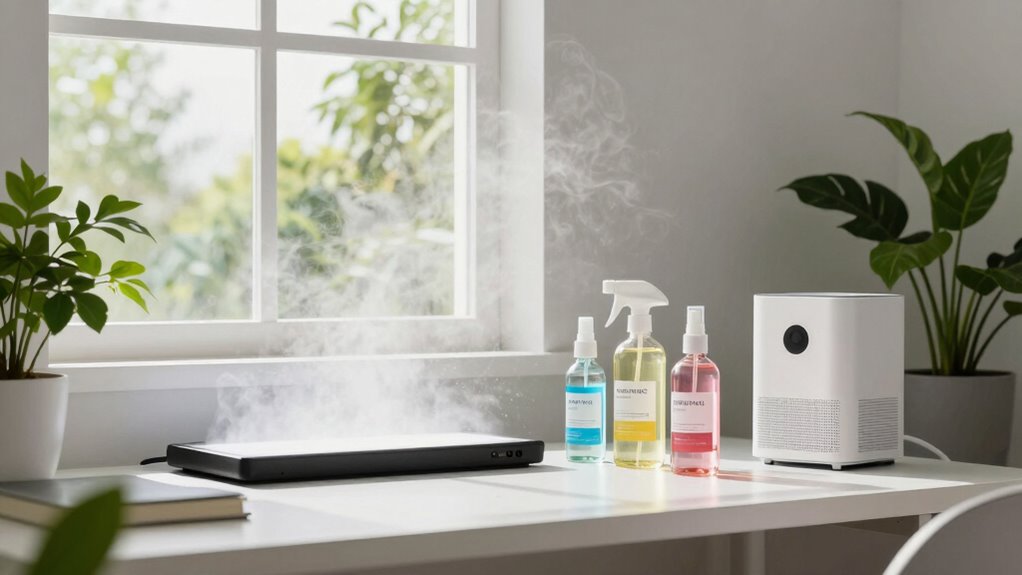
Good air quality is essential in your home studio because it directly impacts your health, comfort, and productivity. Indoor allergens like dust, mold, and pet dander can buildup, making you feel stuffy or causing allergic reactions. Poor air quality can lead to headaches, fatigue, and difficulty concentrating, which hampers your creativity and work. Effective air filtration helps remove these allergens and airborne pollutants, creating a cleaner environment. When your studio’s air is free from irritants, you breathe easier, stay focused longer, and reduce health risks. It’s vital to regularly check and improve your air quality, especially if you use sprays or chemicals, to maintain a safe, comfortable, and inspiring workspace. Understanding microplastics in dust can help you take targeted steps to reduce airborne pollutants, especially since indoor air pollution can be more concentrated than outdoor air. Additionally, being aware of indoor allergen sources can guide you in making practical adjustments to improve overall air quality. Incorporating air quality monitoring devices into your studio setup can provide real-time insights and help you take immediate action to maintain a healthy environment. Recognizing the presence of volatile organic compounds is also important, as these chemicals can off-gas from many common studio products and affect air quality. Good air quality isn’t just a luxury; it’s a necessity for your well-being.
How to Detect Pollutants in Your Studio’s Sprays and Air
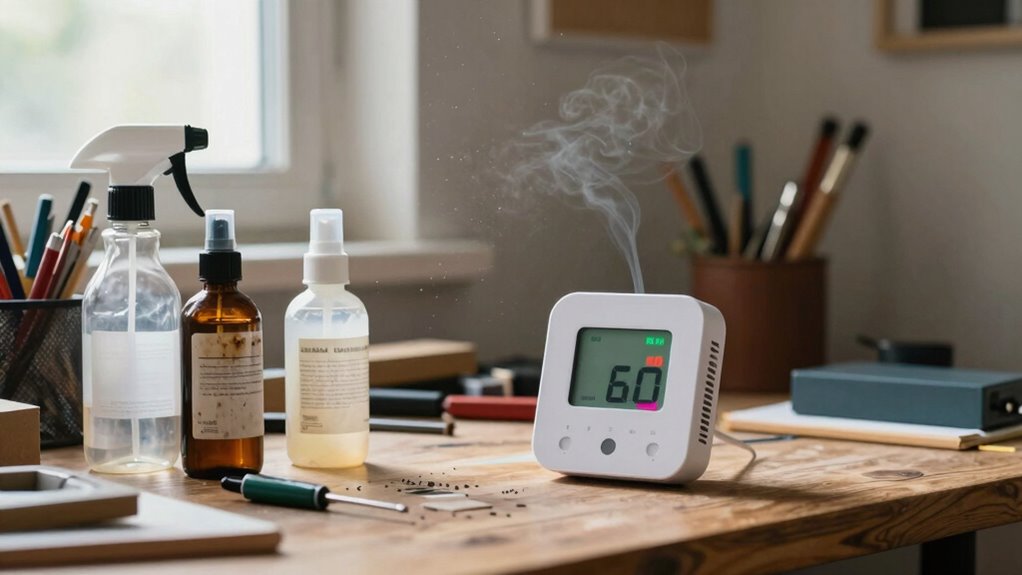
You can start by noticing any unpleasant odors that linger in your studio, which might indicate hidden pollutants. Using air quality testers helps you measure levels of harmful particles and gases in your space. By staying aware of these signs, you can better protect yourself from potential health risks.
Recognizing Unpleasant Odors
How can you tell if your studio’s sprays and air contain pollutants? Unpleasant odors are a clear sign. If you notice lingering, chemical-like smells or strong fragrances that seem out of place, it’s time to investigate. Scent masking and odor neutralizers can temporarily hide odors, but they don’t eliminate the pollutants causing them. Pay attention to persistent or unusual smells that don’t fade after spraying or ventilation. If the odors are sharp or chemical in nature, they likely indicate airborne pollutants from sprays or other sources. Regularly sniff the air and note any off-putting smells. Recognizing these signs early helps you address potential hazards before they impact your health or compromise your studio environment. Additionally, understanding the impact of air quality on your overall environment can help you take more effective measures to maintain a safe space. Proper air purifier maintenance and regular filter checks can significantly reduce the presence of airborne pollutants, ensuring a healthier studio. Incorporating natural ventilation techniques can also improve airflow and dilute airborne contaminants. Being aware of indoor air pollution sources enables you to identify and mitigate additional risks in your studio environment.
Testing Air Quality Levels
Detecting pollutants in your studio’s air and sprays requires more than just noticing odors; it involves actual testing. Using air quality sensors allows you to monitor pollutant levels in real-time, giving you clear data on air quality. These sensors detect common indoor pollutants like VOCs, particulate matter, and fumes from sprays, helping you identify potential hazards before they become health issues. Regular testing with air quality sensors helps you understand how different sprays impact your environment and whether ventilation adjustments are necessary. Pollutant detection isn’t guesswork; it’s precise and immediate, empowering you to take action. Indoor air quality can fluctuate based on various factors, so consistent monitoring is essential for maintaining a healthy studio environment. Incorporating air quality monitoring into your routine can help you stay informed and responsive to changes in your environment. Understanding air quality data enables you to make informed decisions about ventilation and spray use, ultimately protecting your health. Additionally, understanding the sources of pollutants in your studio can guide you in reducing exposure and improving overall air safety. Being aware of dog breeds and their sensitivities can also influence the types of sprays used, ensuring a safer environment for all.
Assess Your Current Air Quality and Studio Setup

Start by checking how well your air circulates in your studio—poor circulation can trap pollutants. Consider how often you use sprays and whether your ventilation system is functioning properly. Addressing these points helps you create a safer, healthier workspace. Additionally, using a heat-gun kit can produce fumes that require proper ventilation to avoid indoor air quality issues. Ensuring air filtration can help remove airborne contaminants generated by sprays or heat tools. Incorporating electric tools like electric dirt bikes or generators in your workspace can also reduce emissions and improve air quality. Regularly monitoring your indoor air quality is essential to maintain a safe environment and prevent health issues. Proper ventilation systems are crucial for maintaining good air quality in a home studio, especially when using sprays.
Air Circulation Effectiveness
Ensuring effective air circulation is essential for maintaining a healthy home studio environment. Proper airflow patterns prevent stagnation and help disperse any airborne contaminants or odors. To assess your current setup, observe how air moves around your space and identify any dead zones. Consider ventilation upgrades like exhaust fans or additional vents to improve airflow. Improving circulation ensures fresh air continually replaces stale air, especially when using sprays. Use the following ideas to optimize your setup:
| Idea | Action | Benefit |
|---|---|---|
| Adjust airflow patterns | Rearrange equipment for better circulation | Even distribution of fresh air |
| Add ventilation upgrades | Install or upgrade exhaust fans | Remove contaminants efficiently |
| Use fans strategically | Position fans to promote airflow | Prevent stagnation and odors |
Spray Usage Frequency
Regularly evaluating how often you use sprays in your home studio is key to maintaining good air quality. High spray frequency can introduce airborne chemicals and volatile organic compounds (VOCs) that degrade air quality over time. Keep track of how often you spray paints, cleaners, or fragrances, and consider reducing usage if you notice lingering odors or symptoms like headaches or dizziness. Limiting spray applications helps prevent chemical buildup in the air and minimizes health risks. If you need to spray frequently, ensure you’re doing so in well-ventilated areas or during times when you can air out your space afterward. Monitoring your spray frequency is a simple but effective way to improve your studio’s air quality and create a healthier environment for your work. Proper ventilation is essential for dispersing airborne contaminants and maintaining safe indoor air quality. Additionally, understanding the impact of VOCs on air quality can guide you in selecting less harmful products or applying them more cautiously. Being aware of air quality indicators such as odors or physical symptoms can help you identify when your environment needs better ventilation or reduced chemical use. Regularly checking for signs of chemical buildup can also help you maintain a safer workspace.
Ventilation System Status
Evaluating your ventilation system is essential for maintaining good air quality in your home studio. Start by checking the airflow efficiency—ensure vents are clear and unobstructed for ideal circulation. If airflow feels weak or uneven, consider inspecting or replacing filters, cleaning ducts, or upgrading your ventilation equipment. Regular ventilation maintenance is crucial to prevent buildup of stale air, pollutants, or odors, especially if you use sprays frequently. Properly functioning vents help remove airborne contaminants and bring in fresh air, reducing health risks. Take note of any unusual noises or reduced airflow, which can signal the need for repairs. Maintaining an efficient ventilation system keeps your studio environment safe, fresh, and comfortable, supporting your creative work and overall well-being.
How to Choose Safe, Low-VOC, or Natural Sprays for Your Studio
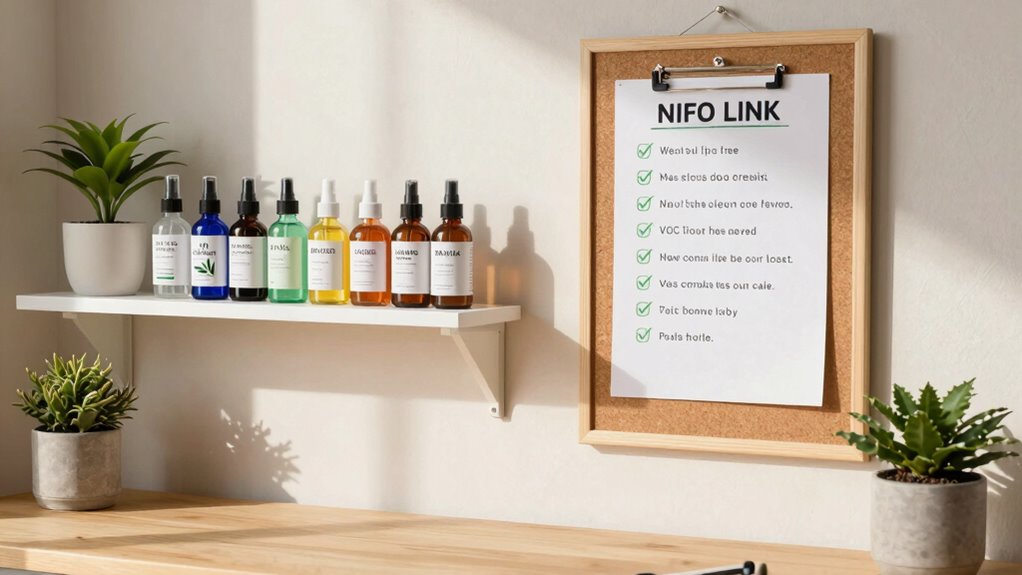
Choosing safe, low-VOC, or natural sprays for your studio starts with reading labels carefully. Look for products labeled as natural alternatives or chemical free options to reduce VOC emissions. These sprays typically contain fewer harmful chemicals, making your environment safer. When selecting, check the ingredient list for natural ingredients like plant extracts or essential oils. Avoid products with artificial fragrances or solvents. To help you compare options easily, consider this table:
| Natural Alternatives | Chemical-Free Options |
|---|---|
| Plant-based sprays | No added synthetic chemicals |
| Essential oils | Free from artificial fragrances |
| Organic ingredients | No solvents or preservatives |
Choosing wisely helps maintain better air quality and supports a healthier studio environment.
Tips for Improving Air Circulation and Ventilation

Improving air circulation and ventilation is essential for maintaining a healthy studio environment. To optimize airflow, consider positioning fans or vents to encourage cross-ventilation, allowing fresh air to flow in while stale air exits. Upgrading your ventilation system can also make a significant difference; installing exhaust fans or air purifiers with proper airflow capacity ensures continuous air exchange. Keep vents unobstructed and regularly clean filters to maintain efficiency. Using ceiling fans or portable oscillating fans helps distribute air evenly, reducing stagnant spots. Adequate ventilation not only dilutes airborne pollutants from sprays or other materials but also improves overall air quality. Focus on airflow optimization and ventilation upgrades to create a safer, healthier space for your creative work.
Setting Up Your Studio for Better Air Purity and Safety
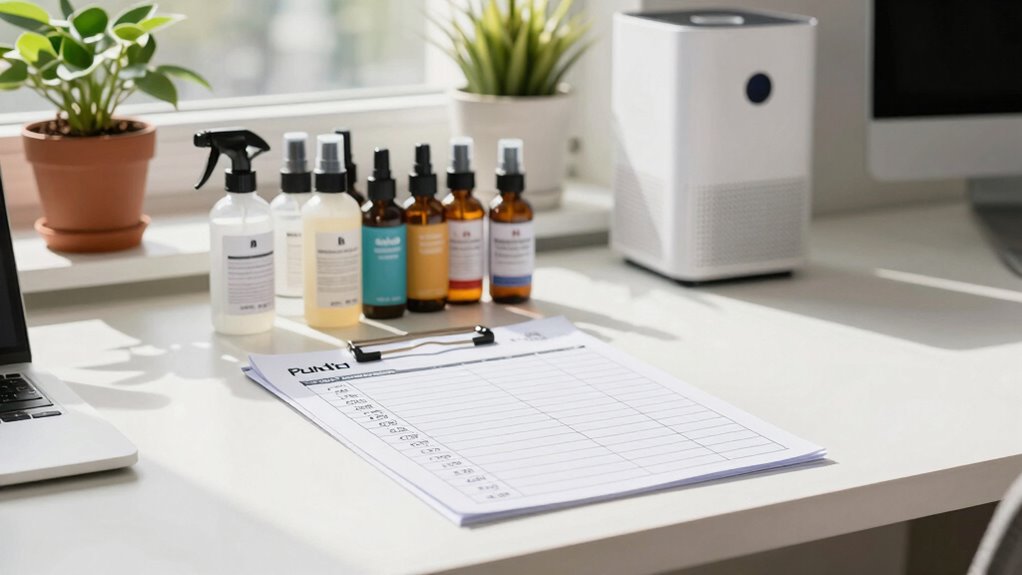
Setting up your studio for better air purity and safety starts with strategic placement of air purification devices and careful organization of your workspace. Use air filtration units near spray areas to catch airborne particles promptly. Additionally, maintain proper humidity control to prevent mold and reduce volatile compounds from sprays. Keep your workspace organized to minimize dust buildup and clutter that hampers air quality. Consider the following setup:
| Aspect | Action |
|---|---|
| Air Filtration | Place HEPA filters near spray zones for effective removal |
| Humidity Control | Use dehumidifiers or humidifiers to maintain ideal levels |
| Workspace Layout | Arrange equipment to maximize airflow and minimize stagnation |
| Ventilation | Ensure fresh air exchange to dilute airborne contaminants |
How to Monitor and Maintain Good Air Quality Over Time
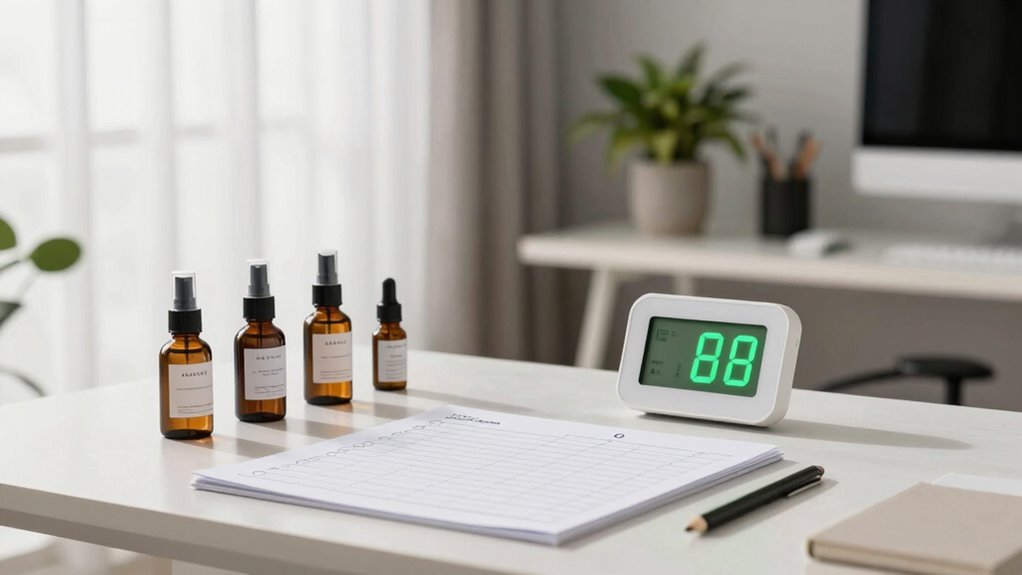
To guarantee your studio maintains healthy air quality over time, regular monitoring is essential. Effective air quality maintenance involves consistent checks for pollutants and airflow. Here’s how you can stay on top of it:
Regular monitoring ensures your studio’s air stays healthy and pollutant-free over time.
- Use a digital air quality monitor to track levels of VOCs, dust, and humidity regularly.
- Inspect ventilation systems for blockages or mold growth, ensuring proper airflow.
- Keep a record of any odors or symptoms that could indicate pollutant buildup.
- Schedule periodic professional testing if you notice persistent issues or suspect hidden pollutants.
DIY Air Purifiers and When to Get Professional Testing
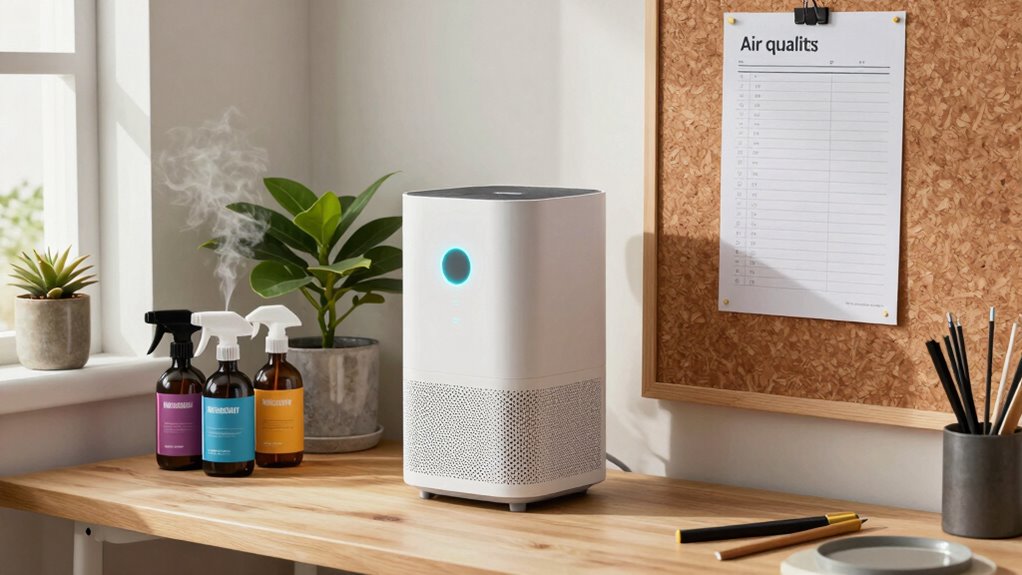
While DIY air purifiers can be an effective way to improve your studio’s air quality on a budget, they do have limitations. Your options for air purifiers range from simple homemade filters to more advanced DIY designs, but they may not filter out all harmful particles or VOCs from sprays. It’s essential to review spray ingredient labels carefully; some ingredients emit strong fumes or toxins that DIY purifiers might not fully remove. If you notice persistent odors, headaches, or respiratory issues, it’s time to contemplate professional testing. Certified air quality experts can accurately assess your environment and identify hidden pollutants. Relying solely on DIY solutions isn’t enough for thorough safety, especially if you use sprays frequently or work with sensitive materials.
Frequently Asked Questions
Can Air Purifiers Effectively Remove Chemical Sprays From My Home Studio?
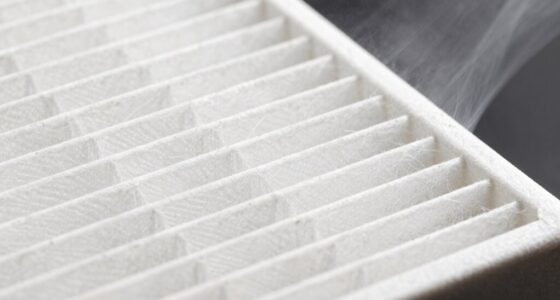
Air purifiers can effectively improve your home studio air quality, but their efficiency in removing chemical sprays depends on the filter type. HEPA filters excel at trapping particles, while activated carbon filters are best for absorbing chemical fumes and odors. Combining these filters enhances chemical removal techniques. For ideal results, choose an air purifier specifically designed for chemical absorption, and run it regularly to maintain a safer, healthier studio environment.
Are There Specific Certifications to Look for in Low-Voc or Natural Sprays?
You should look for sprays with certification standards like USDA Organic or EcoCert, which guarantee adherence to strict safety guidelines. Don’t be deceived by vague labels; check for natural ingredient labels that list recognizable, non-toxic components. While some worry about effectiveness, these certified and naturally labeled sprays are safer for your studio environment, helping you breathe easier without sacrificing quality. Always verify certifications to make informed, health-conscious choices.
How Often Should I Test My Studio’s Air Quality for Pollutants?
You should perform air quality testing and pollutant monitoring at least once every three to six months to guarantee your studio stays safe. If you use sprays or other VOC-emitting products frequently, consider testing more often, like quarterly. Regular testing helps you catch pollutants early, allowing you to improve ventilation or switch to safer products, ultimately maintaining a healthier environment for your work and well-being.
What Are the Health Symptoms of Poor Air Quality in a Home Studio?
Poor air quality in your home studio can cause health symptoms like headaches, dizziness, and respiratory issues. You might notice increased coughing, throat irritation, or allergies acting up more often. Over time, prolonged exposure can lead to fatigue and difficulty concentrating. Pay attention to these signs, and guarantee your air quality stays good by venting properly and avoiding sprays that worsen indoor pollution. Your health depends on it.
Can Indoor Plants Help Improve Air Quality in My Studio?
Picture yourself surrounded by lush, vibrant greenery that filters the air, creating a fresh, calming atmosphere. Indoor gardening can indeed help improve air quality in your studio by reducing toxins and increasing oxygen levels. Plants like snake plants and pothos absorb airborne pollutants, offering notable air quality benefits. Keep them healthy and well-maintained, and you’ll enjoy cleaner air and a more inspiring, peaceful environment for your creative work.
Conclusion
Imagine your studio as a sanctuary where fresh air flows freely, nurturing your creativity and keeping you safe. By regularly checking your air quality, choosing safer sprays, and ensuring good ventilation, you create a breathable haven amidst your artistic chaos. Think of each breath as a gentle breeze, carrying away pollutants and welcoming clarity. With mindful habits, your studio becomes a vibrant space where inspiration and health thrive hand in hand, day after day.