
The best artistic sketchbooks for students balance paper quality, usable page count, portability, and a binding that stays out of the way while drawing. My best overall pick is the Beechmore Books 9 × 12 Spiral Sketchbook because its 140 GSM paper, perforated pages, and classroom-friendly size offer the strongest balance for regular coursework. The Fuxi Small Spiral Sketch Book 2-Pack is the quantity-focused value option, while the Artist’s Sketchbook with 200 GSM paper suits students who use wetter or heavier media. The main choice is between plentiful lighter paper for practice and fewer, thicker sheets for finished work, with portability and page removal adding further tradeoffs. Continue reading for the full breakdown of which format fits each type of student.

Get art and craft supplies delivered free — and shop member deals
- Fast, free delivery on millions of items
- Access to Prime Big Deal Days deals on October 6–7
- Prime Video, Amazon Music and more included
Key Takeaways
- Beechmore Books earns the top position because 140 GSM paper splits the difference between lightweight practice pads and costlier mixed-media books while retaining removable 9 × 12 pages.
- The 160 GSM models are not interchangeable: MOFUNY provides 60 sheets at 9 × 12, while the smaller U.S. Art Supply two-pack favors portability and separating work across two books.
- The Artist’s Sketchbook is the premium media pick with 200 GSM paper, but its 40-sheet capacity makes it less practical for high-volume gesture drawing than the 100-sheet options.
- Fuxi’s small two-pack leads on practice volume, whereas the Talens Art Creation book trades sheet area and spiral convenience for a more protected, pocket-friendly hard-bound format.
- Strathmore’s two pads serve different students: the 200 Series offers an approachable 8.5 × 11 classroom format, while the smaller 400 Series gives more established drawing quality in a compact 100-sheet pad.
| 4 Pack Small Sketch Books, 5.5 × 8.5 in, Spiral Bound, 30 Sheets, Acid-Free Paper |  | Best Multi-Book Pack | Quantity: 4 sketchbooks | Size: 5.5 × 8.5 inches | Sheets per book: 30 | VIEW LATEST PRICE | See Our Full Breakdown |
| Mixed Media Sketchbook 9×12 – 30 Sheets Spiral Bound, 98lb/160gsm Heavyweight Paper for Drawing and Painting |  | Best for Painting Assignments | Size: 9 × 12 inches | Sheets: 30 | Paper weight: 98lb / 160gsm | VIEW LATEST PRICE | See Our Full Breakdown |
| Beechmore Books 9×12 Spiral Sketchbook with 140 GSM Perforated Pages |  | Best Overall | Size: 9 × 12 inches | Page count: 100 perforated pages | Paper weight: 140gsm | VIEW LATEST PRICE | See Our Full Breakdown |
| U.S. Art Supply 5.5×8.5 Mixed Media Sketchbook, 2 Pack (60 Sheets), 98 lb (160 GSM) |  | Best Portable Mixed-Media Pick | Quantity: 2 sketchbooks | Size: 5.5 × 8.5 inches | Sheets per book: 60 | VIEW LATEST PRICE | See Our Full Breakdown |
| Strathmore 400 Series Sketch Pad, 5.5×8.5 inch, 100 Sheets – Artist Sketchbook for Drawing, Illustration, Art Class Students |  | Best for Dry-Media Practice | Brand: Strathmore | Series: 400 Series Sketch | Size: 5.5 × 8.5 inches | VIEW LATEST PRICE | See Our Full Breakdown |
| Ankkol 9×12 Sketch Book |  | Best Protective Full-Size Sketchbook | Size: 9 x 12 inches | Sheet count: 100 sheets | Paper weight: 68 lb / 100 gsm | VIEW LATEST PRICE | See Our Full Breakdown |
| Strathmore 200 Series Sketch Pad |  | Best for Classroom Practice | Brand: Strathmore | Series: 200 Series | Pad size: 8.5 x 11 inches | VIEW LATEST PRICE | See Our Full Breakdown |
| Fuxi Small Spiral Sketch Book 2-Pack |  | Best Compact Two-Pack | Book count: 2 sketchbooks | Size: 5.5 x 8.5 inches | Sheets per book: 100 sheets | VIEW LATEST PRICE | See Our Full Breakdown |
| SuFly 9×12 Sketch Book | 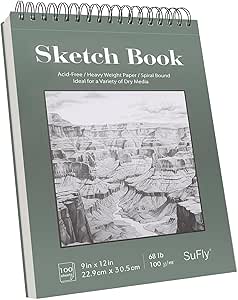 | Best for Clean Page Removal | Sheet size: 9 x 12 inches | Sheet count: 100 sheets | Paper weight: 68 lb / 100 gsm | VIEW LATEST PRICE | See Our Full Breakdown |
| 8.5 x 11 Spiral Bound Sketch Book |  | Best Slim Portfolio Pad | Size: 8.5 x 11 inches | Sheet count: 50 sheets | Paper weight: 68 lb / 100 gsm | VIEW LATEST PRICE | See Our Full Breakdown |
| Fuxi 9 x 12 Inch Spiral Bound Sketch Book with 100 Sheets |  | Best High-Capacity Dry-Media Pick | Size: 9 x 12 inches | Sheet Count: 100 sheets | Paper Weight: 68 lb / 100 gsm | VIEW LATEST PRICE | See Our Full Breakdown |
| Artist’s Sketchbook Hardcover, 200GSM Thick Paper |  | Best for Wet Mixed Media | Size: 8.25 x 11.4 inches | Sheet Count: 40 sheets | Page Count: 80 pages | VIEW LATEST PRICE | See Our Full Breakdown |
| MOFUNY Mixed Media Sketchbook 9×12 |  | Best Mixed-Media Balance | Size: 9 x 12 inches | Sheet Count: 60 sheets | Paper Weight: 98 lb / 160 gsm | VIEW LATEST PRICE | See Our Full Breakdown |
| Soucolor Sketchbook 9×12, 100 Sheets |  | Best for Portfolio Page Removal | Size: 9 x 12 inches | Sheet Count: 100 sheets | Paper Weight: 68 lb / 100 gsm | VIEW LATEST PRICE | See Our Full Breakdown |
| Talens Art Creation Sketchbook, Lake Blue |  | Best Compact Hardbound Sketchbook | Brand: Talens Art Creation | Manufacturer: Royal Talens | Size: 5.1 x 8.3 inches | VIEW LATEST PRICE | See Our Full Breakdown |
| artistic sketchbooks for student | Paper weight | Binding | Size | Sheet count |
|---|---|---|---|---|
| 4 Pack Small Sketch Books | 100gsm | Spiral bound | 5.5 × 8.5 inches | — |
| Mixed Media Sketchbook 9×12 | 98lb / 160gsm | Spiral | 9 × 12 inches | — |
| Beechmore Books 9×12 Spiral Sk | 140gsm | Spiral bound with double wire | 9 × 12 inches | — |
| U.S. Art Supply 5.5×8.5 Mixed | 98lb / 160gsm | Spiral bound | 5.5 × 8.5 inches | — |
| Strathmore 400 Series Sketch P | — | — | 5.5 × 8.5 inches | — |
| Ankkol 9×12 Sketch Book | 68 lb / 100 gsm | Top spiral bound | 9 x 12 inches | 100 sheets |
| Strathmore 200 Series Sketch P | 50 lb | Side wire | — | 100 sheets |
| Fuxi Small Spiral Sketch Book | 68 lb / 100 gsm | Spiral bound | 5.5 x 8.5 inches | — |
| SuFly 9×12 Sketch Book | 68 lb / 100 gsm | Top spiral | — | 100 sheets |
| 8.5 x 11 Spiral Bound Sketch B | 68 lb / 100 gsm | Spiral bound | 8.5 x 11 inches | 50 sheets |
| Fuxi 9 x 12 Inch Spiral Bound | 68 lb / 100 gsm | Top spiral bound | 9 x 12 inches | 100 sheets |
| Artist’s Sketchbook Hardcover | 200 gsm | Spiral bound | 8.25 x 11.4 inches | 40 sheets |
| MOFUNY Mixed Media Sketchbook | 98 lb / 160 gsm | Spiral bound | 9 x 12 inches | 60 sheets |
| Soucolor Sketchbook 9×12 | 68 lb / 100 gsm | Top spiral | 9 x 12 inches | 100 sheets |
| Talens Art Creation Sketchbook | 140 gsm / 94 lb | Hard-bound | 5.1 x 8.3 inches | 80 sheets |
More Details on Our Top Picks
4 Pack Small Sketch Books, 5.5 × 8.5 in, Spiral Bound, 30 Sheets, Acid-Free Paper
I rank the 4 Pack Small Sketch Books as the most practical choice for students who separate coursework by subject or want spare books for travel. Four hardcover, spiral-bound volumes are easier to divide among drawing class, homework, and outdoor studies than one 100-sheet pad. Compared with the U.S. Art Supply 5.5×8.5 Mixed Media Sketchbook, this set supplies more individual books but uses much lighter 100gsm paper, so it favors pencil, charcoal, and other dry media rather than paint. The acid-free sheets help preserve finished exercises, while the compact format fits crowded backpacks. The tradeoff is a restricted drawing area, and each 30-sheet book fills quickly. I would choose it for organized daily practice, but not for ambitious compositions or mixed-media assignments.
Pros:- Four separate books make coursework and subjects easy to organize
- Hardcovers protect drawings inside a backpack
- Lay-flat spiral binding keeps both hands available while sketching
- Acid-free, tear-resistant paper suits several dry media
Cons:- 100gsm paper is not intended for wet media
- The compact page limits broad gestures and large compositions
- Thirty sheets per book can run out quickly during a busy semester
Best for: Students who want separate portable sketchbooks for different classes, subjects, or field-sketching sessions
Not ideal for: Painting students and anyone developing large compositions, since the 100gsm paper is intended for dry media and the pages are only 5.5 × 8.5 inches
- Quantity:4 sketchbooks
- Size:5.5 × 8.5 inches
- Sheets per book:30
- Paper weight:100gsm
- Binding:Spiral bound
- Cover:Hardcover
Our verdict“I recommend this four-pack for students who value organization and portability more than wet-media range or a spacious page.”
Mixed Media Sketchbook 9×12 – 30 Sheets Spiral Bound, 98lb/160gsm Heavyweight Paper for Drawing and Painting
The Mixed Media Sketchbook 9×12 earns this role because its 160gsm paper supports watercolor, acrylic, pastel, and drawing media on a classroom-friendly page. That makes it more capable with paint than the Beechmore Books 9×12 Spiral Sketchbook, whose 140gsm sheets are limited to light watercolor washes. The larger surface also gives students room for color studies and layered compositions, while micro-perforated pages produce cleaner edges for critiques, portfolios, or framing. I place it behind higher-capacity options for routine practice because 30 sheets offer a short working life. Its heavyweight surface may also feel less responsive to students concentrating on faint, delicate pencil marks. This pick makes the most sense when media flexibility matters more than page count or backpack-friendly dimensions.
Pros:- 160gsm paper accommodates drawing, painting, and mixed-media techniques
- The 9 × 12-inch format provides room for layered class projects
- Micro-perforation creates clean presentation edges
- Spiral binding allows the working page to lie flat
Cons:- Thirty sheets provide limited capacity for daily coursework
- Heavy paper can feel less responsive for very light, delicate sketching
- The full-size format is less convenient for small bags
Best for: Art students completing watercolor, acrylic, pastel, and mixed-media assignments that need a full 9 × 12-inch page
Not ideal for: High-volume drawing students who need many practice sheets or a lightweight pad for delicate pencil studies
- Size:9 × 12 inches
- Sheets:30
- Paper weight:98lb / 160gsm
- Binding:Spiral
- Perforation:Micro-perforated
- Paper type:Acid-free mixed-media paper
Our verdict“I recommend this pad for students whose assignments move between drawing and paint and who can accept a lower sheet count.”
Beechmore Books 9×12 Spiral Sketchbook with 140 GSM Perforated Pages
I give the Beechmore Books 9×12 Spiral Sketchbook the overall spot because it balances a generous 100-page capacity, substantial 140gsm paper, and a useful full-size workspace. Compared with the 30-sheet Mixed Media Sketchbook 9×12, it offers a much longer runway for class exercises and portfolio development, though its paper is less suitable for acrylic or wetter watercolor work. The double-wire lay-flat binding supports comfortable desk drawing, and perforations let students remove finished work without ragged edges. Pencil, pastel, calligraphy, and light washes give it broader range than the dry-media-only Strathmore 400 Series. Still, the large 9 × 12-inch footprint is awkward in compact bags, and students who regularly saturate paper should choose the 160gsm mixed-media option instead.
Pros:- One hundred perforated pages support sustained coursework
- 140gsm acid-free paper handles several dry media and light washes
- Double-wire binding lies flat for easier desk work
- Perforations simplify portfolio preparation and framing
Cons:- Paper is limited to light watercolor rather than heavily saturated techniques
- The 9 × 12-inch format is bulky for everyday portable sketching
Best for: Students who want one high-capacity, full-size book for drawing, calligraphy, pastel, and occasional light washes
Not ideal for: Commuters with small bags and painters who use heavy watercolor washes or acrylic layers
- Size:9 × 12 inches
- Page count:100 perforated pages
- Paper weight:140gsm
- Binding:Spiral bound with double wire
- Paper type:Acid-free white paper
- Recommended uses:Sketching, drawing, light watercolor, and calligraphy
Our verdict“I recommend this as the strongest all-around student choice when page capacity and drawing versatility outweigh wet-media performance.”
U.S. Art Supply 5.5×8.5 Mixed Media Sketchbook, 2 Pack (60 Sheets), 98 lb (160 GSM)
The U.S. Art Supply Mixed Media Sketchbook combines compact dimensions with 160gsm paper, making it the strongest choice here for students who want to paint away from the studio. Unlike the 4 Pack Small Sketch Books, it can handle drawing, painting, and mixed-media work rather than dry tools alone. Its fine-tooth surface helps pigments grip and blend, while 120 total sheets provide far more working room than the 30-sheet Mixed Media Sketchbook 9×12. That capacity is split across two books, which is useful for separating coursework but wasteful for someone seeking a single pad. I also see a tradeoff between portability and expression: the 5.5 × 8.5-inch page suits studies and thumbnails, not broad compositions. The micro-perforated sheets aid presentation, although repeated handling may wear the spiral binding over time.
Pros:- 160gsm paper supports drawing, painting, and layered mixed media
- Two books provide 120 sheets in total
- Compact dimensions travel more easily than 9 × 12-inch pads
- Micro-perforated pages remove cleanly for critiques or display
Cons:- The small page restricts large compositions and broad brushwork
- Spiral binding may lose durability with heavy long-term handling
- The two-pack format is unnecessary for students who need only one book
Best for: Students who need backpack-sized books for mixed-media studies, painted field notes, or separate class projects
Not ideal for: Students creating large final pieces or buyers who want one book instead of a mandatory two-pack
- Quantity:2 sketchbooks
- Size:5.5 × 8.5 inches
- Sheets per book:60
- Total sheets:120
- Paper weight:98lb / 160gsm
- Binding:Spiral bound
- Page treatment:Acid-free and micro-perforated
Our verdict“I recommend this pair for mobile mixed-media students who want substantial paper and high capacity in a compact format.”
Strathmore 400 Series Sketch Pad, 5.5×8.5 inch, 100 Sheets – Artist Sketchbook for Drawing, Illustration, Art Class Students
I place the Strathmore 400 Series Sketch Pad in the dry-media specialist role because its 100 heavyweight sheets give pencil, charcoal, and pastel students ample space for repetition without carrying a full-size book. Compared with the U.S. Art Supply 5.5×8.5 Mixed Media Sketchbook, it offers a single high-capacity pad but lacks the 160gsm paper needed for painting. That narrower focus can be an advantage for illustration classes: students are not paying for media range they will never use, and micro-perforation keeps selected drawings ready for critique. The chipboard backing adds support when a desk is unavailable, while wire binding keeps pages manageable. Its limitations are clear: wet media are off the table, and the compact sheet leaves little room for sweeping gestures or large observational studies.
Pros:- One hundred sheets provide strong capacity for repeated practice
- Heavyweight paper supports pencil, charcoal, and pastel
- Micro-perforation allows clean removal of finished drawings
- Chipboard backing adds support during mobile sketching
Cons:- The paper is not suitable for watercolor, acrylic, or other wet media
- The 5.5 × 8.5-inch sheet constrains large studies and expressive gestures
Best for: Illustration, pencil, charcoal, and pastel students who need a compact pad for frequent dry-media exercises
Not ideal for: Painting students and figure-drawing students who need wet-media tolerance or room for large gestural work
- Brand:Strathmore
- Series:400 Series Sketch
- Size:5.5 × 8.5 inches
- Sheets:100
- Recommended uses:Sketching, drawing, and illustration
- Compatible media:Pencil, charcoal, pastel, and other dry media
- Page removal:Micro-perforated
- Construction:Wire binding with chipboard backing
- Item weight:11.52 ounces
Our verdict“I recommend this pad for serious dry-media practice, provided the student does not need paint compatibility or a large drawing surface.”
Ankkol 9×12 Sketch Book
When I rank sketchbooks for students carrying work between home and class, the Ankkol 9×12 Sketch Book earns its place through its hardcover and elastic band. Those features give loose charcoal studies and pencil drawings better protection than the chipboard-backed Strathmore 200 Series. Its 100 gsm paper is also heavier, making it more tolerant of shading, repeated practice, and moderate erasing. Compared with the similarly sized SuFly 9×12 Sketch Book, however, Ankkol lacks micro-perforated pages, so removing finished work may leave a less polished edge. The 100-sheet capacity offers strong semester-long value, while the top spiral keeps the drawing area flat. I would still keep paint, watercolor, and saturated markers away from it: this is a durable dry-media workhorse, not a mixed-media pad.
Pros:- Hardcover and elastic band protect drawings during school commutes
- 100 sheets provide ample space for coursework and regular practice
- 100 gsm acid-free paper supports pencil, charcoal, and pastel work
- Top spiral binding allows comfortable flat-page access
Cons:- No listed micro-perforations for clean presentation-ready removal
- Paper is not designed for watercolor or other wet media
- The 9×12-inch format is less convenient for small bags and quick travel sketches
Best for: Art students who carry full-size pencil, charcoal, or pastel work between classes and want a protective hardcover
Not ideal for: Students who regularly submit removed sheets or work with watercolor and saturated markers, since the pages are not listed as perforated or wet-media compatible
- Size:9 x 12 inches
- Sheet count:100 sheets
- Paper weight:68 lb / 100 gsm
- Paper type:Acid-free drawing paper
- Binding:Top spiral bound
- Cover:Hardcover
- Closure:Elastic band
Our verdict“I recommend Ankkol for students who value full-size workspace and sturdy protection more than clean sheet removal or mixed-media flexibility.”
Strathmore 200 Series Sketch Pad
I place the Strathmore 200 Series Sketch Pad high for students who need abundant, affordable space for gesture drawing, thumbnails, and technique drills. Its lightly textured 50 lb paper gives charcoal and pastel more grip than a very smooth sheet, while 100 pages support frequent assignments without making each experiment feel precious. It is lighter and easier to carry than the hardcover Ankkol 9×12 Sketch Book, but that portability comes with weaker protection from bent corners and crowded backpacks. The side wire also suits a conventional book orientation, whereas Ankkol and SuFly use top spirals that stay out of either drawing hand more easily. I see this as a practice-first classroom pad: useful across several dry materials, yet too light for washes, heavy markers, or students seeking crisp technical detail.
Pros:- 100 sheets accommodate frequent exercises and exploratory drawing
- Light grain provides useful tooth for charcoal, pastel, and sketching sticks
- Eight-ounce weight makes it practical for daily class transport
- Chipboard backing supplies support while sketching away from a desk
Cons:- 50 lb paper is lighter and less resistant to wet media than 100 gsm alternatives
- Light texture can interfere with very fine linework
- Chipboard backing protects artwork less effectively than a full hardcover
Best for: Beginning art students who need a lightweight, high-capacity pad for pencil drills, charcoal studies, pastel exercises, and classroom assignments
Not ideal for: Ink-wash, marker, or mixed-media students who need heavier paper, stronger covers, or a smoother surface for fine detail
- Brand:Strathmore
- Series:200 Series
- Pad size:8.5 x 11 inches
- Sheet count:100 sheets
- Paper weight:50 lb
- Binding:Side wire
- Backing:Chipboard
- Item weight:8 ounces
Our verdict“I favor the Strathmore 200 Series for students who need plenty of dry-media practice paper without the weight or cost of a hardcover book.”
Fuxi Small Spiral Sketch Book 2-Pack
The Fuxi Small Spiral Sketch Book 2-Pack is my choice for students who sketch during commutes, museum visits, or short breaks. Two 5.5-by-8.5-inch books provide 200 total sheets, letting a student separate class exercises from personal drawing or keep a spare in another bag. Compared with the Strathmore 200 Series, Fuxi supplies heavier 100 gsm paper and hard front and back covers, trading a larger workspace for better portability and protection. It also offers twice the sheet count of the single Ankkol book, though each page has far less room for figure studies or broad charcoal movements. The acid-free stock suits pencil, pen, and pastel, but markers and watercolor pens are poor matches. I rank it as a daily-practice companion, not a primary pad for ambitious final pieces.
Pros:- Two-book format separates coursework from personal sketches
- Compact dimensions fit easily into school and travel bags
- Hard front and back covers protect pages while drawing on the move
- 200 total acid-free sheets offer generous practice capacity
Cons:- Small pages restrict large gestures and detailed compositions
- Paper is not suitable for watercolor pens or saturated markers
- The surface may show wear under repeated heavy erasing
Best for: Students who want separate portable books for daily doodling, field sketches, and compact dry-media practice
Not ideal for: Figure-drawing students, marker users, and anyone needing broad pages for large compositions or vigorous erasing
- Book count:2 sketchbooks
- Size:5.5 x 8.5 inches
- Sheets per book:100 sheets
- Total sheet count:200 sheets
- Paper weight:68 lb / 100 gsm
- Paper material:Recyclable, acid-free paper
- Binding:Spiral bound
- Covers:Hard front and back covers
Our verdict“I recommend this Fuxi two-pack as a portable practice system for dry-media students who value quantity and mobility over page size.”
SuFly 9×12 Sketch Book
I rank the SuFly 9×12 Sketch Book as the strongest choice here for students who routinely submit, display, or scan individual drawings. Its micro-perforated 9×12-inch sheets separate more cleanly than pages in the Ankkol 9×12 Sketch Book, while retaining the same 100-sheet capacity and 100 gsm weight. That distinction matters when a classroom sketch needs to become portfolio material without a ragged spiral edge. A hardcover protects work, and the top binding keeps wire away from both left- and right-handed drawing movements. The tradeoff is medium range: despite its presentation-friendly design, this remains a dry-media sketchbook for pencil, charcoal, and pastel rather than paint or juicy markers. It is also less portable than the Fuxi Small Spiral two-pack. For me, its submission-ready versatility justifies the larger footprint.
Pros:- Micro-perforations produce cleaner edges for submissions and display
- Full 9×12-inch sheets provide room for developed studies
- Top spiral accommodates left- and right-handed drawing
- Hardcover protects the 100 acid-free sheets during transport
Cons:- 100 gsm paper is not intended for watercolor or saturated markers
- Larger footprint is less convenient for casual travel sketching
- Removed sheets lose the organizational protection of the bound book
Best for: Art students who frequently remove dry-media assignments for grading, framing, scanning, or portfolio assembly
Not ideal for: Students focused on watercolor, alcohol markers, or pocket-size field sketching, since the paper is dry-media oriented and the pad measures 9×12 inches
- Sheet size:9 x 12 inches
- Sheet count:100 sheets
- Paper weight:68 lb / 100 gsm
- Paper material:Acid-free paper
- Binding:Top spiral
- Page removal:Micro-perforated sheets
- Cover:Hardcover
Our verdict“I would choose SuFly for students who need roomy dry-media pages that can move cleanly from sketchbook to classroom submission or portfolio.”
8.5 x 11 Spiral Bound Sketch Book
I see the 8.5 x 11 Spiral Bound Sketch Book as a focused choice for students building a small set of presentable studies. Its 50 perforated sheets remove neatly for critiques or framing, and the familiar letter-size format fits common folders more readily than the 9×12 SuFly Sketch Book. A hard backing also makes hallway, field, and standing sketch sessions easier when a desk is unavailable. Yet the SuFly gives students twice as many sheets, a protective hardcover, and slightly more drawing area, making it the stronger semester-long purchase. This pad instead favors a lighter, less bulky workload. The 100 gsm acid-free paper is well matched to pencil, charcoal, and pastel, but it cannot replace the heavier mixed-media books elsewhere in the roundup. I recommend it for organized dry-media assignments, not high-volume experimentation.
Pros:- Perforated pages remove cleanly for critiques, framing, or portfolios
- Letter-size format pairs conveniently with common folders and storage
- Hard backing supports drawing when a table is unavailable
- Acid-free 100 gsm paper suits core student dry media
Cons:- 50-sheet capacity is half that of several competing sketchbooks
- Paper is unsuitable for watercolor and other wet techniques
- Hard backing offers less all-around protection than a hardcover design
Best for: Students assembling a concise set of removable pencil, charcoal, or pastel assignments in a folder-friendly page size
Not ideal for: High-volume sketchers and mixed-media students who need more than 50 sheets or paper capable of handling paint and wet washes
- Size:8.5 x 11 inches
- Sheet count:50 sheets
- Paper weight:68 lb / 100 gsm
- Paper material:Acid-free paper
- Binding:Spiral bound
- Page removal:Perforated pages
- Backing:Hard backing
Our verdict“I recommend this slim pad for students who prioritize tidy removable assignments and easy storage over maximum sheet count or media range.”
Fuxi 9 x 12 Inch Spiral Bound Sketch Book with 100 Sheets
I rank the Fuxi 9 x 12 Sketch Book as a practical choice for students who produce many pencil, charcoal, or ink studies. Its 100 bright white, acid-free sheets provide far more practice space than the 40-sheet Artist’s Sketchbook Hardcover, while the diagonal tooth helps graphite and colored pencil marks hold cleanly. The top spiral also keeps the binding away from either drawing hand, and the double-sided hardcover gives students a firmer surface outside the classroom. Compared with the similarly sized MOFUNY Mixed Media Sketchbook, however, its 100 gsm paper is much less flexible: watercolor and heavy applications can buckle or bleed. I place it above basic soft-cover pads for durability, but below mixed-media models for students whose coursework changes between dry and wet techniques.
Pros:- I like the generous 100-sheet capacity for daily exercises and repeated studies.
- The acid-free, bright white paper supports clean contrast and longer-term storage.
- The top spiral permits easy page turning without favoring left- or right-handed students.
- The double-sided hardcover adds protection and a firm drawing surface.
Cons:- The 100 gsm paper can buckle or bleed when used with watercolor and other wet media.
- Heavy charcoal, pastel, or layered ink work may require thicker paper.
- The large 9-by-12-inch format is less convenient for compact school bags.
Best for: I recommend it for drawing students who need a durable, high-capacity book for frequent graphite, charcoal, colored-pencil, and ink exercises.
Not ideal for: I would skip it for students taking watercolor or mixed-media classes because the 100 gsm sheets are intended mainly for dry techniques.
- Size:9 x 12 inches
- Sheet Count:100 sheets
- Paper Weight:68 lb / 100 gsm
- Paper:Acid-free, bright white drawing paper
- Surface:Diagonal tooth
- Binding:Top spiral bound
- Cover:Double-sided hardcover
- Recommended Media:Graphite, colored pencil, charcoal, and ink
Our verdict“I would choose the Fuxi for high-volume dry-media coursework, but not as a student’s only book for a mixed-media class.”
Artist’s Sketchbook Hardcover, 200GSM Thick Paper
The Artist’s Sketchbook Hardcover earns its place through paper weight rather than page volume. At 200 gsm, its sheets are the thickest among these five picks, giving students a stronger base for watercolor, oil pastel, charcoal, and layered mixed-media assignments. That makes it more capable than the 100 gsm Fuxi and Soucolor books when moisture or dense marks are involved. Its 8.25-by-11.4-inch page is also roomy without quite matching the footprint of a 9-by-12-inch pad, and the spiral supports portrait or landscape work. The tradeoff is substantial: students receive only 40 sheets, so frequent classroom exercises will consume the book quickly. I also see the exposed spiral as a weaker long-term storage design than the hard-bound Talens, even though the rigid covers protect work well during a semester.
Pros:- The 200 gsm paper supports wetter and heavier applications than standard drawing paper.
- I like the near-letter-size format for portraits, studies, and classroom compositions.
- The hardcover protects finished assignments during transport.
- The spiral permits both portrait and landscape working positions.
Cons:- The 40-sheet capacity is the lowest in this group.
- The exposed spiral may bend or loosen with rough backpack use.
- Thick paper makes less economic sense for students working only in graphite.
Best for: I recommend it for art students who regularly combine watercolor, oil pastel, charcoal, and colored pencil on the same page.
Not ideal for: I would skip it for students completing daily gesture drawings because 40 sheets provide limited practice capacity for the price of a thick-paper book.
- Size:8.25 x 11.4 inches
- Sheet Count:40 sheets
- Page Count:80 pages
- Paper Weight:200 gsm
- Binding:Spiral bound
- Cover:Hardcover
- Orientation:Portrait or landscape
- Recommended Media:Charcoal, colored pencil, oil pastel, and watercolor
Our verdict“I would pick this model when media flexibility matters more than sheet count, especially for coursework involving watercolor or layered materials.”
MOFUNY Mixed Media Sketchbook 9×12
I see the MOFUNY Mixed Media Sketchbook as the middle ground between high-capacity drawing pads and specialist wet-media books. Its 60 sheets of 160 gsm paper give students more room for a semester’s work than the 40-sheet Artist’s Sketchbook Hardcover, while still handling watercolor and painting better than the thinner Fuxi or Soucolor pages. The 9-by-12-inch area suits finished class assignments, and the spiral can rotate through 360 degrees when desk space is tight. This balance earns it a broader role than any dry-media-only pick here. It still has limits: repeated washes may call for the Artist’s Sketchbook’s heavier 200 gsm stock, and delicate finished surfaces can rub against neighboring pages without added protection. I would also choose the Talens instead when portability matters more than working area.
Pros:- The 160 gsm paper offers a useful balance between media range and book capacity.
- I like the full 9-by-12-inch area for classroom compositions and portfolio pieces.
- The 360-degree spiral rotation helps on crowded desks and drawing boards.
- Acid-free sheets reduce the risk of artwork yellowing during storage.
Cons:- The paper is less resistant to repeated wet washes than the 200 gsm Artist’s Sketchbook.
- Sixty sheets may be insufficient for students producing several studies each week.
- Charcoal and pastel work may need fixative or protective sheets to prevent smudging.
Best for: I recommend it for students whose classes alternate among pencil, charcoal, watercolor, and light painting assignments.
Not ideal for: I would skip it for students using heavy washes, thick impasto, or fragile pastel layers that need heavyweight sheets and protective interleaving.
- Size:9 x 12 inches
- Sheet Count:60 sheets
- Paper Weight:98 lb / 160 gsm
- Paper Type:Acid-free mixed-media paper
- Binding:Spiral bound
- Page Rotation:360 degrees
- Cover:Durable cover
- Recommended Media:Watercolor, pencil, charcoal, and paint
Our verdict“I would choose the MOFUNY as a versatile class book for students who need credible wet- and dry-media performance without dropping to 40 sheets.”
Soucolor Sketchbook 9×12, 100 Sheets
The Soucolor Sketchbook 9×12 is my pick for students who regularly submit, display, or scan individual drawings. Its micro-perforated pages provide a cleaner removal method than the detachable sheets in the Fuxi, while the rigid backboard and top spiral create a stable setup for classroom or location drawing. Like the Fuxi, it supplies 100 acid-free 100 gsm sheets, so it favors sustained practice over media breadth. I give Soucolor the advantage for presentation-focused coursework because removed work is less likely to carry a ragged binding edge. Its weakness is equally clear: watercolor pens, alcohol markers, and wet media are poor matches for this paper. The MOFUNY is a better single-book purchase for varied classes, while Soucolor makes more sense when pencil, charcoal, and pastel dominate the syllabus.
Pros:- Micro-perforations allow cleaner removal for assignments and portfolio mounting.
- The 100-sheet capacity supports frequent practice across a full course.
- I like the sturdy cover and backboard for drawing away from a formal desk.
- The acid-free, pH-neutral paper is better suited to storing selected work.
Cons:- The 100 gsm sheets are unsuitable for watercolor and other wet applications.
- Alcohol markers can bleed through and waste the reverse side.
- Removing pages gradually reduces the protection and structure of the remaining block.
Best for: I recommend it for drawing students who must remove clean sheets for grading, scanning, mounting, or portfolio presentation.
Not ideal for: I would skip it for illustration students who rely on alcohol markers, watercolor pens, or washes because the paper is limited to dry media.
- Size:9 x 12 inches
- Sheet Count:100 sheets
- Paper Weight:68 lb / 100 gsm
- Paper:Acid-free, pH-neutral drawing paper
- Binding:Top spiral
- Page Removal:Micro-perforated
- Support:Sturdy cover and backboard
- Recommended Media:Pencil, charcoal, and pastel
Our verdict“I would select Soucolor for dry-media students who value cleanly removable assignments more than mixed-media flexibility.”
Talens Art Creation Sketchbook, Lake Blue
The Talens Art Creation Sketchbook fills a different student need: it is a portable creative journal rather than a large assignment pad. Its 5.1-by-8.3-inch hard-bound format, elastic closure, and ribbon bookmark travel more neatly than the exposed spirals on the MOFUNY or Artist’s Sketchbook Hardcover. The 140 gsm acid-free paper also accepts a wider mix of pens, pastels, colored pencils, and light watercolor than the 100 gsm Fuxi and Soucolor sheets. With 80 sheets, it offers a useful compromise between the MOFUNY’s 60 and the dry-media books’ 100. The compact page can restrict figure studies, detailed compositions, and work intended for a large portfolio, while the bound construction makes clean page removal difficult. I rank it as the strongest everyday carry option, but not as a replacement for a full-size studio sketchbook.
Pros:- The compact hardcover protects sketches better in a crowded backpack than exposed spiral books.
- Its 140 gsm acid-free paper supports more media than standard 100 gsm drawing sheets.
- I like the elastic closure for keeping pages shut around loose notes or small references.
- Eighty sheets provide respectable capacity for a portable mixed-media journal.
Cons:- The small page area restricts large compositions and detailed class projects.
- Hard-bound pages are inconvenient to remove cleanly for grading or display.
- The paper is not as robust for wet techniques as the 160 gsm MOFUNY or 200 gsm Artist’s Sketchbook.
Best for: I recommend it for commuting students who want a durable pocket journal for observational sketches, visual notes, and light mixed-media work.
Not ideal for: I would skip it for students producing large, highly detailed assignments or submitting loose pages because the compact hard-bound format limits scale and removal.
- Brand:Talens Art Creation
- Manufacturer:Royal Talens
- Size:5.1 x 8.3 inches
- Sheet Count:80 sheets
- Paper Weight:140 gsm / 94 lb
- Paper:White acid-free paper
- Binding:Hard-bound
- Cover Color:Lake Blue
- Item Weight:0.23 kg
Our verdict“I would choose the Talens for portable daily sketching, while keeping a larger spiral pad for formal coursework and portfolio pieces.”
How We Picked
I ranked these sketchbooks by how well their specifications match real student workloads rather than treating the highest paper weight as an automatic winner. My main criteria were paper suitability for the stated media, usable sheet count, drawing area, binding convenience, page removal, cover support, and acid-free construction. I gave added weight to books that can handle both routine exercises and portfolio-worthy assignments without becoming needlessly bulky or expensive.
The order reflects a balance of versatility, classroom usability, durability, and value. A 200 GSM book ranks highly for mixed media but loses ground when only 40 sheets make daily practice less economical; a 100-sheet pad gains points for repetition but falls behind if 68 lb paper limits wet techniques. I also separated products with distinct purposes, including best overall, value, beginner, premium, compact, and mixed-media roles, so each recommendation answers a different buying need. Since prices can change, I judge value through the combination of format, paper specification, and quantity rather than an unverified temporary discount.
Factors to Consider When Choosing Artistic Sketchbooks For Students
I would start by matching the sketchbook to the student’s most frequent assignments, then use size, binding, and sheet count to narrow the field. A heavier book is not automatically the better purchase: students who fill pages quickly may gain more from plentiful drawing paper, while mixed-media students need added resistance to moisture and abrasion.
Match Paper Weight to the Medium
Paper weight shapes what a student can do, but the number alone does not describe surface texture, sizing, or resistance to repeated erasing. Around 100 GSM works well for pencil exercises, charcoal studies, and quick ink lines, especially when page volume matters. Paper in the 140 to 160 GSM range gives students more freedom with markers, light washes, and layered dry media without making the book excessively heavy. Paper near 200 GSM is a better match for wetter work, collage, and forceful mark-making, though it usually means fewer sheets. A common mistake is buying thick paper for a class devoted mainly to gesture drawing, where the added cost brings little benefit. I would choose for the wettest medium used regularly, not for a rare project that could be completed on separate specialty paper.
Choose a Size That Fits the Assignment and Commute
Large 9 × 12 pages give students room to develop composition, draw from the shoulder, and submit work without awkward cropping. They also occupy more desk and bag space, which can become irritating during a crowded commute or lecture. A 5.5 × 8.5 book encourages frequent practice because it is easier to carry, but detailed observational studies can feel cramped. Formats near 8.5 × 11 sit between those extremes and fit common folders or scanners more easily. I would avoid choosing a pocket book as the only sketchbook when a course requires full-page value studies or mounted submissions. The useful question is not which size is most portable, but which size the student will carry without limiting required work.
Decide Between Spiral and Hard-Bound Construction
Spiral binding folds back on itself, keeps the active page flat, and makes drawing on a small desk easier. Exposed wire can bend inside a packed backpack, however, and the finished book may feel less polished as a long-term journal. A hard-bound sketchbook protects pages and suits students who want a cohesive visual diary, but drawing close to the inner gutter can be harder. Spiral books with firm backing also allow lap drawing when no table is available, though the backing adds weight. Left-handed students may prefer top-bound pads or may rotate side-bound books to keep the wire away from the drawing hand. I would base this choice on where the student draws most often, rather than appearance alone.
Balance Sheet Count Against Paper Quality
More pages support repetition, which matters in foundation courses built around thumbnails, gesture sessions, and daily prompts. Yet a large sheet count can disguise lightweight paper that buckles, pills, or shows marks through the reverse side. Students using only one side of each sheet effectively halve the advertised capacity, especially with marker or ink work. Thick 40-sheet books may offer better surfaces for final pieces but can run out quickly when used for warm-ups. A useful approach is pairing an inexpensive practice pad with a smaller premium book reserved for developed studies. This two-book setup often gives a better result than forcing one paper type to handle every task.
Check Page Removal and Archival Needs
Perforated pages simplify submission, scanning, gifting, and mounting, but they can detach early if a book is handled roughly. Non-perforated spiral sheets can still be removed, though torn edges may need trimming before presentation. Hard-bound pages are best treated as permanent, making that format more suitable for journals than assignments collected by an instructor. Acid-free paper helps reduce yellowing over time, which matters for portfolio work and sketchbooks kept as progress records. Students should also check whether the stated dimensions describe the full sheet or the area left after perforation. I place greater weight on clean removal and acid-free stock for assessed work than for disposable drills.
Know When Paying More Makes Sense
Paying more makes sense when the paper removes a real limitation, such as buckling under washes or breaking down after repeated erasing. A premium cover is also useful for students who commute daily and keep one sketchbook for an entire term. Extra spending is harder to justify when a beginner is still learning which media and page size feel comfortable. Multipacks can lower the practical cost of experimentation and let students assign separate books to classwork, personal studies, and travel. Brand reputation may provide more predictable paper texture, but specifications and format still need to fit the course. I would spend first on the right surface and usable format, then on presentation details.
Frequently Asked Questions
Should a student choose 100 GSM, 160 GSM, or 200 GSM paper?
I would choose 100 GSM for high-volume dry-media practice, including pencil, graphite, and many charcoal exercises. The 160 GSM range offers a better middle ground for ink, marker, layered drawing, and controlled light washes. Paper at 200 GSM makes more sense when paint, collage, or repeated reworking appears regularly in the course. Heavier paper usually brings fewer pages and more bag weight, so it is not automatically the best student option. The class supply list and most frequently used medium should settle the choice.
Is a 9 × 12 sketchbook too large for everyday student use?
A 9 × 12 sketchbook is practical for studio classes because it provides enough space for composition studies and developed drawings. It becomes less convenient for students who commute with a small backpack or draw mainly while standing. An 8.5 × 11 format offers a useful compromise, while 5.5 × 8.5 works better for quick studies and daily carrying. I would check the student’s folder size, desk space, and submission requirements before choosing. If portability and coursework demand different formats, a small travel book plus a larger class pad is the cleaner solution.
Can mixed-media sketchbooks replace watercolor paper?
Mixed-media paper can handle light watercolor work, but it rarely behaves like dedicated watercolor paper during saturated washes. It may buckle sooner, allow less lifting, or respond differently to wet-on-wet techniques. For students combining drawing with small areas of paint, 160 or 200 GSM mixed-media paper can be a flexible choice. A watercolor-focused class usually calls for the surface texture and sizing of purpose-made paper. I would treat mixed-media books as versatile classroom tools, not universal substitutes for every painting assignment.
Are perforated pages better for art students?
Perforation is useful when instructors collect individual sheets or when students scan and mount selected work. It produces a cleaner edge than tearing paper directly from many spiral bindings. The drawback is that pages can loosen through repeated flipping, especially when the perforation is aggressive or the book travels unprotected. Students building a chronological visual journal may prefer fixed pages that cannot go missing. I favor perforation for assignment-driven classes and permanent binding for personal process books.
Is one premium sketchbook better than a multipack for a beginner?
Most beginners benefit more from ample, affordable practice space because fear of wasting expensive paper can discourage experimentation. A multipack also lets a student separate subjects or keep one book at school and another at home. Premium paper becomes worthwhile once the student knows that erasing strength, wet media, or archival presentation is limiting cheaper stock. One sensible setup is a high-page-count pad for exercises and a heavier book for selected finished pieces. I would prioritize frequent use over luxury materials during the earliest stage.
Conclusion
For most students, I recommend the Beechmore Books 9 × 12 Spiral Sketchbook as the best overall choice because its 140 GSM perforated paper balances practice volume, versatility, and assignment-ready sizing. The Fuxi Small Spiral Sketch Book 2-Pack is my value choice for students who want abundant portable pages, while the Strathmore 200 Series 8.5 × 11 Pad is the more approachable beginner option for standard drawing exercises. Students working with paint, collage, or heavier layering should choose the 200 GSM Artist’s Sketchbook as the premium pick; those wanting more pages at 160 GSM should favor MOFUNY for mixed media. The Talens Art Creation Sketchbook is the strongest compact journal choice when page protection and portability matter more than removable sheets. For traditional dry-media study, the Strathmore 400 Series suits students who prefer a smaller, established drawing pad with 100 sheets. My final choice would follow the student’s dominant medium and assignment size, since those two factors separate these options more clearly than paper weight alone.
Halloween Picks
halloween
As an affiliate, we earn on qualifying purchases.