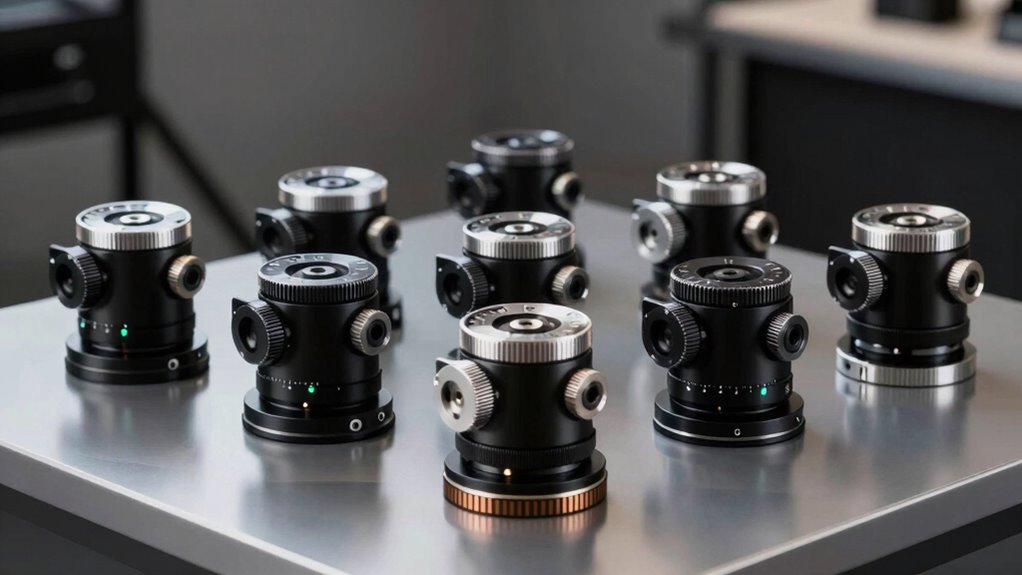

Follow focus systems are essential tools for filmmakers aiming for precise focus pulls and cinematic shots. The best systems balance ease of use, reliability, and affordability, but they often require tradeoffs between manual control and wireless features. The Tilta Nucleus-M II stands out for its advanced wireless control, while the SmallRig Mini Follow Focus offers affordability for entry-level setups. These choices highlight the challenge of finding a system that combines precision, durability, and budget—without sacrificing ease of operation. Continue reading for a detailed breakdown of each option to find the best fit for your filmmaking needs.

Get art and craft supplies delivered free with Prime
- Fast, free delivery on millions of items
- Prime Video, Amazon Music and more included
- Member-only deals all year
Key Takeaways
- Wireless follow focus systems like the Tilta Nucleus-M II offer unmatched control range but come at a higher cost and complexity.
- Manual options such as the SmallRig Mini Focus excel in simplicity and affordability, ideal for beginners or lightweight rigs.
- Modular designs like the SmallRig F60 provide versatility but can introduce setup complexity for less experienced users.
- Consistency in A/B stops and gear compatibility remains a critical factor influencing focus precision across all models.
- Tradeoffs between wired and wireless systems often involve balancing control flexibility with reliability and ease of setup.
| Neewer Mini Follow Focus with A/B Stops, Lens Gear Ring, 15mm Rod & Clamp for Cinema and DSLR Cameras |  | Best Compact and Portable | Weight: 11.3oz (320g) | Lens Diameter Compatibility: Up to 114mm | Rod Size: 15mm | VIEW ON AMAZON | See Our Full Breakdown |
| Tilta Nucleus-M II Wireless Lens Control System Hand Wheel Kit |  | Best Wireless Multi-Function Control | Multi-Motor Control: Yes | Wireless Adjustment: Focus, Iris, Zoom, ND | Camera Control: ISO, White Balance, Shutter Speed | VIEW ON AMAZON | See Our Full Breakdown |
| SmallRig Wireless Follow Focus Kit (Lite) with Handwheel Controller & Receiver Motor, A/B Stops & 15mm Rod Clamp |  | Best for Long Battery Life and Ease of Use | Peak Torque: 4.3 kgf.cm | Battery Life: About 21 hours | Battery: Built-in 1400mAh | VIEW ON AMAZON | See Our Full Breakdown |
| SmallRig Mini Follow Focus with A/B Stops & 15mm Rod Clamp for Cameras |  | Best Lightweight and Modular | Weight: 204g / 7.2oz | Compatibility: DLSRs and mirrorless cameras | Rod Diameter Compatibility: up to 114mm | VIEW ON AMAZON | See Our Full Breakdown |
| SmallRig F50 Follow Focus with A/B Stops |  | Best Damping and Quick Switching | Damping Range: 0.3kgf-1.0kgf | Focus Drive: Dual drive with silicone gears | Compatibility: Mirrorless and DSLR lenses | VIEW ON AMAZON | See Our Full Breakdown |
| SmallRig F60 Modular Follow Focus with A/B Stops and Wide-Range Damping Adjustment |  | Best for Precise, Customizable Control | Damping Range: 0.6kgf-1.8kgf | Focus Angle: Wide-range, 360° infinite zoom | Compatibility: DSLR and mirrorless lenses | VIEW ON AMAZON | See Our Full Breakdown |
| Tilta Nucleus Nano II Base Kit – Wireless Lens Control System |  | Best for Wireless, Remote Control Flexibility | Product Dimensions: 6.8 x 8.5 x 10.4 inches | Item Weight: 2.43 pounds | ASIN: B0CBPHM3NG | VIEW ON AMAZON | See Our Full Breakdown |
| Tilta Pocket Follow Focus |  | Best for Portability and Quick Setup | Material: Composite | A/B Marks: Yes, quick release | Gears: Interchangeable | VIEW ON AMAZON | See Our Full Breakdown |
| follow focus systems for filmmaker | Compatibility |
|---|---|
| Neewer Mini Follow Focus with | — |
| Tilta Nucleus-M II Wireless Le | Cinema and Photography Lenses, Nucleus-M, Nano II |
| SmallRig Wireless Follow Focus | Cinema and zoom lenses |
| SmallRig Mini Follow Focus wit | DLSRs and mirrorless cameras |
| SmallRig F50 Follow Focus with | Mirrorless and DSLR lenses |
| SmallRig F60 Modular Follow Fo | DSLR and mirrorless lenses |
| Tilta Nucleus Nano II Base Kit | — |
| Tilta Pocket Follow Focus | Most cameras and lenses |
More Details on Our Top Picks
Neewer Mini Follow Focus with A/B Stops, Lens Gear Ring, 15mm Rod & Clamp for Cinema and DSLR Cameras
The Neewer Mini Follow Focus stands out for its lightweight, portable design, making it ideal for handheld or on-the-go filming. Compared to the SmallRig Mini Follow Focus, it offers similarly precise control but with a more straightforward setup, though it lacks motorized features. Its adjustable A/B stops facilitate quick focus changes, which is a clear advantage over non-stop options. However, its compatibility is limited to lenses up to 114mm in diameter, and additional accessories might be needed for a complete setup. This pick makes sense for solo filmmakers or run-and-gun shooters seeking reliable manual focus control without extra complexity.
Pros:- Smooth and precise manual focus control
- Adjustable A/B stops for quick focus shifts
- Lightweight and highly portable design
Cons:- Limited to lenses up to 114mm in diameter
- May require additional accessories for full rig setup
Best for: Filmmakers who need a lightweight, manual follow focus for DSLR or mirrorless setups and prioritize portability.
Not ideal for: Producers seeking motorized or wireless control, or those working with larger lenses exceeding 114mm diameter.
- Weight:11.3oz (320g)
- Lens Diameter Compatibility:Up to 114mm
- Rod Size:15mm
- Includes:Rod, Rod Clamp
Our verdict“This is a solid choice for solo operators needing simple, reliable focus control in a compact form.”
Tilta Nucleus-M II Wireless Lens Control System Hand Wheel Kit
The Tilta Nucleus-M II excels for its wireless capabilities, allowing remote control of focus, iris, zoom, and even camera settings like ISO and white balance. Compared to the SmallRig Wireless Follow Focus Kit, it offers broader control over multiple parameters, but its setup can be complex, especially for newcomers. Its support for multiple motors and compatibility with previous Nucleus systems makes it highly adaptable for professional productions. The main tradeoff lies in its learning curve and need for understanding gear pitch compatibility. This system is best suited for advanced shooters or crews working in larger setups where remote operation adds efficiency.
Pros:- Wireless control of focus, iris, zoom, and camera parameters
- Supports multiple lenses and previous Nucleus systems
- Enables remote adjustments, reducing operator fatigue
Cons:- Requires understanding of gear pitch and system compatibility
- Setup can be complex for those unfamiliar with wireless systems
Best for: Professional filmmakers and camera operators who need wireless, multi-parameter lens and camera control on complex shoots.
Not ideal for: Beginners or solo shooters who prefer simple, wired focus systems with minimal setup requirements.
- Multi-Motor Control:Yes
- Wireless Adjustment:Focus, Iris, Zoom, ND
- Camera Control:ISO, White Balance, Shutter Speed
- Compatibility:Cinema and Photography Lenses, Nucleus-M, Nano II
Our verdict“Ideal for experienced crews seeking flexible, remote control with extensive camera parameter adjustments.”
SmallRig Wireless Follow Focus Kit (Lite) with Handwheel Controller & Receiver Motor, A/B Stops & 15mm Rod Clamp
The SmallRig Wireless Follow Focus (Lite) offers a compelling mix of long battery life and user-friendly controls, making it suitable for extended shooting sessions. It provides high torque for precise focusing, comparable to the larger Nucleus-M II but without wireless camera parameter control. Its long-lasting battery—around 21 hours—outperforms many wired options, and its simple calibration process makes it accessible for beginners. However, its focus is solely on focusing, lacking the multi-parameter control of more advanced systems. This makes it perfect for crews or solo operators who prioritize reliable focus without extra complexity.
Pros:- High torque motor provides smooth, accurate focus
- Exceptional battery life for long shoots
- Simple calibration process for quick setup
Cons:- Limited to focus control only
- No wireless control of camera or lens settings
Best for: Videographers needing long-duration, precise focus control without the need for wireless camera settings manipulation.
Not ideal for: Shooters requiring wireless control over iris, zoom, or camera parameters, or those with complex lens setups needing motorized focus adjustments.
- Peak Torque:4.3 kgf.cm
- Battery Life:About 21 hours
- Battery:Built-in 1400mAh
- Compatibility:Cinema and zoom lenses
Our verdict“A great choice for operators who need dependable, long-duration manual focus without added complexity.”
SmallRig Mini Follow Focus with A/B Stops & 15mm Rod Clamp for Cameras
The SmallRig Mini Follow Focus is tailored for lightweight, on-the-move productions, especially on DSLRs and mirrorless cameras. Its modular design and adjustable A/B stops make it flexible for various setups. Compared to the larger Nucleus-M II, it lacks motorized or wireless features but excels in quick, manual operation. Its portability is a key advantage, although it may require additional gears for specific lens diameters, and it doesn’t include motorized control. It’s ideal for handheld shooters or those who favor simplicity and quick assembly without sacrificing focus precision.
Pros:- Lightweight and portable for easy transport
- Adjustable A/B stops for versatile focus points
- Modular setup allows quick assembly and customization
Cons:- Requires additional gears for some lens diameters
- Limited to manual focus control
Best for: Solo filmmakers or small crews needing a compact, manual focus solution for mirrorless and DSLR cameras.
Not ideal for: Producers needing motorized focus or wireless control, or working with very large lenses exceeding 114mm diameter.
- Weight:204g / 7.2oz
- Compatibility:DLSRs and mirrorless cameras
- Rod Diameter Compatibility:up to 114mm
- Included:15mm Rod 1050, Rod Clamp 3011, storage box
Our verdict“A practical, portable focus system for those prioritizing simplicity and quick setup in small camera rigs.”
SmallRig F50 Follow Focus with A/B Stops
The SmallRig F50 Follow Focus offers a balance of precision and flexibility with adjustable damping, making it suitable for a variety of lenses. Compared with the wireless options, it’s a purely manual device but supports quick switching between focal points thanks to its A/B stops. Its modular design and 360-degree zoom capability make it adaptable, although the silicone gears are only suited for DSLR and mirrorless lenses, limiting its use with larger cinema lenses. Installation can be a bit complex for beginners, but once set up, it provides very smooth operation. It’s ideal for shooters who want a reliable, adjustable manual focus system with quick focal switches.
Pros:- Precise focus control with adjustable damping
- Supports quick switching between focus points
- Modular and adjustable for different setups
Cons:- Silicone gear only suitable for DSLR/mirrorless lenses
- Installation complexity for beginners
Best for: Videographers seeking accurate manual focus with adjustable damping and rapid focus changes for DSLR or mirrorless lenses.
Not ideal for: Operators needing wireless or motorized control, or working with large cinema lenses that require specialized gears.
- Damping Range:0.3kgf-1.0kgf
- Focus Drive:Dual drive with silicone gears
- Compatibility:Mirrorless and DSLR lenses
- Installation:Supports 15mm rods, adjustable angle
Our verdict“Perfect for users who need precise, adjustable manual focus with fast focal point changes in standard camera lenses.”
SmallRig F60 Modular Follow Focus with A/B Stops and Wide-Range Damping Adjustment
The SmallRig F60 stands out for its exceptional precision and smoothness, thanks to a stepless damping system that allows users to tailor resistance from 0.6kgf to 1.8kgf. Unlike the Tilta Pocket Follow Focus, which emphasizes portability over fine-tuning, the F60 offers a wider damping range for more nuanced control. Its adjustable A/B stops and reversible rotation add versatility, making it suitable for various shooting styles. However, locking the stops is necessary to prevent friction noise, and the wooden texture, while ergonomic, may vary in appearance, affecting aesthetic consistency. Compared with the SmallRig Wireless Kit, the F60 is more manual but offers tactile feedback that some filmmakers prefer for critical focus pulls. This pick makes the most sense for camera operators who need a highly adjustable, reliable focus system without wireless complexity. It is best for filmmakers working with DSLR or mirrorless lenses who prioritize tactile feel over wireless features.Pros:- Precise and smooth focus control with zero-backlash tracking
- Wide-range stepless damping adjustment for tailored feel
- Reversible rotation and adjustable A/B stops for versatility
- Anti-slip wooden texture enhances grip and control
Cons:- Requires locking of A/B stops to avoid friction noise
- Silicone gear only compatible with DSLR and mirrorless lenses, remove for cinema lenses
Best for: Camera operators who need precise, customizable focus control on DSLR or mirrorless cameras without wireless setup.
Not ideal for: Filmmakers who prefer wireless control or work primarily with cinema lenses that require gear removal for compatibility.
- Damping Range:0.6kgf-1.8kgf
- Focus Angle:Wide-range, 360° infinite zoom
- Compatibility:DSLR and mirrorless lenses
- Material:Sapele wood texture
- Includes:15mm rod clamp, snap-on gear ring belt
Our verdict“Ideal for filmmakers seeking finely tuned manual focus with customizable resistance and a comfortable grip.”
Tilta Nucleus Nano II Base Kit – Wireless Lens Control System
The Tilta Nucleus Nano II excels in enabling wireless control over focus, zoom, and aperture, making it ideal for dynamic shooting scenarios where cable management is a concern. Its wireless connectivity via Wi-Fi, Bluetooth, and USB-C distinguishes it from the SmallRig F60, which relies solely on manual adjustments. The inclusion of a touchscreen provides quick access to settings, and supporting expansion to control multiple motors enhances its versatility. However, the system requires batteries and a more complex setup, which might be daunting for beginners. Compared to the Tilta Pocket Follow Focus, the Nano II offers broader control options but at a higher cost and setup complexity. This system is best suited for professional productions where remote operation and multi-motor control are priorities. It’s less suitable for solo shooters or those who prefer wired simplicity.Pros:- Wireless control of lens functions via Wi-Fi, Bluetooth, and USB-C
- Includes a touchscreen for intuitive operation
- Supports expansion to control up to 4 motors
- Compatible with multiple camera brands and gimbals
Cons:- Requires batteries for operation
- Setup process may be complex for newcomers
- Higher price point for professional features
Best for: Professional filmmakers needing wireless, remote focus and lens control in fast-paced or multi-camera setups.
Not ideal for: Solo operators or beginners who want a simple, wired manual focus system without the need for batteries or complex setup.
- Product Dimensions:6.8 x 8.5 x 10.4 inches
- Item Weight:2.43 pounds
- ASIN:B0CBPHM3NG
- Batteries:1 Lithium Ion
- Connectivity:Wi-Fi, Bluetooth, USB-C
Our verdict“Best suited for professional productions that require flexible, wireless focus control across multiple devices.”
Tilta Pocket Follow Focus
The Tilta Pocket Follow Focus offers precise manual control with a quick-release A/B stop system and interchangeable gears, making it particularly appealing for run-and-gun filmmakers. Its lightweight, compact design allows easy attachment to a variety of rigs, and the fluid damping system ensures smooth focus pulls. Compared to the SmallRig F60, which provides more adjustable damping and a wooden grip, the Pocket version emphasizes portability and quick setup, though it sacrifices some of the fine-tuning options. It requires additional accessories for full compatibility with different lens systems, especially for larger or cinema lenses, limiting immediate out-of-the-box versatility. This model fits best with smaller camera setups where fast, reliable focus control matters most. It’s less suited for projects demanding extensive gear compatibility or manual focus precision at a high level.Pros:- Precise focus control with quick-release A/B stops
- Interchangeable gears for different lenses
- Lightweight and compact for portability
- Fluid damping for smooth operation
Cons:- May require extra accessories for full compatibility
- Limited to systems using 15mm rods
Best for: Filmmakers who prioritize portability, quick setup, and reliable focus control on smaller camera rigs.
Not ideal for: Operators using large cinema lenses or needing extensive gear compatibility without additional accessories.
- Material:Composite
- A/B Marks:Yes, quick release
- Gears:Interchangeable
- Compatibility:Most cameras and lenses
- Rod Size:15mm
Our verdict“Perfect for on-the-go filmmakers who need a lightweight, reliable follow focus for smaller rigs.”

How We Picked
These follow focus systems were evaluated based on their performance, build quality, ease of use, and value. Priority was given to systems that provide reliable focus control, whether manual or wireless, with a focus on durability and compatibility with common camera rigs. We also considered user interface simplicity, motor responsiveness, and expandability for future upgrades. Products were ranked by how well they balance these factors for different types of filmmakers, from hobbyists to professionals, ensuring each choice offers meaningful advantages in real-world shooting scenarios.| follow focus systems for filmmaker | Compatibility |
|---|---|
| Neewer Mini Follow Focus with | — |
| Tilta Nucleus-M II Wireless Le | Cinema and Photography Lenses, Nucleus-M, Nano II |
| SmallRig Wireless Follow Focus | Cinema and zoom lenses |
| SmallRig Mini Follow Focus wit | DLSRs and mirrorless cameras |
| SmallRig F50 Follow Focus with | Mirrorless and DSLR lenses |
| SmallRig F60 Modular Follow Fo | DSLR and mirrorless lenses |
| Tilta Nucleus Nano II Base Kit | — |
| Tilta Pocket Follow Focus | Most cameras and lenses |
Factors to Consider When Choosing Follow Focus Systems For Filmmakers
Choosing the right follow focus system requires understanding several key factors beyond just features. First, consider whether you need manual control or wireless operation, as this impacts setup time and flexibility. Compatibility with your lens gear and rig is also crucial to ensure smooth operation. Budget constraints will influence whether you opt for basic models or advanced, feature-rich systems. Lastly, think about your shooting style—whether you prioritize portability, precision, or expandability—so your choice aligns with your filmmaking workflow.Manual vs. Wireless Control
Manual follow focus systems are straightforward, reliable, and typically more affordable, making them ideal for smaller rigs or beginner filmmakers. Wireless systems, meanwhile, offer greater control flexibility, allowing focus pulls from a distance, which is essential for complex shots or when operating a gimbal. However, wireless units tend to be more expensive and can suffer from signal interference. Balancing these factors depends on your production needs and budget.
Compatibility and Gear Integration
Ensure your chosen system supports your lens gear and rig. Look for compatibility with standard 15mm rods and gear rings, which are common in cinema setups. Some systems require specific gear sizes or mounting options, which could add to your costs or complicate setup. Proper gear compatibility guarantees smooth, precise focus pulls without slipping or binding, crucial for professional results.
Build Quality and Durability
Since follow focus systems are frequently handled during shoots, durability is vital. Metal construction often outperforms plastics in longevity and stability, especially when used in demanding environments. Check for features like robust clamping mechanisms and quality motors to avoid focus slips or mechanical failures mid-shot. Investing in a well-built system reduces frustration and enhances reliability on set.
Ease of Use and Setup
Ease of setup and intuitive controls can significantly impact workflow efficiency. Systems with straightforward calibration, quick attachment, and clear controls save time during shoots. Wireless units may require pairing and configuration, which can be tricky for beginners. Consider your comfort level with technology and whether you prefer plug-and-play solutions or are willing to handle more complex setups for additional features.
Budget and Future Expandability
While budget constraints are real, investing in a system that can grow with your skills and gear is wise. Cheaper, manual options are perfect for starting out, but may lack future expandability. Higher-end wireless systems often support additional motors and accessories, enabling more complex setups as your projects evolve. Weigh the immediate cost against long-term value to find the best investment for your filmmaking journey.
Frequently Asked Questions
Can I upgrade a manual follow focus system to wireless later?
Upgrading from a manual to a wireless system is possible but may require replacing or adding components such as wireless motors or controllers. Some systems, like the SmallRig F60, are designed with modularity in mind, allowing for future expansion. However, this can involve extra costs and setup time. It’s often more straightforward to choose a system that already includes wireless features if you anticipate needing that flexibility soon.
How important is gear compatibility when choosing a follow focus system?
Gear compatibility is crucial because mismatched gears can cause slipping or uneven focus pulls. Most cinema rigs use 15mm rods and standard gear rings, but some systems may require adapters or specific gear sizes. Ensuring compatibility upfront prevents setup delays and mechanical issues during shoots, especially when precision focus is critical to your project quality.
Are wireless follow focus systems reliable enough for professional work?
Many wireless follow focus systems now offer reliable signal ranges and minimal latency suitable for professional productions. Brands like Tilta have refined their technology to minimize interference and improve responsiveness. However, environmental conditions like dense metal structures or large distances can still pose challenges. It’s advisable to test your wireless setup thoroughly before critical shoots to ensure consistent performance.
What’s the main tradeoff between manual and wireless follow focus systems?
The primary tradeoff lies in control versus complexity. Manual systems are simple, reliable, and affordable but limit focus control to physical proximity. Wireless systems provide remote operation and greater flexibility but come with added complexity, potential signal interference, and higher costs. Your choice depends on your shooting style, budget, and whether remote focus pulls are a priority for your projects.
How do I know if a follow focus system is compatible with my camera and lens setup?
Compatibility depends on your lens gear size, the mounting method, and the rig configuration. Check if the system supports common gear rings and 15mm rods, which are standard in most cinematic rigs. Additionally, verify if the focus motor can handle your lens’s focus throw and diameter. Consulting the product specifications and, if possible, testing with your gear will help prevent compatibility issues during filming.
Conclusion
For those just starting out or working with lightweight rigs, the SmallRig Mini Follow Focus offers affordability and simplicity. Professionals seeking maximum control and flexibility should consider the Tilta Nucleus-M II for its wireless range and expandability. Budget-conscious filmmakers can find value in the Neewer Mini Follow Focus without sacrificing basic functionality. Those needing a premium, modular setup will appreciate the SmallRig F60 for its adaptability. Ultimately, your choice depends on your production scale, control needs, and budget—matching the right system to your filmmaking style ensures smoother focus pulls and more cinematic shots.
Halloween Picks
halloween
As an affiliate, we earn on qualifying purchases.