
TL;DR
In 2018, a collection of Soviet control rooms was showcased, revealing their vintage design and technological features. This highlights a unique aspect of Cold War history and technological heritage.
In 2018, a series of photographs and videos showcasing Soviet-era control rooms attracted widespread interest for their distinctive vintage design and technological features. These control rooms, used during the Cold War period, exemplify a unique blend of functionality and aesthetic that reflects the technological ambitions of the Soviet Union. The collection offers a rare glimpse into the operational environments of Soviet military and space programs, emphasizing their historical and cultural importance.
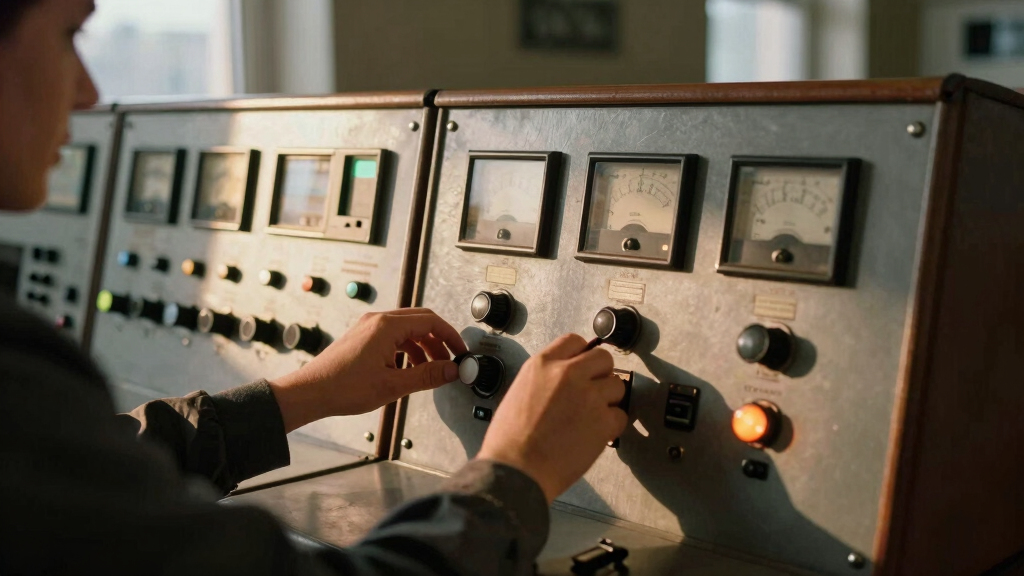
The images, taken from preserved facilities and former command centers, display an array of analog consoles, blinking indicator lights, and large control panels, all arranged in a manner that emphasizes practicality and durability. Experts note that these control rooms served critical roles in missile defense, space exploration, and military command, with some facilities still accessible for research and display purposes. The photographs have been shared widely online, sparking interest among historians, enthusiasts, and those interested in Cold War technology.
According to sources familiar with the collection, the control rooms date back to the 1960s and 1970s, reflecting the technological standards of that era. Many of these rooms have been decommissioned but remain intact, offering valuable insights into Soviet engineering and design philosophies. The vintage aesthetic, characterized by analog instruments and utilitarian layouts, contrasts sharply with modern digital command centers, highlighting the evolution of control room technology over the decades.
Cultural and Technological Significance of Soviet Control Rooms
The display and preservation of Soviet control rooms are significant for understanding Cold War history and technological development. These facilities symbolize the Soviet Union’s efforts to project power and maintain security during a tense geopolitical period. Their design also reflects the practical engineering priorities of the era, emphasizing durability and straightforward functionality. For historians and engineers, these control rooms serve as a physical record of Soviet technological innovation and strategic planning.
Furthermore, the aesthetic of these control rooms influences contemporary design discussions, with some viewing them as a form of industrial art. The vintage control rooms also evoke questions about the legacy of Cold War technology and how it shaped modern command and control systems, making their preservation and study relevant today.

1/16 Russian T-72 RC Main Battle Tank Military WW2 Army Vehicles Remote Control Toys Soviet T72 HL 3939 Edition V7 HobbyToki (3939-1-Original)
- Infrared Battle System: Includes BB launch, smoke, LED lights
- Realistic Recoil & Engine: Simulates recoil and engine sounds
- Turret & Cannon Movement: Turret rotates 320°, cannon lifts 20°
As an affiliate, we earn on qualifying purchases.
As an affiliate, we earn on qualifying purchases.
Historical Background of Soviet Control Room Design
Soviet control rooms emerged during the Cold War as critical components of missile defense, space exploration, and military command. Built primarily in the 1960s and 1970s, these facilities were designed to operate reliably under extreme conditions, often in remote or underground locations. Their design prioritized durability, simplicity, and redundancy, reflecting Soviet engineering principles of the time.
Many of these control rooms remained operational through the late 20th century, with some being decommissioned after the dissolution of the Soviet Union in 1991. Over the years, a number of these sites have been preserved or repurposed as museums or research facilities, allowing modern audiences to glimpse into the technological landscape of the Cold War era.
“These control rooms are a testament to Soviet engineering resilience and their focus on practical, durable technology.”
— Dr. Ivan Petrov, Cold War historian

599-210XD Climate Control Module Compatible with 2003-2007 Chevrolet Silverado Avalanche Suburban Tahoe Trailblazer & GMC Sierra Yukon XL Envoy (Only fit Factory Manual HVAC Control Models
- Compatible Vehicle Models: Chevy, GMC, Buick, Isuzu, Oldsmobile, Saab
- Model Compatibility: Fits 2003-2006, 2007 Classic models
- Part Number Confirmation: OEM part 599-210XD, manual knob systems
As an affiliate, we earn on qualifying purchases.
As an affiliate, we earn on qualifying purchases.
Remaining Questions About Control Room Preservation and Access
It is not yet clear how many Soviet control rooms remain accessible to the public or researchers, and whether they are being actively preserved or restored. The extent of their current condition varies, with some sites fully preserved and others deteriorating. Details about ongoing preservation efforts or plans for future exhibitions are still emerging.

WAR ROOM Metal Sign – Vintage Aluminum Wall Decor for bar, Game Room, Garage, Gym – Tactical Motivation Plaque – 4×16 Inches, Easy to Hang
- Versatile Decor for Multiple Spaces: Suitable for game rooms, gyms, garages, and more
- Durable Aluminum Construction: Rust-resistant, lightweight, long-lasting material
- Easy to Hang Anywhere: Fits in game rooms, gyms, bars, and offices
As an affiliate, we earn on qualifying purchases.
As an affiliate, we earn on qualifying purchases.
Future Plans for Exhibiting and Studying Soviet Control Rooms
Experts and institutions are expected to continue exploring ways to preserve and showcase these control rooms, potentially through museums or virtual reconstructions. Further research may reveal more about their operational history and technological details. Increased documentation and digital archiving efforts are likely to expand access to these historical sites for educational and research purposes.
As an affiliate, we earn on qualifying purchases.
Key Questions
Why are Soviet control rooms considered historically significant?
They represent the technological and strategic efforts of the Soviet Union during the Cold War, reflecting engineering practices, military priorities, and Cold War geopolitics.
Are these control rooms still operational today?
Most are decommissioned, with some preserved as historical sites or museums. Their operational status varies, and many are no longer active.
Can the public visit these Soviet control rooms?
Some sites have been opened to visitors as museums or exhibitions, but access is limited and depends on preservation status and location.
What makes these control rooms visually distinctive?
Their vintage design features analog controls, blinking indicator lights, and utilitarian layouts, contrasting sharply with modern digital command centers.
How do these control rooms influence modern design or technology?
They inspire industrial and architectural design and serve as a historical reference for the evolution of control room technology.
Source: hn