
TL;DR
Paris Art Week events continued after protests and clashes disrupted parts of the city, with the Grand Palais briefly locked down during Art Basel Paris setup. Artists and visitors described a surreal contrast between fair activity and street damage, while organizers’ full response and the protests’ wider effects remain unclear.
Paris Art Week events continued after protests and clashes on Saturday, October 17, left fires, damaged storefronts and disrupted travel across parts of the city. The police prefecture ordered a temporary lockdown of the Grand Palais while galleries installed Art Basel Paris; the venue reopened the following day, according to Hyperallergic’s report from the week.

Get art and craft supplies delivered free with Prime
- Fast, free delivery on millions of items
- Prime Video, Amazon Music and more included
- Member-only deals all year
The unrest was visible near the city’s art-week venues and neighborhoods. Hyperallergic reporter Naima Morelli described arriving at Gare du Nord amid burning plastic, scattered fires and police pursuing protesters. A friend in the Marais said she and her family struggled to get home as police and demonstrators confronted one another on Boulevard de Sébastopol. “We had to run!” she said, describing what she called indiscriminate police blows.
At the Grand Palais, where Art Basel Paris was being installed, the police prefecture ordered people to remain inside or outside the building at about 5 p.m. Saturday; for a time, nobody could enter or leave. The building reopened on Sunday without damage, the report said. Elsewhere, an Italian curator described preparing an exhibition in the Marais while hearing people running and shouting outside and tear gas seeping inside.
The wider cultural schedule was also affected. On October 15, the Foreign Ministry postponed a design presentation by Thierry Lemaire and Harry Nuriev in the salons of the Quai d’Orsay, saying the social climate made the timing inappropriate, according to the report. Art fairs and exhibitions nevertheless continued, placing visitors and workers amid a city experiencing unrest.
Art Fairs Amid Citywide Unrest
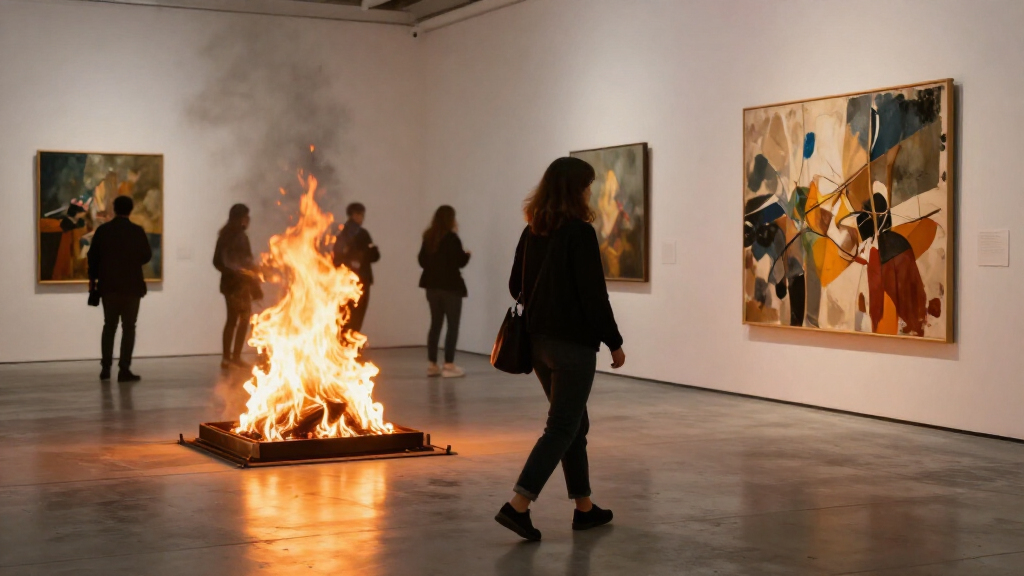
The events exposed a sharp contrast between Paris’s commercial art calendar and the unrest unfolding outside fair venues. The lockdown at the Grand Palais showed that disruption reached a major international art fair, even though the building reopened the next day and the report did not describe lasting damage there.
The protests also affected ordinary residents, visitors and cultural workers: people faced blocked routes, fires, tear gas and uncertainty about getting home. For galleries and collectors, the episode raised immediate practical questions about access and safety. For artists and critics, it prompted a deeper argument about whether fairs selling high-value work can sit comfortably alongside anger over inequality and economic power.
Popular right now

Ninja Foodi Smart 6-in-1 Indoor Grill and Air Fryer, 4 Qt, FG551

KitchenAid Artisan Mini Tilt-Head Stand Mixer, 3.5 Quart, Aqua Sky Blue

Breville Barista Pro Espresso Machine with Grinder, Brushed Stainless Steel
As an affiliate, we earn on qualifying purchases.
A Familiar Week, A Different Scale
Paris Art Week has coincided with disruption before. Morelli recalled strikes and cost-of-living marches in 2022, and a high terror alert in October 2023 that included bomb threats and disrupted air travel. Those episodes form part of the report’s account of how a major art week can continue despite upheaval; they do not establish that the current protests had the same causes or consequences.
This year’s tensions were apparent before the main fair events. At Asia Now, one collector told Morelli that art-world visitors were “courageous,” but added that they wanted to be back at their hotel before 7 p.m. French-Moroccan artist El Mehdi Largo chose to skip the fairs, calling them “rather grotesque” in the circumstances and arguing that today’s art economy is closely tied to taxes and the movement of money.
The report described damage to shopfronts and other property, including banks, supermarkets, real estate agencies, luxury brands and government buildings. It also noted that the protests included people with different motives and actions, from taking supplies for unhoused people to smashing windows. Those observations are the reporter’s account of events on the ground, not a full accounting of the demonstrations.
““The people in the art world are courageous. But I would still like to be back at my hotel before 7pm, you know, just in case.””
— A collector speaking to Hyperallergic at Asia Now
The Protests’ Wider Effects
The report does not give a full count of injuries, arrests, fires or damaged businesses, nor does it establish the protests’ overall cause or scale across France. It also does not detail whether Art Basel Paris changed its operating arrangements after the Grand Palais reopened, or whether other fairs altered schedules or security plans. The account documents specific scenes and testimony from Paris, but those reports do not represent a complete official assessment of the unrest.
Fairs Continue Under Watch
Art Week events were continuing after the Grand Palais reopened on Sunday, while the design presentation at the Quai d’Orsay had already been postponed. The immediate next developments for visitors and exhibitors are whether access, security measures or programming change as the week proceeds. The source report does not specify further announcements from fair organizers or authorities, so any additional closures or schedule changes remain unconfirmed.
Key Questions
What happened during Paris Art Week?
Protests and clashes disrupted parts of Paris on October 17, with fires and damage reported in several areas as art-week events continued.
Was Art Basel Paris closed?
The Grand Palais was temporarily locked down during installation on Saturday. According to Hyperallergic, it reopened the next day without damage; the report does not say the fair was fully closed.
Which event was postponed?
A design presentation by Thierry Lemaire and Harry Nuriev, planned for the salons of the Quai d’Orsay, was postponed on October 15. The Foreign Ministry judged the timing inappropriate amid the social climate, the report said.
Are the protests’ cause and full impact known?
Not from the report. It describes clashes, property damage and varied protest activity, but does not provide a complete account of the demonstrations’ causes, injuries, arrests or total damage.
Source: rss