To read a medieval illuminated manuscript like an expert, focus on understanding its symbolic imagery, colors, and objects, as each element carries specific meanings. Study the artistic techniques, such as stylized figures and flat perspective, that reflect cultural contexts. Pay attention to iconography and allegories to uncover layered messages hidden within the visuals. By exploring these details, you’ll gain insight into its deeper messages—keep exploring to unseal even more fascinating insights.
Listen free for 30 days with Audible
Thousands of audiobooks and originals — cancel anytime.
As an affiliate, we earn on qualifying purchases.
Key Takeaways
- Study the symbolism of colors, animals, and objects to uncover hidden messages and themes.
- Analyze artistic techniques like perspective, style, and decorative elements for cultural context.
- Identify and interpret iconography and allegories to understand complex ideas conveyed visually.
- Observe craftsmanship details, such as gilding and intricate borders, to appreciate artistic intent.
- Connect visual elements to the manuscript’s broader narrative and theological messages through active interpretation.
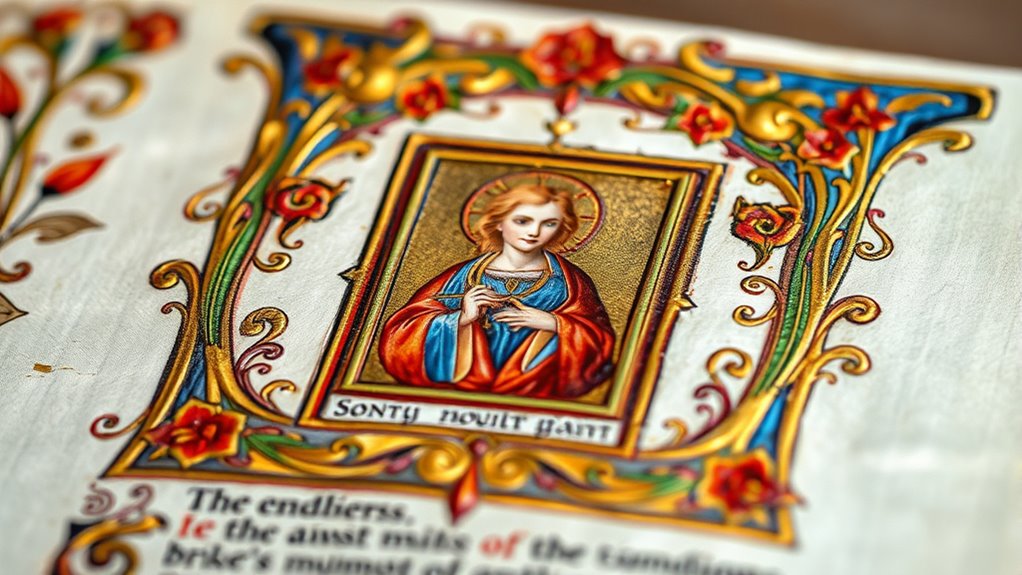
Ever wonder how to interpret the intricate beauty of a medieval illuminated manuscript? When you first look at these works, it might seem overwhelming—rich colors, detailed figures, and mysterious symbols fill the pages. To truly understand them, you need to delve into symbolism analysis and appreciate the artistic techniques used by medieval artisans. These manuscripts aren’t just decorative; they’re layered with meaning, often conveying religious, political, or cultural messages through complex iconography. Your goal is to uncover these messages by carefully examining both what is depicted and how it’s depicted.
Discover the layered symbolism and artistry behind medieval illuminated manuscripts.
Start by observing the imagery closely. Every figure, color, and object is intentional. For instance, gold leaf often signifies divine light or holiness, while specific animals might symbolize virtues or vices. These symbolic choices reflect the manuscript’s purpose and context. As you analyze the symbolism, ask yourself what each element might represent within the broader narrative or theological framework. Medieval artists frequently embedded allegories and metaphors into their work, so understanding these symbols can unlock a deeper layer of meaning. This process, known as symbolism analysis, transforms your viewing from superficial admiration into active interpretation.
Alongside symbolism, pay attention to the artistic techniques employed. Medieval illuminators used a variety of methods to achieve their effects. Look at how the figures are stylized—are they elongated or naturalistic? Notice the use of perspective, which was often flat and symbolic rather than realistic, emphasizing spiritual over physical realism. Examine the color palette: vibrant blues, reds, and golds weren’t just chosen for beauty but also for their symbolic significance. The decorative borders, intricate initials, and detailed backgrounds demonstrate meticulous craftsmanship and reveal the artist’s skill. Recognizing these artistic techniques helps you understand the cultural and technical context in which the manuscript was created, giving you insight into the craftsmanship and intentions behind each page.
Ultimately, reading a medieval illuminated manuscript like an expert involves combining your analysis of symbolism with an appreciation of the artistic techniques. You’re not just looking at pretty pictures; you’re unlocking a language of visual symbolism that communicates complex ideas. Every color choice, every symbolic element, and every stylistic detail was deliberately crafted to convey meaning. As you develop your understanding, you’ll find that these manuscripts tell stories far beyond their words, offering a glimpse into the medieval mind—rich in symbolism, skilled in art, and deeply layered in significance. With patience and curiosity, you’ll begin to see these illuminated pages as vibrant dialogues between the artist and the viewer, inviting you to interpret their profound messages.
medieval illuminated manuscript replica
As an affiliate, we earn on qualifying purchases.
As an affiliate, we earn on qualifying purchases.
Frequently Asked Questions
What Materials Were Used to Create the Illuminations?
You might wonder what materials bring illuminated manuscripts to life. Typically, artists used natural pigments like lapis lazuli for blue and gold leaf for embellishments, identified through pigments analysis. Parchment, made from animal skin, served as the perfect writing surface. By examining these materials, you can better appreciate the craftsmanship and the cultural significance behind each illuminated page, revealing the intricate process behind medieval artistry.
How Do I Identify the Manuscript’s Origin and Date?
To identify a manuscript’s origin and date, focus on manuscript dating techniques and regional styles. Examine the script, illumination style, and decoration patterns, comparing them to known regional styles from specific periods. Look for unique features, such as color palettes and motifs, that reflect local traditions. These clues help you place the manuscript within a particular historical context, making it easier to determine its origin and approximate date.
Are There Specific Symbols Indicating Religious Significance?
You’ll notice that medieval symbolism and religious iconography often reveal the manuscript’s spiritual meaning. Look for symbols like the lamb for Christ, the cross for salvation, or halos indicating saints. These visual cues help you understand the religious significance embedded in the artwork. Recognizing these symbols deepens your appreciation of the manuscript’s spiritual messages and highlights how medieval creators used visual language to communicate faith.
Can Illuminations Be Restored or Preserved Over Time?
You can restore or conserve illuminations through specialized conservation techniques that address preservation challenges like fading, cracking, or dirt. Experts carefully clean, stabilize, and sometimes retouch the artwork to maintain its integrity. Preservation requires ongoing care and climate control to prevent further deterioration. While restoration can be delicate, proper techniques help ensure these masterpieces endure for future generations, allowing you to appreciate their historical and artistic significance over time.
How Do Illuminations Reflect Medieval Societal Values?
Think of the illuminations as windows into medieval society, where every symbol speaks volumes. You’ll see medieval symbolism illustrating societal hierarchy, with regal figures towering over humble ones, reflecting social order. These images reveal what’s valued—faith, chivalry, and authority—showing how art conveyed moral and cultural ideals. By studying these visual cues, you uncover how medieval people understood their world and their place within it.
artistic techniques in illuminated manuscripts
As an affiliate, we earn on qualifying purchases.
As an affiliate, we earn on qualifying purchases.
Conclusion
Think of yourself as a traveler stepping into a sacred forest, each illuminated page a glowing path guiding your way. As you uncover the symbols and stories woven into the manuscript, you awaken a hidden world of faith, art, and history. With each careful look, you become a keeper of ancient whispers, carrying their light forward. Embrace this journey, and let the illuminated manuscript be your lantern in the timeless darkness of the past.
medieval manuscript illumination tools
As an affiliate, we earn on qualifying purchases.
As an affiliate, we earn on qualifying purchases.
As an affiliate, we earn on qualifying purchases.
NFL season / tailgating Picks
team gear
As an affiliate, we earn on qualifying purchases.