
Ethical dilemmas in AI-generated art revolve around who owns the work—the programmer, user, or AI itself—and how rights are shared or struck down. Questions about responsibility for offensive or infringing outputs also arise, especially since current laws may not fully address AI’s role. Ensuring fair use, protecting original creators, and establishing accountability are complex issues that demand careful consideration. Continuing investigates how to navigate these challenges responsibly and ethically.

Get art and craft supplies delivered free with Prime
- Fast, free delivery on millions of items
- Prime Video, Amazon Music and more included
- Member-only deals all year
Key Takeaways
- Determining ownership rights among programmers, users, and AI raises complex ethical questions.
- Existing legal frameworks may not adequately address moral responsibilities for AI-generated content.
- Ethical concerns include AI producing offensive, controversial, or infringing works without clear accountability.
- Protecting original creators requires transparent datasets and fair use policies to prevent misuse.
- Developers have a moral obligation to implement safeguards and follow ethical guidelines for responsible AI deployment.

AI-Generated Art Ownership Dilemmas
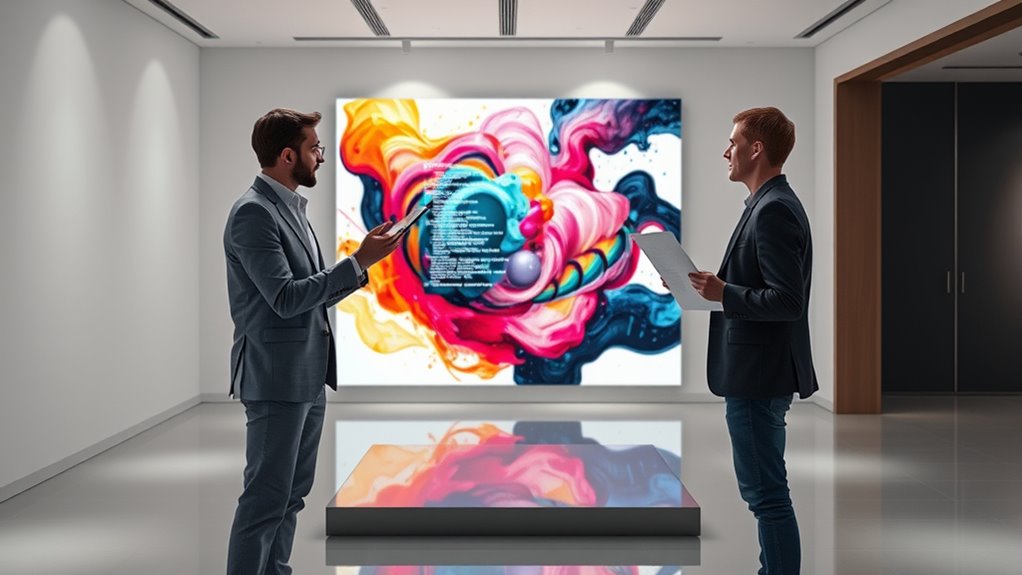
As AI-generated art becomes more prevalent, questions about who owns the final creation grow more complex. When you create or use AI tools to produce art, issues surrounding intellectual property come into sharp focus. Unlike traditional art, where a human artist’s skill and vision determine ownership, AI blurs these lines. If an AI system generates a piece based on a dataset of existing works, who holds the rights? Is it the programmer who built the algorithm, the user who inputted the prompts, or the AI itself? These questions challenge the very foundation of intellectual property law, which was designed around human creators. As you navigate this landscape, you must deliberate whether current legal frameworks adequately address AI’s role in art creation or if new laws are needed to clarify ownership rights. Additionally, the rapid development of AI technologies underscores the importance of establishing clear guidelines to prevent misuse and ensure fair attribution. Moreover, the authorship of AI-generated works is often ambiguous, complicating legal interpretations and rights management. Beyond legal concerns, moral responsibility plays a vital role in these dilemmas. When an AI produces controversial or offensive content, who bears the ethical weight? If you’re the user who prompted the AI, should you be held accountable for the output? Or does responsibility lie with the developers who designed the system? The question becomes even more complex when AI-generated art is used commercially or publicly displayed. If an AI inadvertently plagiarizes or infringes on someone’s existing work, who should be held responsible for such infringements? These scenarios raise important moral questions about accountability and the ethical obligations of those involved in developing and deploying AI art tools. Recognizing the limitations of AI in understanding context and originality is crucial to fostering responsible use. You also have to think about the moral responsibility of the creators behind the AI technology. They might argue that AI is just a tool, similar to a camera or a paintbrush, and that ultimate responsibility lies with the human operator. But as AI systems become more autonomous, this argument becomes less convincing. If the AI independently generates content that causes harm or infringes on others’ rights, moral responsibility becomes murkier. You need to consider whether developers should implement safeguards or ethical guidelines to prevent misuse or harmful outputs, acknowledging that the technology can impact others beyond just its users. Additionally, understanding the Law of Attraction principles related to ethical behavior can help guide responsible development and use of AI in art. Ensuring ethical development also involves considering the intellectual property rights of original creators to foster a fair and respectful creative environment. Recognizing the vetted nature of AI tools and datasets can help mitigate issues related to unauthorized use and infringement.
Top picks for "ethical dilemma generat"
As an affiliate, we earn on qualifying purchases.
Frequently Asked Questions
How Do Different Countries’ Laws Affect AI Art Ownership?
You should know that different countries’ laws impact AI art ownership due to international copyright treaties and legal jurisdiction variability. These treaties set common standards, but enforcement and interpretations vary, meaning your rights may differ depending on where you’re located. You need to stay aware of local laws and how they align with international agreements, as this determines who owns AI-generated art and how you can use or protect it across borders.
Can Ai-Generated Art Be Copyrighted Without Human Input?
Think of AI-generated art as a blank canvas filled by a machine’s brushstrokes. Without human input, you face authorship debates and originality challenges—can something truly be copyrighted if no person creates it? Currently, laws lean toward requiring human authorship for copyright, so AI art without human involvement often isn’t protected. You must consider these issues before claiming ownership of works created solely by AI.
Who Holds Liability if Ai-Generated Art Infringes on Existing Copyrights?
If AI-generated art infringes on existing copyrights, you’re responsible for addressing liability, especially as deepfake ethics and algorithm transparency come into play. You should guarantee your AI tools are transparent and ethically used, as unclear algorithms can lead to unintended infringement. Ultimately, you hold accountability, emphasizing the importance of understanding how your AI models operate and respecting copyright laws to prevent legal issues.
How Do Intellectual Property Rights Apply to Collaborative Ai-Human Art?
When considering collaborative AI-human art, you need to understand how authorship attribution applies. You’re responsible for assigning credit to both the human creator and the AI, clarifying who holds moral responsibility for the work. This impacts intellectual property rights, as clear attribution determines ownership. You must decide whether the human or AI’s contribution is primary, ensuring transparency and fairness in recognizing creative input and moral accountability.
What Ethical Considerations Arise From AI Art Influencing Human Artists?
When AI art influences your work, you face ethical concerns like authorship disputes and preserving your creative autonomy. You might struggle with questions about who truly owns the art—yourself or the AI—and whether your originality is compromised. This influence can challenge your independence, making you question if your unique voice remains authentic or if the AI’s role diminishes your creative control. Balancing innovation with integrity becomes essential in this evolving landscape.
Conclusion
As you navigate AI-generated art, remember that around 60% of artists feel uncertain about ownership rights. This statistic highlights the growing concern over who truly owns AI-created works. As technology advances, it’s essential for you to stay informed and advocate for clear legal and ethical guidelines. Only through understanding these dilemmas can you help shape a fair future where creativity and innovation coexist responsibly. Your awareness can make a difference in resolving these complex ownership issues.
Halloween Picks
halloween
As an affiliate, we earn on qualifying purchases.