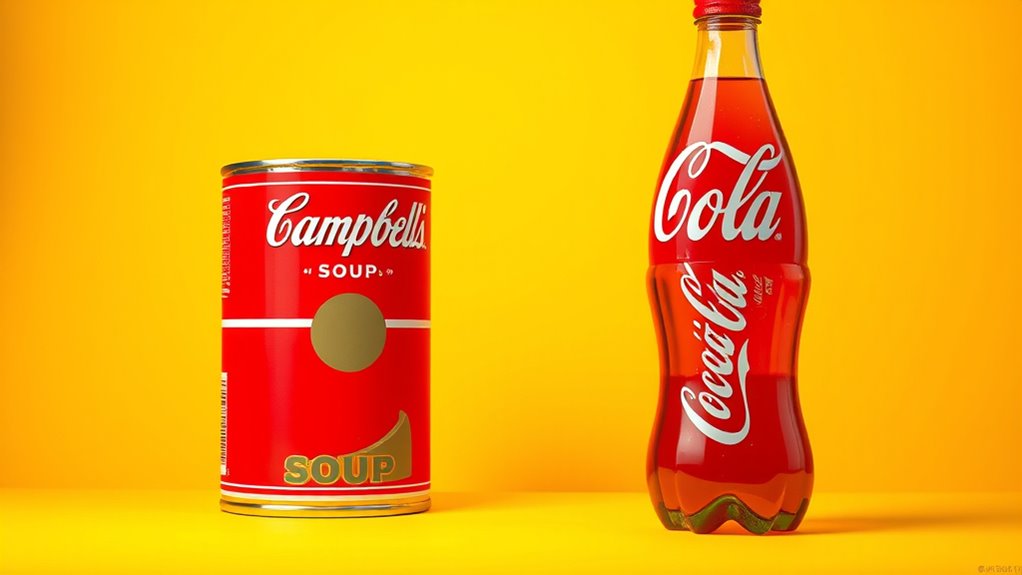

Pop Art transforms everyday objects into icons by elevating mundane items like soup cans, household products, and advertisements into bold, recognizable symbols of modern culture. Using techniques like silkscreen printing and repetition, artists like Andy Warhol emphasized the mass-produced nature of consumer goods, blurring the line between art and commerce. This approach challenges traditional notions of art and invites you to see beauty and cultural significance in the simplest objects. If you’re curious, there’s more to discover about how Pop Art reshaped our visual world.

Get art and craft supplies delivered free with Prime
- Fast, free delivery on millions of items
- Prime Video, Amazon Music and more included
- Member-only deals all year
Key Takeaways
- Pop Art elevated mundane objects by transforming them into bold, recognizable symbols through vivid colors and striking imagery.
- Artists used techniques like silkscreen printing to reproduce everyday objects repeatedly, emphasizing their cultural significance.
- Pop Art blurred the distinction between high art and commercial imagery, making ordinary items central to artistic expression.
- It critiqued consumer society by highlighting the pervasive influence of advertising and mass production on daily life.
- The movement turned familiar objects into icons that reflected modern culture and questioned societal values.
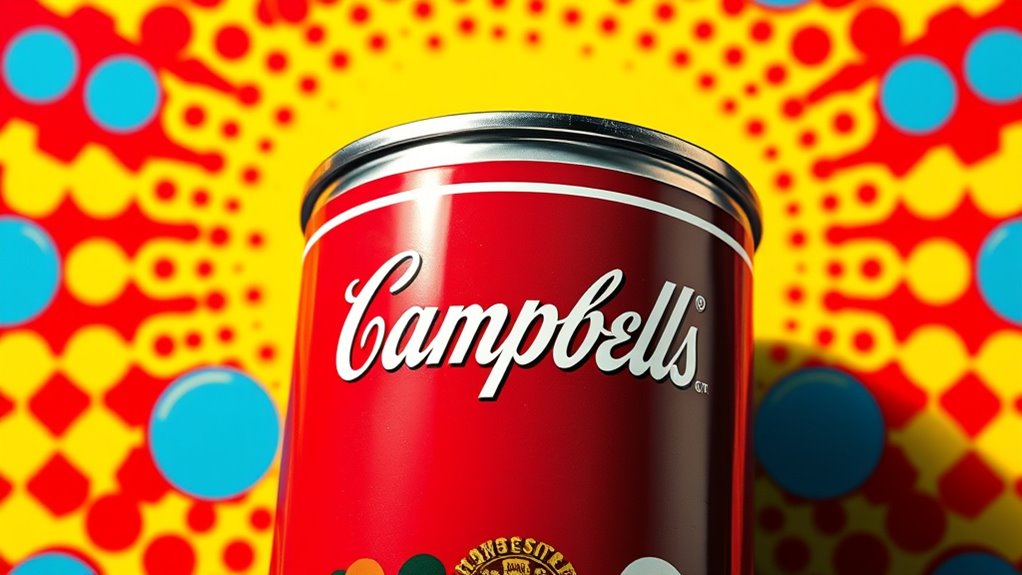
Pop Art revolutionized the way we see everyday objects by turning mundane items into bold, eye-catching art. This movement emerged in the 1950s and gained momentum in the 1960s, challenging traditional notions of fine art by elevating popular culture to a new level. You might be surprised to realize how much of your daily life influenced pop artists’ works. They drew inspiration from consumer culture—advertisements, comic strips, household products—and transformed these familiar images into striking visual statements. By doing so, pop art blurred the line between high art and commercial imagery, making it accessible and relatable.
One of the key ways pop artists achieved this was through pop art mass production. Unlike traditional artworks, which are unique and handcrafted, pop art embraced reproducibility. Artists like Andy Warhol pioneered the use of silkscreen printing to produce multiple copies of iconic images, such as Campbell’s Soup cans or Marilyn Monroe. This technique not only emphasized the influence of consumerism but also underscored the idea that art could be replicated endlessly, just like the products we buy every day. You start to see how the repetition of these images reinforces their status as cultural icons, embedded in the fabric of everyday life.
Furthermore, the movement’s emphasis on authenticity and branding highlights how commercial identities are woven into cultural expression. By elevating mass-produced objects and images, pop art challenged the elitism of traditional art forms. It made you reconsider the significance of ordinary items—an everyday can of soup or a comic book panel—transforming them into symbols of modern culture. You realize that these objects are not just mundane, but are reflective of societal values, capitalism, and mass media. The use of mass production techniques in pop art also reflected the industrial era’s influence on art, making it more aligned with the technological advancements of the time. You see how these methods allowed for broader dissemination and impact of the artwork beyond galleries and museums.
The movement also critiques the consumption-driven society you live in, highlighting how commercial images shape your perceptions and desires. As you observe pop art, you notice how its vivid colors, bold lines, and repetitive motifs mirror the fast-paced, consumer-oriented world we inhabit. The use of mass production techniques in pop art not only makes it more accessible but also comments on the commodification of culture. When artists use familiar commercial imagery, they invite you to see the beauty and significance in what you might normally overlook. This transformation of everyday objects into icons is what makes pop art so enduring—it’s a reflection of your own environment, turned into art that questions, celebrates, and critiques the world around you. Additionally, the industrial era’s influence on pop art signifies how technological advancements shaped artistic practices and cultural narratives during that period.
As an affiliate, we earn on qualifying purchases.
Frequently Asked Questions
How Did Pop Art Influence Modern Advertising?
Pop Art greatly influences modern advertising by emphasizing bold visuals and familiar imagery, which grab your attention quickly. It uses techniques from mass media and celebrity culture to create relatable and eye-catching messages. You notice how ads today often feature celebrities and everyday objects, making products feel more accessible and trendy. This approach helps brands connect emotionally with consumers, making advertising more engaging and memorable, just like Pop Art did.
What Are Some Lesser-Known Pop Art Artists?
Think of obscure pop artists as hidden gems in a treasure chest, their work rich with pop art symbolism waiting to be uncovered. You might not have heard of Ray Johnson’s collage antics or Tom Wesselmann’s bold nudes, but their contributions deepen the movement’s tapestry. These lesser-known creators challenge your perspective, proving that pop art’s vibrant language extends beyond the mainstream, inviting you to explore its diverse and colorful universe.
How Did Pop Art Impact Consumer Culture?
You see, pop art greatly impacted consumer culture by highlighting the influence of mass media and celebrity culture. It made everyday objects and celebrities into icons, blurring the lines between high and low culture. This shift encouraged you to view consumer products as art, fueling mass consumption and shaping societal values. By doing so, pop art transformed advertising and media into powerful tools that influence your preferences and perceptions daily.
Are There Parallels Between Pop Art and Digital Culture?
Imagine scrolling through social media, where viral memes turn everyday objects into symbols just like pop art did. You see how digital culture transforms familiar items into icons, echoing pop art’s approach. Both use repetition, bold visuals, and shared symbols to connect with audiences. Just as pop art elevated mundane objects, social media trends make ordinary content go viral, creating a shared cultural language that’s instantly recognizable and emotionally resonant.
How Do Collectors Currently Value Pop Art Pieces?
You’ll notice that pop art valuation depends heavily on collector trends and the artwork’s cultural significance. Collectors now prioritize pieces that have historical relevance, iconic status, and rarity. As demand fluctuates, pop art pieces can see major price swings. Staying updated on market trends helps you understand current collector preferences, ensuring you recognize which artworks are most valued today and how pop art continues to influence contemporary collecting behaviors.
As an affiliate, we earn on qualifying purchases.
Conclusion
As you step back, you’ll see how Pop Art turned simple objects into shining stars on the cultural stage. It’s as if everyday items shed their boring shells to dance in the spotlight, becoming symbols that ignite your imagination. This movement transforms the mundane into masterpieces, reminding you that beauty and meaning can be found in the most ordinary corners of life. So, next time you see a familiar object, remember—it might just be a canvas waiting to tell its story.
As an affiliate, we earn on qualifying purchases.
As an affiliate, we earn on qualifying purchases.
Halloween Picks
halloween
As an affiliate, we earn on qualifying purchases.