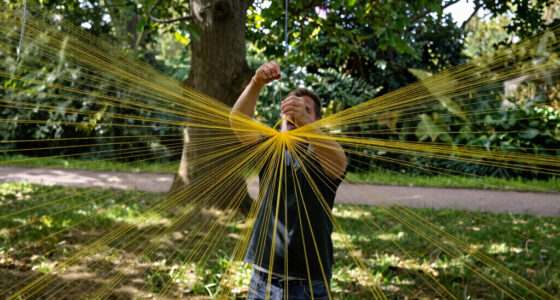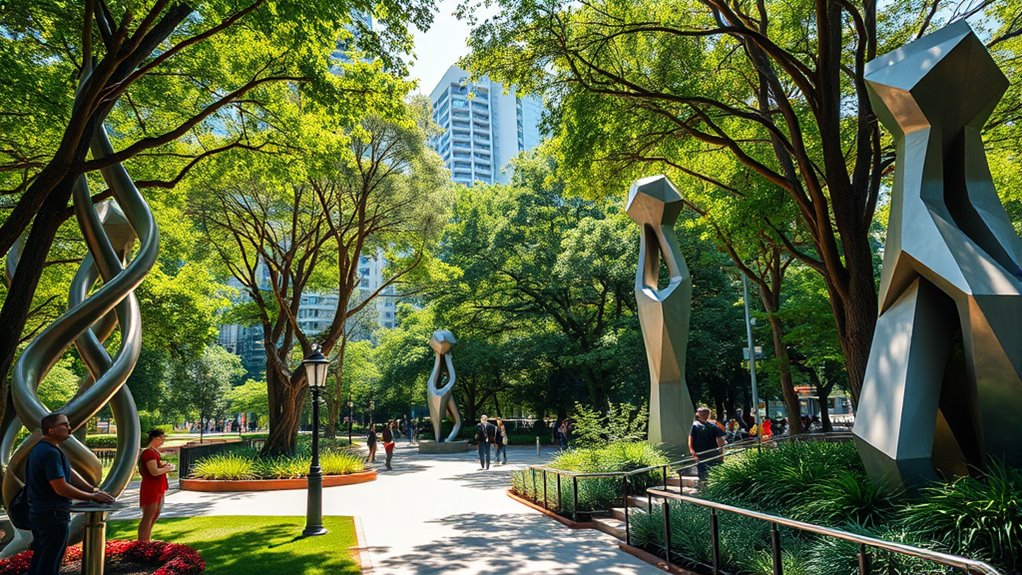

Sculptural installations in urban parks turn these spaces into vibrant open-air galleries that blend art, nature, and community. You can explore works made from eco-friendly or recycled materials that emphasize sustainability and ecological awareness. These installations inspire reflection, spark conversations about environmental issues, and foster social connections. They often serve as focal points for gatherings and help shape a unique community identity. To discover how these artworks enhance parks, keep exploring their creative and ecological impact.
Key Takeaways
- Transform urban parks into accessible, outdoor galleries that foster community engagement and visual impact.
- Incorporate eco-friendly or recycled materials to emphasize environmental sustainability and awareness.
- Use sculptures to highlight local ecosystems, climate issues, or ecological challenges, promoting environmental education.
- Create focal points that encourage social interaction, shared experiences, and community identity.
- Inspire curiosity and dialogue about sustainability through artistic forms and environmental messaging.
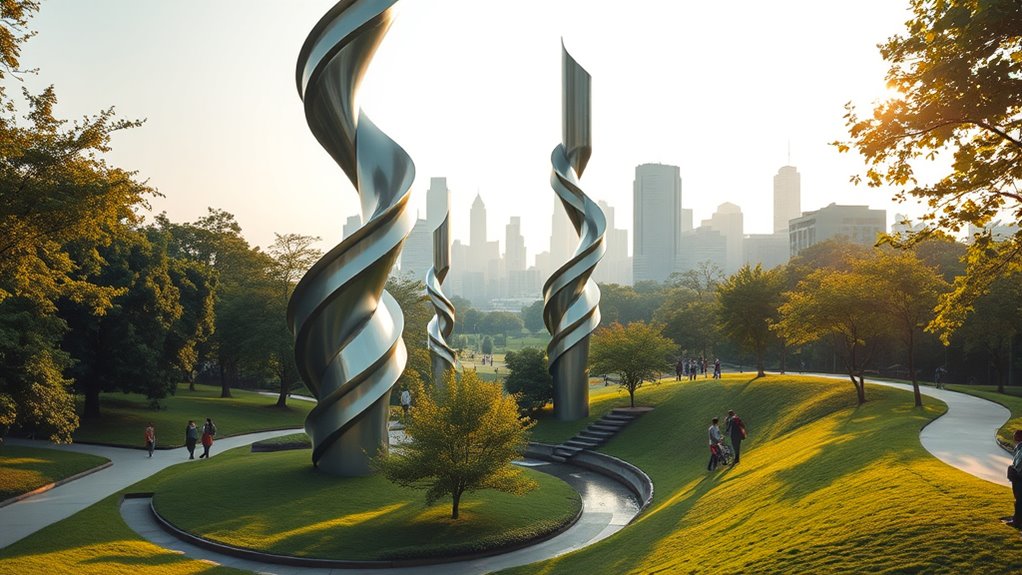
Urban parks have become vibrant canvases for artistic expression, where sculptural installations transform everyday spaces into dynamic open-air galleries. When you walk through these parks, you’re not just passing by greenery and pathways—you’re immersed in a world of public art that invites reflection, conversation, and connection. These sculptures do more than add visual interest; they shape the identity of the space and influence how people interact with their surroundings. As you encounter these installations, you might notice how they challenge traditional notions of art by existing outdoors, accessible to all, and integrated into the natural environment.
Urban parks become outdoor galleries, blending natural beauty with public art to inspire reflection and community connection.
The placement of sculptural installations in urban parks often emphasizes environmental impact, making them more than decorative features. Many artists and designers prioritize sustainability, choosing materials that are eco-friendly or repurposed. When you see sculptures crafted from recycled metals or reclaimed wood, you realize how art can promote environmental awareness while reducing waste. These choices underscore a commitment to preserving the park’s natural integrity, demonstrating that public art can serve as a bridge between creative expression and ecological responsibility. By integrating art into the landscape thoughtfully, designers help foster a sense of stewardship for the environment, encouraging visitors to appreciate and protect their shared spaces.
Furthermore, sculptural installations can actively contribute to environmental education. When you encounter pieces that highlight local ecosystems or climate issues, they become conversation starters about sustainability and conservation. This form of public art not only beautifies the park but also communicates essential messages about environmental impact in an engaging, accessible way. Artists often collaborate with environmental experts to create works that reflect local flora, fauna, or ecological challenges, making the sculptures relevant and meaningful. As a visitor, you’re invited to contemplate how human activity affects the environment and what role art can play in inspiring positive change. Public art in urban parks also enhances the social fabric of the community. These installations create focal points for gatherings, events, or quiet reflection. When you pause to appreciate a sculpture, you join others in shared experience—creating a sense of collective ownership and pride. The dynamic nature of outdoor art allows it to evolve with the environment and community, making each visit unique. Whether it’s a towering abstract piece or a delicate mobile, these sculptures foster dialogue and curiosity, enriching your connection to the space and encouraging you to see the environment through a creative lens. In this way, sculptural installations do more than decorate—they engage, educate, and inspire everyone who encounters them.
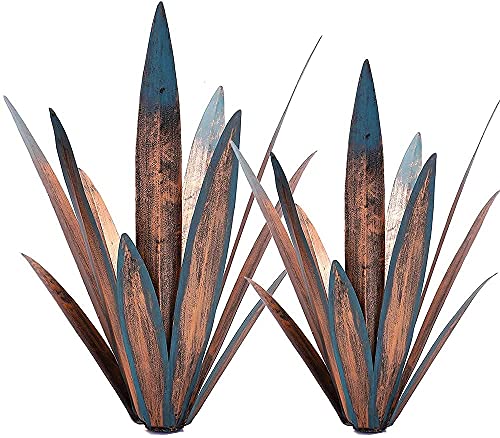
Jesokiibo 2pcs Tequila Rustic Sculpture DIY Metal Agave Plant Home Decor Rustic Hand Painted Metal Agave Garden Ornaments Outdoor Decor Figurines Home Yard Decorations Stakes Lawn Ornaments…
【Agave Metal Yard Art】100% handmade to order. This is a DIY decoration model, the customer needs to DIY…
As an affiliate, we earn on qualifying purchases.
As an affiliate, we earn on qualifying purchases.
Frequently Asked Questions
How Do Sculptural Installations Influence Local Ecosystems?
You might not realize it, but sculptural installations can influence local ecosystems through biological interactions and habitat modification. By introducing new structures, you create habitats for various species, encouraging biodiversity. These installations can alter light, water flow, or soil conditions, impacting plant and animal life. Your choices in design and placement can either support or disrupt existing ecological balances, making mindful planning essential for positive environmental effects.
What Safety Measures Are Taken for Large Outdoor Sculptures?
Like a fortress standing strong, large outdoor sculptures require rigorous safety measures. You should guarantee installation durability by using weather-resistant materials and solid foundations. Regular safety inspections are essential to identify any wear or damage early. These checks help prevent accidents, ensuring visitors stay safe while enjoying the artwork. By prioritizing these safety measures, you protect both the sculpture’s longevity and everyone’s well-being.
How Are Artists Selected for Urban Park Installations?
You get involved in the selection process through community involvement, where public input is highly valued. Artists are chosen based on their innovative designs, experience, and how well their work fits the park’s vision. Funding sources like grants, sponsorships, and city budgets support these projects, ensuring the process remains transparent. Your participation helps shape the installation, making it a reflection of community values and aesthetic goals.
What Maintenance Is Required for Outdoor Sculptures?
Think of outdoor sculptures as garden plants needing care. You’ll need to check weather resilience, especially before storms or extreme heat, to protect the artwork. Regular cleaning protocols help remove dirt, bird droppings, and pollution that can tarnish surfaces. You should also inspect for corrosion or damage, applying protective coatings if needed. This routine maintenance keeps sculptures vibrant and resilient, ensuring they continue to inspire park visitors for years to come.
How Do Sculptures Impact Visitor Engagement and Education?
You find that sculptures boost visitor engagement and education by providing interactive displays that invite participation. These installations spark curiosity and create memorable experiences, encouraging visitors to explore themes and messages more deeply. Incorporating educational programs around sculptures enhances learning, making art accessible and meaningful. By combining interactive elements with educational initiatives, you foster a richer connection between visitors and the park’s artistic landscape.

HowLoo Recycled Metal Coffee Frog Art Sculpture Decor, Unique Metal Frog Sitting Statue for Yard and Garden, Indoor Outdoor Metal Decor, Gardening Gifts Figurines, Housewarming Garden Gift (A)
As an affiliate, we earn on qualifying purchases.
As an affiliate, we earn on qualifying purchases.
Conclusion
As you wander through these urban parks, let the sculptures whisper stories of creativity and hope. They breathe life into concrete jungles, turning cold spaces into vibrant canvases of imagination. Feel the heartbeat of art pulsing beneath your feet, inspiring wonder and reflection. These installations are more than just sculptures—they’re the soul of the city, inviting you to pause, dream, and connect with the magic woven into every curve and shadow.

Public Art in Public Space: Twenty Years Advancing Work in New York’s Madison Square Park
As an affiliate, we earn on qualifying purchases.
As an affiliate, we earn on qualifying purchases.

Tequila Rustic Sculpture, 2Pack DIY Rustic Hand Painted Metal Agave, Metal Agave Plant Home Decor, Garden Yard Sculpture Lawn Home Art Decoration Statue, Garden Ornaments Outdoor Decor (Small)
【Agave Metal Yard Art】100% handmade to order. This is a DIY decoration model, the customer needs to DIY…
As an affiliate, we earn on qualifying purchases.
As an affiliate, we earn on qualifying purchases.