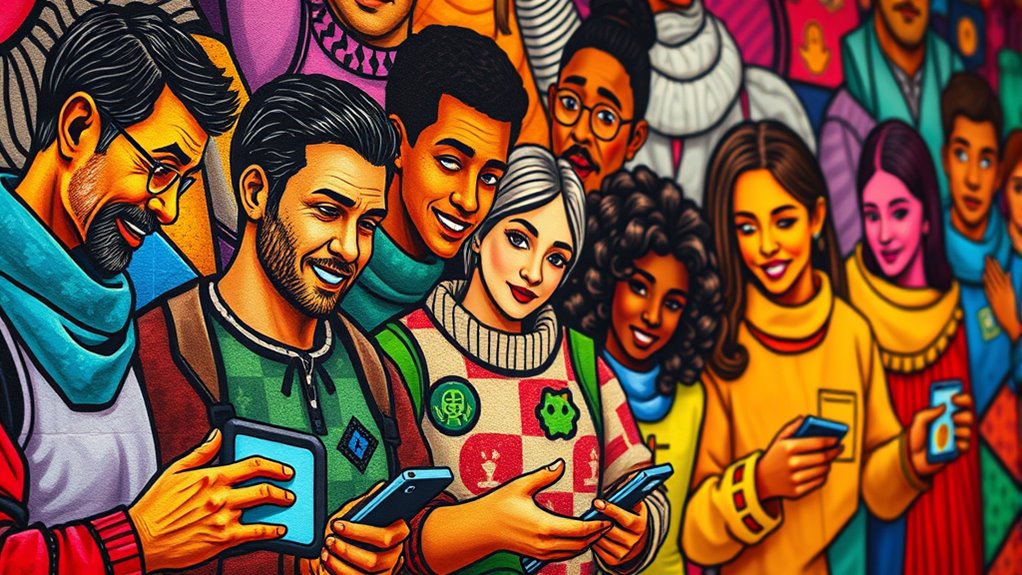

Inclusive design and diverse representation in digital art guarantee that your creative experiences reflect real-world variety and respect all identities. By prioritizing accessibility features, adaptive interfaces, and authentic cultural elements, digital art can better serve and engage a wide range of users. This approach promotes understanding, empathy, and social change. If you explore further, you’ll discover how these principles shape meaningful, inclusive digital art that truly resonates with everyone.
Key Takeaways
- Inclusive digital art features accessible interfaces that accommodate diverse physical, linguistic, and technological needs.
- Authentic representation requires careful research and community engagement to avoid stereotypes and ensure cultural accuracy.
- Adaptive technology enables personalized experiences, enhancing engagement for users with various abilities and preferences.
- Digital art that reflects diverse narratives fosters social understanding, empathy, and appreciation of different cultures.
- Combining inclusive design with cultural authenticity creates powerful tools for social change and broader audience reach.

Have you ever noticed how digital art can both reflect and shape society’s views on diversity? It’s a powerful medium that not only showcases different cultures, identities, and perspectives but also influences how people see themselves and others. When creators prioritize inclusive design, they often incorporate adaptive interfaces that respond to diverse needs. These interfaces make digital art accessible to everyone, regardless of physical ability, language, or technological familiarity. For instance, adjustable text sizes, color contrast options, and voice controls ensure that more people can engage deeply with artwork. By doing so, creators demonstrate a commitment to inclusivity, making sure that their work resonates across different communities and abilities. Additionally, integrating automation technology can help tailor experiences to individual users, further enhancing accessibility and personalization. Cultural authenticity plays a critical role in guaranteeing that digital art genuinely represents diverse groups. When artists and designers pay close attention to authentic cultural elements, they avoid stereotypes and superficial portrayals. Instead, they embed genuine symbols, narratives, and aesthetics that honor the traditions and histories of various communities. This approach not only enriches the artwork but also fosters respect and understanding. As a viewer, you’re more likely to connect with pieces that accurately reflect the lived experiences and cultural nuances of different groups. For artists, embracing cultural authenticity means investing time in research and engaging with the communities they depict, rather than relying on clichés or assumptions. This effort creates a more honest and meaningful representation that can challenge stereotypes and promote empathy. In digital art, adaptive interfaces and cultural authenticity work hand in hand. An artwork designed with adaptive features allows for personalized experiences, which can include language options or culturally relevant content adjustments. It’s about creating a space where multiple identities are acknowledged and celebrated without forcing viewers into a narrow, one-size-fits-all perspective. For example, a digital exhibition might offer multilingual descriptions or culturally specific visual elements that adapt based on user preferences. This not only broadens access but also signals respect for the diversity of your audience. When digital art incorporates these principles, it becomes a tool for social change, fostering inclusivity and authentic representation. It invites you to see the world through varied lenses, encouraging understanding and appreciation for the richness of human experience.
As an affiliate, we earn on qualifying purchases.
Frequently Asked Questions
How Can Digital Artists Ensure Accessibility for All Users?
You can guarantee accessibility by prioritizing color contrast, making sure text and backgrounds stand out for easy reading. Incorporate user testing with diverse groups to identify accessibility issues early. Use clear navigation and descriptive alt text for images. Regularly update your work based on feedback, and consider different devices and assistive technologies. These steps help create digital art that’s inclusive and accessible for all users.
What Are the Best Tools for Inclusive Digital Art Creation?
Imagine opening a world of creativity with tools that prioritize inclusivity. You should explore software like Adobe Color, which helps craft inclusive color palettes, ensuring color accessibility for all users. Additionally, tools like Figma and Canva offer features for designing with accessible contrast and color choices. These tools empower you to create digital art that’s vibrant, respectful, and welcoming, making your work truly inclusive for every viewer.
How Do Cultural Differences Influence Digital Art Representation?
Cultural differences shape digital art representation by influencing the use of cultural symbolism and artistic authenticity. You should consider local traditions, symbols, and storytelling styles to make your work resonate authentically across cultures. By respecting cultural symbolism, you guarantee your art accurately reflects diverse perspectives. Prioritizing artistic authenticity helps you create meaningful, inclusive pieces that celebrate each culture’s unique identity, fostering deeper connections with a global audience.
What Challenges Exist in Implementing Diverse Representation?
You face challenges like avoiding stereotype reinforcement and minimizing tokenism risks when implementing diverse representation. It’s tempting to rely on superficial traits or clichés, which can reinforce stereotypes instead of celebrating authentic identities. You need to be mindful, create meaningful portrayals, and include varied voices to genuinely reflect diversity. By doing so, you promote inclusivity and prevent the pitfalls of tokenism, ensuring your digital art resonates positively across different communities.
How Can Digital Platforms Promote Inclusive Art Practices?
Think of digital platforms as vibrant murals that can showcase diverse stories through color symbolism and visual storytelling. You can promote inclusive art practices by curating spaces that highlight varied voices, offering tools that support different cultural expressions, and encouraging artists to explore universal themes. By doing so, you turn your platform into a mosaic reflecting society’s richness, inspiring viewers and creators alike to embrace inclusivity in every digital brushstroke.
adaptive interface software for artists
As an affiliate, we earn on qualifying purchases.
As an affiliate, we earn on qualifying purchases.
Conclusion
By embracing inclusive design and celebrating diverse representation, you create digital art that welcomes everyone, empowers voices that are often unheard, and reflects the richness of our world. You challenge stereotypes, break barriers, and foster connection through your work. When you prioritize accessibility, authenticity, and inclusivity, you not only elevate your art but also inspire change. So, keep designing, keep representing, and keep making digital art that truly speaks to and for everyone.
multilingual digital art display
As an affiliate, we earn on qualifying purchases.
As an affiliate, we earn on qualifying purchases.
cultural authenticity art resources
As an affiliate, we earn on qualifying purchases.
As an affiliate, we earn on qualifying purchases.