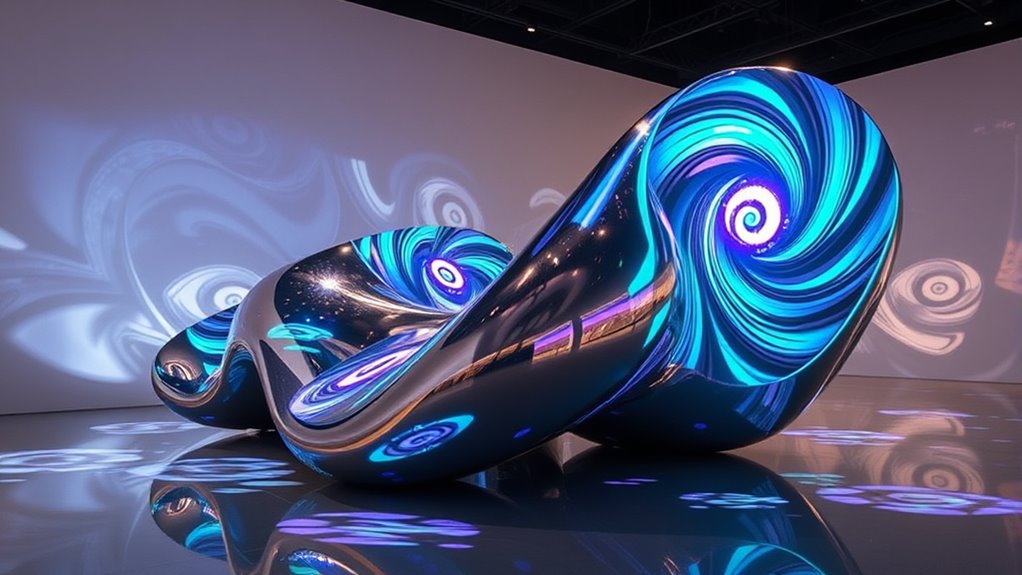

Hybrid physical-digital installations blend tangible sculptures with augmented reality and digital projections to craft immersive, interactive experiences. You can explore how digital overlays deepen engagement, reveal hidden layers, and transform static objects into dynamic, responsive artworks. These setups bridge reality and virtual worlds, allowing you to manipulate digital content and experience layered narratives. Staying tuned will reveal how advanced technology continues to evolve, creating even more enthralling ways to connect the physical and digital domains.

Get art and craft supplies delivered free with Prime
- Fast, free delivery on millions of items
- Prime Video, Amazon Music and more included
- Member-only deals all year
Key Takeaways
- Hybrid installations combine tangible sculptures with digital overlays like augmented reality for immersive experiences.
- They use sensors and interactive interfaces to respond to user movements, enhancing engagement.
- Digital projections and AR reveal hidden layers or alternate perspectives within physical artworks.
- These installations blur boundaries between physical and virtual worlds, creating fluid, layered narratives.
- Technological advancements enable more intuitive interactions and richer digital content, transforming audience participation.

Hybrid physical-digital installations seamlessly blend tangible objects with digital technology to create immersive and interactive experiences. When you step into these environments, you’re not just observing art or displays—you become part of a dynamic dialogue between the physical and digital worlds. Augmented reality (AR) plays a pivotal role in this integration, overlaying digital elements onto real-world objects to deepen your engagement. For example, an interactive sculpture might appear static at first glance, but when viewed through an AR device or app, it transforms into a lively, animated piece that responds to your movements or gestures. This fusion allows you to explore art in a new dimension, where physical form and digital augmentation coexist seamlessly.
Hybrid installations merge tangible objects with digital tech, creating immersive, interactive art experiences that respond to your movements and gestures.
Digital interaction is often enhanced by sensors and interfaces that respond to your presence, making each experience uniquely personalized. As you move around these installations, you notice the key role of interactivity. Interactive sculptures serve as focal points, inviting you to manipulate or engage with them directly. These sculptures often incorporate sensors, touch interfaces, or motion detectors that trigger digital responses—lights flicker, sounds emerge, or visual effects shift—based on your input. This makes the experience uniquely personal, as every interaction shapes the artwork’s appearance or behavior. The tactile aspect combined with digital responses amplifies your sense of presence and participation, blurring the boundaries between observer and creator. You’re no longer just a viewer but a collaborator in the artistic process.
The appeal of hybrid installations lies in their ability to dissolve the line between the physical and digital spheres. Digital projections can enhance physical sculptures, adding layers of meaning or context that would be impossible with traditional media alone. For instance, an interactive sculpture might project a narrative that evolves in real-time, influenced by your gestures or choices. Augmented reality, in particular, enriches this experience by allowing you to see hidden elements, alternate perspectives, or virtual extensions of physical objects. You might hold up your phone or AR glasses and discover a layered story unfolding around a static sculpture—an invisible world brought to life through digital overlays.
Understanding digital augmentation is crucial to appreciating how these installations create new experiential dimensions. This blend of tangible and virtual invites exploration and discovery. It challenges you to engage actively with the artwork, rather than passively observe it. As technology advances, these hybrid installations become increasingly sophisticated, offering more intuitive interfaces and richer digital content. They create a space where reality is fluid, and your interactions directly influence the outcome. Ultimately, you’re not just witnessing art—you’re co-creating it, experiencing a seamless integration of physical presence and digital innovation that transforms how you perceive and connect with the world.
Frequently Asked Questions
How Do These Installations Adapt to Different Environmental Conditions?
You can expect these installations to adapt to different environmental conditions through adaptive environments and contextual responsiveness. They use sensors and real-time data to monitor factors like light, temperature, and movement. This allows the digital elements to adjust dynamically, ensuring the experience remains engaging and seamless regardless of weather or crowd changes. By integrating these responsive systems, you create an immersive, flexible installation that thrives in various environmental settings.
What Are the Costs Involved in Designing Such Hybrid Systems?
You should conduct a thorough cost analysis and budget planning to understand the expenses involved in designing hybrid systems. These costs include hardware, software development, installation, maintenance, and potential upgrades. By identifying these elements early, you can allocate resources effectively, avoid surprises, and guarantee your project stays financially sustainable. Careful planning helps you balance features with your budget, making the integration of physical and digital components both feasible and successful.
How Do Users Typically Interact With Mixed Reality Elements?
Imagine you’re stepping into a mixed reality space, like something from a sci-fi novel. You interact with augmented interfaces using gestures or controllers, seamlessly blending digital info with the physical world. Sensor calibration guarantees these elements respond accurately, creating smooth experiences. You might manipulate virtual objects or navigate environments naturally, feeling immersed. Your actions are tracked, allowing you to explore and engage effortlessly, making the digital-physical connection feel intuitive and real.
What Safety Considerations Are Necessary for Public Installations?
You need to prioritize safety by establishing clear emergency protocols and regularly maintaining the installation. Make sure to provide easy access to emergency exits and clear signage. Conduct routine maintenance procedures to prevent technical issues that could pose risks. Train staff thoroughly on emergency response and troubleshooting. By proactively managing these safety measures, you guarantee a secure environment, allowing visitors to enjoy the experience without unnecessary hazards or concerns.
How Is Data Security Managed in Digital-Physical Integrations?
You manage data security in digital-physical integrations by implementing strong encryption protocols to protect sensitive information during transmission and storage. You also establish strict access controls, ensuring only authorized personnel can access critical systems and data. Regular security audits and updates help you identify vulnerabilities early. By combining these measures, you create a secure environment that maintains the integrity and confidentiality of data across physical and digital components.
Conclusion
As you step back from these hybrid installations, you realize they’re more than just bridges—they’re gateways. The physical and digital dance like intertwined threads, weaving a tapestry of endless possibilities. Each element symbolizes connection, transformation, and discovery, beckoning you to explore beyond the surface. In this seamless blend, boundaries dissolve, and new worlds emerge—reminding you that reality itself is fluid, waiting to be reshaped by your curiosity and imagination.
Fall Picks
fall essentials
As an affiliate, we earn on qualifying purchases.