
In STEAM-powered classrooms, you actively connect art and science to boost creativity and problem-solving. You engage through hands-on experiments, collaborative projects, and innovative technologies like 3D printing and virtual tools. This approach fosters curiosity, critical thinking, and real-world skills, making learning more meaningful. By integrating diverse disciplines, you prepare students for future careers and inspire ongoing exploration. Keep exploring to discover how these dynamic environments transform education and student potential.

Get art and craft supplies delivered free with Prime
- Fast, free delivery on millions of items
- Prime Video, Amazon Music and more included
- Member-only deals all year
Key Takeaways
- Integrate hands-on experiments to foster active learning and deepen understanding of scientific and artistic concepts.
- Promote creative collaboration to enhance communication, teamwork, and innovative problem-solving skills.
- Combine arts with STEM to encourage design thinking, aesthetics, and interdisciplinary approaches in education.
- Utilize cutting-edge technologies and materials for engaging, real-world, and globally connected learning experiences.
- Create dynamic, collaborative environments that inspire curiosity, innovation, and holistic skill development across disciplines.
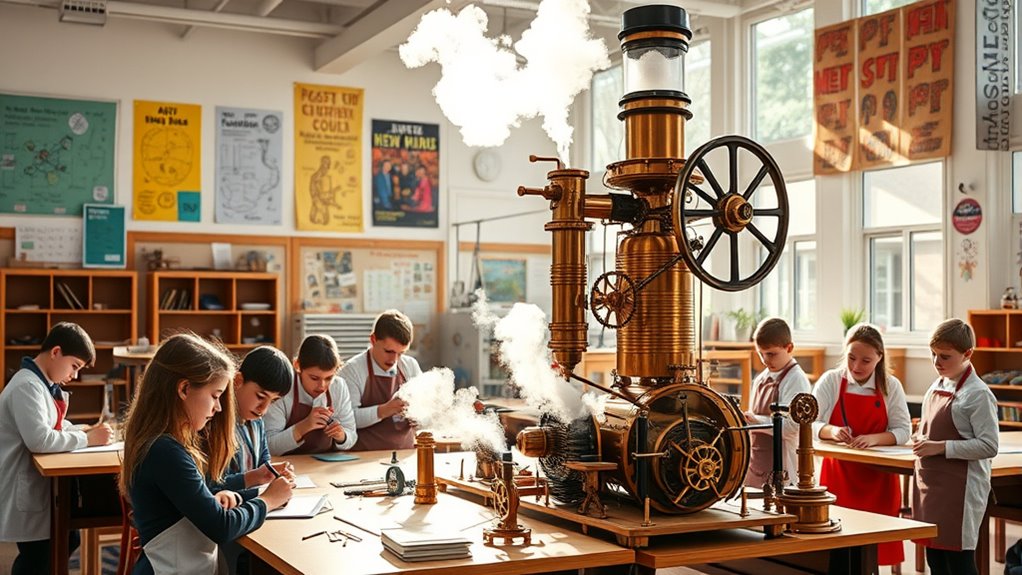
Have you ever wondered how integrating science, technology, engineering, arts, and math can transform the way students learn? When you bring these disciplines together in a STEAM-powered classroom, learning becomes more engaging, relevant, and inspiring. One of the most effective ways to achieve this is through hands-on experiments that allow students to actively participate in their education. Instead of passively absorbing information, students get to manipulate materials, test theories, and see real-world applications firsthand. These experiments foster deeper understanding because students aren’t just told about concepts—they experience them. For example, building a simple circuit or designing a structure encourages learners to think critically and troubleshoot, solidifying their grasp on complex ideas.
Hands-on experiments deepen understanding and inspire active, engaged learning in STEAM education.
But hands-on experiments are just one piece of the puzzle. Another essential element is fostering creative collaborations. When students work together, they combine their different strengths, perspectives, and ideas, leading to more innovative solutions. In a STEAM classroom, collaboration isn’t just encouraged; it’s fundamental. Students learn to communicate effectively, share responsibilities, and respect differing opinions, all while tackling challenging projects. This collaborative environment mirrors real-world work settings, preparing students for future careers where teamwork is often indispensable. Whether they’re creating a multimedia presentation, designing a sustainable model, or experimenting with robotics, working together sparks creativity and pushes boundaries.
Integrating arts into the traditional STEM framework enhances this collaborative spirit even further. Arts encourage expression, imagination, and design thinking, which complement scientific inquiry and technological skills. When students combine artistic creativity with scientific rigor, they develop innovative solutions that might not emerge within siloed disciplines. For example, designing an eco-friendly product involves not only understanding materials and engineering but also thinking about aesthetics and user experience. This holistic approach helps students see the interconnectedness of knowledge and prepares them to solve complex, multifaceted problems.
Furthermore, incorporating innovative materials and cutting-edge technologies can elevate student engagement and learning outcomes, aligning with trends seen in industries like sneaker culture and personalized design. In a STEAM classroom, technology plays a role by providing tools that amplify collaboration and experimentation. Digital platforms, 3D printers, and virtual simulations extend learning beyond traditional boundaries. These tools enable students to prototype ideas quickly, test concepts, and share their work with peers and experts worldwide. Through hands-on experiments, creative collaborations, and technological integration, students become active participants in their education, developing skills that will serve them well beyond the classroom. You’re not just teaching science and arts separately—you’re cultivating a dynamic environment where curiosity, collaboration, and creativity thrive.
Frequently Asked Questions
How Can Teachers Effectively Balance Art and Science Curricula?
You can effectively balance art and science curricula by fostering interdisciplinary collaboration, allowing students to explore connections between subjects. Embrace curriculum flexibility to adapt lessons and integrate projects that combine art and science concepts. Encourage creativity and inquiry, making learning engaging and meaningful. By blending these disciplines seamlessly, you help students develop a well-rounded understanding while nurturing their innovative skills and curiosity across both fields.
What Are the Best Tools for Integrating Art Into STEM Lessons?
You can effectively integrate art into STEM lessons using tools that foster creative partnerships and technology integration. Digital platforms like Tinkercad or Canva encourage collaborative projects, blending art and science seamlessly. Additionally, tools like 3D printers or graphic design software enable students to visualize scientific concepts creatively. By leveraging these tools, you promote innovative thinking and deepen understanding while making lessons engaging and interactive for your students.
How Do STEAM Classrooms Impact Student Creativity and Critical Thinking?
Imagine a garden where each plant represents a student’s idea, flourishing through creative problem solving and innovative collaboration. STEAM classrooms act like nurturing soil, boosting student creativity and critical thinking. By blending art and science, you encourage unique perspectives and flexible thinking, helping students grow confident in their abilities. This environment ignites curiosity, inspiring them to explore solutions with imagination and teamwork, ultimately cultivating brighter, more inventive thinkers.
What Challenges Do Schools Face When Adopting STEAM Approaches?
You’ll face challenges like funding hurdles, which can limit resources and program expansion. Curriculum rigidity also poses a barrier, as strict standards may restrict integrating art and science effectively. You might struggle to balance traditional requirements with innovative approaches, making it difficult to fully adopt STEAM methods. Overcoming these obstacles requires persistent advocacy for funding and curriculum flexibility to foster creativity and critical thinking.
Are There Proven Long-Term Benefits of STEAM Education for Students?
Yes, there are proven long-term benefits of STEAM education for students. You’ll see improved assessment outcomes as students develop critical thinking, creativity, and problem-solving skills. Additionally, STEAM boosts student engagement, making learning more meaningful and motivating. Over time, this approach helps students become better prepared for future careers that demand interdisciplinary knowledge and innovative thinking, ultimately fostering lifelong learning habits and adaptability.
Conclusion
As you embrace the idea of STEAM-powered classrooms, you gently open doors to a world where art and science dance together, nurturing curiosity and innovation. By blending creativity with logic, you quietly foster a more inspiring and dynamic learning environment. Remember, a little harmony between these worlds can subtly shape bright minds and brighter futures. So, step forward with confidence, knowing you’re helping craft a space where imagination and discovery flourish side by side.
Halloween Picks
halloween
As an affiliate, we earn on qualifying purchases.