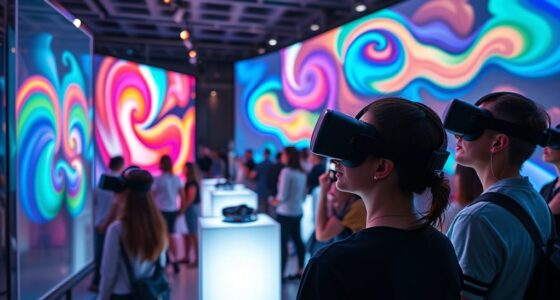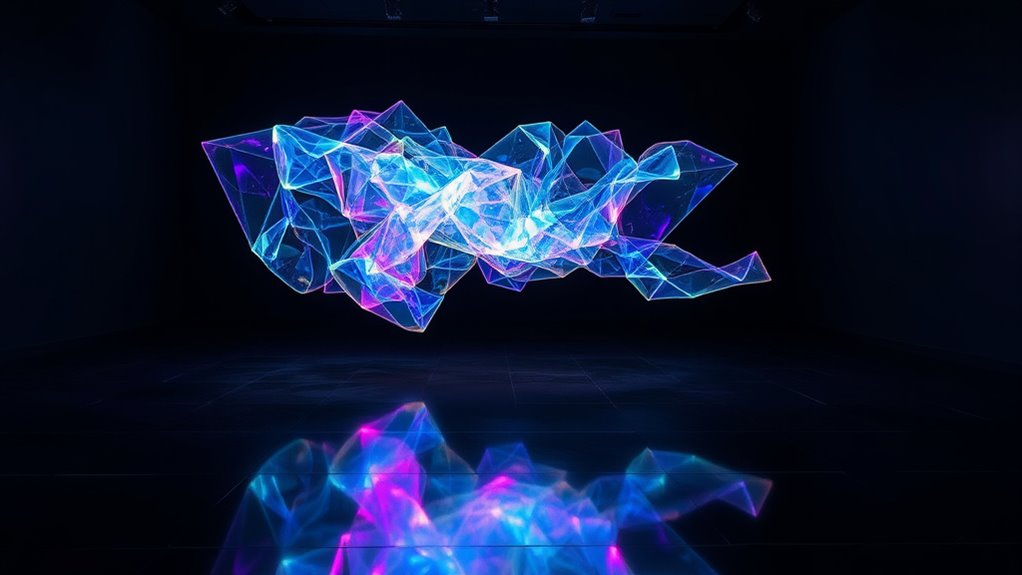
Holographic art installations use advanced light projection techniques to create immersive, three-dimensional visuals that seem to float mid-air. As you move around, the environment responds, enhancing the illusion and making you feel part of the artwork. These setups often combine laser holography and spatial design to challenge perception and evoke wonder. If you’re curious about how light and technology transform art into a mesmerizing experience, keep exploring to discover more.

Get art and craft supplies delivered free with Prime
- Fast, free delivery on millions of items
- Prime Video, Amazon Music and more included
- Member-only deals all year
Key Takeaways
- Holographic art installations use advanced projection techniques to create floating, three-dimensional visuals that transform surfaces and environments.
- They incorporate technologies like volumetric displays and laser holography for dynamic, responsive scenes.
- These installations foster immersive experiences by engaging multiple senses and challenging perceptions of space and depth.
- Ambient lighting, reflections, and spatial design enhance 3D effects and interactivity, making holograms appear lifelike and floating.
- They represent a fusion of light projection and technological innovation, transforming passive viewing into active, mesmerizing engagement.
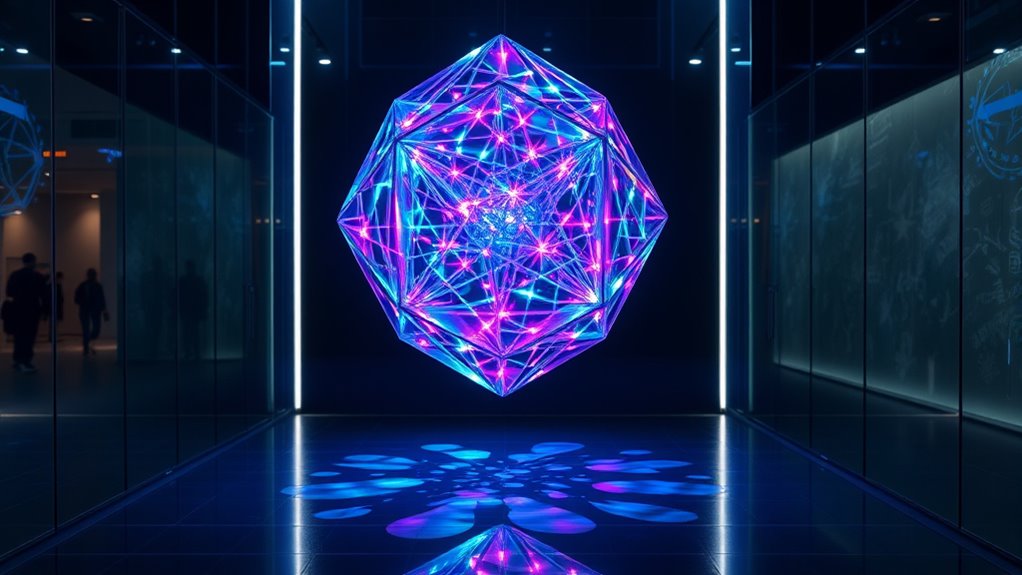
Have you ever wondered how artists create stunning, three-dimensional visuals that seem to float in space? The secret often lies in the innovative use of light projection, which transforms ordinary surfaces into mesmerizing displays. In holographic art installations, light projection isn’t just about illuminating a piece; it’s about crafting immersive environments that envelop you completely. These installations utilize advanced holographic techniques to make images appear as if they’re suspended mid-air, giving viewers the sensation of stepping into a different reality. When you stand before such a piece, you’re not just observing art—you’re immersed inside it, surrounded by shifting visuals that respond to your presence.
Discover how light projection transforms surfaces into immersive, floating holographic art experiences.
This sense of immersion is a hallmark of modern holographic art. Artists combine light projection with cutting-edge technology like volumetric displays and laser holography to create environments that challenge your perception of space and depth. Instead of static images, you experience dynamic scenes that seem to materialize out of thin air, evolving as you move around them. These immersive environments are carefully designed to engage all your senses, making it feel as if you’re part of the artwork itself. The use of light projection here isn’t merely decorative; it plays a *crucial* role in shaping the entire experience, emphasizing depth and perspective that make the visuals pop out in three dimensions.
Furthermore, holographic art installations often leverage ambient lighting and spatial design to heighten the illusion. The interplay of shadows, reflections, and varying intensities of light can deepen the three-dimensional effect, making the visuals appear even more lifelike. You might walk through a space where holograms seem to react to your movements, or where images shift seamlessly as you change your angle of view. This dynamic interaction is what makes holographic art so *fascinating* and futuristic—it’s not just a static display but a living, breathing environment created through precise light manipulation.
In addition, the advanced holographic techniques used in these installations often require sophisticated equipment and careful planning to achieve the desired visual effects. The magic of holographic art installations is rooted in their ability to blend light projection with immersive environments. They turn passive observation into active engagement, inviting you to step into a world where the boundaries between reality and imagination blur. As you explore these spaces, you’ll realize that holography isn’t just about visual spectacle; it’s about creating experiences that challenge perceptions and ignite wonder. The future of art is, without doubt, illuminated by these mesmerizing, three-dimensional worlds that seem to float effortlessly in space, waiting for you to step inside.
As an affiliate, we earn on qualifying purchases.
Frequently Asked Questions
What Are the Origins of Holographic Art Installations?
You should know that holographic art installations started with early experiments in holography during the 1960s, influenced by technological advancements in laser technology. Over time, artists embraced these innovations, creating immersive and interactive experiences. The historical evolution of holographic art reflects a blend of scientific progress and creative exploration, leading to today’s stunning installations that captivate audiences worldwide. Your understanding of their origins highlights how technology and art continually shape each other.
How Do Holographic Installations Impact Viewer Emotions?
Holographic installations evoke strong emotional resonance and boost viewer engagement through their mesmerizing visuals and immersive experience. You feel awe, wonder, and curiosity as the 3D images seem to float before your eyes. These installations create a sense of connection, inspiring reflection or excitement. As you interact with the holograms, your emotions deepen, making the art memorable and impactful, encouraging you to explore and connect on a personal level.
Are Holographic Art Pieces Permanent or Temporary?
Holographic art pieces are usually temporary rather than permanent, as their installation longevity depends on technology and maintenance. You might notice that holograms often require digital permanence solutions to preserve them over time, but they tend to be designed for short-term displays or special events. If you want a lasting impact, consider how the installation’s digital infrastructure influences its ability to endure beyond the initial exhibition period.
What Are the Main Challenges in Creating Holographic Art?
You face several challenges creating holographic art. Technical limitations often restrict the quality and scale of holograms, making it hard to achieve perfect realism. Additionally, you need to find ways to boost audience engagement, as holograms can sometimes feel detached or hard to interpret. Overcoming these hurdles requires innovative technology and creative presentation, but successfully doing so can create immersive, enthralling experiences that truly resonate with viewers.
How Accessible Are Holographic Art Installations to the Public?
You find holographic art installations somewhat accessible, but public engagement can vary depending on location and awareness. Technological barriers, like high costs and specialized equipment, limit widespread access, making it harder for everyone to experience these installations fully. However, as technology advances and becomes more affordable, more people will likely discover and engage with holographic art, increasing its public accessibility over time.
As an affiliate, we earn on qualifying purchases.
Conclusion
You might be amazed to learn that holographic art installations can attract audiences up to 60% more than traditional exhibits. As you experience these mesmerizing, immersive displays, you’ll realize they’re transforming how we engage with art. These installations don’t just entertain—they evoke emotion and spark imagination. So, next time you see a holographic piece, remember you’re witnessing a groundbreaking blend of technology and creativity that’s reshaping the future of art.
As an affiliate, we earn on qualifying purchases.
interactive holographic art display
As an affiliate, we earn on qualifying purchases.
As an affiliate, we earn on qualifying purchases.
Fall Picks
fall essentials
As an affiliate, we earn on qualifying purchases.