Public murals are powerful tools for social justice, allowing you to engage with community issues and spark cultural change. These artworks go beyond decoration, fostering dialogue, raising awareness, and giving marginalized voices a platform. Murals invite passersby to reflect on inequalities and inspire action. By participating in or supporting these projects, you help turn neighborhoods into vibrant spaces for activism. Keep exploring how murals continue to transform societies and ignite movements.
Key Takeaways
- Murals serve as powerful visual tools that challenge societal norms and promote awareness on social justice issues.
- Community involvement in creating murals fosters ownership, amplifying marginalized voices and cultural expression.
- Public murals encourage dialogue, reflection, and activism, transforming passive viewers into active participants in social change.
- Murals’ visibility and emotional impact inspire movements, protests, and policy advocacy for social justice.
- Art as activism through murals helps reshape communities, making them more inclusive, equitable, and culturally vibrant.
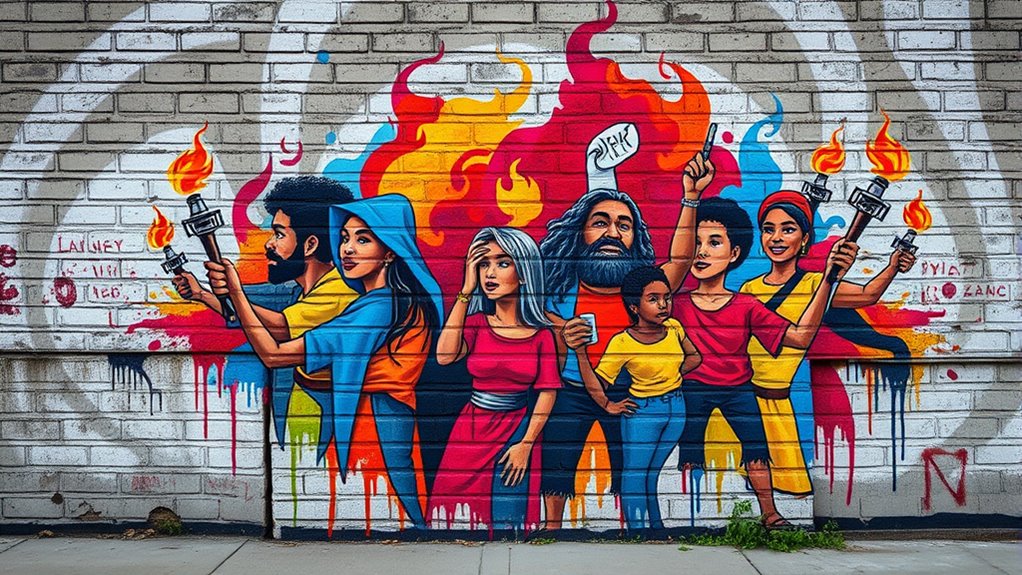
Have you ever wondered how art can spark social change? When you think about murals and public art, you might not realize their power to transform communities and challenge societal norms. Art placed in public space becomes more than just visual decoration; it turns into a tool for dialogue, awareness, and activism. By using murals as a form of community engagement, artists create a platform where voices that are often marginalized can be seen and heard. These artworks breathe life into neighborhoods, turning blank walls into canvases that reflect shared struggles, hopes, and aspirations.
Murals transform neighborhoods into vibrant platforms for community voice and social change.
Public space is central to this process. Unlike gallery exhibitions, murals are accessible to everyone—residents, passersby, visitors—without barriers or entry fees. This accessibility guarantees that the messages conveyed reach a broad audience, promoting inclusivity and collective participation. When you see a mural in your neighborhood, it’s not just about the artwork itself but about the community’s ability to shape its environment. Artists often collaborate with local residents, incorporating their stories, symbols, and cultural elements into the piece. This community engagement fosters a sense of ownership and pride, making the art more meaningful and impactful.
The act of creating murals in public space also encourages dialogue. It invites viewers to reflect on social issues such as inequality, racial injustice, environmental concerns, or political oppression. The visual language of murals can evoke emotional responses that words alone might not achieve. As a viewer, you become part of an ongoing conversation, prompted to think critically about the world around you. The community, in turn, can rally around these artworks, organizing events, discussions, or protests that amplify their message. Additionally, the use of high-quality color accuracy in murals can enhance their visual impact and emotional resonance, making the message even more compelling.
Furthermore, murals as activism can challenge the status quo. They often occupy prominent locations, demanding attention and visibility. When you see a mural addressing a social justice issue, it’s impossible to ignore its message. It can inspire action—whether that’s participating in a movement, advocating for policy change, or simply sharing awareness. This visual activism harnesses the power of art to motivate collective action, turning passive viewers into active participants in social change.
In essence, murals in public space serve as catalysts for community engagement and social justice. They transform neighborhoods into vibrant forums for expression and activism. When you encounter these artworks, remember that they’re not just aesthetic statements—they’re powerful tools for cultural change, built on the foundation of community involvement and the desire to make society more equitable.
social justice mural spray paint kit
As an affiliate, we earn on qualifying purchases.
As an affiliate, we earn on qualifying purchases.
Frequently Asked Questions
How Do Murals Influence Policy Changes Over Time?
Murals influence policy changes over time by shaping public perception, making social issues more visible and urgent. As you view these murals, you become more aware of injustices, which can drive collective support for policy influence. When public perception shifts, policymakers often respond, adopting new laws or reforms. So, murals serve as powerful catalysts that inspire long-term cultural change and encourage action toward social justice.
What Are the Legal Challenges Artists Face With Politically Charged Murals?
You face legal hurdles like permits and zoning laws when creating politically charged murals, which can delay or prevent your work. Vandalism risks are also a concern, especially if your mural is seen as provocative or controversial, leading to potential legal action or destruction. These challenges require careful planning and understanding of local regulations to make sure your activism through art is protected and effective.
How Do Communities Decide Which Issues to Highlight in Murals?
Think of your community as a garden, where each issue is a different flower vying for attention. You and your neighbors engage in community selection and issue prioritization, discussing what matters most—be it social justice, environment, or local concerns. Together, you decide which issues to highlight in murals, ensuring that the artwork reflects collective values and resonates with the community’s heart, fostering unity and meaningful change.
Can Murals Effectively Address Complex Social Justice Issues?
Yes, murals can effectively address complex social justice issues through visual storytelling and community engagement. When you involve local voices in creating murals, it fosters understanding and empathy, making the message more powerful. Murals serve as accessible platforms that spark conversations, raise awareness, and inspire action. By capturing community stories visually, you help translate intricate issues into compelling images that resonate and promote cultural change.
What Is the Impact of Digital Media on Mural Activism?
Did you know that 73% of social media users engage more with digital storytelling? Digital media amplifies mural activism by expanding reach through virtual exhibitions and online campaigns. It allows you to share powerful messages instantly, connect with a global audience, and inspire action from anywhere. You can use these tools to enhance social justice causes, making murals more accessible and impactful beyond physical spaces, ultimately fostering cultural change.

ABEIER Outdoor Acrylic Paint Set, 15 x 8.45 oz, Waterproof & UV Resistant
- Weatherproof and UV Resistant: Resists fading, peeling, cracking outdoors
- 15 Vibrant Colors: Rich, professional-grade hues in large bottles
- Large 8.45oz Bottles: Provides ample coverage for big projects
As an affiliate, we earn on qualifying purchases.
As an affiliate, we earn on qualifying purchases.
Conclusion
You see how murals can spark change, like the famous “Hope” poster by Shepard Fairey inspiring optimism during challenging times. When you use art as activism, you become part of a movement that challenges injustices and fosters cultural shifts. Imagine painting a mural in your community highlighting social issues, encouraging conversations, and inspiring action. Your art isn’t just decoration—it’s a powerful tool to influence society and create lasting change.

U.S. Art Supply 12-Ounce Triple Primed Gesso 36" Wide x 6' Long (2 Yards), 100% Cotton, Acid-Free – Unstretched Canvas Rolls for Painting, Oil & Acrylic, Murals – Cut to Frame Size
- Triple Primed Surface: Bright white, acid-free, strong adhesion
- Archival Quality: Durable, acid-free cotton for lasting art
- Versatile Media Compatibility: Suitable for oil, acrylic, watercolor, and more
As an affiliate, we earn on qualifying purchases.
As an affiliate, we earn on qualifying purchases.
ABEIER Outdoor Acrylic Paint Set, 15 x 8.45 oz, Waterproof & UV Resistant
- Weatherproof and UV Resistant: Resists fading, peeling, cracking outdoors
- 15 Vibrant Colors: Rich, professional-grade hues in large bottles
- Large 8.45oz Bottles: Provides ample coverage for big projects
As an affiliate, we earn on qualifying purchases.
As an affiliate, we earn on qualifying purchases.