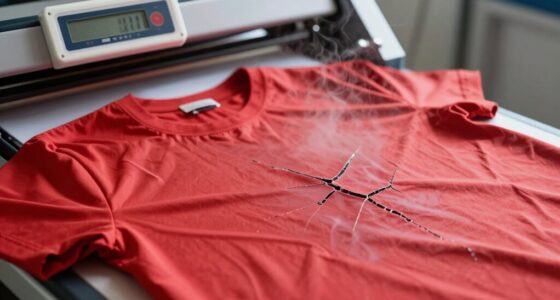
Sublimation looks “painted on” because the ink chemically bonds with polyester fibers or coated surfaces, creating a seamless and vibrant image that feels like part of the material. When done correctly, this process results in sharp, detailed graphics with smooth color progressions and a finish that resembles a painted surface. If you want to know how to perfect this effect, keep exploring the key steps and tips for amazing sublimation results.

Get art and craft supplies delivered free — and shop member deals
- Fast, free delivery on millions of items
- Access to Prime Big Deal Days deals on October 6–7
- Prime Video, Amazon Music and more included
Key Takeaways
- Sublimation inks turn into gas when heated, bonding chemically with polyester fibers for a seamless, painted-on appearance.
- The gas molecules penetrate fabric fibers, creating a tight bond that results in vibrant, detailed, and durable images.
- Proper heat, pressure, and material preparation ensure the ink fully sublimates and bonds, enhancing the painted-on visual effect.
- High-quality sublimation inks and paper facilitate smooth color transfer, mimicking a painted-on look without raised layers.
- The sublimation process embeds the design into the material, producing a seamless, vibrant finish that feels like part of the surface.
As an affiliate, we earn on qualifying purchases.
What Is Sublimation Printing and How Does It Work?
Sublimation printing is a popular method for creating vibrant, durable images on a variety of surfaces. The process starts with special sublimation ink that turns into gas when heated, allowing it to bond seamlessly with polyester fabrics or coated surfaces. This guarantees excellent ink adhesion, which results in sharp, detailed images that won’t peel or crack over time. Because the ink becomes part of the material, the print maintains its brightness and clarity through repeated washes or use. The durability of the fabric isn’t compromised, making sublimation ideal for apparel, mugs, and promotional items. Additionally, print quality is often superior due to the dye’s ability to produce smooth, gradient-rich visuals. This technique offers a high-quality finish, with colors that stay vivid even after extensive handling, thanks to the strong bond formed during the sublimation process. Furthermore, understanding the chemical transformation involved helps explain why sublimation produces such resilient and vibrant results. It is also important to consider that the process works best with polyester materials, ensuring optimal color transfer and durability. Recognizing how dye sublimation interacts with different surfaces can help users achieve the best possible results.
As an affiliate, we earn on qualifying purchases.
Why Does Sublimation Create a Painted-On Look?
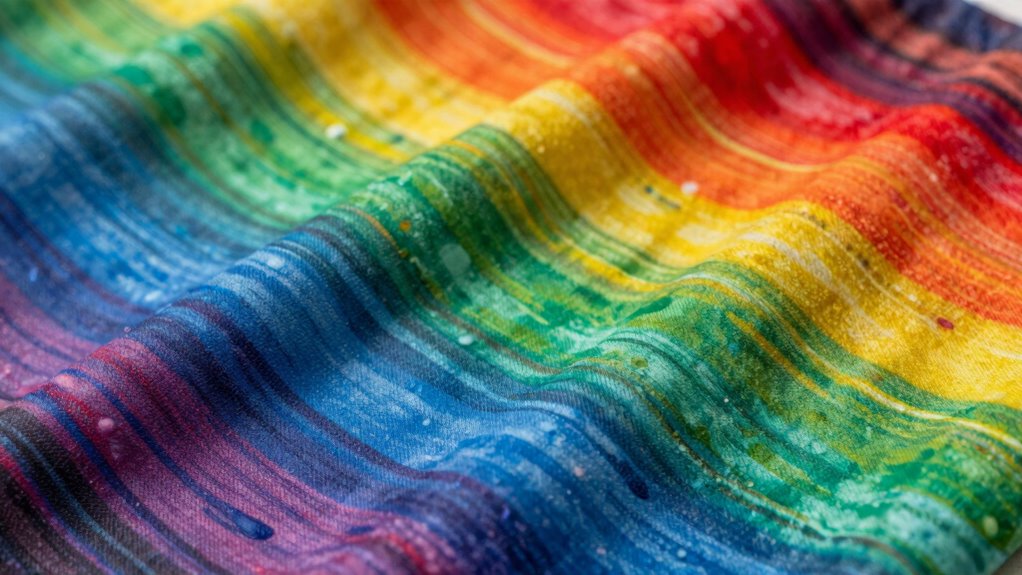
When you use sublimation, the ink bonds tightly with the fabric fibers, making the design feel like it’s part of the material. This integration results in vibrant colors with impressive saturation and depth. As a result, the printed design often appears painted-on rather than just sitting on the surface. Understanding the bonding process helps explain why sublimation creates such a seamless, painted-on appearance. Additionally, the fabric composition plays a crucial role in how well the sublimation process works and the final look of the design. The heat transfer process also ensures the ink becomes an integral part of the fabric, enhancing this painted-on effect. Moreover, the quality of the sublimation ink can significantly influence the final appearance and durability of the design.
Ink Integration With Fabric
Because sublimation dyes convert directly from a gas to a solid within the fabric’s fibers, the ink becomes part of the material itself. This process is similar to advanced fabric dyeing techniques used in textile art, where dyes bond permanently with fibers for vibrant, durable results. Unlike screen printing or heat transfers, sublimation embeds the ink at a molecular level, eliminating any raised layers or texture. As a result, the printed image looks seamless and painted on, with no visible ink deposits. Your design integrates smoothly, creating a natural, high-quality finish. This deep ink integration is what gives sublimation its signature appearance—rich, vivid, and flush with the fabric surface—making it ideal for detailed, professional-looking textile art. Molecular bonding ensures the ink remains permanent and resistant to washing or fading over time.
Color Saturation and Depth
The molecular bonding process in sublimation allows the dyes to penetrate deeply into the fabric fibers, resulting in vibrant colors with remarkable saturation. This deep ink integration enhances color vibrancy and creates a rich, painted-on appearance. The key to achieving this look lies in how ink layering builds depth:
- Multiple layers of dye intensify color richness without losing sharpness.
- The ink blends seamlessly, preventing visible borders or pixelation.
- The dye’s penetration guarantees consistent saturation across the design, mimicking a painted-on finish.
- The molecular bonding process ensures the durability of the colors over time, maintaining that painted-on effect even after washing.
- Understanding the color saturation process helps in selecting the right sublimation techniques for vivid, long-lasting results.
- Optimizing color depth techniques can further enhance the visual impact of sublimation printing.
As an affiliate, we earn on qualifying purchases.
Essential Materials for Vibrant, Painted-On Sublimation Prints
Achieving vibrant, painted-on sublimation prints requires selecting the right materials that guarantee vivid colors and sharp details. Start with high-quality sublimation inks known for their ink durability, making certain your prints resist fading over time. Opt for a compatible sublimation printer designed for precise color output and consistent ink flow. Use a premium sublimation paper with a smooth surface to maximize color vibrancy and prevent bleeding. The quality of your heat press also matters; a uniform, adjustable press ensures even transfer and sharp details. Properly maintaining your equipment and selecting the right sublimation materials can greatly impact the final quality of your prints. Additionally, choosing environmentally friendly and sustainable textile care practices can help reduce pollution and extend the lifespan of your fabrics. Incorporating quality heat presses can further enhance the precision and consistency of your sublimation projects. Investing in the best supplies, such as professional-grade inks, directly impacts the durability and vibrancy of your sublimation results. Using proper transfer techniques can also help achieve cleaner and more accurate designs. Combining these materials ensures your design maintains its richness and clarity, giving the illusion of a painted-on finish.
As an affiliate, we earn on qualifying purchases.
How to Prepare Your Designs for Seamless, Painted-On Results
To guarantee your designs produce seamless, painted-on results, you need to prepare them carefully before printing. First, verify your artwork accounts for fabric texture, as high-resolution images help the ink blend smoothly with the material. Second, choose colors wisely; use vibrant, well-balanced hues to enhance ink longevity and prevent fading over time. Third, optimize your design’s file format, preferably in a vector or high-quality PNG, to maintain sharp edges and prevent pixelation. Properly prepared designs will adapt flawlessly to the fabric’s surface, reducing the appearance of texture gaps. Additionally, understanding the importance of affiliate disclosure can help you select quality supplies and tools for your sublimation projects. Ensuring your digital file preparation aligns with best practices will significantly improve the final painted-on appearance, with consistent color, smooth integration, and long-lasting vibrancy.
Step-By-Step: Achieving a Painted-On Effect With Sublimation
To achieve a painted-on effect with sublimation, you need to start by preparing your design carefully, ensuring it has the right resolution and vibrant colors. Next, optimize your sublimation settings, like temperature and pressure, to get that seamless, painted look. Adjusting these points precisely will help you create stunning, realistic results. Incorporating luxury lifestyle products can also elevate the presentation of your sublimation projects, adding a touch of sophistication and appeal.
Preparing the Design
Before you start, make sure your design is ready for sublimation printing. To achieve a painted-on look, focus on how the design interacts with fabric texture and color blending. Here are key steps:
- Choose high-resolution images to ensure smooth color blending and sharp details.
- Adjust your design to complement the fabric’s texture, avoiding overly intricate patterns that can look muddled.
- Use subtle gradients and soft shifts to enhance the painted-on effect, emphasizing how colors blend seamlessly across the surface.
Optimizing Sublimation Settings
Optimizing your sublimation settings is key to achieving that seamless, painted-on look. To enhance color blending, adjust temperature and pressure to guarantee even ink absorption across the surface. Too high a temperature can cause ink to bleed, while too low may result in dull colors. Consistent pressure helps ink penetrate uniformly, promoting smooth color progressions. It’s essential to run test prints, tweaking settings to find the perfect balance for your materials. Properly optimized settings improve ink absorption, reducing the appearance of edges or halos that break the painted-on illusion. Focusing on color management techniques can further refine the vibrancy and blending of your designs. Fine-tuning these parameters ensures your sublimation process delivers that polished, painted-on effect you’re aiming for. Additionally, selecting the right storage and connectivity gear, such as reliable SSDs and stable internet connections, can streamline your workflow and ensure your sublimation equipment operates smoothly during high-volume production. Incorporating personality assessment tools can also help customize your workflow to better suit your unique printing style and preferences.
Common Mistakes That Ruin the Painted-On Look: and How to Fix Them
Achieving a flawless painted-on look can be tricky, especially when common mistakes undermine your efforts. One major issue is color bleeding, which happens when ink spreads beyond the design edges, ruining the smooth appearance. To prevent this, make sure your sublimation paper and fabric are properly aligned and pre-pressed. Another problem is fabric stretching, which distorts the design and causes uneven lines. Avoid stretching the fabric excessively before pressing, and handle it gently. Finally, improper heat and pressure settings can lead to poor adhesion and blurring. Remember these tips:
Prevent color bleeding and distortion by aligning materials properly and handling with care during sublimation.
- Use correct heat and pressure settings
- Keep fabric taut but not stretched
- Handle materials carefully during transfer
Fix these issues, and your design will look seamless and perfectly painted-on.
Tips to Keep Your Sublimation Colors Bright and Durable
To keep your sublimation colors bright and long-lasting, start by choosing high-quality materials that guarantee vibrant results. Make sure you apply the right heat and pressure settings to prevent fading or damage. Following these tips helps your designs stay vivid and durable over time.
Use High-Quality Materials
Are you using the right materials for your sublimation projects? High-quality materials make all the difference in achieving vibrant, durable results. Start with quality substrates that are specifically designed for sublimation to guarantee proper ink absorption. Proper surface preparation is vital; clean and smooth surfaces help prevent imperfections and color fading. To get the best results, focus on these essentials:
- Choose substrates with a coated surface optimized for sublimation.
- Inspect for any dirt or oils and clean surfaces thoroughly before printing.
- Use materials that are consistent in quality to avoid color inconsistencies.
Using quality materials combined with proper surface preparation guarantees bright, long-lasting colors, and a professional finish that looks “painted on.”
Proper Heat and Pressure
Proper heat and pressure are essential for guaranteeing your sublimation colors stay bright and durable. Achieving the right heat application guarantees the ink transfers evenly and fully, preventing dull or faded results. Use a heat press that allows precise temperature control and set it according to the material you’re working with—typically around 375-400°F. Pressure control is equally important; applying consistent, firm pressure ensures the sublimation paper makes good contact with the substrate, resulting in vibrant, sharp images. Too little pressure can cause incomplete transfers, while too much might distort or damage your item. Regularly check your equipment and adjust settings as needed. Mastering proper heat and pressure ensures your sublimation projects look professional, with colors that remain bright and durable over time.
Comparing Sublimation to Other Printing Methods: Which Is Best for the Painted-On Effect?
Have you ever wondered which printing method best mimics a painted-on look? Sublimation excels here, but other methods like screen printing, DTG, and heat transfer also have their strengths. To achieve the painted-on effect, consider these factors:
Sublimation best mimics a painted-on look with vibrant, seamless, and durable results.
- Fabric texture: Sublimation creates a seamless, ink-infused surface, blending with the fabric for a painted feel.
- Ink longevity: Sublimation inks are durable, resisting cracking and fading, which helps maintain that painted-on appearance over time.
- Detail and color depth: Sublimation offers vibrant, detailed images that look like expertly painted artwork, unlike some other methods that may appear flatter or more layered.
Troubleshooting: Why Is Your Sublimation Not Looking Quite Right?
When your sublimation results aren’t meeting expectations, the issue often stems from a combination of equipment settings, material quality, or preparation steps. Poor ink adhesion can cause colors to appear faded or uneven, so double-check your temperature, pressure, and time settings. If the heat isn’t right, ink won’t properly bond with the substrate, leading to dull or inconsistent color blending. Also, ensure your material is clean and free of dust or oils, which can hinder ink adhesion. Inconsistent color blending might mean your sublimation paper isn’t transferring smoothly or your ink isn’t evenly distributed. Adjusting your heat press or using higher-quality sublimation inks can improve results. Troubleshooting these factors helps achieve a more vibrant, painted-on look with seamless color blending.
Final Tips for Mastering the Perfect Painted-On Sublimation Finish
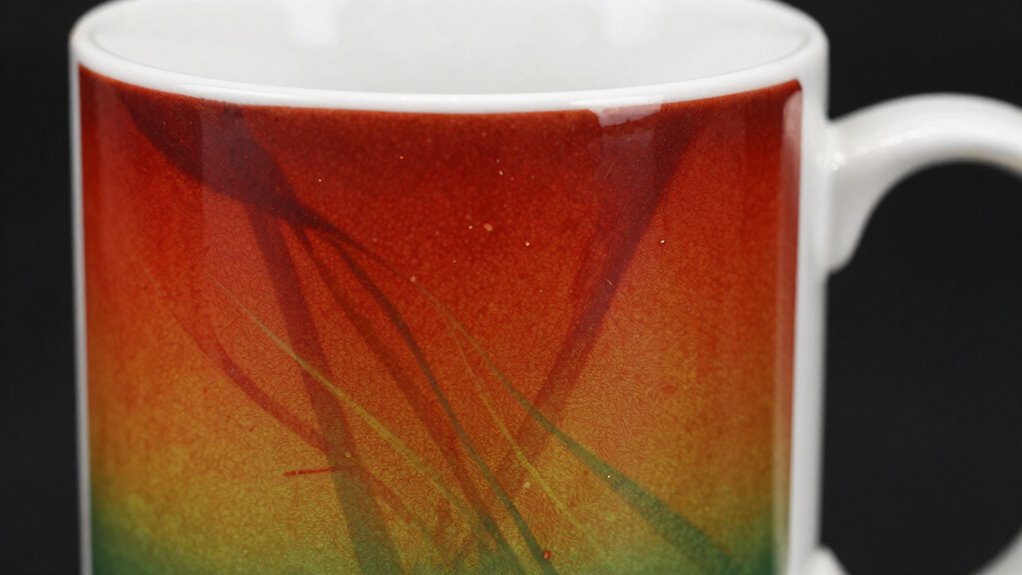
To achieve a flawless painted-on sublimation finish, focus on fine-tuning your process and paying attention to detail. First, guarantee your fabric stretch is consistent; uneven stretch can cause dye migration and distortion. Second, use proper heat and pressure settings, as too much heat can increase dye migration, while too little may result in dull images. Third, always pre-press your fabric to remove wrinkles and moisture, which helps prevent dye migration and ensures even transfer. Additionally, monitor your sublimation paper alignment closely to maintain the painted-on effect. By controlling fabric stretch, heat, and pressure, you can minimize dye migration and achieve that perfect, seamless painted-on look that looks professionally done.
Frequently Asked Questions
Can Sublimation Be Used on Dark-Colored Fabrics?
You can’t use sublimation on dark-colored fabrics because of fabric compatibility issues. Sublimation dye relies on dye penetration into polyester fibers, which are often lighter in color. On dark fabrics, the dye doesn’t show well, resulting in dull or faded designs. To get vibrant results, you need a polyester surface or special sublimation blanks designed for dark fabrics, ensuring the dye penetrates properly and the design looks sharp and vivid.
How Does Temperature Affect the Painted-On Effect?
Temperature has a significant heat impact on sublimation, directly affecting color precision and the painted-on effect. When you set the heat too high, colors can become oversaturated or bleed, diminishing detail and sharpness. Conversely, lower temperatures may result in duller or incomplete transfers. To achieve that perfect painted-on look, you need to carefully control the heat, ensuring it’s just right to preserve vibrant, crisp images without ruining the design.
Is Special Software Needed for Designing Sublimation Images?
You’ll need special sublimation software to design your images easily and accurately. These design tools are tailored to handle high-resolution files and color profiles, ensuring vibrant, seamless transfers. While basic programs can work, dedicated sublimation software simplifies the process, giving you more control over your designs. Without it, you might struggle to achieve that perfect, “painted on” look you’re aiming for, so it’s worth investing in the right tools.
How Long Does a Sublimation Print Last Before Fading?
Your sublimation print can last several years before fading, thanks to high-quality ink durability and fade resistance. Properly cared for, the vibrant images retain their brightness, even with regular washing or exposure to sunlight. To maximize longevity, avoid harsh detergents and extreme conditions. By choosing the right sublimation inks and following recommended care instructions, you guarantee your design stays vivid and intact for a long time.
Can Sublimation Be Used for Full-Color Photographic Images?
Yes, sublimation works great for full-color photographic images on compatible fabrics. You need fabric compatibility with sublimation inks, typically polyester or polyester-coated items. The dye penetration is deep, resulting in vibrant, detailed images that look painted on but are actually infused into the fabric. This process guarantees durability and wash-fastness, making it ideal for high-quality photos on apparel, mugs, or other coated items.
Conclusion
Think of sublimation as painting with light—you’re creating a masterpiece that looks like it’s part of the surface itself. When you master the techniques and materials, your designs will seamlessly blend, giving that painted-on appearance. Remember, patience and practice are your brushes and paints. Keep experimenting, and soon you’ll craft finishes so perfect, they’ll seem to have grown right into the fabric, transforming your projects into true works of art.
Halloween Picks
halloween
As an affiliate, we earn on qualifying purchases.