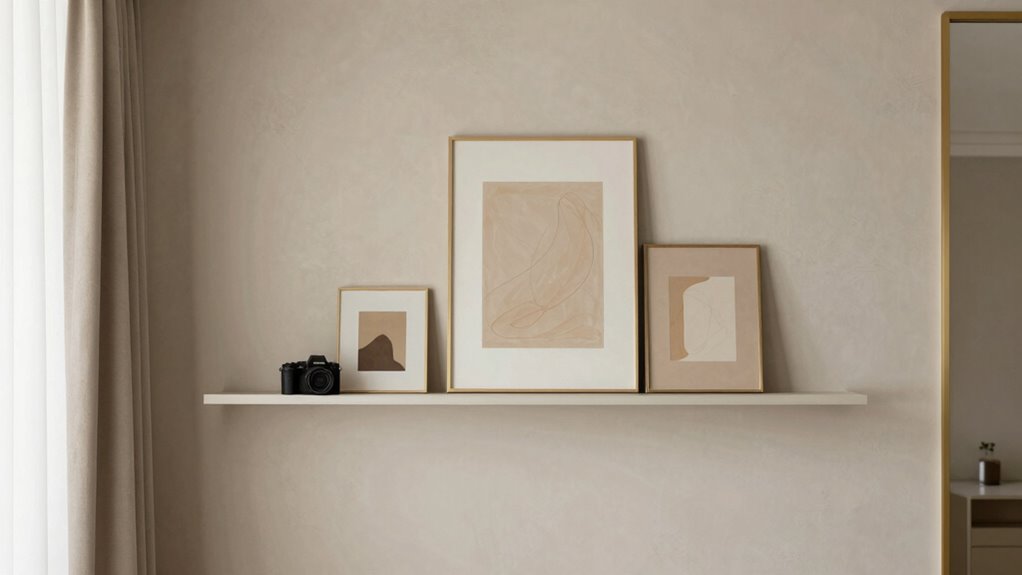

To create a calm “museum wall” color palette at home, choose soft, neutral shades like beige, taupe, gray, and white that evoke serenity and sophistication. Focus on colors that promote focus and tranquility, and guarantee they work well together through harmonious combinations such as analogous or monochromatic schemes. Use matte or satin finishes to reduce glare, and test large swatches in different lighting to refine your choices. Keep accents subtle to maintain a peaceful atmosphere—continue exploring for more tips to perfect your space.

Get art and craft supplies delivered free with Prime
- Fast, free delivery on millions of items
- Prime Video, Amazon Music and more included
- Member-only deals all year
Key Takeaways
- Select soft, neutral shades like beige, taupe, gray, or greige to evoke serenity and timelessness.
- Incorporate subtle blues, greens, or muted hues for a calming, harmonious atmosphere.
- Use matte or satin finishes to soften textures and reduce glare, enhancing tranquility.
- Test large color swatches in different lighting to ensure the palette maintains a peaceful feel throughout the day.
- Add gentle accents sparingly to complement the main colors without disrupting the calm, museum-inspired aesthetic.
As an affiliate, we earn on qualifying purchases.
What Is a Museum-Inspired Wall Palette and Why It Calms
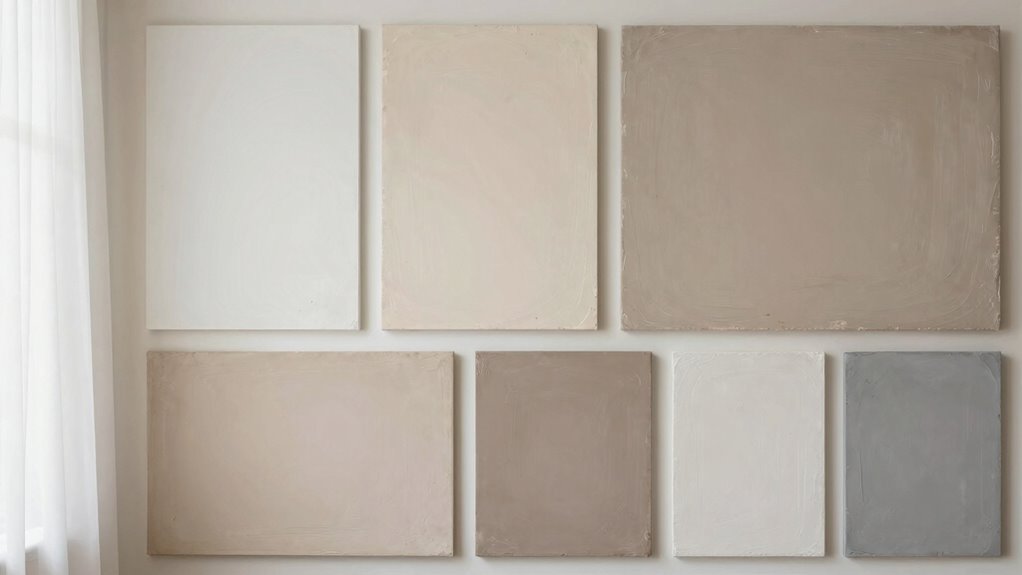
A museum-inspired wall palette draws from the calming, neutral tones often found in art galleries and historical exhibits. These colors are inspired by the subdued hues used in museum art and the careful approach to historical preservation. They create a sense of serenity and timelessness, allowing your space to feel both elegant and grounded. By choosing colors that mimic the subtle shades seen in classic paintings or preserved artifacts, you evoke a quiet sophistication that reduces visual noise. This approach helps foster a peaceful atmosphere, making your home feel like a refined, contemplative space. The palette’s restrained tones serve as a perfect backdrop, highlighting artwork or collectibles, while maintaining a calm environment rooted in the principles of museum design. The careful preservation of artifacts offers insight into how subtle colors contribute to a sense of stability and harmony within a space. Incorporating museum-inspired color palettes can also enhance the overall aesthetic, creating a cohesive and soothing environment. Understanding the importance of color harmony in museum displays can help you select the most effective shades for your home. Additionally, choosing colors with visual stability ensures a balanced and tranquil visual experience throughout your space. Moreover, selecting colors with aesthetic restraint ensures your decor remains timeless and unobtrusive.
neutral wall paint for living room
As an affiliate, we earn on qualifying purchases.
As an affiliate, we earn on qualifying purchases.
How to Choose Calm, Neutral Colors for Your Museum Wall
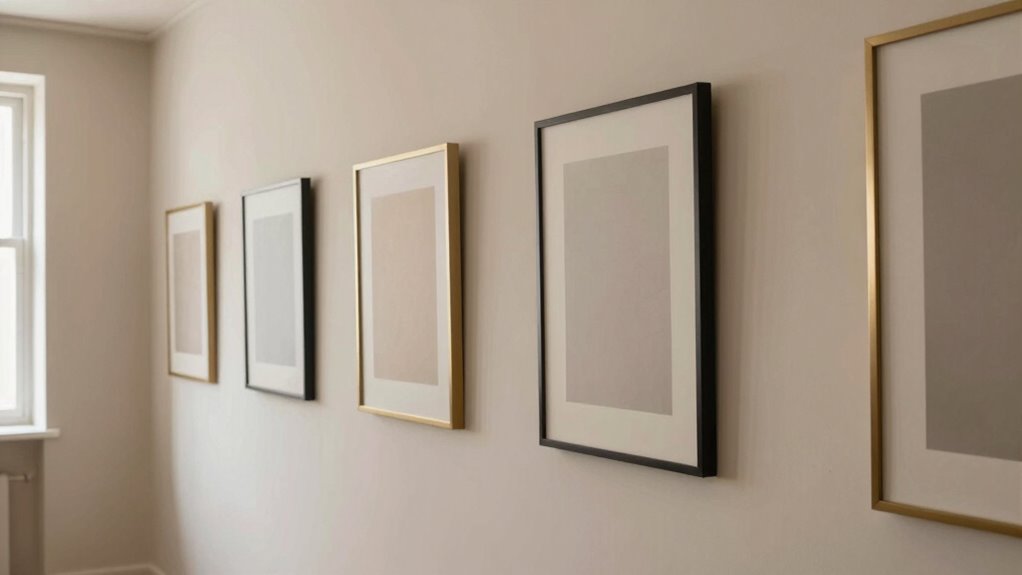
Choosing the right calm, neutral colors for your museum-inspired wall requires understanding how subtle shades influence the overall atmosphere. Color psychology plays a pivotal role—softer tones evoke serenity, while cooler neutrals promote focus. Achieving visual harmony means selecting shades that complement each other seamlessly. Consider the following options:
| Warm Neutrals | Cool Neutrals |
|---|---|
| Beige, Taupe | Gray, Greige |
| Soft Sand, Cream | Slate Gray, Pale Blue |
| Light Taupe | Misty Gray, Silver |
| Warm White | Cool White, Oyster |
| Champagne | Frosted Blue |
Stick to these shades to create a soothing, balanced backdrop that enhances your space without overwhelming it. Remember, visual harmony in your color palette is essential for creating a calm environment. Incorporating color psychology principles can further help you select shades that evoke the desired mood and promote relaxation in your space. Paying attention to color balance ensures that your palette remains cohesive and inviting. Additionally, understanding how subtle shades influence the perception of space can help you make more informed choices for your walls. Being aware of color perception can assist in selecting hues that expand or contract the feel of a room, contributing to your overall sense of tranquility.
As an affiliate, we earn on qualifying purchases.
Building a Soft, Balanced Color Palette With Soothing Tones
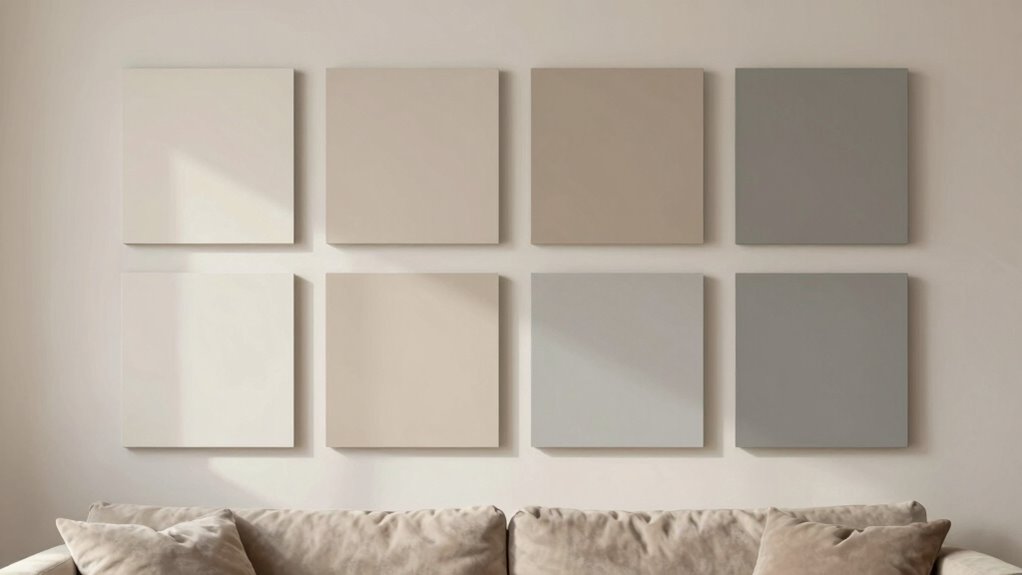
Creating a soft, balanced color palette starts with choosing serene combinations that evoke calmness. You can achieve this by pairing gentle hues that complement each other seamlessly. Using neutrals thoughtfully helps maintain harmony and guarantees the overall look stays soothing and cohesive. Incorporating elements of aromatherapy benefits can further enhance the calming effect of your space. Embracing minimalist principles ensures that your color choices contribute to a clutter-free, tranquil environment that promotes relaxation. Additionally, selecting printmaking paper textures that are smooth and subtle can support the overall sense of calm in your design scheme. Exploring sound healing science and its frequencies can also be a subtle way to enhance the peaceful atmosphere you aim to create. Considering family well-being when selecting colors can also promote a peaceful atmosphere conducive to relaxation and emotional comfort.
Serene Color Combinations
To cultivate a calming museum wall, focus on selecting serene color combinations that evoke tranquility and balance. Opt for soft, muted hues like gentle blues, warm beiges, and subtle greens, which naturally soothe the eye. Incorporate art gallery lighting to enhance these colors, highlighting their delicate nuances without creating harsh shadows. Using wall texture techniques, such as matte finishes or subtle plastering, can add depth and interest without overwhelming the space. Stick to monochromatic or analogous color schemes to maintain harmony and avoid visual clutter. These combinations foster a peaceful ambiance, making your home feel like a tranquil retreat. Incorporating color harmony principles can help ensure your palette remains cohesive and visually pleasing. Paying attention to visual flow can help you create a more unified and calming environment. Additionally, understanding the importance of requirements traceability in planning your design can help you systematically select and adjust colors to achieve the desired serenity. Exploring the role of curiosity in design can inspire innovative ideas and personalized touches that enhance your space’s calming effect. Remember, the goal is to create a cohesive, soothing environment that invites relaxation and reflection.
Balance Through Neutrals
Balancing your museum wall with neutrals creates a soothing foundation that promotes calmness and visual harmony. Neutral tones like soft beiges, warm greys, and gentle taupes serve as versatile backdrops for your art selection, allowing pieces to stand out without overwhelming the space. Incorporate a variety of wall textures—matte, satin, or subtle plaster finishes—to add depth and interest while maintaining a tranquil atmosphere. When choosing art, opt for pieces with muted colors or simple frames that complement the neutral palette. This approach guarantees your space feels balanced and cohesive, letting the calming tones shine. By anchoring your wall with neutrals and thoughtful textures, you create a serene environment perfect for showcasing your favorite art while fostering a peaceful, museum-like ambiance. Additionally, integrating textile decorating markers can help personalize and subtly enhance your wall with delicate patterns or accents that blend seamlessly with the neutral tones. Incorporating contrast in textures can further enrich the visual interest and prevent the space from feeling flat, all while maintaining the tranquil atmosphere. Understanding the importance of neutral color schemes can help you select the most effective tones for your space. Using texture variety can also add depth and tactile interest, making your wall more engaging without disrupting the calming effect.
As an affiliate, we earn on qualifying purchases.
How to Use Paint Finishes and Techniques to Enhance Serenity
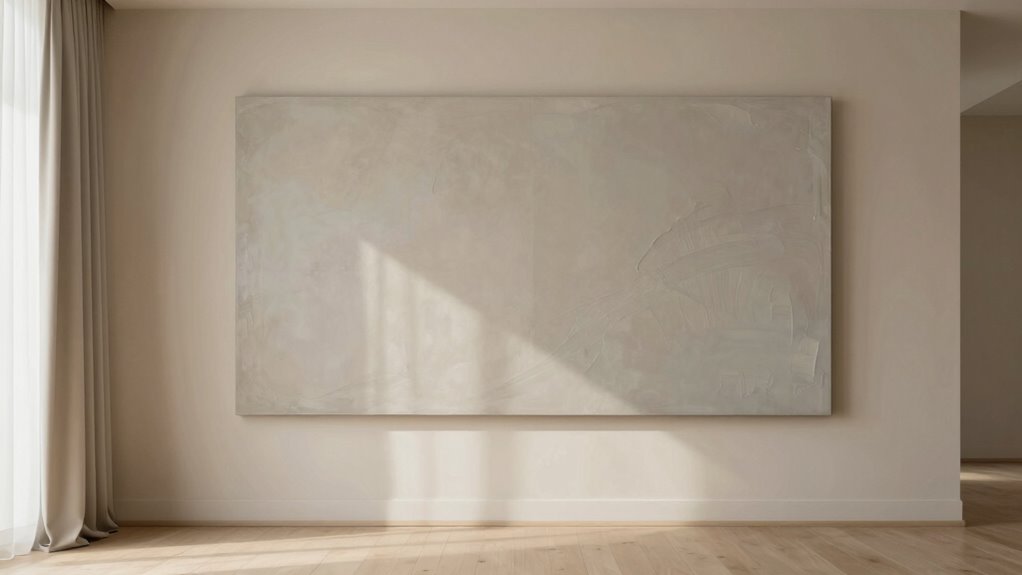
Choosing the right paint finish can considerably influence the room’s calmness, with matte and satin options offering different effects. Matte finishes create a soft, muted look that reduces glare, while satin adds a gentle sheen that reflects light subtly. Techniques like blending or applying color washes can further enhance a serene atmosphere without overwhelming the senses.
Matte vs. Satin Finishes
When selecting paint finishes for a calming museum wall, understanding the differences between matte and satin can make a significant impact. Matte finishes offer minimal sheen, creating a smooth, velvety surface that absorbs light and reduces glare. This makes them ideal for creating a soft, muted backdrop that enhances serenity. Satin finishes have a subtle sheen, offering more reflective qualities without being glossy. They bring slight texture options that add depth while maintaining a calm atmosphere. The sheen differences influence how light interacts with the wall, affecting the overall mood. Choose matte for a more subdued, tranquil effect, or satin if you want a touch of gentle luster that still feels soothing. Both finishes can complement your palette, depending on the ambiance you desire.
Techniques for Soft Effects
To create a truly serene atmosphere on your museum walls, the right application techniques and finishes can make a noticeable difference. Using subtle painting techniques, like dry brushing or glazing, adds soft, layered effects that enhance calmness. Artistic framing of artwork or photos can also reinforce the tranquil vibe, drawing attention without overwhelming the space. Lighting techniques play a essential role; soft, diffused lighting minimizes harsh shadows and creates a gentle glow that complements your wall color. When combined with satin or matte finishes, these methods soften textures and reduce glare, fostering serenity. Pay attention to the way light interacts with your walls and artwork, and choose techniques that promote a cohesive, peaceful environment.
Tips for Testing and Perfecting Your Wall Colors Before Painting
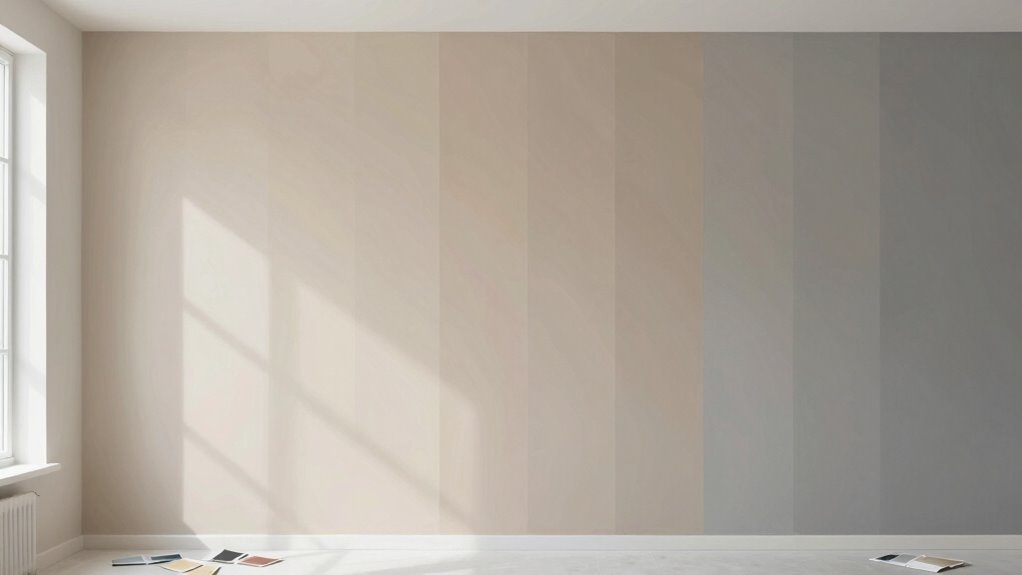
Testing your wall colors before committing to a full paint job is essential to guarantee you get the desired look. This step helps you assess how different shades influence the room’s mood and verify the color aligns with your intended atmosphere. Use paint sample strategies like painting large swatches on your wall or testing in various lighting conditions throughout the day. Consider color psychology to select shades that evoke calmness and serenity, such as soft blues or muted greens. Check how the samples interact with your existing decor and natural light. Don’t rush the process; take your time to observe how each color affects the space’s tone and ambiance. This careful testing ensures you’ll love your final choice and avoid costly mistakes.
Adding Subtle Accent Colors Without Overwhelming the Space
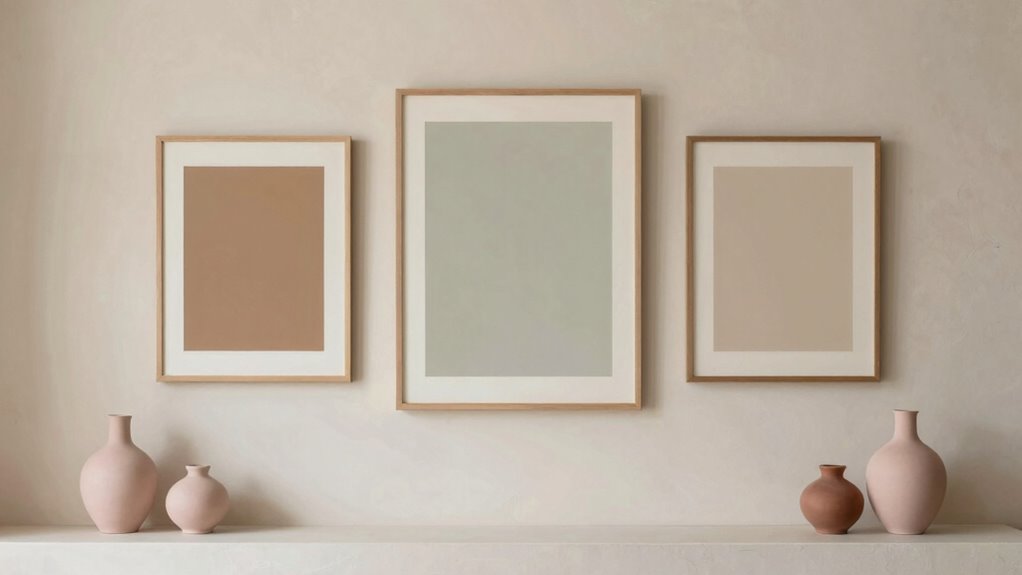
Adding subtle accent colors can enhance your calming museum wall palette without overwhelming the space. Instead of bold color accents that dominate, opt for soft, muted tones that complement your main colors. Incorporate subtle accent colors through small decor pieces, artwork, or textiles like cushions and throws. These touches add visual interest without disrupting the tranquil vibe. Use variations of your wall colors, such as a slightly darker or lighter shade, to create depth. Avoid overpowering the room by limiting accent colors to just a few carefully chosen items. Keep the overall palette cohesive, ensuring each accent supports the soothing atmosphere. This approach allows you to enjoy subtle visual interest while maintaining the calm, museum-like quality you desire.
Frequently Asked Questions
Can I Incorporate Bold Accents Into a Calm Museum Wall Palette?
Yes, you can incorporate bold accents into a calm museum wall palette. To maintain color balance, add these bold touches sparingly, like in artwork, decorative objects, or small furniture pieces. Use colors that complement your base palette, ensuring the bold accents stand out without overwhelming the space. This approach adds visual interest while preserving the overall serenity and refined aesthetic of your museum-inspired wall.
How Do Natural Lighting Conditions Affect Color Choices for a Museum-Inspired Wall?
Natural light and lighting temperature profoundly impact your color choices for a museum-inspired wall. Bright, natural light can make colors appear lighter and more vibrant, so opt for softer, muted tones to maintain calmness. Warm lighting temperatures create cozy, inviting atmospheres, while cooler temperatures emphasize crispness and serenity. Adjust your paint selection based on your home’s natural lighting to guarantee your museum wall remains calming and true to your desired palette.
What Are the Best Tools for Accurately Testing Paint Colors at Home?
They say “seeing is believing,” so you need the right tools for accurate color matching and paint sample testing. Use a digital colorimeter or a color matching app to compare shades precisely. Sample pots or peel-and-stick paint testers help you evaluate how colors look on your wall in different lighting. These tools guarantee you select the perfect hues, creating that calm, museum-inspired setting you envision, without surprises.
How Often Should I Repaint or Refresh My Museum-Inspired Wall Palette?
You should refresh your museum-inspired wall palette every 1 to 2 years to keep it looking fresh and calming. Regular paint touch ups help maintain the overall aesthetic, especially if you notice any chips or fading. Consider seasonal updates, like adding subtle accent shades in spring or autumn, to enhance the ambiance without overwhelming the serene vibe. This approach keeps your space both timeless and inviting.
Can Artwork or Furniture Influence the Perceived Calmness of the Color Palette?
Artwork selection and furniture placement act like gentle whispers that can amplify your room’s calmness. Choosing soothing, harmonious pieces helps the palette breathe serenity, while strategic furniture placement creates a balanced flow that keeps chaos at bay. When these elements complement your museum-inspired colors, they transform your space into a tranquil sanctuary, inviting peace and quiet reflection, making every corner feel intentionally peaceful and welcoming.
Conclusion
Creating a museum-inspired wall palette is like crafting a peaceful oasis in your home. By selecting soothing, neutral tones and testing them beforehand, you set the stage for serenity. Think of your walls as a calm lake—still, balanced, and inviting. With the right colors and techniques, you’ll transform your space into a tranquil retreat that feels as timeless as a gallery’s quiet hush. Your perfect, calming haven is just a brushstroke away.
Halloween Picks
halloween
As an affiliate, we earn on qualifying purchases.