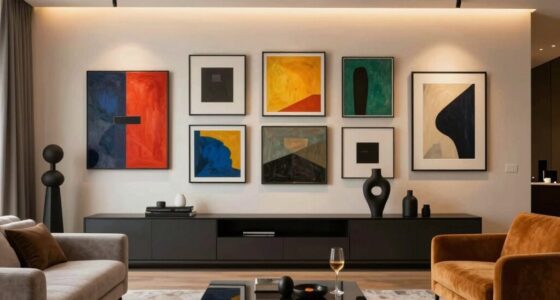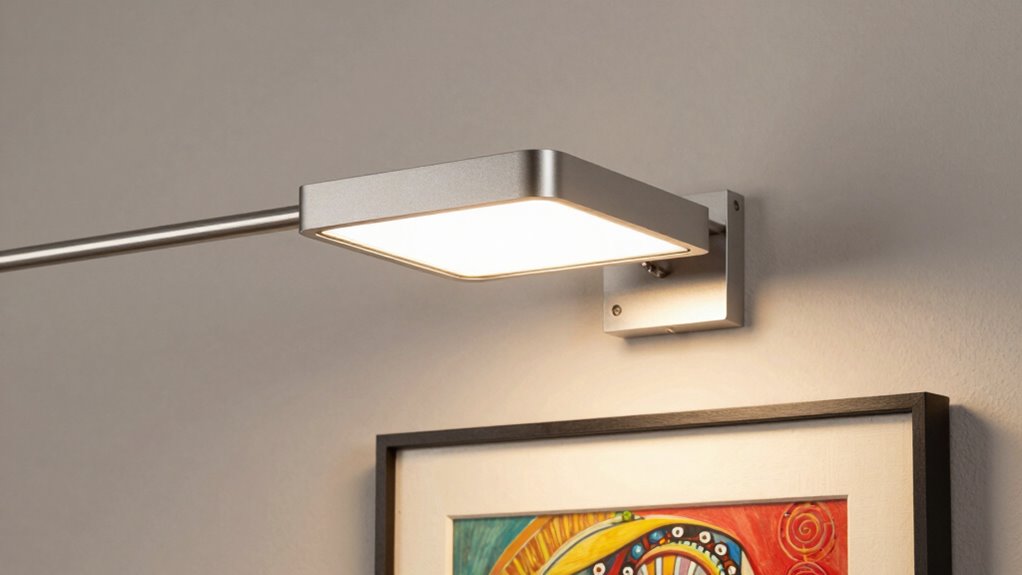

To make certain your artwork is evenly lit, choose a picture light that’s slightly wider than the art itself, extending beyond the edges for even coverage. The fixture should be mounted about 6-12 inches above the art at a downward angle of 30° to 45°. Proper sizing and placement prevent glare or shadows, creating a balanced display. Want more tips on selecting and positioning the perfect picture light? Keep exploring for expert advice.
Key Takeaways
- Choose a fixture width that extends slightly beyond the artwork edges for even light coverage.
- Match the fixture size and style proportionally to the artwork and frame for visual harmony.
- Mount the light 6-12 inches above the art, angling it downward at 30° to 45° for optimal illumination.
- Test and adjust the light’s height, angle, and distance to eliminate hotspots, shadows, and glare.
- Use professional guidance for precise sizing and placement, especially for valuable or delicate artworks.
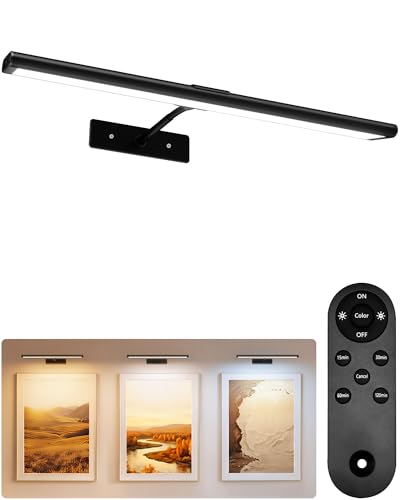
EZVALO Picture Light for Wall, 4800mAh 16'' Rechargeable Wireless IR Remote Built in Battery Lights for Painting, Dimmable Magnetic LED Art Display Light, Colors Temperatures, for Gallery, Living Room
- Rechargeable with USB-C: Built-in 4800mAh battery with USB-C charging
- Long-lasting Battery: Up to 11 hours of illumination after 5-hour charge
- Full Coverage Illumination: 80 LEDs with 150lm, CRI >90%
As an affiliate, we earn on qualifying purchases.
As an affiliate, we earn on qualifying purchases.
Why Choosing the Right Size for Picture Lights Matters
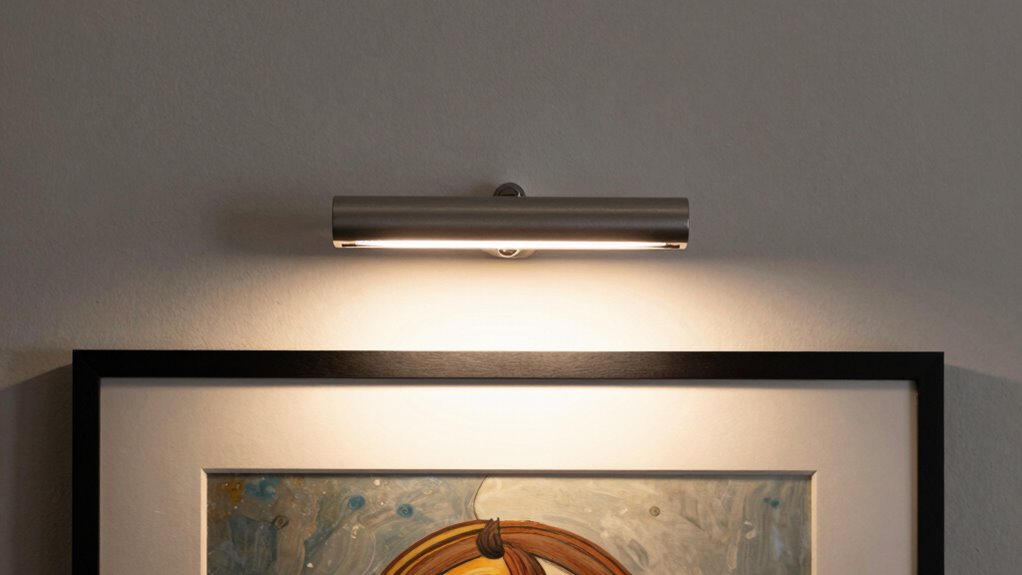
Choosing the right size for your picture light is essential because an improperly sized fixture can detract from your artwork or create an unbalanced look. When selecting a light, consider how the lighting color will enhance or clash with your art’s tones. A fixture that’s too small may not provide enough illumination, while one that’s too large can overpower the piece. Installation height also plays a critical role; placing the light too high or too low can cause uneven lighting and visual discomfort. The correct size ensures the light evenly highlights your artwork without overwhelming it. Additionally, understanding quality assurance principles can help you plan how your display will be viewed across different devices and platforms. Paying attention to the lighting fixture’s dimensions and how it’s installed helps create a balanced, aesthetically pleasing display that truly showcases your art’s details and colors. Properly sizing your picture light also involves considering visual harmony, ensuring that the fixture complements both the artwork and the surrounding wall space for a cohesive look. Thinking about lighting placement can further enhance the overall effect and viewer experience.
adjustable picture lighting fixture
As an affiliate, we earn on qualifying purchases.
As an affiliate, we earn on qualifying purchases.
How to Pick the Perfect Width for Your Artwork

The width of your picture light plays a significant role in how well it complements your artwork. If it’s too narrow, the light may look out of place or unevenly distributed, while a too-wide fixture can overwhelm the piece. To find the perfect fit, consider the artwork’s size and frame. A good rule of thumb is to choose a light that extends slightly beyond the edges of your piece. Also, think about the lighting color—warm or cool tones can change the mood—and bulb types, such as LED or incandescent, which affect brightness and energy use. Maintaining support and boundaries in your lighting choices can help create a balanced and inviting display. Additionally, understanding market trends in lighting design can help you select fixtures that remain timeless and adaptable to different art styles. Being aware of lighting standards can also ensure your display is both safe and effective. Moreover, considering proper lighting placement can prevent glare and shadows, enhancing the overall presentation.

4-Pack Picture Lights for Wall, Rechargeable Wireless Poster Lights, Black
- Rechargeable Battery: 2000mAh capacity, charges in 3 hours, lasts 15 hours
- Multiple Color Modes: 12 RGB colors, 3 CCT options, dynamic modes
- Easy Magnetic Mounting: Magnetic attachment, no tools or wiring needed
As an affiliate, we earn on qualifying purchases.
As an affiliate, we earn on qualifying purchases.
What Affects the Ideal Height and Angle of Your Picture Light
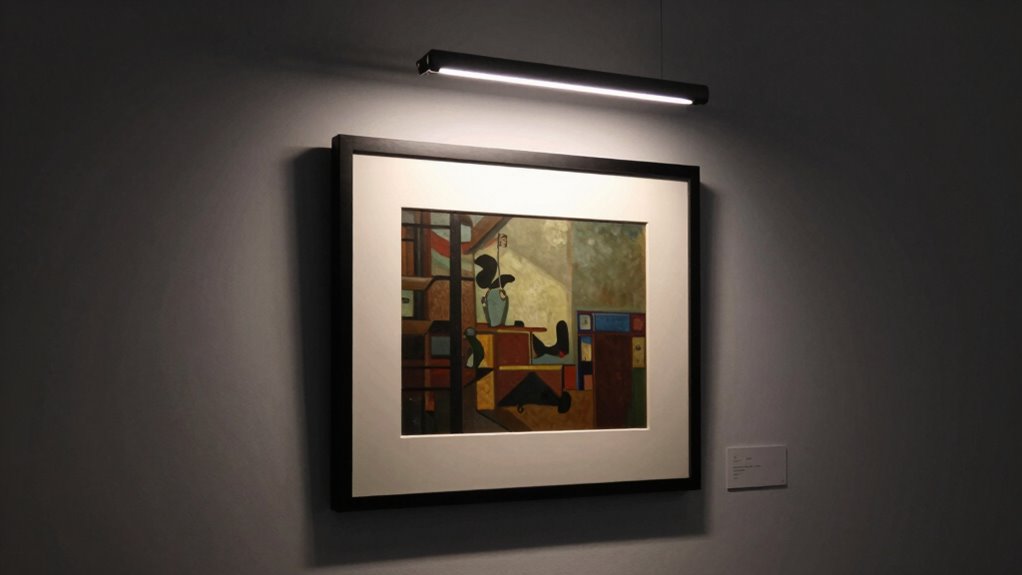
The height and angle of your picture light are essential for highlighting artwork effectively, as they influence how the light hits the piece and creates visual impact. If placed too high, the light may wash out details; too low, and it can cause glare or uneven illumination. The ideal height is typically 6 to 12 inches above the artwork, depending on the size and frame. The angle should direct the light at about 30° to 45° downward to reduce shadows and glare. Consider the LED color—warm tones create a cozy glow, while cooler tones enhance clarity. Higher bulb wattage provides brighter light but can cause heat buildup, so choose a suitable LED bulb to balance brightness and energy efficiency. Properly lighting design can further improve the overall presentation by minimizing shadows and ensuring consistent illumination across the artwork.
4-Pack Picture Lights for Wall, Rechargeable Wireless Poster Lights, Black
- Rechargeable Battery: 2000mAh capacity, charges in 3 hours, lasts 15 hours
- Multiple Color Modes: 12 RGB colors, 3 CCT options, dynamic modes
- Easy Magnetic Mounting: Magnetic attachment, no tools or wiring needed
As an affiliate, we earn on qualifying purchases.
As an affiliate, we earn on qualifying purchases.
How to Match Light Size and Style With Your Artwork and Frame
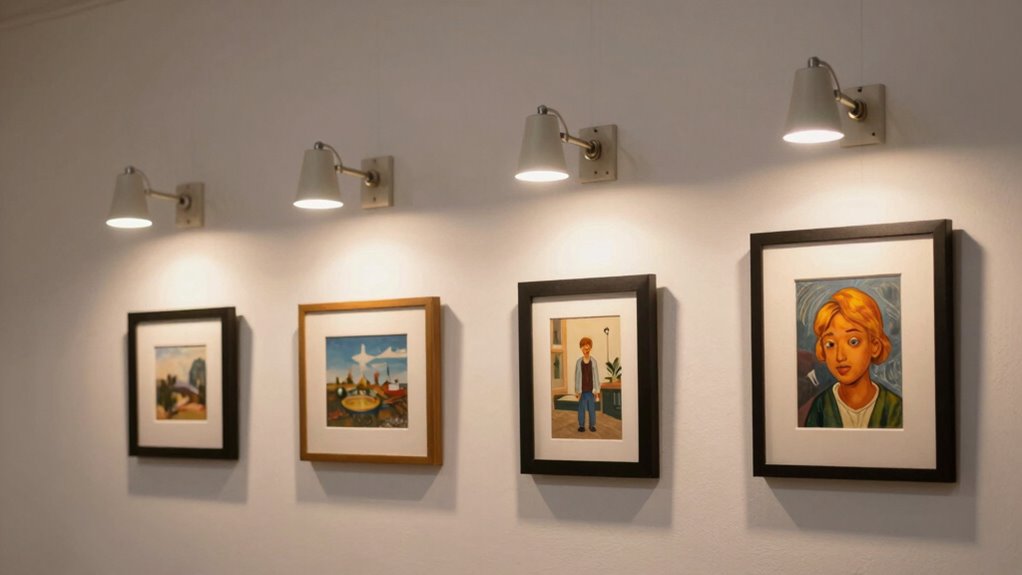
Choosing the right light size and style depends on your artwork’s frame and overall look. You want the fixture to complement both the artwork’s size and its frame’s design without overwhelming or underwhelming. Pay attention to proportions to create a cohesive display that highlights your piece beautifully. Additionally, considering cabling solutions ensures a clean and professional installation that maintains the aesthetic balance.
Frame Style Compatibility
Matching your picture lights to your artwork and frame involves considering both size and style to create a cohesive display. To guarantee harmony, focus on how the light’s style complements your frame’s material and color coordination. For example:
- Choose a sleek, minimalist light for modern metal frames to maintain a contemporary look.
- Opt for a vintage-style fixture with warm tones if your frame features ornate carvings or antique materials.
- Match the finish of the light—brass, black, or silver—with your frame’s color to unify the overall aesthetic.
- Selecting the appropriate car protection/accessories can also enhance the presentation of your framed artwork by preventing damage from environmental factors.
Artwork Size Considerations
When selecting a picture light, size is a crucial factor to guarantee your artwork remains the focal point without overwhelming or underwhelming the display. An appropriately sized light enhances art conservation by preventing excessive heat or UV exposure that can damage delicate pieces. For gallery lighting, choosing a fixture proportional to the artwork ensures even illumination, highlighting details without causing glare or shadows. Too small a light may fail to adequately showcase large pieces, while oversized fixtures can overpower smaller works. Consider the artwork’s dimensions and frame style to select a light that complements and preserves its integrity. Proper sizing also helps maintain artwork longevity, ensuring your pieces stay vibrant and undamaged over time. Proper sizing enhances visual appeal and maintains the longevity of your art, making it a key step in creating a balanced, professional display.
Light Fixture Proportions
To achieve a harmonious display, your light fixture should complement both the size and style of your artwork and its frame. The proportions matter—too large, and it overwhelms; too small, and it looks lost. Choose a fixture that’s proportionate to your artwork’s dimensions and style. Consider these tips:
- Match light bulb types to create the right ambiance, whether warm LEDs for cozy pieces or brighter halogens for vibrant art.
- Select mounting hardware options that suit your wall and artwork weight, ensuring stability and ease of installation.
- Pick a fixture style that aligns with your frame’s aesthetic—sleek modern designs for contemporary art or ornate details for classic pieces.
- Remember that lighting placement can significantly influence how your art is perceived, so plan your installation carefully.
- Pay attention to proportional sizing to ensure your picture light enhances your art without overpowering or underwhelming it.
- Additionally, understanding lighting fixtures can help you choose options that maximize both function and visual appeal.
- Incorporating sound healing science principles, such as harmonizing light and sound, can further elevate your art display experience.
- Being aware of battery life and energy efficiency of your fixtures ensures sustained and cost-effective lighting over time.
Proper proportions ensure your picture light enhances your art without overpowering or underwhelming it.
Common Mistakes to Avoid When Selecting and Installing Picture Lights
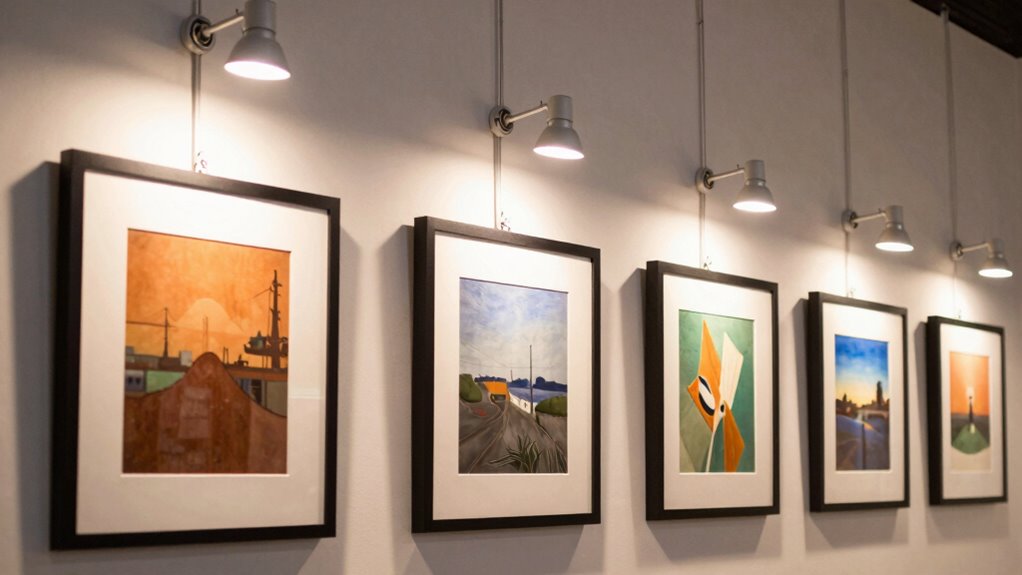
Choosing and installing picture lights might seem straightforward, but several common mistakes can undermine their effectiveness and aesthetic appeal. One mistake is selecting lights that are too small or too large, disrupting the balance of your art gallery lighting. Avoid using vintage fixture styles that don’t match your space’s decor or the artwork’s style, as mismatched fixtures can look out of place. Improper placement is another frequent error—installing lights too high or too low can cause uneven illumination or glare. Also, neglecting to contemplate the bulb’s color temperature may result in inaccurate color rendering of your artwork. Properly managing wire and power connections and ensuring they meet extension cord standards can prevent electrical hazards and maintain safety. Additionally, understanding the importance of light distribution can help you achieve even lighting across your art pieces. Using the correct light bulb brightness ensures your artwork is highlighted without overwhelming the space. Finally, skipping testing and adjustments can leave you with uneven lighting, diminishing your art’s visual impact. Be mindful of these pitfalls to ensure your picture lights enhance your art beautifully.
Tips for Testing and Adjusting Your Light for Even Illumination
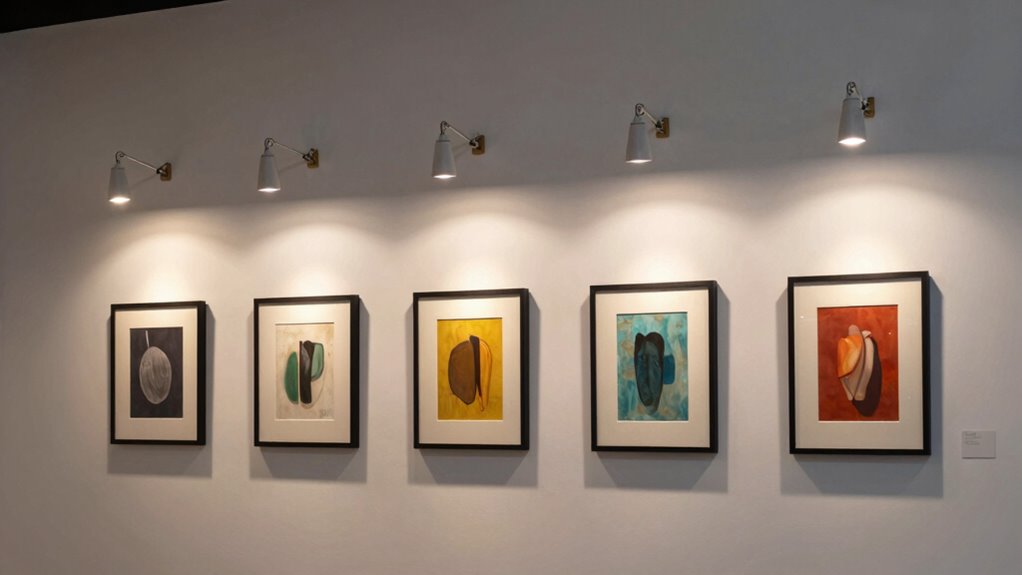
To make certain your picture is evenly lit, start by using a light meter to measure the illumination levels. Next, adjust the light’s distance and angle until the brightness is consistent across the artwork. Fine-tuning these details helps you achieve a balanced and professional-looking display. Additionally, consider the Free Floating concept to ensure the lighting complements the artwork’s natural surroundings without overwhelming it. Monitoring the lighting environment over time can also help maintain optimal illumination as conditions change.
Use a Light Meter
Have you ever wondered if your picture lights are providing even illumination? Using a light meter helps you measure the light levels accurately, guaranteeing your artwork is evenly lit. When testing, focus on the key factors that affect the look, like color temperature and bulb types. A light meter can reveal if your lights have inconsistent brightness or color shifts that may distort the artwork’s appearance. Consider these tips:
- Check the light’s color temperature to match the surrounding lighting, avoiding unwanted color casts.
- Measure at multiple points to ensure uniform illumination across the entire piece.
- Adjust bulb types if necessary to maintain consistent brightness and color rendering.
Using a light meter makes it easier to fine-tune your setup, so your art looks its best with balanced, even lighting.
Adjust Distance and Angle
Adjusting the distance and angle of your picture lights can considerably improve even illumination. Proper light placement ensures the beam angle distributes light evenly across the artwork, avoiding hotspots or shadows. Start by moving the light closer or farther from the art to see how it affects brightness and uniformity. Keep in mind that a narrower beam angle concentrates light, so you may need to position the light more precisely, while a wider beam spreads illumination more broadly. Test different angles by tilting the fixture slightly until the light covers the entire piece without creating glare or uneven spots. Regularly step back and observe the effect, making small adjustments until the light hits the artwork evenly. This process guarantees your picture lights deliver consistent, balanced illumination.
When to Consult a Lighting Professional for Custom Solutions
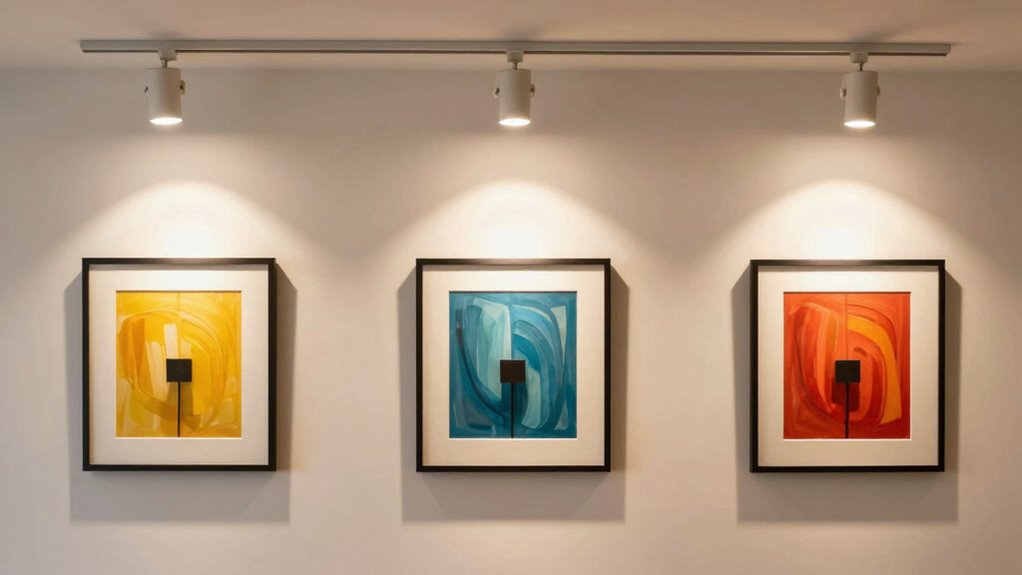
- You have valuable or delicate artwork needing precise lighting
- Standard fixtures don’t provide the desired effect
- You want to optimize lighting for art preservation and longevity
A lighting expert can recommend fixtures, angles, and controls that balance aesthetics with the health of your art, giving you peace of mind and a beautifully lit display.
Frequently Asked Questions
Can Picture Lights Be Used Outdoors or in Damp Environments?
You shouldn’t use picture lights outdoors or in damp environments because they typically aren’t designed for outdoor lighting or damp environment suitability. Exposure to moisture can damage the electrical components and cause safety issues. Instead, look for lights specifically made for outdoor use, with weatherproof or damp-rated features. This guarantees your lighting remains safe, durable, and effective, providing proper illumination without risking damage or safety hazards.
What Materials Are Best for Durable, Long-Lasting Picture Lights?
Did you know metal finishes like brass and bronze resist corrosion better than others? For durable, long-lasting picture lights, opt for materials such as solid brass or stainless steel, which withstand moisture and time. Choose fixtures with sturdy metal finishes and compatible bulb types like LED or halogen for longevity. These choices guarantee your lights stay beautiful and functional, even in high-humidity or outdoor environments.
How Do LED Picture Lights Compare to Traditional Incandescent Options?
You’ll find LED picture lights more efficient than traditional incandescent options, thanks to their superior LED efficiency. They consume less energy while providing bright, focused illumination, making them cost-effective and eco-friendly. While LEDs offer a cooler, modern light, incandescent lights provide a warm, inviting glow. Depending on your preference for warmth or efficiency, you can choose LED lights for a sleek, energy-saving look or traditional incandescent for cozy ambiance.
Are Dimmable Picture Lights Suitable for All Artwork Types?
Dimmable picture lights are versatile, making them suitable for most artwork types, especially when you want to enhance art preservation and lighting aesthetics. They let you adjust brightness to suit different pieces, avoiding glare and ensuring even illumination. Whether you’re highlighting delicate paintings or vibrant prints, dimmable lights give you control, helping your art look its best while protecting it from unnecessary light exposure.
How Often Should I Clean and Maintain My Picture Lighting Fixtures?
You should clean your picture lighting fixtures every few months to maintain artwork conservation and guarantee light fixture safety. Regular dusting prevents dirt buildup that can affect light quality and damage your art over time. Use a soft, dry cloth and avoid harsh cleaners. Periodic maintenance also checks for loose fittings or electrical issues, helping you keep your fixtures functioning safely and protecting your artwork from potential damage caused by improper lighting.
Conclusion
Choosing the right picture light is like finding the perfect frame for a masterpiece—every detail matters. When you size and position your lights thoughtfully, your artwork will glow with balanced beauty, turning your space into a gallery of your own making. Don’t rush the process; take the time to test and tweak. After all, the right illumination can turn an ordinary wall into a stunning focal point that truly shines.