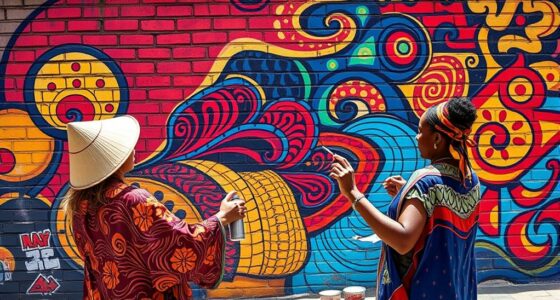
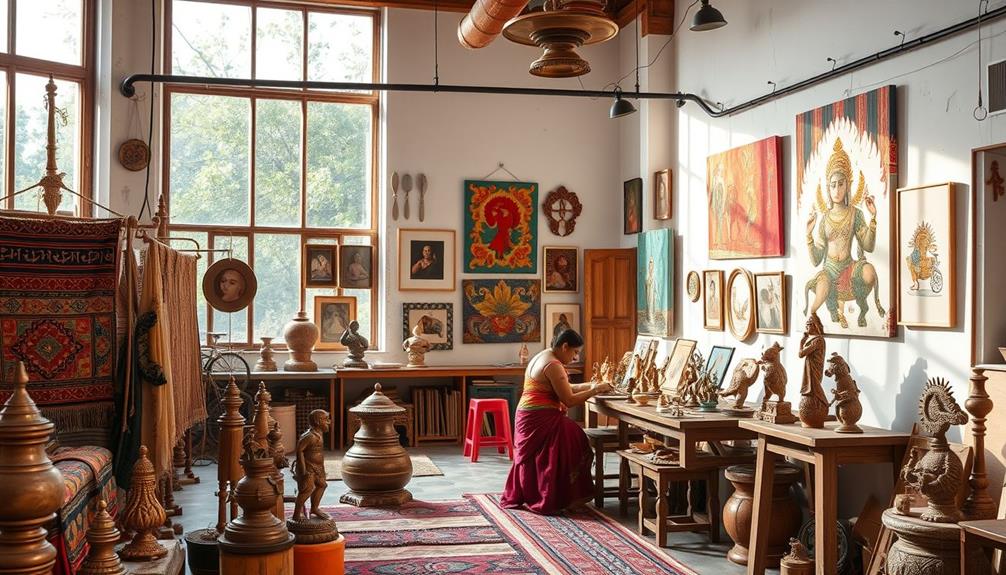
Art plays a vital role in building community resilience by symbolizing hope, fostering cultural pride, and encouraging active participation. Public artworks like murals and sculptures serve as visible signs of strength and solidarity during tough times. They help connect residents, bridge divides, and inspire collective healing. Engaging with art creates a sense of ownership and unity that can boost recovery efforts. Keep exploring to discover how artists and communities use creativity as a powerful tool for resilience and renewal.
Key Takeaways
- Public art symbolizes hope and community strength during crises, fostering resilience through visual narratives.
- Art reflects cultural identity, helping communities reconnect with traditions and feel valued amid adversity.
- Community engagement in creating art projects builds ownership, pride, and stimulates social and economic revitalization.
- Artistic expressions serve as unifying symbols, promoting social cohesion and aiding healing among diverse groups.
- Art acts as a strategic tool to reinforce shared history, inspire hope, and demonstrate community resilience during challenging times.
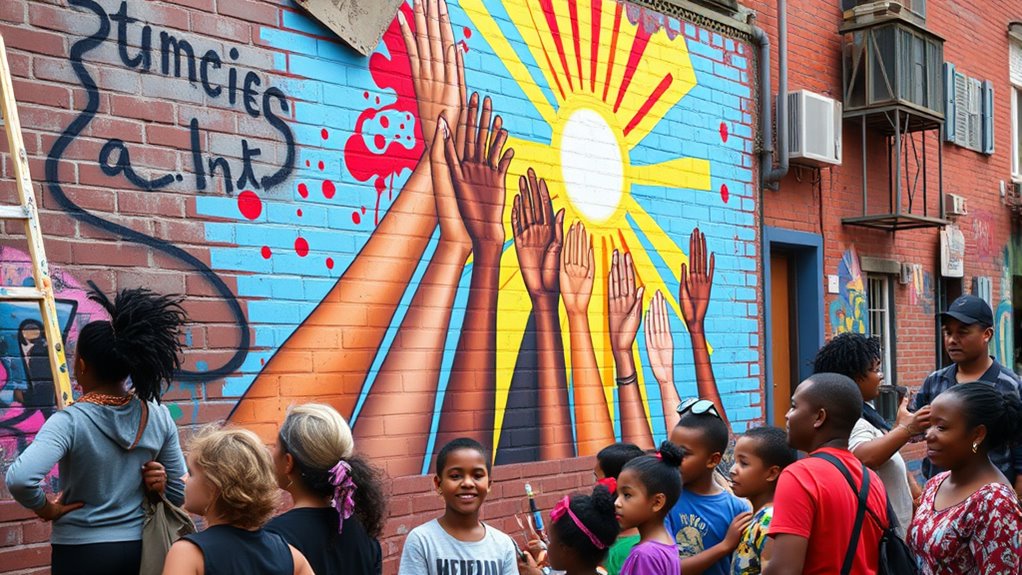
Art plays a pivotal role in strengthening community resilience, especially during times of crisis. When challenges arise, such as natural disasters, economic downturns, or social upheavals, public art becomes more than just decoration; it transforms into a powerful symbol of hope and solidarity. Public art, whether murals, sculptures, or installations, provides a visible reminder of a community’s strength and shared values. It helps residents reconnect with their cultural identity, fostering a sense of pride and belonging that can be essential during difficult times. By showcasing local history, traditions, and stories, public art reminds community members of their roots and collective resilience, encouraging unity and perseverance.
Public art symbolizes hope and resilience, reconnecting communities with their shared strength and cultural identity during challenging times.
As you walk through a neighborhood adorned with murals and vibrant public art, you might notice how these works reflect your community’s cultural identity. They act as visual narratives that celebrate diverse backgrounds, histories, and experiences, making everyone feel seen and valued. When a community faces adversity, these artistic expressions become rallying points, reinforcing the idea that despite hardships, your community’s spirit endures. Public art often sparks conversations and builds bridges among different groups, helping to heal divisions and promote social cohesion. It’s tangible proof that your community values its cultural identity, and that this identity can be a source of strength in turbulent times.
Furthermore, public art can serve as a catalyst for community engagement. When residents participate in creating murals or installing sculptures, they develop a sense of ownership and pride in their surroundings. This active involvement fosters resilience by empowering individuals to take an active role in shaping their environment and collective narrative. These collaborative projects often attract local businesses, tourists, and media attention, which can stimulate economic recovery and revitalization after setbacks. The shared experience of creating or experiencing public art deepens community bonds, reinforcing a collective identity that stands resilient in the face of adversity.
In essence, public art isn’t just about aesthetic enhancement; it’s a strategic tool for reinforcing community resilience. It elevates cultural identity, celebrates shared history, and promotes social cohesion—all of which are essential during times of crisis. When you see a mural or a public sculpture, you might also recognize how anime movies and other forms of storytelling can inspire hope and unity within a community. Remember that it’s more than just art on a wall; it’s a reflection of your community’s strength, history, and unity. Art becomes a rallying point, inspiring hope and reminding everyone that, together, your community can overcome any challenge.

Critical Issues in Public Art: Content, Context, and Controversy
Used Book in Good Condition
As an affiliate, we earn on qualifying purchases.
As an affiliate, we earn on qualifying purchases.
Frequently Asked Questions
How Do Community Art Projects Fund Themselves Sustainably?
You can make community art projects sustainable by exploring diverse funding models like grants, donations, and crowdfunding. Building strong partnership strategies with local businesses, nonprofits, and government agencies also boosts financial stability. Engaging the community for support and volunteers reduces costs and fosters ownership. Regularly demonstrating your project’s impact encourages ongoing funding and partnerships, ensuring your art initiatives thrive long-term and continue strengthening community resilience.
Can Art Initiatives Effectively Reach Marginalized or Isolated Groups?
Yes, art initiatives can effectively reach marginalized or isolated groups by addressing cultural barriers and language differences. You can tailor programs that respect cultural identities, use multilingual materials, and involve community members in planning. By creating inclusive spaces and actively listening to their needs, you foster trust and engagement. This personalized approach helps break down barriers, ensuring that even the most isolated groups feel connected and empowered through art.
What Measures Ensure Inclusive Participation in Community Art Programs?
Think of community art programs as a vibrant tapestry—you want every thread to shine. You can guarantee inclusive participation by prioritizing cultural accessibility, making sure all voices are heard and respected. Engage participants through approachable activities and open dialogues, creating a welcoming environment where everyone feels valued. By actively reaching out, adapting to diverse needs, and fostering genuine connections, you turn participation into a shared celebration, enriching the community’s collective story.
How Is the Impact of Art on Resilience Measured Scientifically?
You can measure art’s impact on resilience by using quantitative metrics, like surveys tracking community well-being, and psychological assessments that evaluate mental health improvements. Collect data before and after art programs to analyze changes. By analyzing these metrics, you identify how art enhances resilience, providing scientific evidence of its benefits. This approach helps you understand the tangible effects of community art initiatives on collective and individual resilience.
Are Digital Art Platforms as Effective as Physical Community Art?
Like a time traveler from the Renaissance, you might wonder if digital art platforms are as effective as physical community art. Virtual engagement boosts artistic accessibility, allowing broader participation and connection beyond physical boundaries. While digital platforms excel in reaching diverse audiences, they can lack the tactile, communal atmosphere of physical art. Ultimately, both serve essential roles in fostering community resilience, but their effectiveness depends on how they’re integrated and embraced.

JECOMPRIS 6pcs Jesus Figurine Craft Kit Handcrafted Religious Model Sculpture for Baptism Community and Home Decor for Art Enthusiasts and Projects
Elegant Beige: These plastic Jesus figurines feature a classic beige color that exudes elegance and warmth. The subtle…
As an affiliate, we earn on qualifying purchases.
As an affiliate, we earn on qualifying purchases.
Conclusion
You can see how art acts as a essential thread weaving communities together, transforming challenges into opportunities for growth. Like a resilient vine, it wraps around shared struggles, offering hope and renewal. Embracing art’s power, you help foster stronger, more connected communities that bounce back stronger after setbacks. Remember, in the face of adversity, art isn’t just decoration—it’s the heartbeat that keeps resilience alive, reminding us that even in darkness, creativity can light the way.

11×14 Coloring Sneakers Canvas 28 Pack Sip And Paint Kit Large Group DIY Art Therapy Cultural Festival Community Event Holiday Project
Bulk 28 pack sneakers sip and paint kit designed for classrooms homeschool programs youth groups summer camps church…
As an affiliate, we earn on qualifying purchases.
As an affiliate, we earn on qualifying purchases.

unuaST Outdoor Acrylic Paint Waterproof Set, 10 Colors Large Bulk Outdoor Paint with Pump, Rich Pigmented Paints for Artists/Beginners on Rocks, Wood, Metal, Crafts, Garden Statues (10oz/300ml)
10 VIBRANT LARGE-CAPACITY OUTDOOR PAINTS: unuaST outdoor acrylic paint waterproof set includes 10 vivid, highly pigmented colors, each…
As an affiliate, we earn on qualifying purchases.
As an affiliate, we earn on qualifying purchases.