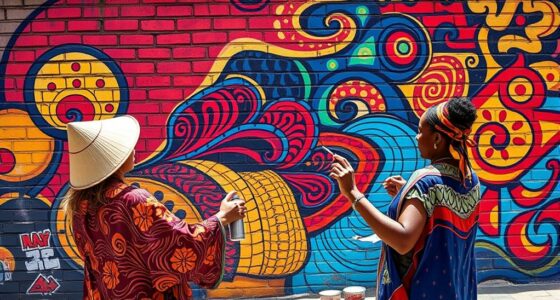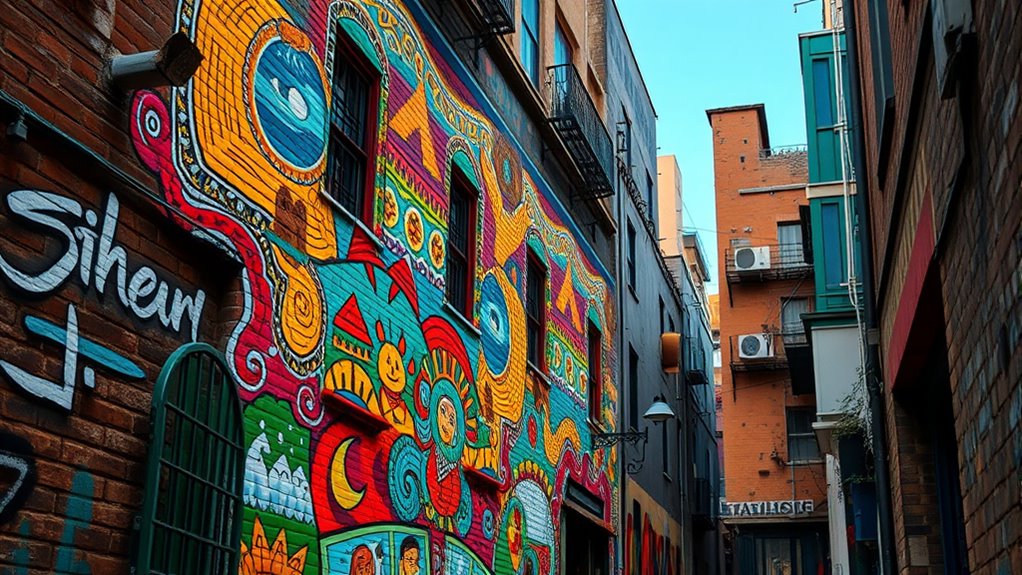

Hyperlocal murals powerfully tell community stories, reflecting cultural identities through vibrant visuals that showcase traditions, histories, and shared experiences. These murals turn blank walls into open history books, highlighting significant moments and local heroes. They foster pride, unity, and resilience while inviting community members to participate in storytelling. By preserving marginalized voices and celebrating heritage, these murals become living symbols of cultural affirmation. Continue exploring to discover how murals shape urban identities and deepen social connections.
Key Takeaways
- Hyperlocal murals serve as vibrant visual narratives that reflect community-specific cultural identities and histories.
- They involve local residents in storytelling, ensuring authentic representation of cultural traditions and experiences.
- These murals commemorate social justice, cultural achievements, and marginalized groups, preserving their stories visually.
- They enhance urban identity by showcasing diverse cultural fabric, fostering pride and community cohesion.
- Murals act as dynamic tools for cultural dialogue, resilience, and ongoing community engagement.
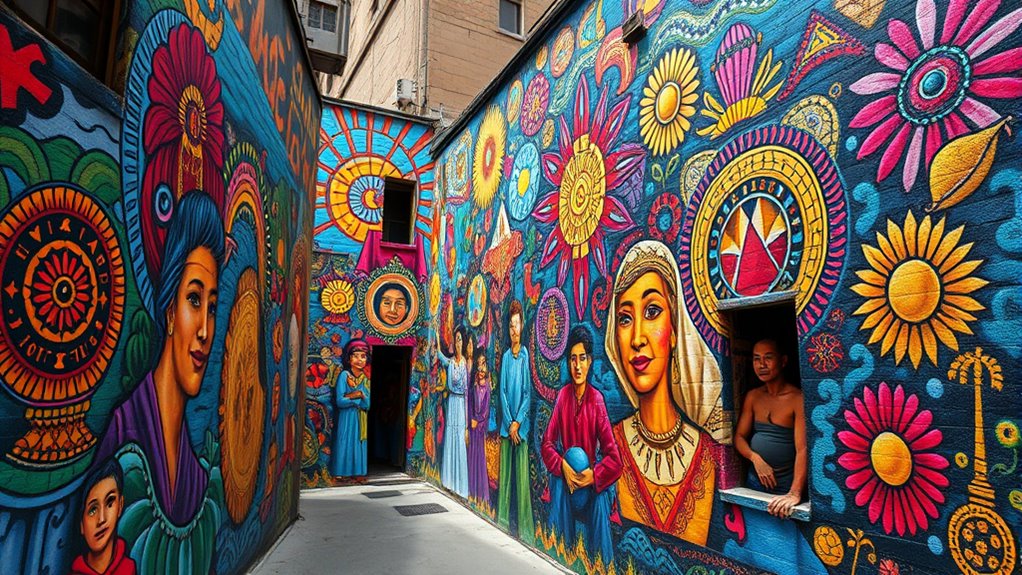
Have you ever wondered how murals serve as vibrant storytellers of cultural history? When you walk through neighborhoods adorned with colorful wall art, you’re not just observing decorations—you’re witnessing visual chapters of a community’s identity. Murals have a unique power to shape urban identity by reflecting the values, struggles, and triumphs of the people who live there. They transform blank or neglected surfaces into powerful platforms for storytelling, turning city walls into open books of history that everyone can read. These murals often capture significant moments or figures that define a community’s collective memory, making history accessible and engaging for all passersby. As you move through these spaces, you’re invited to see your surroundings through a lens that connects past and present, fostering a sense of pride and belonging.
Murals function as dynamic canvases for telling historical narratives that might otherwise remain hidden or forgotten. Unlike textbooks or formal monuments, murals are created locally, often with direct input from community members, giving voice to stories that resonate on a personal level. They can commemorate struggles for social justice, celebrate cultural achievements, or highlight important local traditions. By doing so, murals serve as visual archives, preserving the stories of marginalized groups and ensuring their histories aren’t lost to time. When you encounter a mural depicting historical events or cultural icons, you’re engaging with a visual retelling that brings history to life in a visceral way. These artworks often spark conversations about identity, heritage, and social change, encouraging communities to reflect on where they come from and where they’re headed. They’re not just art; they’re active history lessons etched into urban landscapes.
Furthermore, murals contribute to shaping a city’s identity by emphasizing its unique cultural fabric. They challenge the monoculture of commercialized cityscapes and highlight the diversity that defines urban life. When you see a mural celebrating indigenous traditions, immigrant stories, or local legends, you’re witnessing the city’s multifaceted identity expressed through art. These visual stories foster a sense of unity and pride, reminding residents and visitors alike that the city’s character is built on a rich tapestry of stories. Murals become symbols of resilience and cultural affirmation, reinforcing the importance of history in shaping a shared sense of place. As you continue exploring the city, pay attention to these murals—they’re more than decorations; they’re living evidence of the community’s ongoing narrative, shaping urban identity one brushstroke at a time.
wall mural art for community spaces
As an affiliate, we earn on qualifying purchases.
As an affiliate, we earn on qualifying purchases.
Frequently Asked Questions
How Do Murals Influence Local Community Identity?
Murals strongly influence your local community identity by fostering community engagement and cultural preservation. When you see vibrant murals, you feel connected to your neighborhood’s history and values. They encourage residents to participate in the storytelling process, strengthening pride and unity. These powerful visual narratives celebrate local culture, making the area distinctive and memorable. Ultimately, murals help you and your community embrace shared heritage while inspiring ongoing involvement and cultural appreciation.
What Materials Are Best for Preserving Cultural Murals?
Did you know that murals painted with high-quality acrylics last up to 20 years longer than traditional paints? For preservation techniques, opt for materials with excellent durability, like weather-resistant acrylics or fresco methods. These materials withstand environmental elements better, ensuring your cultural murals stay vibrant. Using durable paints and proper sealants is essential for long-term preservation, helping you showcase local stories while maintaining their integrity over time.
How Do Artists Choose Storytelling Themes for Murals?
You choose storytelling themes for murals by exploring symbolic motifs and historical narratives that resonate with the community. Consider local traditions, legends, or events that reflect cultural identity. You might engage community members to gather authentic stories or analyze significant symbols that hold meaning. This approach guarantees your mural vividly communicates shared history and values, creating a powerful visual storytelling experience that connects deeply with viewers.
What Is the Impact of Murals on Local Tourism?
You can see murals boost local tourism by sparking an urban revival that attracts visitors. These vibrant artworks often become landmarks, encouraging artistic collaboration and community pride. Tourists seek out these murals for photos and cultural experiences, increasing foot traffic and revenue in nearby businesses. The theory holds that well-executed murals transform neighborhoods into must-visit destinations, making the area more appealing and fostering a sense of identity that draws tourists year-round.
How Can Murals Be Used to Address Social Issues?
You can use murals to address social issues by fostering public engagement and promoting cultural preservation. By designing murals that highlight community concerns or celebrate diverse traditions, you encourage residents to participate and reflect on important topics. These visual stories raise awareness, spark conversations, and inspire collective action, making murals powerful tools for social change and cultural continuity within your neighborhood.
cultural mural painting supplies
As an affiliate, we earn on qualifying purchases.
As an affiliate, we earn on qualifying purchases.
Conclusion
As you step back to admire the vibrant tapestry of murals, you realize they’re more than just colors on walls—they’re the heartbeat of a community’s soul. Each brushstroke whispers stories of history, dreams, and identity, weaving a rich cultural mosaic that invites you to listen and reflect. These murals are living tapestries, transforming urban landscapes into open books of collective memory, reminding you that art isn’t just seen; it’s felt deeply in the core of your being.
urban mural painting kits
As an affiliate, we earn on qualifying purchases.
As an affiliate, we earn on qualifying purchases.

CSFOTO 6x13ft Forest Stream Garage Door Decorative Banner Tropical Forest Woodland Decorative Wallpaper Large Garage Door Cover Interior Decoration Mural Outdoor Picnic Photo Props
Package include: 1 piece Tropical Beach theme garage door decoration banner,and 4 pieces of 20ft rope, large enough…
As an affiliate, we earn on qualifying purchases.
As an affiliate, we earn on qualifying purchases.