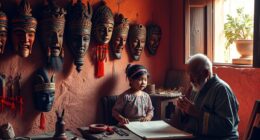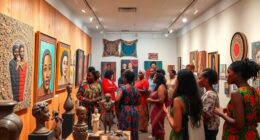
Art festivals that celebrate diversity and inclusion bring together authentic cultural expressions, marginalized voices, and innovative collaborations to foster understanding and empathy. You’ll experience a mix of artwork, performances, and exhibits that showcase different traditions and perspectives, creating a welcoming environment for everyone. These festivals aim to promote dialogue, challenge prejudices, and build community through art. Keep exploring to discover how these event’s efforts truly connect, inspire, and promote social harmony.
Key Takeaways
- Showcase diverse cultural traditions through authentic art, performances, and installations to highlight global diversity.
- Design accessible programming with multilingual guides and accommodations for disabilities to include all attendees.
- Incorporate stories from marginalized communities, promoting dialogue and understanding through active participation.
- Use art as a universal language to challenge prejudices and build compassionate, connected communities.
- Emphasize the festival’s mission of authentic representation, inclusion, and social justice to foster respect and community cohesion.

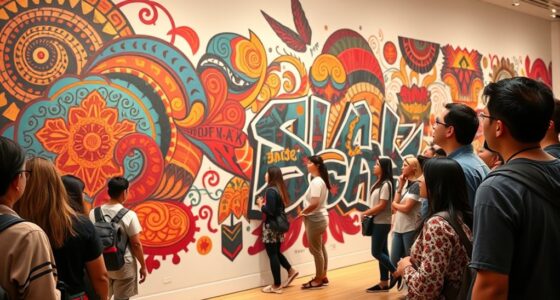
Have you ever wondered how art festivals can serve as powerful platforms for celebrating diversity and fostering inclusion? These events are more than just showcases of creativity; they’re vibrant spaces where different cultures, identities, and perspectives come together to be appreciated and understood. One of the key ways festivals achieve this is through multicultural exhibits, which highlight the richness of various traditions and artistic expressions from around the world. By featuring artwork, performances, and installations rooted in diverse cultural backgrounds, these exhibits invite attendees to experience the world through different lenses. This exposure not only broadens your understanding but also encourages respect and empathy for cultures that might otherwise be overlooked or misunderstood. Multicultural exhibits help break down stereotypes by presenting authentic, nuanced representations, giving voice to marginalized communities and shining a spotlight on their stories.
But the impact goes beyond just showcasing diverse art. Inclusive programming plays a pivotal role in making festivals accessible and welcoming to everyone. When you attend an art festival with inclusive programming, you’re participating in an environment that actively seeks to involve diverse audiences. This might mean providing multilingual guides, accessible venues for people with disabilities, or workshops that encourage participation from all age groups and backgrounds. By intentionally designing activities and schedules that accommodate different needs and interests, festival organizers send a clear message: everyone belongs here. Inclusive programming ensures that marginalized voices are not only represented but also given space to lead conversations, workshops, and performances. It’s about creating a sense of community where all attendees feel seen, heard, and valued. Additionally, integrating accessible technology can further enhance participation for individuals with different needs.
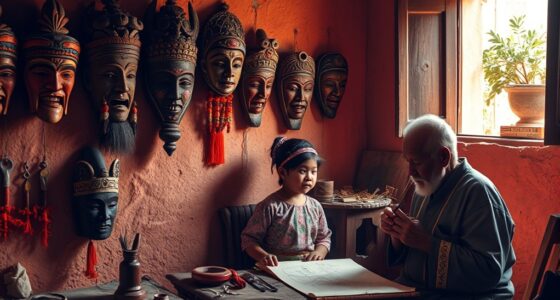
As you walk through these festivals, you’ll notice how multicultural exhibits and inclusive programming work hand-in-hand to forge connections. You might hear stories from artists representing indigenous traditions, witness dance performances from marginalized groups, or participate in discussions about social justice. These moments foster dialogue and understanding, making diversity more than just an aesthetic element—it’s a essential part of the festival’s mission. When you engage with these exhibits and programs, you’re not just observing; you’re actively participating in a movement to celebrate differences and promote equality. Art festivals that prioritize diversity and inclusion succeed because they recognize that art is a universal language capable of bridging gaps, challenging prejudices, and building a more compassionate and connected community.
Frequently Asked Questions
How Do Festivals Ensure Genuine Representation of Diverse Communities?
You can guarantee genuine representation of diverse communities by actively fostering cultural collaboration and community engagement. This involves reaching out to different groups early, listening to their stories, and involving them in planning and decision-making. By creating spaces where diverse voices are heard and respected, festivals authentically reflect the communities they serve, showcasing their unique perspectives and talents, and promoting a true sense of inclusion and celebration.
What Challenges Do Organizers Face in Promoting Inclusion?
You face the challenge of balancing accessibility barriers with cultural sensitivities, often feeling caught between inclusivity and tradition. Promoting genuine inclusion requires overcoming physical and technological obstacles, which can be costly and complex. Simultaneously, you must navigate diverse cultural expectations to avoid misrepresentation or offense. This delicate balancing act demands sensitivity, resources, and strategic planning to make certain all communities feel respected and truly included.
How Can Attendees Actively Support Diversity at Festivals?
You can actively support diversity at festivals by engaging with different cultural expressions and showing genuine interest, which fosters audience engagement. Respect cultural authenticity by listening and learning from diverse artists and attendees. Participate in discussions or workshops that highlight different perspectives, and encourage others to do the same. Your active involvement helps create an inclusive environment where everyone feels valued and celebrated, reinforcing the festival’s commitment to diversity.
Are There Specific Criteria for Artists to Participate?
Think of the festival as a vibrant garden, where every flower matters. Artists are chosen through a careful selection process that emphasizes diversity quotas, ensuring a rich tapestry of backgrounds and perspectives. While specific criteria may vary, your participation depends on showcasing authentic voices and unique stories. By meeting these standards, you help cultivate an inclusive space where creativity blooms from every corner of the world.
How Do Festivals Measure Success in Promoting Inclusion?
You can measure success in promoting inclusion by observing audience engagement and feedback, which show how well diverse communities connect with the festival. Additionally, assess how effectively cultural sensitivity is incorporated into programming and interactions. When attendees feel represented and respected, it indicates the festival promotes true inclusion. Tracking diverse participation and positive responses helps you understand whether the event fosters an inclusive environment that celebrates all cultures.
Conclusion
As you explore these vibrant festivals, remember that embracing diversity and inclusion isn’t just a modern trend—it’s a timeless value, even dating back to the days of the Renaissance. These events remind you that art has the power to unite, inspire, and challenge perceptions across all eras. So, step into these celebrations with an open mind, and let the colors, sounds, and stories shape your understanding of a more inclusive world. Don’t miss your chance to be part of this ongoing masterpiece.