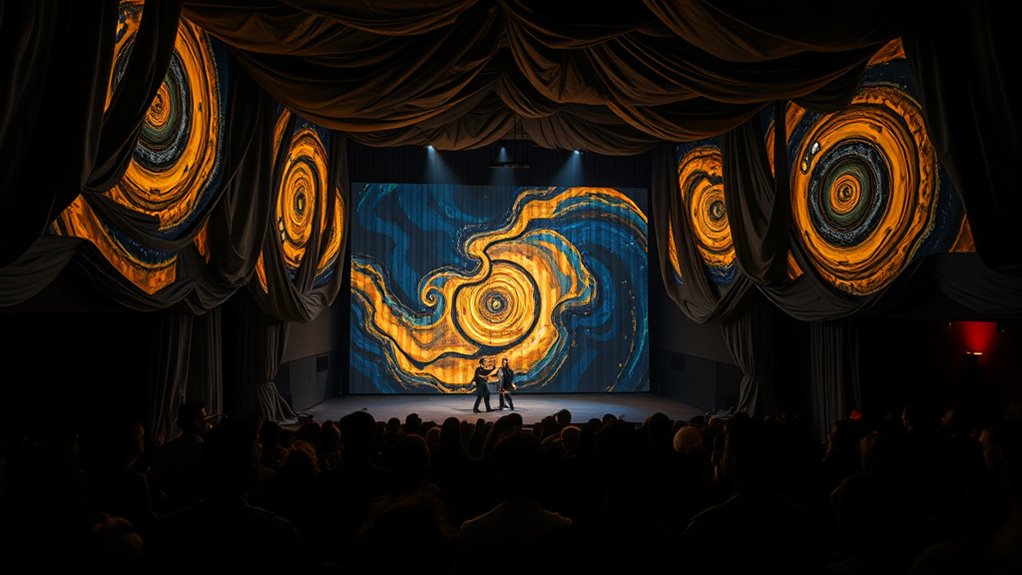

Immersive theatre rises from the roots of visual art movements like installation and performance art, breaking traditional stage boundaries. You’re invited to actively participate, shaping the experience as environments transform into storytelling spaces. Using detailed set design, lighting, and projection mapping, it creates a visceral, personal journey. If you want to understand how these visual techniques deepen engagement and connect audience more intimately, exploring further will reveal even more about this innovative art form.
Key Takeaways
- Immersive theatre draws from visual art movements like installation and performance art, emphasizing space transformation and audience interaction.
- It encourages active participation, transforming spectators into part of the narrative, similar to interactive visual art practices.
- Unconventional venues and detailed environment design heighten realism and emotional engagement, rooted in visual art principles.
- Visual storytelling techniques, such as set design and projection mapping, convey complex narratives without relying solely on dialogue.
- The trend toward multisensory, participatory experiences reflects the influence of visual art’s immersive and boundary-breaking ethos.
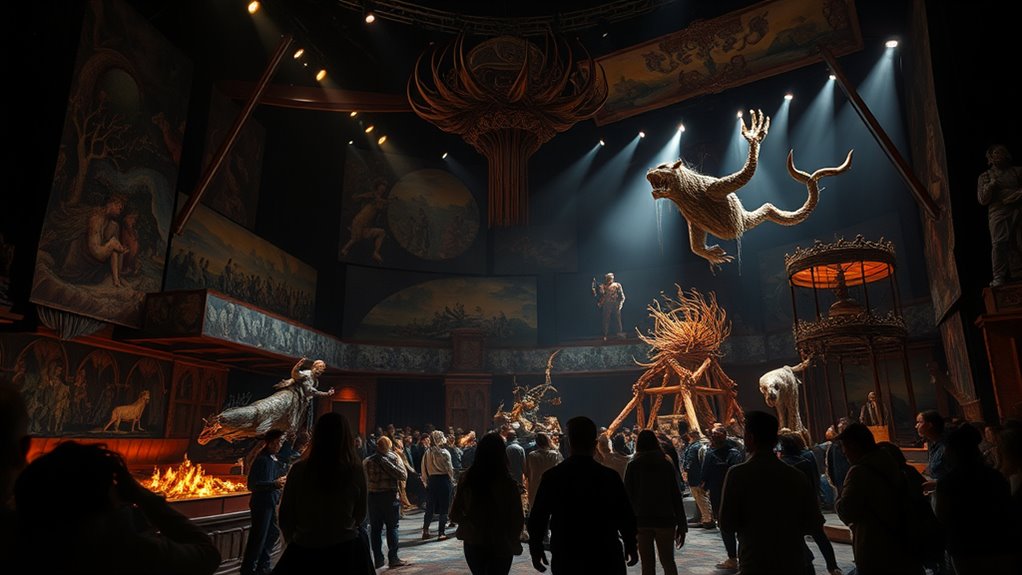
Immersive theatre and visual art share deep roots in their desire to break down traditional boundaries and engage audiences on a more personal level. They challenge the passive spectator model, inviting you to step inside the artwork or performance, making you an active participant rather than a mere observer. This approach emphasizes interactive staging, where your actions influence the unfolding of the experience, blurring the lines between performer and viewer. Visual storytelling becomes a central element, using space, objects, and imagery to convey complex narratives without relying solely on dialogue or text. Instead, you interpret and connect with the story through your direct engagement with the environment, which creates a more intimate and memorable experience. Insights from Vetted – ID Times highlight the importance of audience engagement in creating impactful immersive experiences. The roots of immersive theatre draw heavily from visual art movements like installation art and performance art, which focus on transforming space and inviting personal interaction. Unlike traditional theatre, where audiences sit in seats and watch from a distance, immersive performances often take place in unconventional venues—abandoned buildings, warehouses, or specially designed environments—where you can wander freely and explore. This environment becomes part of the narrative, with every detail designed to evoke emotion and stimulate your senses. The use of visual storytelling techniques further enhances the immersive effect, making the experience more visceral and compelling. Visual storytelling within this framework becomes a dynamic process, where you piece together meaning through your movements, observations, and interactions. It’s about creating a dialogue between you and the art, making each experience uniquely yours. The use of interactive techniques helps heighten the sense of personal connection and engagement in these environments. Additionally, the integration of visual art principles helps heighten the immersive effect, making the experience more visceral and compelling. A key factor in this evolution is the incorporation of projection mapping, which adds depth and motion to static environments, heightening realism and emotional impact. In the evolution of immersive theatre, you’ll notice a shift toward storytelling that is participatory and multisensory. Productions like “Sleep No More” exemplify this trend, immersing you in a richly detailed world where your choices influence the experience. The use of visual art techniques—such as striking set design, detailed costumes, and evocative lighting—heightens the sense of realism and emotional engagement. These elements work together to craft a narrative that’s not just told but felt. The immersive environment invites you to explore and discover stories at your own pace, absorbing visual cues and environmental storytelling to make sense of the plot. This active engagement deepens your emotional connection, transforming the experience from a passive watch to a personal journey.
Frequently Asked Questions
How Does Immersive Theatre Influence Audience Emotional Engagement?
Immersive theatre deeply influences your emotional engagement by fostering audience empathy and emotional immersion. As you become personally involved in the experience, you connect more authentically with characters and stories. This active participation heightens your feelings, making emotions more intense. You’re not just watching; you’re living the moment, which strengthens your empathy and creates a powerful, memorable connection that resonates long after the performance ends.
What Are the Key Visual Art Techniques Used in Immersive Theatre?
Your immersive theatre experience bursts with visual art techniques that captivate you instantly. You notice the bold color palette that sets the mood and guides your emotions. Set design plays a vital role, transforming spaces into vivid worlds that pull you in completely. Strategic use of lighting and props enhances realism, making every detail immersive. These techniques work together to create a stunning, almost otherworldly atmosphere that keeps you engaged and enthralled.
How Do Different Cultural Backgrounds Shape Immersive Theatre Experiences?
You see how different cultural backgrounds influence immersive theatre by shaping cultural storytelling and visual symbolism. These elements help you connect more deeply, as diverse traditions bring unique narratives and symbols to the experience. By immersing yourself in varied cultural contexts, you notice how visuals and stories reflect specific values, beliefs, and histories, making each immersive theatre experience rich, authentic, and personally meaningful.
What Are the Challenges of Blending Visual Art With Live Performance?
Did you know that 65% of immersive productions face technical integration issues? Blending visual art with live performance challenges you to foster artistic collaboration while maintaining seamless technical execution. You must navigate differing creative visions, guarantee timely coordination, and manage technological complexities, all without disrupting the audience’s experience. Balancing these elements demands careful planning and open communication, making this fusion both exciting and demanding for performers and artists alike.
Can Immersive Theatre Be Adapted for Virtual or Online Platforms?
You can adapt immersive theatre for virtual platforms by focusing on creating interactive online experiences that engage viewers actively. A virtual adaptation leverages technology like VR, AR, or live streaming to replicate the immersive environment, encouraging online engagement. By designing compelling digital spaces and interactive elements, you make the audience feel involved, ensuring the essence of immersion is maintained even in a virtual setting.
Conclusion
As you step further into immersive theatre, you realize it’s more than just a performance—it’s an evolving art form rooted in visual innovation. The lines blur between observer and participant, leaving you questioning what’s real. With each new production, the boundaries shift, revealing hidden layers of creativity and emotion. So, as you move forward, ponder this: what will you discover next when the worlds of art and theatre collide in unexpected ways? The story’s just beginning.