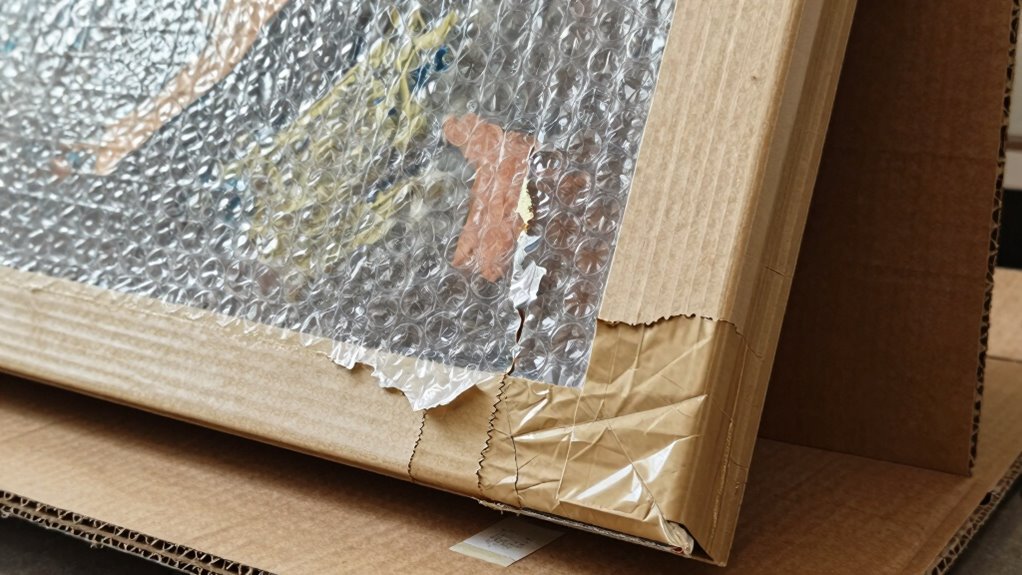
The most common packing errors that cause artwork damage include not securing the piece tightly, leaving edges unprotected, and using inadequate materials that can tear or shift during transit. Neglecting proper corner guards or insufficient padding increases the risk of dents, scratches, or breaks. Overlooking clear labeling or handling instructions can lead to mishandling. To avoid these mistakes and make certain your artwork arrives safely, follow proven packing strategies—more tips await if you keep exploring.
Key Takeaways
- Not securing artwork tightly causes movement, leading to cracks, tears, or scratches during transit.
- Skipping corner protectors exposes vulnerable edges to damage.
- Using weak or inappropriate packaging materials increases the risk of breakage and moisture exposure.
- Overly tight or loose boxes allow shifting, which can cause dents or bending.
- Inadequate labeling or handling instructions result in mishandling and potential damage en route.

Mr. Pen- Adjustable Cardboard Corner Protectors, Fits 1", 1.5" and 2.1" Frames, 40 Pack, Corner Protectors for Shipping, Cardboard Packing Corner, Packaging Edge Protector, Cardboard Shipping Corners
Package includes 40 adjustable cardboard corner protectors, which will protect 10 frames and are reusable. It includes easy-to-follow…
As an affiliate, we earn on qualifying purchases.
As an affiliate, we earn on qualifying purchases.
Why Proper Packing Is Crucial for Artwork Safety
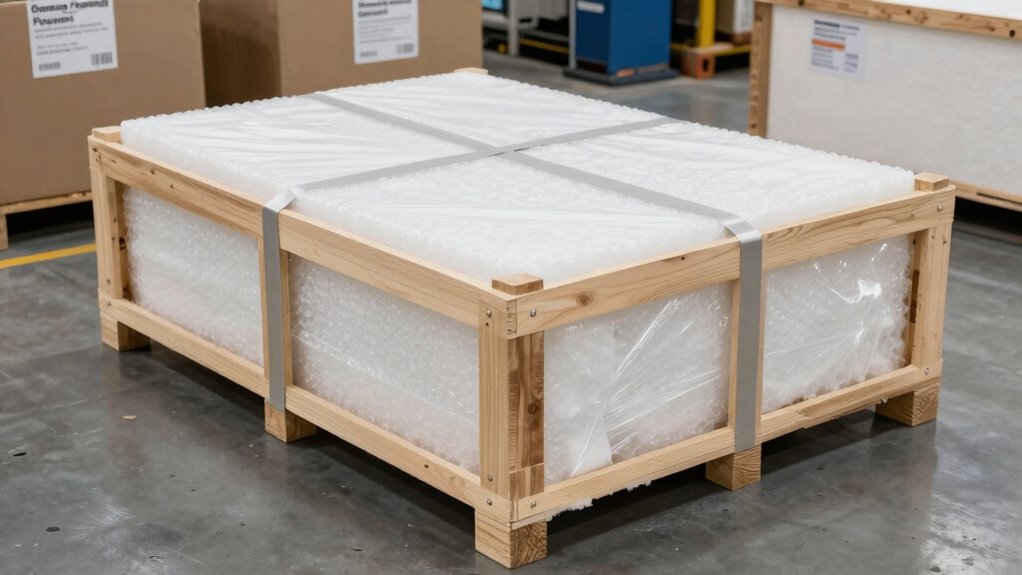
Proper packing is essential because artwork is delicate and vulnerable to damage during transit. Using correct framing techniques helps protect the piece by providing structural support and preventing warping or tears. Secure framing ensures that edges stay intact and the artwork remains flat. Additionally, proper packing safeguards the authentication process, which verifies the artwork’s legitimacy. If not packed correctly, labels or certificates can get lost or damaged, complicating ownership verification. Effective packing also minimizes movement within the shipping container, reducing the risk of scratches, dents, or breakage. Understanding shipping best practices and how they influence packing requirements can further enhance protection strategies. Employing protective materials such as bubble wrap, foam, or custom crates can significantly reduce the risk of damage during handling and transport. Using custom-sized crates tailored to the artwork’s dimensions ensures a snug fit that prevents shifting during transit. Properly secured shipping containers are crucial to prevent shifting and impact damage. Ultimately, investing time and care in proper packing preserves the artwork’s integrity, ensuring it arrives in pristine condition and retains its value. Properly packed artwork reflects professionalism and respect for the piece’s worth.

Large roll of 175 Feet of Recycled Small Plus Bubble wrap for packing, moving and shipping for your business essentials. Eco friendly and made from 90% post-consumer materials by American Bubble Boy
Eco Friendly Shipping Supplies: Our bubble wrap roll is the first of its kind, made from 90% post-consumer…
As an affiliate, we earn on qualifying purchases.
As an affiliate, we earn on qualifying purchases.
Common Packing Mistakes That Damage Artwork
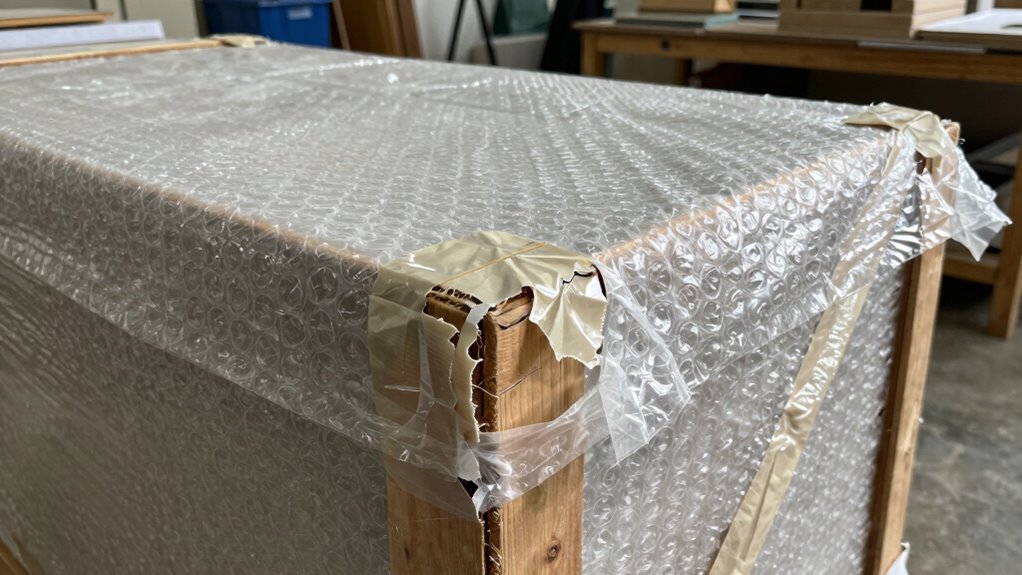
Failing to secure artwork properly inside the packing materials is a common mistake that can lead to damage during transit. Fragile artwork, especially, needs careful handling to prevent cracks or tears. Improper sealing can leave gaps where the artwork shifts or gets exposed to external elements. To avoid this, ensure all sides are tightly sealed and stabilized. Use sturdy materials and double-check every seal before shipping. Additionally, careful packing materials selection can greatly reduce the risk of damage. The table below highlights key packing errors:
| Error | Consequence | Solution |
|---|---|---|
| Not securing artwork tightly | Movement causes cracks or tears | Use proper padding and fastening |
| Skipping corner protection | Corners are vulnerable to damage | Add corner protectors |
| Improper sealing | Exposure to moisture or dirt | Seal all edges thoroughly |
| Using weak packing materials | Breakage during transit | Choose durable, reinforced materials |
| Neglecting to label fragile artwork | Mishandling risks damage | Clearly mark as fragile |
Additionally, understanding the importance of packing materials can help you select the most suitable options to prevent damage during shipping. Proper packing techniques are essential to maintaining artwork integrity throughout transit, especially when considering protective padding and other specialized materials. Being aware of common packing mistakes can help you identify and avoid potential issues before shipping.

Custom Shipping Boxes (25 Pack) – Branded Mailer Boxes with Logo Print for Small Business and Subscription (Inside and Outside Print)
MANY SIZES AVAILABLE – Click the “Customize” button to see available sizes.
As an affiliate, we earn on qualifying purchases.
As an affiliate, we earn on qualifying purchases.
Choosing the Right Padding to Protect Your Artwork
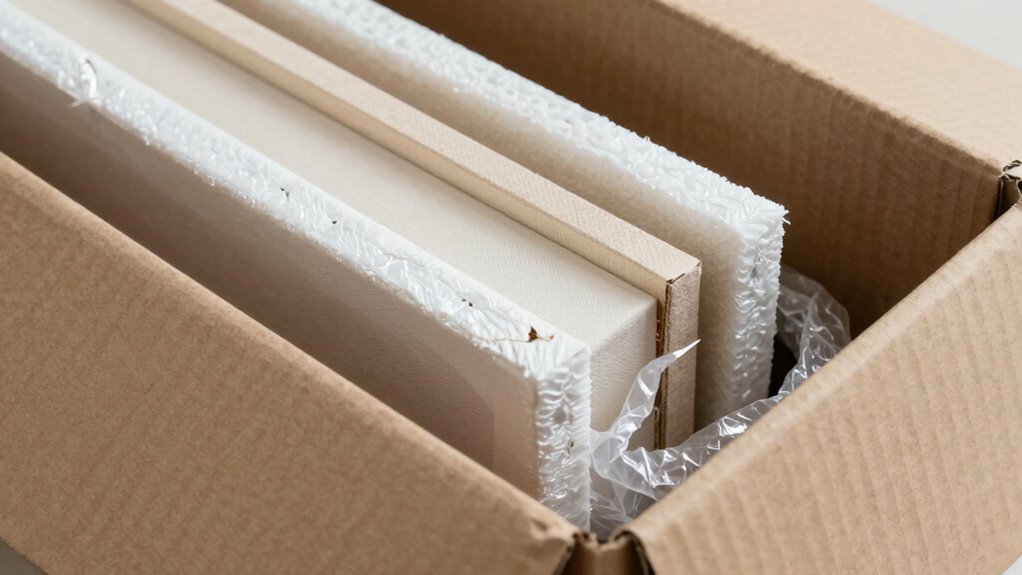
Choosing the right padding is essential for preventing damage during transit. Foam padding offers excellent shock absorption, cushioning your artwork from impacts and vibrations. It molds easily around delicate surfaces, providing a snug fit that minimizes movement. Bubble wrap is also effective, creating a protective barrier with its air-filled bubbles that absorb shocks and prevent scratches. Wrap your artwork tightly in bubble wrap before adding foam padding for added security. Be sure to cover all edges and corners, as these are most vulnerable to damage. Using proper padding not only safeguards your artwork but also reduces the risk of costly repairs or replacements. Select padding materials that are clean, durable, and appropriate for the artwork’s size and fragility to ensure safe delivery. Incorporating sound vibrations in the packing process can also help secure delicate items by reducing internal movement and vibrations during transit. Additionally, understanding sector performance metrics can inform your choice of specialized packaging solutions for different types of artwork and shipment conditions. Properly evaluating packaging standards can further enhance protection and ensure compliance with shipping regulations. Considering environmental factors like humidity and temperature during packing can also safeguard sensitive artworks from environmental damage during transit. Using appropriate packing techniques tailored to the artwork’s specific characteristics can further reduce the risk of damage.
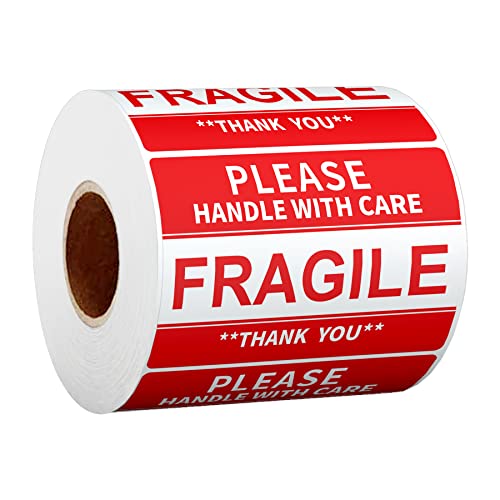
Anylabel 2" x 3" Fragile Stickers for Shipping and Moving Please Handle with Care Fragile Thank You Do Not Drop, Warning Stickers Fragile Labels, Permanent Adhesive(500 Labels, 1 Roll)
🧻Specification: 2" x 3" Fragile Stickers, 500 labels per Roll, 1 Roll.
As an affiliate, we earn on qualifying purchases.
As an affiliate, we earn on qualifying purchases.
Selecting the Best Shipping Materials for Artwork
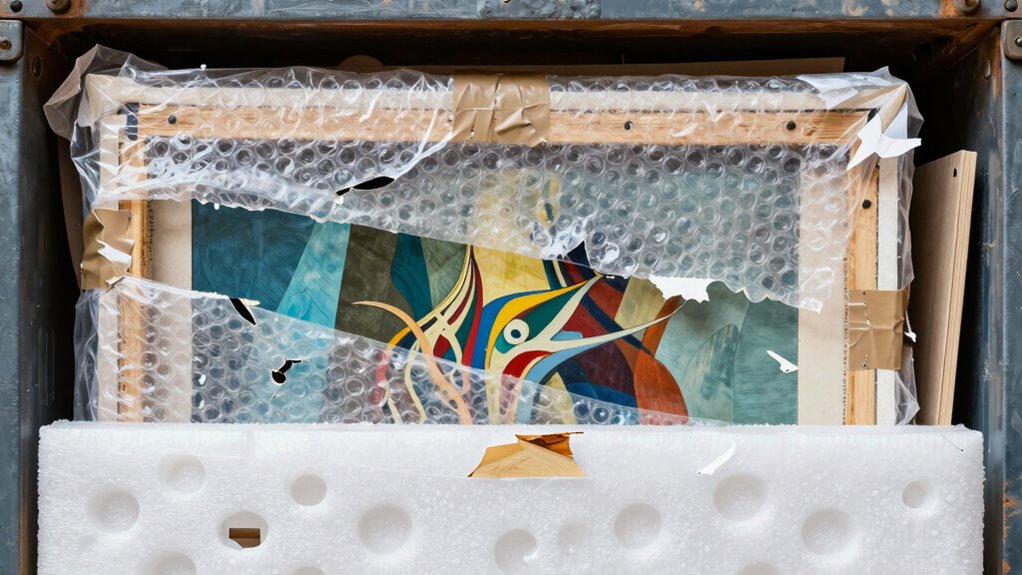
Choosing the right shipping materials is essential to keep your artwork safe during transit. You need to select protective packaging that cushions against impacts and prevents movement. Opting for durable, high-quality materials guarantees your artwork arrives intact and undamaged. Additionally, implementing caregiver emotional health strategies can help manage the stress associated with shipping valuable artwork. Being mindful of shipping best practices can further reduce the risk of damage and ensure a smooth delivery process. Incorporating proper packing techniques, such as using bubble wrap and corner protectors, can significantly enhance the safety of your artwork during shipment. Regularly reviewing quality assurance standards helps maintain consistent packing procedures and prevents errors. Paying attention to shipping materials selection is crucial for safeguarding fragile items and avoiding costly damages.
Choosing Protective Packaging
Selecting the right protective packaging is essential to guarantee your artwork arrives undamaged. You should consider using custom foam inserts, which provide tailored cushioning that fits your piece perfectly, reducing movement and preventing impact damage. Additionally, opting for environmentally friendly packaging shows your commitment to sustainability while protecting your artwork. Look for recyclable materials, biodegradable fillers, and eco-conscious tapes to minimize your environmental footprint. Ascertain the packaging offers sufficient padding and rigidity to withstand handling and shipping stresses. Avoid flimsy boxes or generic packing materials that don’t provide enough support. Incorporating smart packaging solutions that track and monitor your shipment can further ensure safe delivery. Being aware of microplastics in dust and other pollutants is important, as they can affect the preservation of your artwork over time. Using specialized eco-friendly packaging not only safeguards your artwork effectively but also aligns with sustainable practices. This careful selection minimizes the risk of damage during transit and demonstrates professionalism.
Selecting Durable Materials
Using the right packaging materials is vital to guarantee your artwork arrives safely and intact. Selecting materials with high artwork durability ensures your piece withstands handling during transit. Choose sturdy, acid-free cardboard or foam boards for backing, which offer excellent support and prevent warping. For wrapping, opt for bubble wrap or tissue paper that resists tearing and cushions effectively. Prioritize materials with proven material longevity, such as archival-quality plastics or specialty papers, to prevent deterioration over time. Avoid cheap or flimsy options that can easily tear or degrade, risking damage. Properly chosen, durable materials provide a reliable shield against shocks, vibrations, and environmental factors, preserving your artwork’s integrity from start to finish. Your careful selection directly contributes to safe, damage-free shipping.
How to Pick the Perfect Box for Shipping Artwork
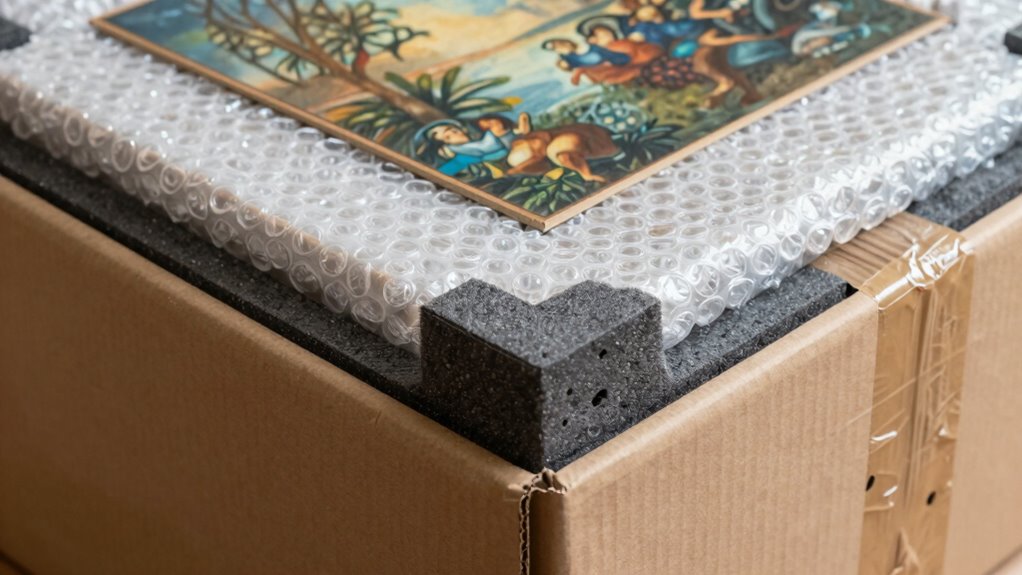
Finding the right box for shipping artwork is crucial to guarantee it arrives safely and undamaged. Start by measuring your artwork carefully, noting its dimensions—height, width, and thickness. Choose a box with interior dimensions that provide at least 2 inches of padding on all sides, ensuring the artwork is snug but not compressed. Consider the artwork’s weight; heavier pieces require sturdier boxes with reinforced corners to prevent crushing during transit. If your artwork is large or heavy, opt for double-walled or specialized shipping boxes designed to handle extra stress. Avoid boxes that are too small, which can cause bending or pressure points, or too large, which may lead to shifting and damage. Picking the right box based on dimensions and weight keeps your artwork protected every step of the way.
Proper Handling and Labeling for Safe Transit
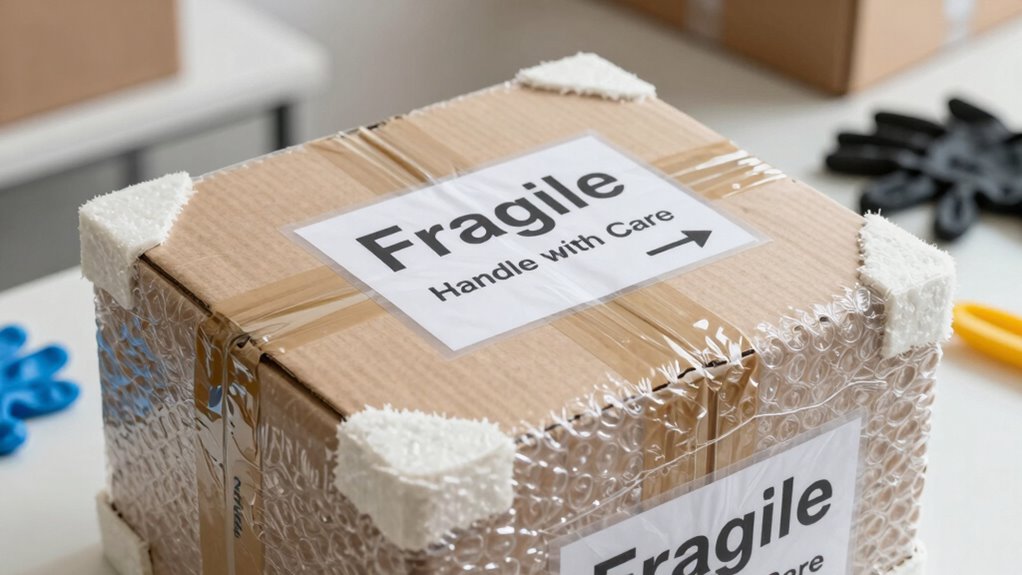
How you handle and label your artwork during shipping can make all the difference in preventing damage. Accurate labeling guarantees handlers understand the fragile nature of your piece, reducing the risk of mishandling. Use clear, legible labels indicating “Fragile,” “Handle with Care,” and “This Side Up,” and double-check for labeling accuracy before sealing the package. Follow proper handling procedures, such as lifting from designated points and avoiding unnecessary movement, to minimize stress on the artwork. Train anyone involved in the shipping process on these procedures to ensure consistency. Proper handling and accurate labeling communicate the importance of careful transit, decreasing the chances of accidents or mishandling that could cause damage. Remember, clear labels and careful handling are your first line of defense against shipping mishaps.
Expert Tips to Avoid Packing Errors and Ship Artwork Safely
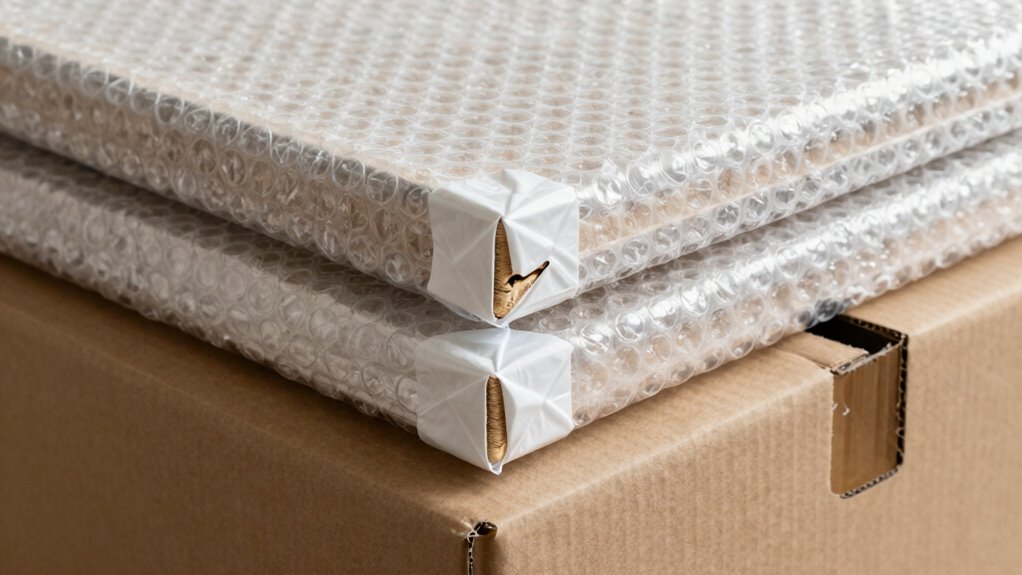
To prevent packing errors, focus on proper cushioning techniques that protect your artwork during transit. Make sure to use secure packaging materials that won’t shift or break under pressure. These steps are essential for shipping artwork safely and avoiding costly damage.
Proper Cushioning Techniques
Proper cushioning is essential to prevent damage during shipping, especially when handling fragile art. Using effective cushioning techniques protects delicate surfaces from impact and vibrations. Wrap your artwork with acid-free tissue or bubble wrap, ensuring full coverage. Add foam or packing peanuts around the wrapped piece for extra shock absorption. Place the protected art in a sturdy box, filling all voids to prevent shifting. Use corner protectors for added safety. Consider these cushioning techniques to minimize risk:
| Step | Material Used | Purpose | Tips |
|---|---|---|---|
| 1 | Bubble wrap | Shock absorption | Wrap tightly, cover edges |
| 2 | Foam or packing peanuts | Fill voids, stabilize art | Fill gaps completely |
| 3 | Corner protectors | Protect fragile corners | Secure firmly |
| 4 | Acid-free tissue | Prevent scratches | Wrap smoothly |
| 5 | Sturdy box | Contain and support | Reinforce if needed |
Secure Packaging Materials
Ensuring you use the right packaging materials is essential for safeguarding artwork during transit. Start with custom foam inserts tailored to fit your piece precisely; they provide critical cushioning and prevent shifting inside the box. When selecting bubble wrap, opt for high-quality bubble wrap with appropriately sized bubbles—large enough to absorb shocks but not so big that they leave gaps. Wrap the artwork thoroughly, covering all surfaces, and secure the bubble wrap with tape to prevent unraveling. Combining sturdy outer boxes with these protective materials minimizes the risk of damage from impacts, vibrations, or handling errors. Properly chosen packaging materials guarantee your artwork stays secure and intact throughout shipping, giving you peace of mind and your clients confidence in your professionalism.
Frequently Asked Questions
How Do I Determine the Appropriate Packing Materials for Different Artwork Types?
To determine the right packing materials, consider your artwork’s medium, size, and fragility. For delicate pieces, use custom foam to cushion edges and prevent movement. Wrap paintings or prints with acid-free tissue to protect against acids and dust. For heavier or larger works, reinforce with sturdy cardboard boxes and additional padding. Always tailor your packing approach to your artwork’s specific needs to guarantee safe transport and avoid damage.
What Are the Signs That Packing Damage Has Occurred During Transit?
You’ll notice signs of packing damage like visual inspection revealing dents, tears, or crushed corners that tell a story of rough handling. Handle marks or scratches on the surface hint at careless transit, while warped or bent frames suggest improper packing. Look closely for displaced padding or loose wrapping, which can indicate the artwork was jostled. Trust your eye; these clues reveal the journey’s rough spots.
How Can I Reduce Shipping Costs Without Compromising Artwork Safety?
You can reduce shipping costs without risking artwork safety by choosing effective framing techniques that add structural support without excess bulk. Opt for custom crating tailored to your artwork’s size and fragility, ensuring secure protection while avoiding unnecessary padding. Combining these strategies minimizes weight and volume, cutting shipping expenses. Always prioritize quality materials and proper packing methods to prevent damage, balancing safety with affordability during transit.
What Insurance Options Are Recommended for Artwork During Shipping?
Think of shipping insurance policies as your artwork’s shield, much like the armor of a knight. You should opt for thorough coverage that matches your artwork’s value, backed by a recent appraisal. Always review policies carefully to confirm they cover damages during transit. An artwork appraisal helps determine the right insurance level, giving you peace of mind knowing your prized piece is protected against unexpected mishaps en route.
How Often Should Packaging Materials Be Replaced to Ensure Optimal Protection?
You should replace your packaging materials based on their lifespan and the replacement frequency guidelines. Regularly inspect your materials for wear, tears, or degradation, and replace them at least every 6 to 12 months if used frequently. For long-term storage, consider replacing every 1-2 years. This guarantees ideal protection for your artwork and minimizes the risk of damage during shipping. Staying proactive keeps your artwork safe and your packaging effective.
Conclusion
So, next time you’re packing artwork, remember: don’t treat it like your lunch—no crumpled paper or flimsy boxes allowed. Avoid the common pitfalls, choose sturdy materials, and handle with care. Think of yourself as an art ninja—swift, precise, and invisible to damage. Because, after all, what’s more satisfying than sending a masterpiece safely, while your packing errors become just a funny story for next time? Happy shipping!