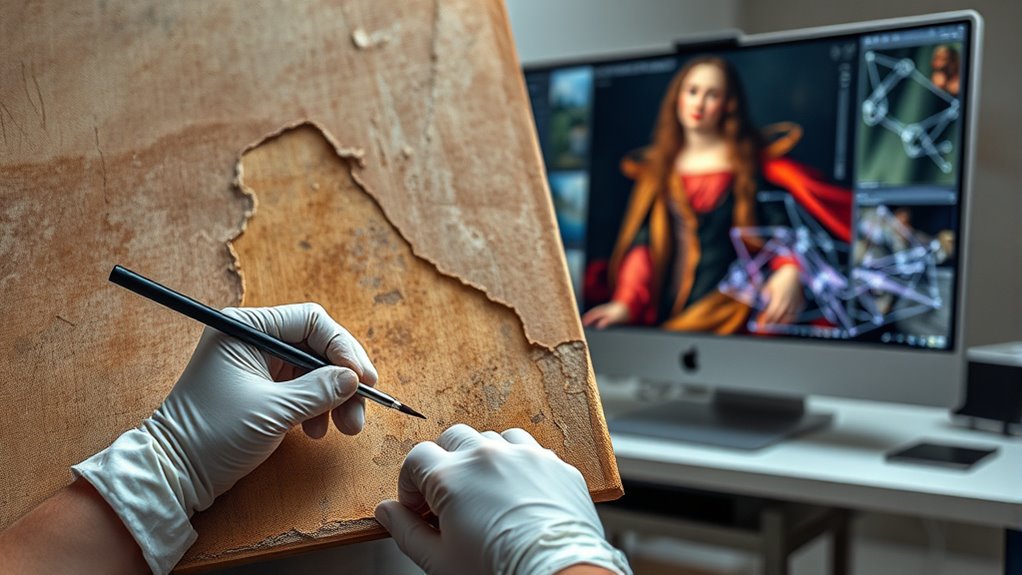

AI and machine learning are revolutionizing art restoration and preservation by offering detailed digital imaging, advanced analysis of historical data, and continuous monitoring for early signs of damage. These tools help identify authentic colors, materials, and techniques used by artists, ensuring restorations stay true to the original. They also reconstruct missing sections and generate accurate visualizations. Keep exploring to discover how these cutting-edge technologies can safeguard cultural treasures for future generations.
Key Takeaways
- AI analyzes extensive historical data to reconstruct original artwork appearances and techniques.
- Machine learning detects subtle deterioration signs, enabling early intervention and preservation.
- Digital imaging creates detailed 3D models for studying and simulating restorations safely.
- AI-driven security systems protect artworks from theft and vandalism through continuous monitoring.
- Reconstruction algorithms fill in missing sections, guiding accurate, data-backed physical restorations.
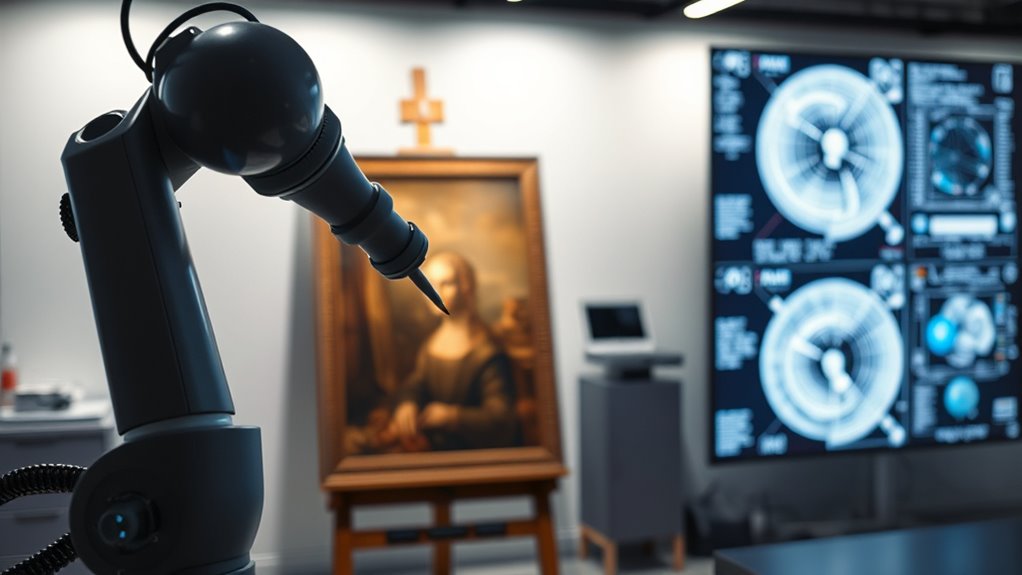
Artificial intelligence and machine learning are transforming art restoration by offering new tools to analyze, preserve, and repair priceless works. One of the most significant advancements is in digital imaging, which allows you to create highly detailed and accurate representations of artworks. These digital images serve as the foundation for further analysis, helping you identify areas of deterioration that might be invisible to the naked eye. By capturing high-resolution images, you can examine minute details, pigments, and textures, enabling a more thorough understanding of a piece’s current condition. Digital imaging also facilitates the creation of 3D models, which are invaluable for studying sculptures or layered paintings without risking damage. This technology allows you to virtually peel back layers or simulate how restorations might look, giving you a safer way to plan interventions.
Alongside digital imaging, historical analysis plays an essential role in guiding your restoration efforts. With the aid of machine learning algorithms, you can sift through vast archives of historical data, including photographs, documents, and previous restoration records. These tools help you piece together the artwork’s original appearance and understand its original context, which is vital for authentic restoration. Machine learning can identify patterns and predict the original colors, materials, and techniques used by artists, even when evidence has faded over time. This deep historical analysis guarantees that your restoration work stays true to the artwork’s authentic intent, preserving its cultural significance. Additionally, advances in AI-driven security systems help protect these invaluable artworks from theft or vandalism, ensuring their safety for future generations.
You also benefit from AI-driven tools that can compare current images with historical records, detecting subtle changes or new areas of concern. This continuous monitoring means you can intervene early, preventing further deterioration. Furthermore, AI can assist in reconstructing missing or damaged sections by analyzing similar works from the same period or artist. It helps you generate accurate, data-backed hypotheses about how the artwork originally appeared, which can then guide physical restorations.

HORGELU Upgraded 5 in 1 Heat Press Machine 12 x 15 Inch Heat Transfer Machine 360-Degree Swing Away Multifunction Digital Sublimation Combo Heat Press for T Shirt Mug Hat Plate Cap for Commercial Home
👕 UPGRADED High Efficient Control Box 👕 Two new functions were added on this 2024 newest heat press...
As an affiliate, we earn on qualifying purchases.
Frequently Asked Questions
How Does AI Detect Hidden Damages in Artwork?
You can see how AI detects hidden damages in artwork through digital analysis and pattern recognition. It examines high-resolution images, identifying subtle inconsistencies, cracks, or pigment changes that might be invisible to the naked eye. By comparing current images with historical data, AI uncovers anomalies, revealing hidden damages. This process helps conservators make precise decisions, ensuring better preservation while maintaining the artwork’s integrity.
Can AI Restore Missing Parts of Damaged Paintings?
Yes, AI can restore missing parts of damaged paintings through advanced machine learning techniques. It analyzes existing sections of the artwork and uses digital reconstruction to generate plausible, seamless restorations. You can leverage AI tools to fill in gaps, match colors, and preserve the original style, making restorations more accurate and efficient. This technology helps bring damaged masterpieces back to life while maintaining their historical integrity.
What Are the Ethical Concerns of AI in Art Restoration?
You should consider that AI raises ethical concerns like authenticity doubts, as it might alter the original artist’s intent or misrepresent the artwork. Bias in algorithms can also influence restoration choices, potentially skewing results based on incomplete data. These issues make it vital for you to guarantee transparency and maintain respect for the artwork’s integrity, so restorations remain true to the original and avoid misleading viewers.
How Accurate Is AI Compared to Human Restorers?
You might be surprised to learn that AI achieves about 85% digital accuracy in art restoration, yet it lacks the artistic intuition humans bring. While AI can quickly analyze and replicate details, human restorers excel at interpreting context and emotional nuances. So, AI is accurate but not entirely comparable; it’s a powerful tool that complements, not replaces, the skilled judgment of human experts.
Is Ai-Based Restoration Reversible or Permanent?
AI-based restoration is generally designed to be reversible, allowing you to undo changes if needed. Techniques like digital fingerprinting help track modifications, ensuring you can verify authenticity and restore the artwork to its original state. This reversibility provides flexibility and control, giving you confidence that the restoration process won’t cause permanent alterations. Using AI thoughtfully, you can balance preservation with the ability to revisit and adjust your work later.

VEVOR 8 in 1 Heat Press Machine 15x15 Inch, 360° Swing Away Shirt Press Machine - Digital Professional Heat Transfer Tshirt Press Machine, Sublimation Heat Press for T Shirts Hat Cap Mug Plate Blue
Digital Control and Display】The Upgraded Vevor heat press machine includes a digital display controller with a dual-screen display...
As an affiliate, we earn on qualifying purchases.
Conclusion
By leveraging AI and machine learning, you can revolutionize art restoration, making it more precise and efficient. Imagine using AI to analyze a centuries-old painting, pinpointing areas needing repair with incredible accuracy—like in a recent case where algorithms restored faded colors and filled in missing sections seamlessly. Embracing these technologies not only preserves masterpieces for future generations but also enhances your ability to breathe new life into treasured artworks with confidence and innovation.

Heat Transfer Vinyl Bundle - 43 Pack 12" x 10" PU Iron on Vinyl for T-Shirt, 32 Assorted Colors HTV Vinyl for Heat Press Machine - Easy to Cut, Weed & Transfer
2023 UPDATED HTV VINYL -Our heat transfer vinyl sheets is thin with an excellent dimensional stability and very...
As an affiliate, we earn on qualifying purchases.

IRON-ON HTV Heat Transfer Vinyl Bundle 42 Pack 12" x 10" Sheets Iron on Vinyl 32 Assorted Colors for Shirts DIY Design for All Cutter and Heat Press Machine
【Various colors & multipurpose】: 32 Various colors are available, It is convenient to do your personalized design. Customize...
As an affiliate, we earn on qualifying purchases.