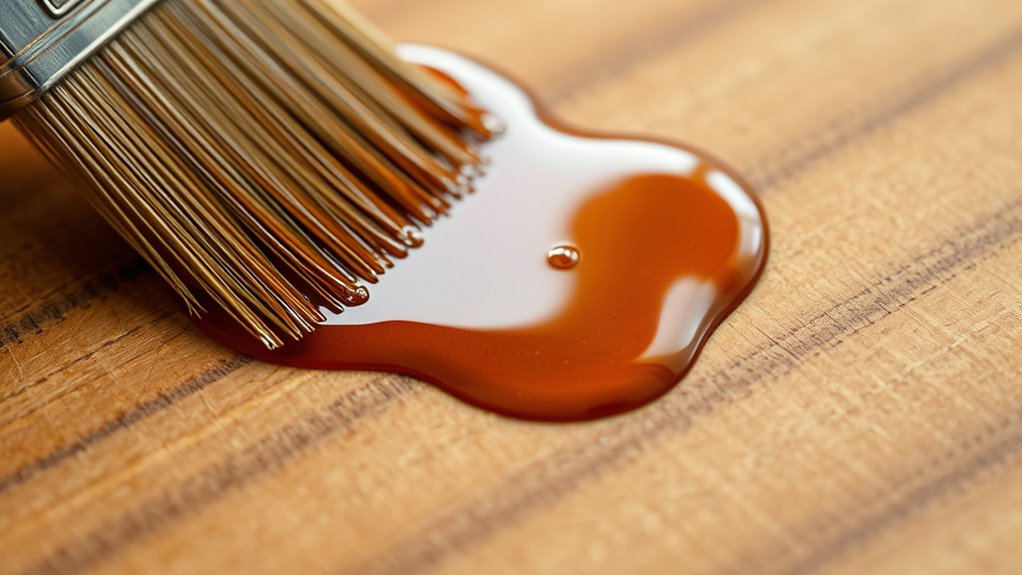

The chemistry of varnishes involves carefully balanced formulations of polymers, solvents, and additives that form a clear, durable film on surfaces. When applied, the solvents evaporate, allowing the polymer particles to coalesce into a flexible, crack-resistant layer that protects and enhances appearance. This process depends on precise chemical interactions, which determine how well the varnish adheres and responds to environmental factors. To understand why this science matters, keep exploring how formulation choices impact what you see and feel on coated surfaces.
Key Takeaways
- The chemistry of varnishes involves polymers and additives that determine adhesion, flexibility, and environmental resistance.
- Proper chemical formulation ensures optimal drying, film formation, and surface protection.
- The polymer composition influences durability, moisture resistance, and UV stability of the coating.
- Chemical interactions during drying affect the clarity, integrity, and crack-resistance of the final film.
- Advances in polymer chemistry enhance varnish performance, longevity, and environmental resilience.

Varnishes are transparent coatings that protect and enhance the appearance of surfaces, and their effectiveness depends heavily on their chemical makeup. When you apply a varnish, you’re fundamentally creating a thin, protective layer composed of a polymer film. This polymer film forms the core of the coating, providing durability, resistance to moisture, and an attractive finish. The nature of this film determines how well the varnish adheres, how it interacts with the underlying material, and how it responds over time. Understanding the drying process is vital because it influences the development of this polymer film, affecting the final quality and performance of the varnish.
Varnish forms a durable, attractive polymer film that protects surfaces, with its quality hinging on the drying process.
The drying process of varnishes is a complex sequence that transforms liquid components into a solid, cohesive film. It begins with solvent evaporation, where volatile compounds leave the mixture, allowing the polymer particles to come closer together. As the solvent dissipates, these particles start to coalesce, forming a continuous polymer film. The efficiency of this process depends on the chemical properties of the varnish, such as the type of solvents used, the molecular weight of the polymers, and the presence of additives. For example, fast-drying varnishes use solvents that evaporate quickly, enabling the formation of the polymer film in a shorter time, while slow-drying types may allow for better leveling and a smoother finish. Additionally, the drying kinetics play a crucial role in determining the final surface quality and uniformity of the coating. Proper control of these kinetics ensures a high-quality finish and reduces the likelihood of defects. The chemical interactions during drying are essential for forming a stable and resilient film that withstands environmental challenges.
The polymer film resulting from the drying process is vital because it dictates the varnish’s protective qualities and aesthetic appeal. A well-formed film is flexible, resistant to cracking, and adheres tightly to the surface. Its transparency ensures that the underlying surface’s beauty remains visible, whether it’s wood grain, artwork, or other material. Conversely, if the drying process is rushed or improperly controlled, it can lead to defects like bubbles, cracks, or cloudiness, compromising both appearance and durability. Chemical composition also influences how the polymer film interacts with environmental factors, such as UV exposure or moisture. The incorporation of stabilizers and plasticizers during formulation helps optimize these interactions for long-term performance, ensuring the varnish maintains its protective qualities over time. This balance is crucial for creating a coating that is both visually appealing and functionally durable.
The chemical composition of the varnish also influences how the polymer film interacts with environmental factors. For instance, certain polymers provide excellent water resistance, while others offer better UV stability. Additives like plasticizers or stabilizers are incorporated to enhance flexibility or prevent degradation over time. These components work together during the drying process to produce a resilient, attractive coating that performs its protective role effectively. A proper understanding of the underlying chemistry allows manufacturers and users to tailor varnishes for specific applications and environmental conditions. Recognizing how different chemical components interact can lead to innovations in coating durability and environmental resistance. Moreover, advancements in polymer chemistry continue to improve the overall performance and longevity of varnishes in various environments.
In reality, the chemistry behind varnishes, especially the formation of the polymer film through a carefully managed drying process, determines their success. It’s a delicate balance of chemical interactions that results in a coating capable of safeguarding surfaces while showcasing their natural beauty. Understanding these processes helps you appreciate why selecting the right varnish and application technique matters so much for achieving ideal results.
Frequently Asked Questions
How Do Varnishes Impact Environmental Sustainability?
Varnishes impact environmental sustainability by incorporating biodegradable coatings and utilizing renewable resources, which reduce pollution and conserve natural materials. When you choose varnishes made from eco-friendly ingredients, you’re helping lower toxic emissions and waste. These sustainable options break down more easily in the environment, lessening long-term harm. By supporting products that focus on renewable resources, you’re contributing to a greener, healthier planet while still protecting and enhancing surfaces effectively.
Can Varnishes Be Safely Used on Food-Contact Surfaces?
You can use varnishes on food-contact surfaces if they’re specifically designed for food safety. These varnishes meet strict standards, ensuring they’re non-toxic and durable for coating food surfaces. Always check labels and product specifications to confirm coating durability and safety. Using the right varnish helps protect the surface and prevents contamination, giving you peace of mind that your food remains safe while maintaining a high-quality finish.
What Are the Health Risks Associated With Varnish Fumes?
Did you know that exposure to varnish fumes can pose significant health hazards? When you breathe in varnish fumes, you risk respiratory irritation, headaches, or dizziness. Prolonged exposure may lead to more serious issues like liver or kidney damage. It’s essential to guarantee proper ventilation and use protective gear, as these fumes contain volatile organic compounds (VOCs) that can affect your health over time.
How Do Different Drying Methods Affect Varnish Quality?
Different drying methods markedly impact varnish quality by influencing drying speed and film durability. Faster drying techniques, like heat or UV curing, can save time but may compromise film integrity if not controlled properly. Slow drying allows better film formation, enhancing durability and finish. You should choose a method based on your project needs, balancing drying speed with the desired film quality to guarantee long-lasting, high-quality results.
Are There Eco-Friendly Alternatives to Traditional Varnishes?
Did you know that the demand for eco-friendly coatings has increased by 30% in recent years? You can choose biodegradable coatings made from plant-based resins, which offer a sustainable alternative to traditional varnishes. These eco-friendly options reduce environmental impact, are safer for you, and still provide excellent protection and finish. Switching to plant-based resins helps you contribute to a healthier planet without sacrificing quality or durability.
Conclusion
Think of varnishes as the silent guardians of your creations, wrapping them in a shimmering shield that reflects your craftsmanship. Their chemistry, like a carefully woven tapestry, blends protection with beauty, ensuring your work endures. When you understand their essence, you hold the brush to a future where your artistry shines brighter, protected by the invisible bonds of chemistry. Ultimately, varnishes symbolize the harmony between science and art, preserving your vision for generations to come.