To fix your art room’s climate, use a humidifier if the air is too dry, and a dehumidifier if it’s too moist, aiming to keep humidity between 40-50%. Proper device choice depends on your space and current moisture level. Monitoring with a hygrometer helps you adjust settings for stability and protect your artwork from cracking, warping, or mold. Keep your environment consistent—if you want to learn more steps, keep exploring.
Key Takeaways
- Use a dehumidifier to reduce humidity above 60%, preventing mold and warping of artwork.
- Use a humidifier to add moisture when humidity drops below 40%, avoiding cracks and brittleness.
- Monitor humidity levels regularly with reliable hygrometers to determine whether to run a dehumidifier or humidifier.
- Maintain a stable humidity between 40-50% for optimal art preservation and prevent damage.
- Combine climate control devices with proper placement and sealing for a smart, effective art room environment.

Govee Digital Hygrometer Indoor Thermometer Room H5075, Bluetooth Temperature Humidity Meter with 164ft Remote App Control, Notification Alerts, 2 Years Data Storage Export for Bedroom, Wine Cellar
Smart Features: The Govee Wireless Thermometer Hygrometer supports all basic functions as well as smart functions such as…
As an affiliate, we earn on qualifying purchases.
As an affiliate, we earn on qualifying purchases.
Why Proper Humidity Is Essential for Your Art Room
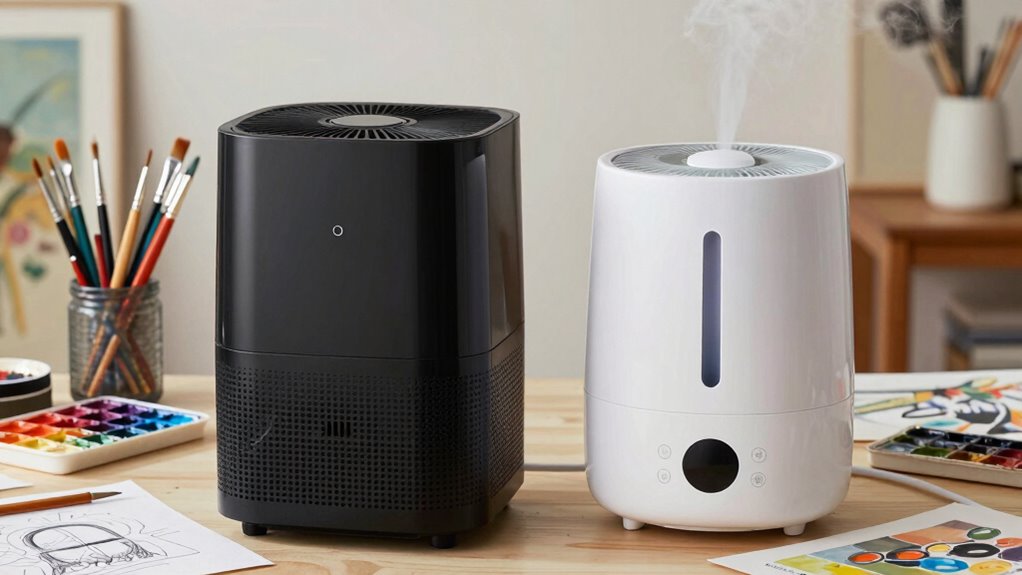
Maintaining proper humidity in your art room is essential because it directly affects the condition of your artwork and your creative process. Humidity fluctuations can cause materials like paper, canvas, and paint to expand, contract, or warp, jeopardizing art preservation. When humidity is too high, your artwork becomes susceptible to mold, mildew, and warping, while low humidity can lead to cracking, brittleness, and fading. Consistent humidity levels help stabilize these materials, preventing damage over time. Proper humidity control devices, such as dehumidifiers or humidifiers, are crucial tools to achieve this stability. By regulating humidity, you create a stable environment that protects your art’s integrity and ensures your creative process remains smooth. Monitoring environmental conditions with smart sensors can provide real-time data, allowing you to make timely adjustments. Additionally, understanding the effects of humidity on various art materials can help you choose the right climate control solutions. Regularly checking your environment with hygrometers or sensors can help maintain optimal humidity levels and prevent unexpected fluctuations. Incorporating climate control devices can further ensure your art materials are kept in ideal conditions, reducing the risk of deterioration. Managing humidity fluctuations is a key step toward safeguarding your collection and maintaining the quality of your work for years to come.

Humidifiers for Bedroom Large Room with Smart App & Remote Control, 7L/1.85Gal Large Humidifier, 4 Mist Levels Humidifiers for Home Crow
【Smart Humidity Control & 4 Mist Levels】: The humidifier for bedroom features a built-in humidistat for real-time monitoring….
As an affiliate, we earn on qualifying purchases.
As an affiliate, we earn on qualifying purchases.
What Is the Ideal Humidity Level for Artwork?
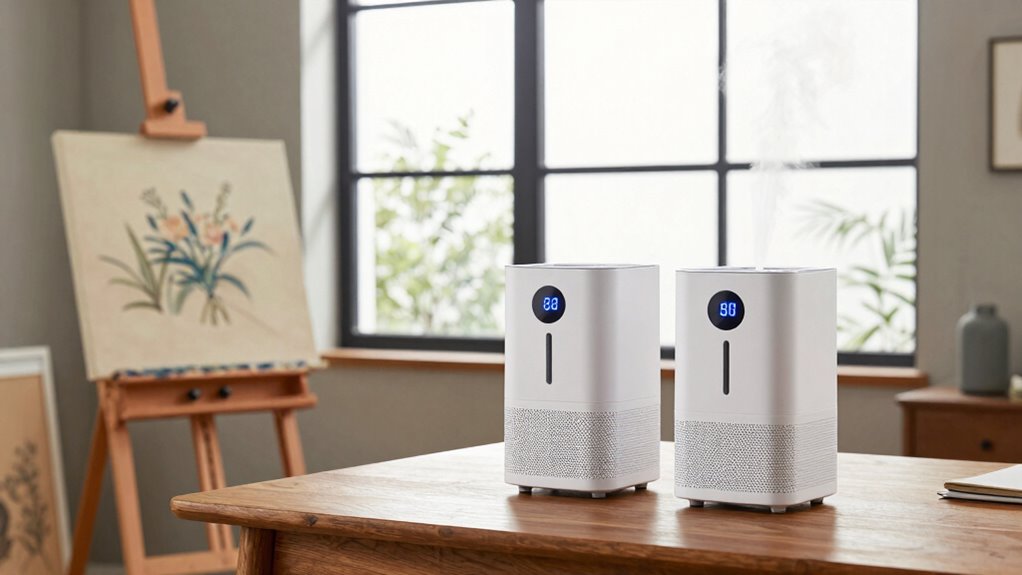
Have you ever wondered what the ideal humidity level is to keep your artwork safe and vibrant? Maintaining a consistent humidity between 40-50% is essential for art preservation. Fluctuations can cause materials to expand and contract, leading to cracking, warping, or fading. Stable climate conditions help prevent deterioration over time. To achieve this, monitor your room’s humidity regularly and use appropriate devices. Keep in mind that different artwork types may require slight adjustments. Consistent humidity supports long-term preservation and minimizes environmental stress on your pieces. By controlling humidity, you create a stable environment that protects your art and guarantees it remains as beautiful as the day you acquired it. Proper climate stability is key to enduring art preservation. Additionally, understanding how indoor air quality factors like dust and microplastics impact your environment can help you optimize conditions further. Maintaining proper humidity levels is crucial for preventing damage caused by environmental fluctuations, ensuring your artwork remains in pristine condition over time. Regularly assessing your indoor environment can help identify other factors that influence artwork longevity. Furthermore, utilizing climate control devices can help maintain a consistent environment and safeguard your collection. Incorporating air filtration systems can further enhance the preservation environment by reducing airborne pollutants.
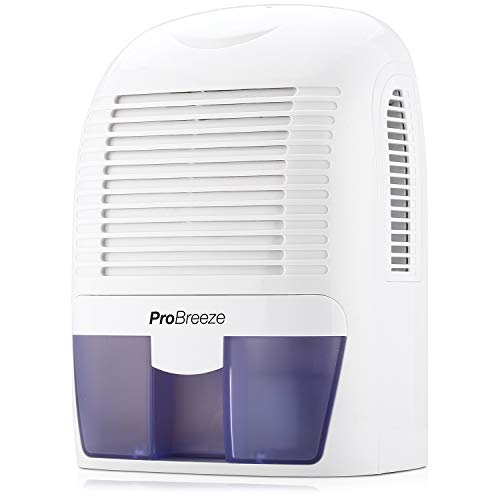
Pro Breeze Electric Mini Dehumidifier, 2200 Cubic Feet (250 sq ft), Compact and Portable for High Humidity in Home, Kitchen, Bedroom, Basement, Caravan, Office, Garage
COMPACT & SMALL DEHUMIDIFIER: Lightweight, compact, and portable, this mini dehumidifier removes up to 18 oz of water…
As an affiliate, we earn on qualifying purchases.
As an affiliate, we earn on qualifying purchases.
Should You Use a Dehumidifier or a Humidifier? How to Decide

Choosing between a dehumidifier and a humidifier depends on your current indoor humidity levels and your environment’s needs. If your space is too humid, a dehumidifier helps prevent mold and reduces allergens. Conversely, if it’s too dry, a humidifier adds moisture, protecting your artwork from cracking and deterioration. Use this quick guide to decide:
| Current Humidity | Recommended Device | Benefits |
|---|---|---|
| High (>60%) | Dehumidifier | Mold prevention, allergen reduction |
| Low (<40%) | Humidifier | Prevents cracking, enhances preservation |
| Just right | Neither | Maintain ideal conditions |
Monitoring humidity levels guides your choice, ensuring your art stays safe and your environment remains comfortable. Proper humidity levels are essential for the long-term preservation of artwork, especially in environments where fluctuating conditions can cause damage. Maintaining appropriate indoor humidity can significantly extend the lifespan of your artwork and prevent environmental damage. Regularly checking your humidity levels helps you make informed decisions about climate control devices.
art preservation climate control devices
As an affiliate, we earn on qualifying purchases.
As an affiliate, we earn on qualifying purchases.
How to Choose the Right Device for Your Art Space

When selecting a device for your art space, consider the room size and its specific needs to guarantee proper humidity levels. Look for models with features that let you easily control and monitor humidity, so your artwork stays protected. Making the right choice depends on matching the device’s capabilities to your space and humidity requirements. Additionally, understanding the importance of maintaining optimal climate control can help prevent damage to delicate artworks and ensure a comfortable environment for creativity. Proper humidity management is essential for preserving your art collection and creating an ideal workspace. In environments with varying temperatures or altitudes, selecting a device that accounts for derating factors ensures consistent performance and reliable protection for your artwork. Recognizing early warning signs of improper humidity can help you respond promptly and safeguard your creations. Consulting whole-home water system considerations can also help optimize your environment by reducing excess humidity or dryness that might affect your art.
Room Size and Needs
Selecting the right dehumidifier or humidifier depends largely on the size and specific needs of your art space. Larger rooms require devices with higher capacity to guarantee proper air circulation and consistent humidity levels. Smaller spaces might need compact units that are easier to manage without over-saturating the air. Consider how much you need to maintain temperature stability, as this impacts both the device’s size and power. Proper airflow helps distribute moisture evenly, preventing hot or cold spots. Additionally, assess whether your space has high ceilings or irregular shapes that could affect the device’s effectiveness. A well-chosen unit will optimize humidity control, ensuring your art environment remains stable and comfortable. Understanding air circulation patterns can further enhance the effectiveness of your chosen device, helping maintain a balanced climate throughout your space. Evaluating room layout and airflow can assist in positioning your device for maximum efficiency, especially when considering airflow management techniques to promote even humidity distribution.
Humidity Control Features
To guarantee your art space maintains ideal humidity levels, focus on the device’s humidity control features. Look for models equipped with smart sensors, which monitor moisture levels in real-time. These sensors enable automatic adjustments, ensuring the environment stays consistent without your constant intervention. Devices with precise humidity control allow you to set your desired range, and then handle the rest automatically. This prevents fluctuations that could damage your artwork. Consider whether the device offers features like humidity calibration or digital displays for easy monitoring. By choosing a unit with advanced humidity control, you’ll protect your art and create a stable, superior environment effortlessly. Smart sensors and automatic adjustments make maintaining the perfect climate simple and reliable. Additionally, understanding cybersecurity tactics can encourage a positive mindset that supports your creative space, especially when managing digital art tools and online resources.
Tips for Maintaining Optimal Humidity and Protecting Your Art
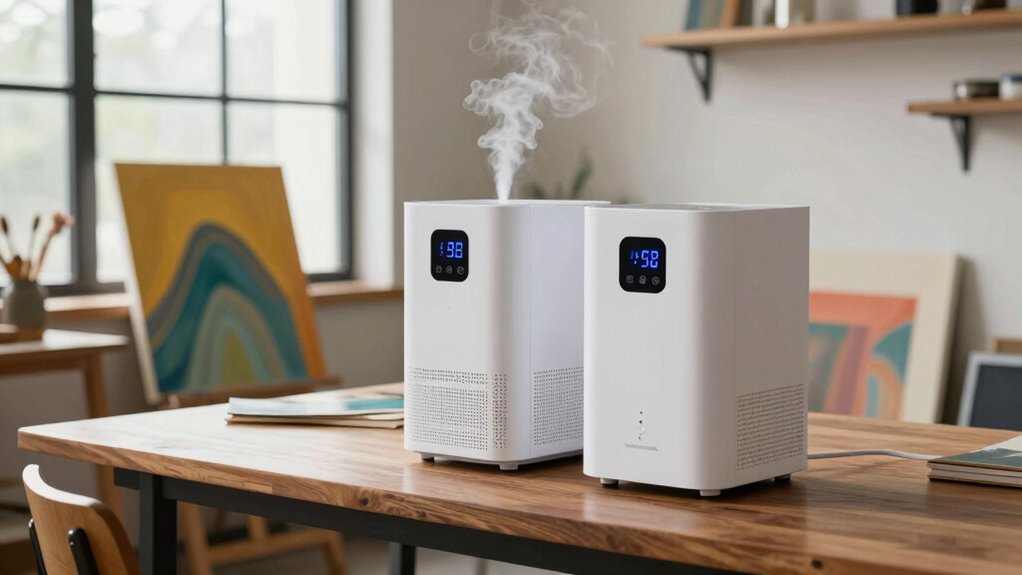
Maintaining proper humidity levels is essential for preserving your artwork’s integrity. Consistent humidity prevents cracking, warping, and mold growth, ensuring your art remains in pristine condition. Be aware of common humidity myths, such as the idea that high humidity always harms art—moderate levels are key. To protect your collection, monitor humidity regularly with a reliable hygrometer. Use a humidifier or dehumidifier as needed, avoiding rapid changes. Keep artworks away from direct sunlight and drafts, which can cause damage. Proper storage in climate-controlled environments also plays a vital role.
Maintaining stable humidity levels prevents damage and preserves your artwork’s integrity.
- Regularly calibrate your hygrometer for accuracy
- Maintain a stable humidity range of 40-50%
- Avoid placing art near heating or cooling vents
- Educate yourself on art preservation best practices
Common Mistakes in Humidity Control and How to Avoid Them
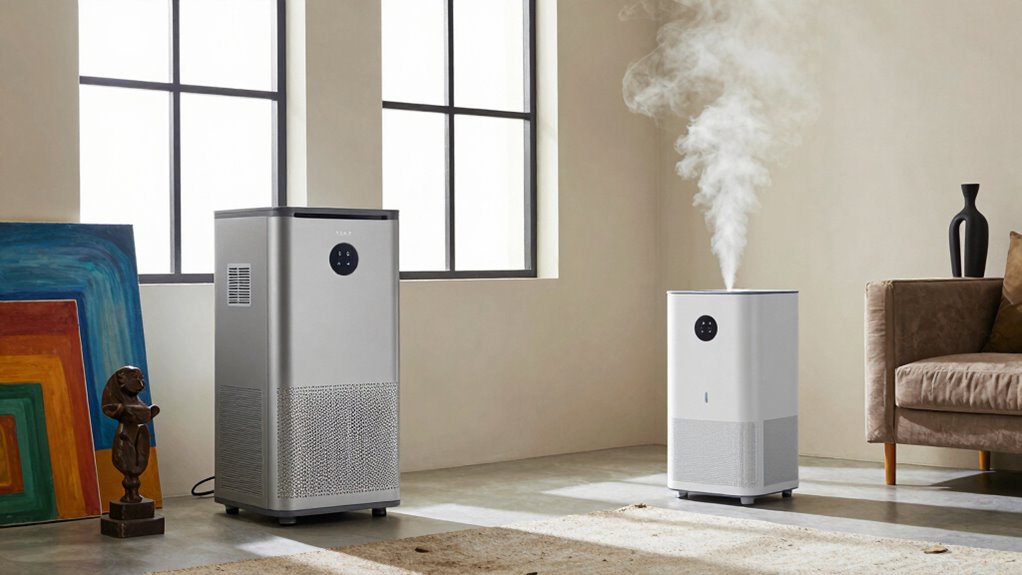
Are you aware of the common mistakes that can sabotage your efforts to control humidity and protect your artwork? One major error is overhumidification issues, which can cause mold growth and warping. To avoid this, don’t set your humidifier too high or leave it running constantly. Additionally, incorrect device placement can undermine your efforts; placing a humidifier or dehumidifier near walls or vents can lead to uneven humidity levels. Always position your devices in open, central locations away from direct sunlight or airflow sources. Regularly monitor humidity levels with a reliable hygrometer to catch problems early. By avoiding these mistakes, you ensure a stable environment that safeguards your art without risking damage from excess moisture or dryness.
Step-by-Step Guide to Fixing Your Art Room’s Climate
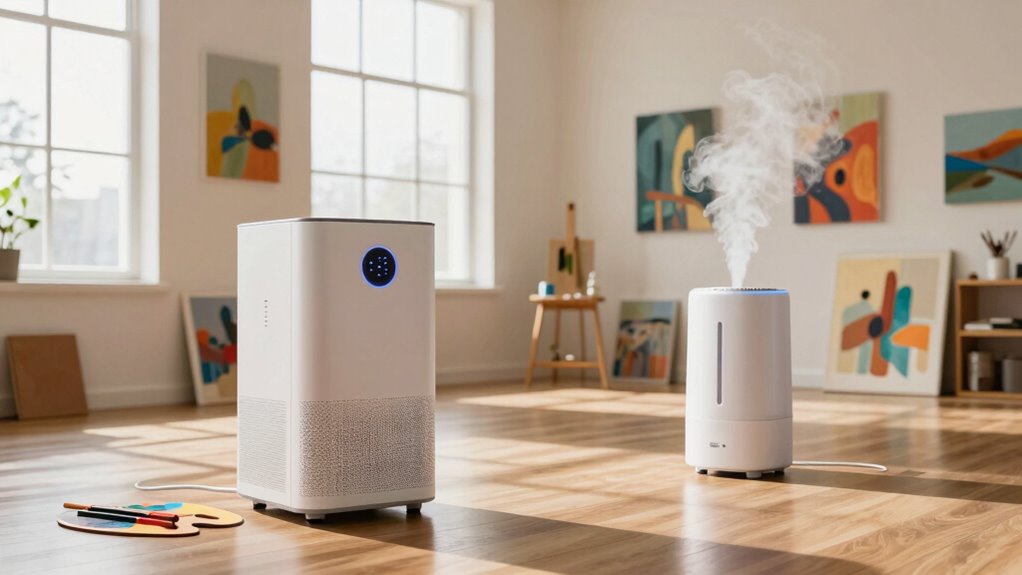
Fixing your art room’s climate starts with evaluating the current humidity levels and identifying problem areas. Use a reliable hygrometer to monitor humidity consistently, noting spots with fluctuating or extreme conditions. Once you understand the environment, take targeted actions to improve art conservation and mold prevention.
Assess humidity with a hygrometer, identify problem spots, and take targeted steps to protect your art.
- Check for sources of excess moisture, like leaks or poor ventilation
- Adjust your dehumidifier or humidifier settings based on readings
- Seal cracks and gaps to prevent humidity fluctuations
- Incorporate air circulation solutions to maintain even humidity
Frequently Asked Questions
Can a Humidifier or Dehumidifier Damage My Artwork?
Yes, a humidifier or dehumidifier can damage your artwork if not used properly. Excess humidity from a humidifier can lead to mold or warping, while a dehumidifier’s low moisture levels might cause cracking or dryness. To protect your artwork, focus on proper device maintenance and monitor indoor humidity levels. Maintaining a stable environment helps preserve your artwork’s integrity without risking damage from improper humidity control.
How Often Should I Check and Adjust Humidity Levels?
You should check and adjust your humidity levels weekly to maintain proper environmental monitoring. Regularly calibrate your hygrometer for accuracy, ensuring your readings are reliable. Keep an eye on the humidity, especially if you notice changes in your artwork or room conditions. Adjust your dehumidifier or humidifier as needed, based on your calibration results, to create a stable climate that protects your art from damage caused by fluctuating moisture levels.
Are There Specific Brands Recommended for Art Room Climate Control?
You should consider trusted climate control devices like those from popular brands such as Frigidaire, Honeywell, or Vornado, which offer reliable dehumidifiers and humidifiers. When choosing, look for models compatible with art supply brands, ensuring they maintain ideal humidity for your materials. These brands are known for durability and precision, helping you create a stable environment that protects your artwork and supplies.
What Are Signs My Artwork Is Being Affected by Humidity Issues?
Like a detective noticing clues, you’ll see your artwork develop warping, cracking, or mold—signs of humidity fluctuations threatening art preservation. Paint may bubble, colors fade, or paper warp, revealing moisture issues. These signs indicate your environment’s humidity isn’t stable, risking damage over time. Stay vigilant; controlling humidity guarantees your art stays pristine, and you avoid the tragedy of irreversible deterioration caused by unchecked climate shifts.
Is It Better to Use a Combined Device for Humidity Regulation?
Using a combined device for humidity regulation offers the advantage of convenience and space-saving, allowing you to control both humidity levels with one unit. However, the drawbacks include less precise control since a single device may not respond quickly to fluctuating conditions, and it might not effectively address extreme humidity issues. Consider your room’s specific needs before opting for a dual device to guarantee ideal climate stability for your artwork.
Conclusion
Getting your art room’s climate just right isn’t rocket science, but it does take some attention. By choosing the right device and maintaining proper humidity, you’ll keep your artwork safe and your creative flow smooth. Remember, don’t put all your eggs in one basket—regular checks and tweaks make all the difference. With a little effort, you’ll have a space that’s as inspiring as the art you create, turning the tide in your favor.