Never use harsh chemicals like bleach, strong solvents, or aggressive commercial cleaners on your canvas. These substances can weaken fibers, fade colors, or cause irreparable damage to the artwork. Instead, test gentle, pH-balanced solutions on a small, hidden area first, and always use lukewarm or cold water to protect the surface. Avoid scrubbing too hard—stick to light, careful cleaning techniques. Continuing with these tips will help you preserve your canvas’s beauty and longevity.
Key Takeaways
- Never use harsh chemicals like bleach or aggressive solvents on canvas, as they can cause damage and discoloration.
- Avoid vigorous scrubbing; gentle blotting or light brushing is essential to prevent fiber tears and surface deterioration.
- Do not apply hot water (>120°F), which can warp or shrink the canvas; always use lukewarm or cold water.
- Never skip testing cleaning products on a hidden area to prevent unintended damage or discoloration.
- Avoid over-application of cleaning solutions to prevent residue buildup and long-term surface harm.

The Gentle Art of Swedish Death Cleaning: How to Free Yourself and Your Family from a Lifetime of Clutter (The Swedish Art of Living & Dying Series)
As an affiliate, we earn on qualifying purchases.
As an affiliate, we earn on qualifying purchases.
Never Use Harsh Chemicals When Cleaning Your Canvas

When cleaning your canvas, it’s crucial to avoid harsh chemicals that can damage the material. Harsh chemicals, like bleach or strong solvents, can weaken the fibers and cause discoloration, making your artwork look faded or ruined. Damage prevention starts with using gentle cleaning methods that won’t compromise the integrity of the canvas. Instead of aggressive cleaners, opt for mild soap diluted with water or specialized art-cleaning products designed for delicate surfaces. Always test a small, inconspicuous area first to ensure there’s no adverse reaction. Remember, the goal is to preserve your canvas’s appearance and longevity. To further protect your artwork, understanding the importance of color fidelity can help you choose the safest cleaning methods. Being aware of cleaning techniques is also essential to avoid unintentional damage. Incorporating proper maintenance routines can extend the lifespan of your artwork significantly. Additionally, understanding material-specific care can help you tailor your cleaning approach to different types of canvas and surfaces. By steering clear of harsh chemicals, you protect your artwork from unnecessary harm and keep it looking fresh for years to come.

Pink Miracle Shoe Cleaner Kit with Bottle and Brush For Fabric Cleaner For Leather, Whites, Suede and Nubuck Sneakers (4 Oz)
The ORIGINAL Shoe Cleaning System: Pink Miracle Shoe Cleaner has been around since 1985, and the great formula…
As an affiliate, we earn on qualifying purchases.
As an affiliate, we earn on qualifying purchases.
Why Harsh Chemicals Can Damage Your Artwork

Harsh chemicals can cause serious damage to your artwork by weakening the canvas surface and breaking down paint layers. They may also lead to color fading, making your masterpiece look dull over time. Using strong cleaners can accelerate surface degradation, ruining your artwork’s integrity and beauty. Additionally, exposure to certain chemicals can introduce pollutants like microplastics in dust, which may settle on your artwork and negatively impact its preservation. To protect your artwork, it’s best to avoid harsh cleaning agents and opt for gentle, artist-approved cleaning methods. Choosing appropriate cleaning techniques can significantly extend the lifespan of your artwork and maintain its original appearance. Being aware of environmental pollutants helps in selecting safer cleaning options that safeguard your artwork’s longevity, especially in environments where air quality may be compromised.
Chemical Damage Risks
Using strong chemicals on your artwork can cause irreversible damage, compromising the integrity of the materials and colors. Harsh substances can trigger unexpected chemical reactions, weakening fibers or dissolving paint layers. Solvent effects may seem effective but often lead to unintended consequences, such as discoloration or peeling. To visualize this, imagine:
| Surface Damage | Color Alteration | Material Breakdown |
|---|---|---|
| Fading fibers | Bleached hues | Cracked paint |
| Softened canvas | Color washout | Flaking layers |
| Discoloration | Stained textures | Weakened structure |
These effects happen because aggressive chemicals disrupt the delicate balance of your artwork’s chemistry. Always opt for gentle cleaning methods to prevent damaging the artwork’s longevity and visual integrity. Additionally, understanding the chemical composition of cleaning agents is crucial to avoid unintended reactions that could harm your artwork, especially considering how vetted cleaning products are recommended to ensure safety. Furthermore, chemical reactions can sometimes produce harmful fumes or byproducts that pose additional risks during cleaning. Avoiding chemical damage risks is essential to preserve the durability and appearance of your artwork over time.
Color Fading Causes
Chemicals that are too strong can cause your artwork’s colors to fade or shift over time. Harsh cleaning agents and solvents can break down the pigments and binders in your paint, compromising canvas preservation and reducing color retention. When you use aggressive chemicals, you risk stripping away the vibrant hues, leaving your artwork dull and faded. Over time, this damage becomes irreversible, diminishing its visual impact and value. To protect your painting’s integrity, it’s essential to choose gentle, pH-balanced cleaning solutions designed specifically for artwork. By avoiding strong chemicals, you ensure that your canvas remains vibrant and well-preserved for years to come. Proper cleaning techniques help maintain the original brilliance, safeguarding the artistic intent behind your masterpiece. Additionally, understanding the importance of content quality and topical authority can guide you toward best practices for maintaining your artwork’s longevity. Using appropriate cleaning methods can significantly extend the lifespan of your artwork and preserve its original beauty. Being aware of heat and fumes generated during cleaning can prevent potential damage and help maintain your artwork’s condition over time. Moreover, avoiding over-aggressive cleaning ensures that your efforts do not unintentionally harm delicate materials. Recognizing the chemical composition of cleaning agents can help you select the safest options for your artwork’s surface.
Surface Degradation
When strong cleaning agents are applied to a canvas, they can cause surface degradation by breaking down the delicate layers of paint and varnish. This damage accelerates canvas deterioration and hampers surface preservation. Harsh chemicals can weaken the paint’s adhesion, leading to flaking or loss of color. To illustrate, consider the following effects:
| Effect | Result |
|---|---|
| Chemical Breakdown | Damages paint layers |
| Varnish Erosion | Reduces gloss and protection |
| Surface Weakening | Increases vulnerability |
Using the wrong cleaners risks irreversible harm to your artwork. Always opt for gentle, conservation-approved methods to maintain the integrity of your canvas and ensure its longevity. Proper cleaning techniques also depend on understanding surface degradation, which can help you better assess the appropriate methods for your artwork. Being aware of the aero guardians principles can further guide you in protecting your art from environmental damage. Recognizing the importance of gentle cleaning techniques can be crucial in preventing long-term damage. Additionally, proper cleaning procedures are essential for safeguarding the surface from chemical harm. Protect your art’s surface by avoiding harsh chemicals at all costs.

Speedball Art Products SB3159 2-Ounce Pen Cleaner
Pen cleaner for speedball super pigment acrylic inks
As an affiliate, we earn on qualifying purchases.
As an affiliate, we earn on qualifying purchases.
Always Test Cleaning Products on a Hidden Spot First
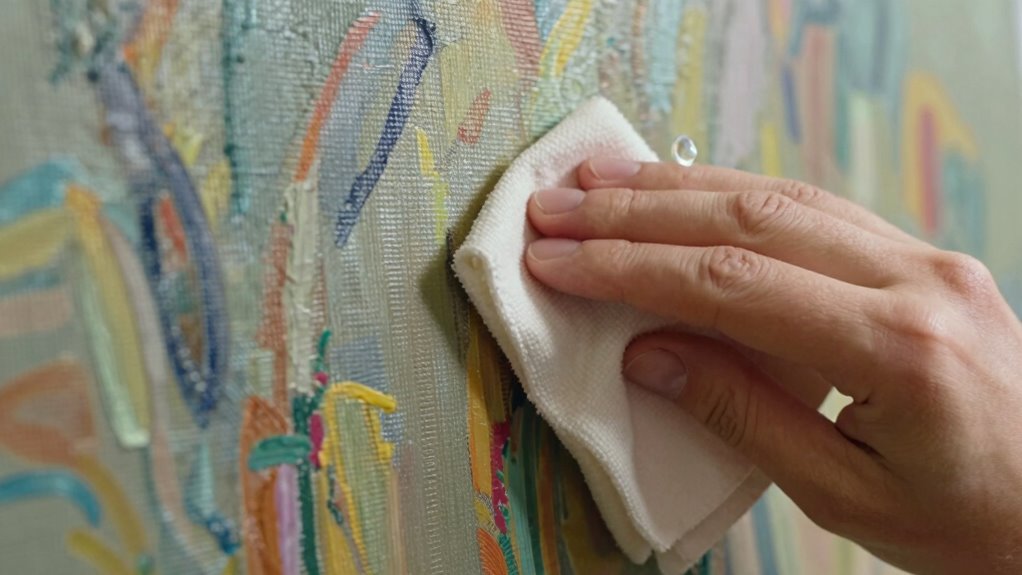
Before applying a cleaning product to your canvas, it’s vital to test it on a hidden spot first. This test patch helps you determine whether the cleaner causes discoloration or damage. Find a discreet area, like the underside or a seam, and apply a small amount of the product. Wait a few minutes to observe any reaction. If the fabric’s color remains intact and no damage appears, it’s safe to proceed with cleaning the visible surface. Skipping this step risks ruining your canvas or creating unsightly spots. Always prioritize testing on a hidden spot to protect your investment. A simple test patch ensures you’re using the right product safely, preventing costly mistakes and preserving your canvas’s appearance over time.

Scotch-Brite Gentle Clean Delicate Scrub Sponges, For Washing Dishes and Cleaning Kitchen, 3 Scrub Sponges
THREE SCRUBBING SPONGES: This pack of Scotch-Brite Delicate Clean Scrub Sponges includes three dish sponges
As an affiliate, we earn on qualifying purchases.
As an affiliate, we earn on qualifying purchases.
Use the Right Water Temperature to Protect Your Canvas
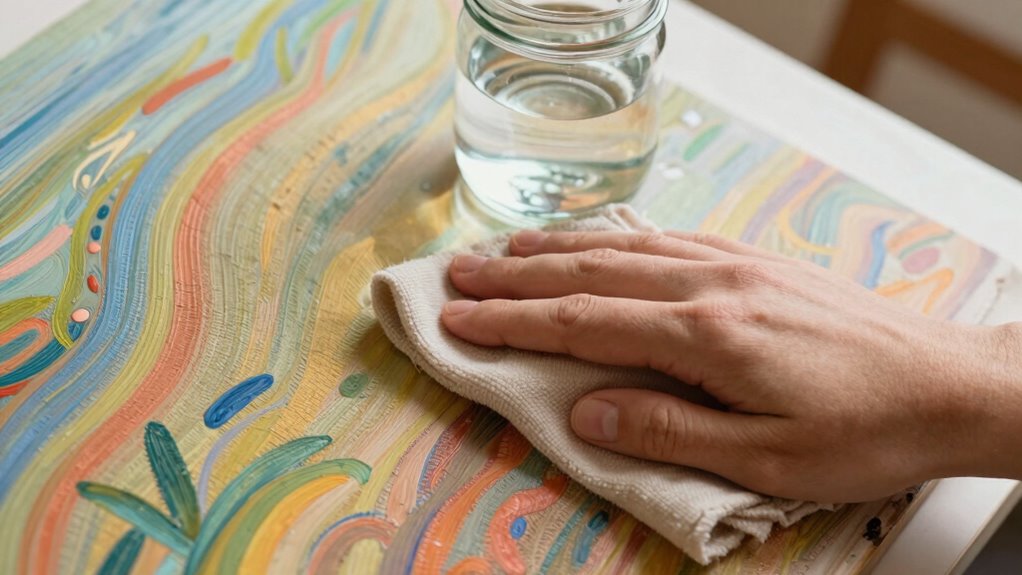
Using the right water temperature is key to protecting your canvas. Hot water can damage the material, so stick to lukewarm or cold for cleaning. Cold water is often best for preserving your canvas’s color and fabric integrity.
Avoid Hot Water
Have you ever wondered what temperature of water is safest for cleaning your canvas? Using hot water can cause hot water hazards, like shrinking or warping the fabric. To avoid damage, stick to cooler water options. Here’s a quick water temperature tips table:
| Water Temperature | Effect on Canvas |
|---|---|
| Hot (above 120°F) | Risks shrinking, warping |
| Warm (90–120°F) | Slight risk, best avoided |
| Lukewarm (80–90°F) | Safe for most cleaning |
| Cold (below 80°F) | Effective without damage |
| Ice-cold | Less effective, not recommended |
Always opt for the right water temperature to keep your canvas in top shape and prevent unnecessary damage.
Use Lukewarm Best
Choosing the right water temperature is key to maintaining your canvas’s integrity. Using lukewarm water helps prevent damage while ensuring effective cleaning. When selecting water, consider these points:
- Chemical safety: Lukewarm water activates cleaning solutions without risking chemical breakdown or residue buildup.
- Cleaning tools: Gentle scrubbing tools work best with lukewarm water, avoiding abrasiveness that hot water might cause.
- Canvas preservation: Temperatures that are too hot can weaken fibers, so sticking to lukewarm ensures your canvas stays durable.
Cold Protects Canvas
When you opt for cold water, it forms a gentle yet effective approach to protecting your canvas. Cold water helps preserve the canvas texture by preventing unnecessary expansion or contraction that can cause cracking or warping. It also plays an essential role in paint preservation, ensuring colors stay vibrant and don’t peel or fade prematurely. Using icy or cold water reduces the risk of damaging delicate paint layers and maintains the integrity of the surface. This careful temperature control minimizes stress on the canvas fibers, keeping it looking fresh longer. Remember, hot water can weaken the material and compromise your artwork, so sticking to cold water when cleaning is the best way to safeguard your canvas’s longevity and visual quality.
Avoid Over-Applying Cleaning Solutions and Scrubbing Too Hard
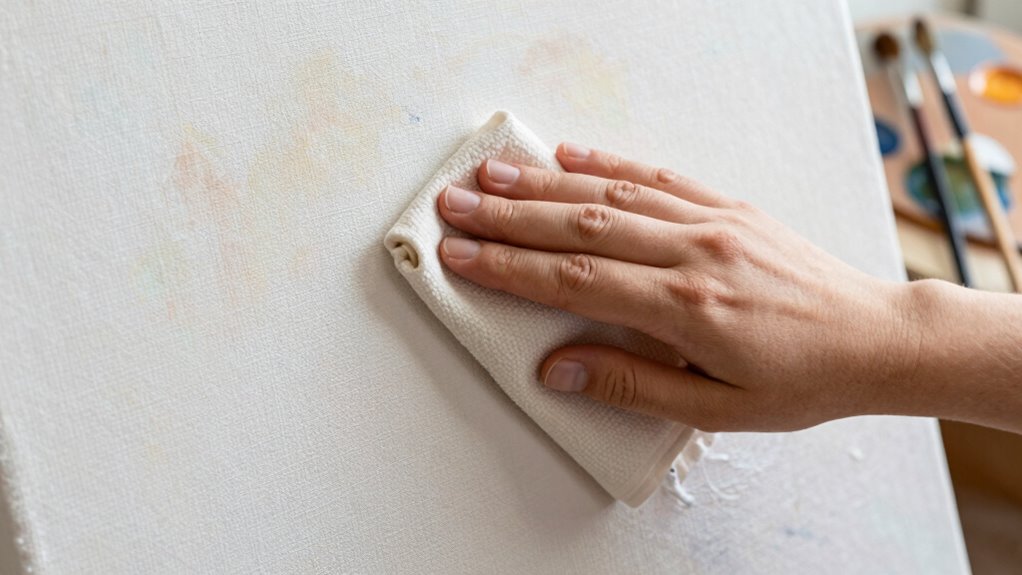
Applying too much cleaning solution or scrubbing too aggressively can actually damage your canvas rather than clean it. Over application dangers include residue buildup and potential color fading, while aggressive scrubbing can weaken fibers and cause tears. To avoid these pitfalls, keep these tips in mind:
Use minimal cleaner and gentle blotting to protect your canvas from damage.
- Use only a small amount of cleaner, applying it gently with a soft cloth or sponge.
- Focus on blotting or light brushing instead of vigorous scrubbing.
- Test any cleaning method on a small, inconspicuous area first to prevent unintended damage.
Choose the Best Cleaning Method for Your Canvas Type
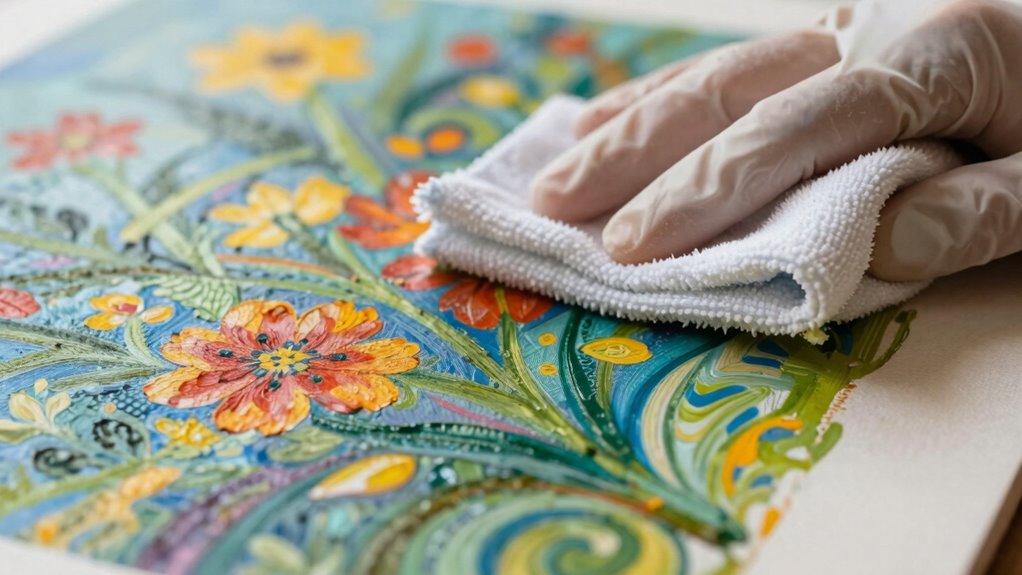
Selecting the right cleaning method depends on your canvas type, as different materials respond best to specific techniques. For smooth or tightly woven canvas textures, gentle brushing with soft cleaning tools can remove surface dirt without damaging the fabric. If your canvas has a rougher or more textured surface, use a slightly damp cloth to avoid embedding dirt deeper into the fibers. For delicate or vintage canvases, opt for light, careful cleaning with minimal moisture, and avoid harsh chemicals. Always match your cleaning tools to your canvas texture to prevent damage. Using the wrong tools or techniques can cause fraying or staining. Assess your canvas carefully, choose appropriate cleaning tools, and apply the method that preserves its integrity and appearance.
How to Rinse and Dry Your Canvas Properly
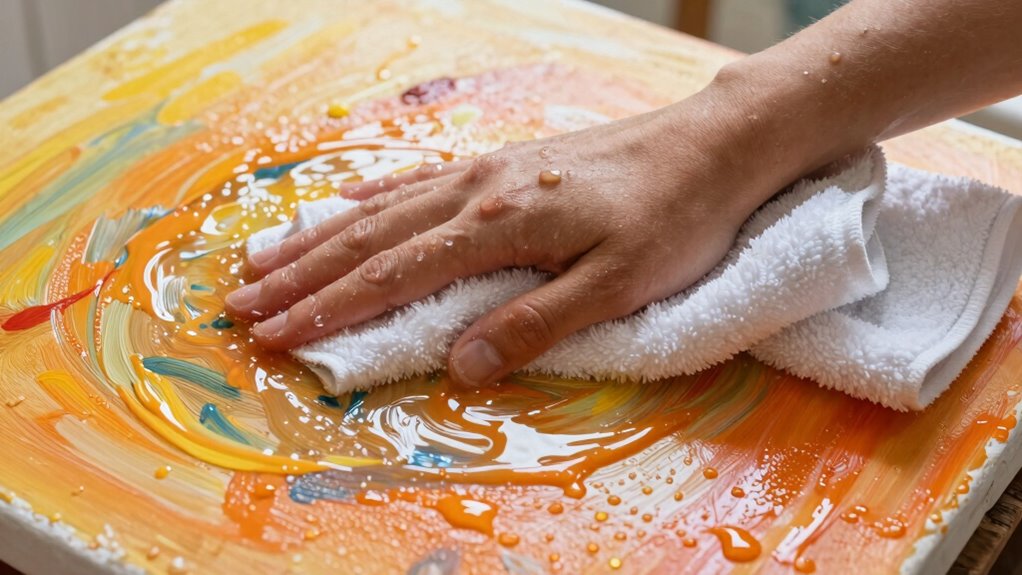
Rinsing and drying your canvas correctly are essential steps to guarantee a clean finish. Proper rinsing preserves the canvas texture and prevents residue buildup, especially if you clean more frequently. To do it right:
- Gently rinse the canvas with cool water, ensuring all soap or cleaning solution is thoroughly washed away.
- Avoid twisting or wringing, as this can distort the canvas texture; instead, gently press out excess water.
- Let the canvas air dry in a well-ventilated area, avoiding direct sunlight, which can cause fading or warping.
What to Do If Your Canvas Gets Damaged During Cleaning
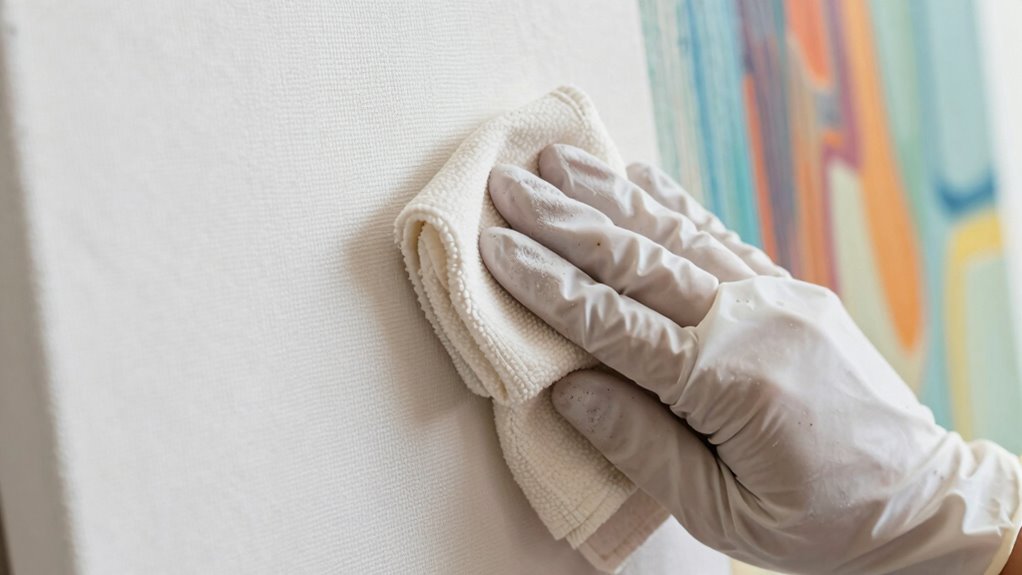
If your canvas sustains damage during cleaning, it’s important to act quickly to prevent further harm. First, stop cleaning immediately to avoid worsening the damage. Carefully assess the extent of the tear or stain. For minor damages, you might attempt gentle canvas repair using specialized patch kits designed for fabric tears. However, for significant damage or if you’re unsure, it’s best to seek professional restoration. A professional can perform proper canvas repair techniques that preserve your artwork’s integrity. Avoid trying complicated repairs yourself, as improper methods can cause more harm. Remember, timely professional intervention ensures your canvas is properly restored without risking additional damage. Prioritize expert help to maintain the longevity and appearance of your piece.
Frequently Asked Questions
Can I Use Bleach to Clean My Canvas?
You shouldn’t use bleach to clean your canvas because of bleach dangers. It can damage the fabric, cause discoloration, and weaken the material over time. Many cleaning myths suggest bleach is effective for stains, but it’s harsh and unnecessary. Instead, opt for gentle, fabric-safe cleaners to preserve your canvas’s quality and appearance. Always check manufacturer instructions before using any cleaning product on your canvas to avoid costly mistakes.
Is It Safe to Clean Canvas With Household Vinegar?
You might think vinegar is a quick fix, but it’s a slippery slope. Cleaning your canvas with household vinegar isn’t always safe because vinegar dangers can damage the fabric or cause discoloration. Instead, stick to gentle, recommended canvas cleaning methods like mild soap and water. Using vinegar often isn’t worth the risk, as it can weaken the material and lead to costly repairs down the line.
How Often Should I Clean My Canvas Artwork?
You should clean your canvas artwork with a gentle dusting at least once every few months. Regular canvas dusting prevents dirt buildup and preserves its appearance. Avoid over-cleaning, which can damage the surface. Pay attention to cleaning frequency based on your environment—more frequent dusting is needed in dusty or high-traffic areas. Always use soft brushes or microfiber cloths to keep your artwork looking its best without risking damage.
Can Cleaning Damage the Paint or Materials on My Canvas?
Cleaning your canvas can damage the paint or materials if you use abrasive scrubbing or chemical solvents. These harsh methods can strip paint, cause discoloration, or weaken the canvas itself. Instead, gently dust with a soft brush or cloth, and avoid strong chemicals. Always test cleaning methods on a small, inconspicuous area first, and consult a professional if you’re unsure, to preserve your artwork’s integrity.
What Are Professional Cleaning Options for Valuable or Antique Canvases?
For valuable or antique canvases, you should seek professional restoration techniques to guarantee proper preservation. Experts use gentle cleaning methods, such as specialized solvents and careful surface treatments, to avoid damage. These professionals focus on display preservation, maintaining the artwork’s integrity while cleaning. Never attempt DIY cleaning on delicate or priceless pieces, as improper techniques can cause irreversible harm. Always consult a conservator to protect your treasured canvases effectively.
Conclusion
Remember, the key to keeping your canvas pristine is avoiding one critical mistake. A single wrong move during cleaning could silently damage your artwork beyond repair. Think you’ve got it under control? Think again. The next step could be the one that changes everything—either preserving your masterpiece or risking irreversible harm. Stay vigilant, follow the right procedures, and always stay one step ahead. Because when it comes to your art, a small oversight can make all the difference.