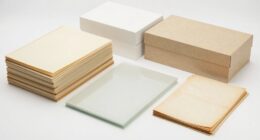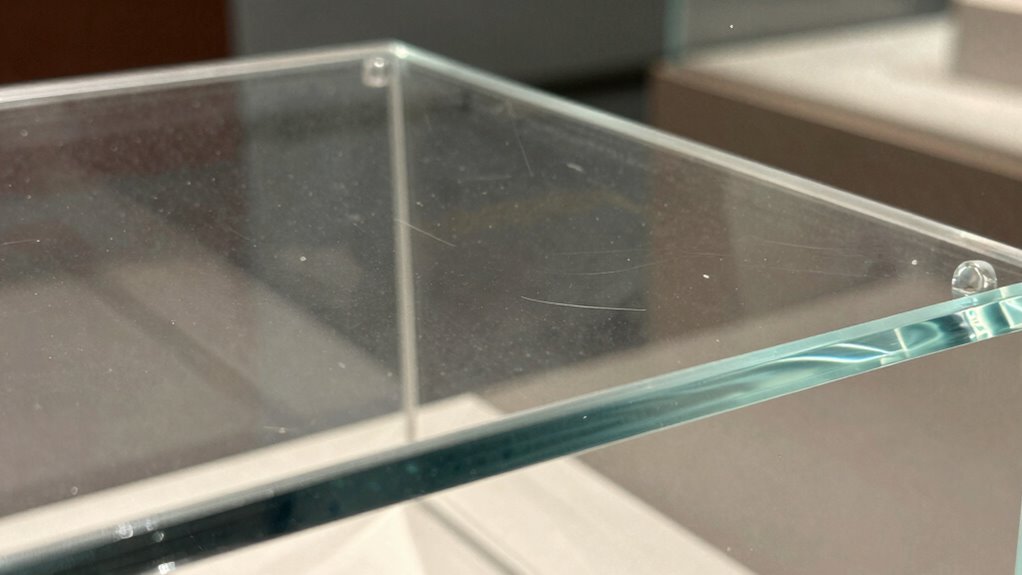

When choosing between museum glass and acrylic, consider your priorities. Museum glass offers superior clarity, UV protection, and glare reduction, making it ideal for high-end displays and valuable artwork. Acrylic is lightweight, impact-resistant, and more budget-friendly but can produce more glare and scratches over time. If long-term preservation and visual quality matter most, paying extra for museum glass is worthwhile. To discover which option best fits your needs and budget, explore the details further.
Key Takeaways
- Museum glass offers superior clarity, UV protection, and glare reduction, making it ideal for high-end art displays.
- Acrylic is lightweight, shatter-resistant, and easier to handle, but tends to produce more glare and offers less UV filtering.
- The higher cost of museum glass is justified by its long-term preservation benefits and better visual experience.
- Acrylic requires careful cleaning to prevent scratches, but can be polished if damaged, unlike museum glass.
- Consider your display environment, safety needs, and budget when choosing between the two materials.

Tru Vue Optium Museum Grade Acrylic Glass Cover For Picture Framing, Anti-Glare 99% UV Blocking Conservation Grade Anti-Abrasion (3 x 5)
Crystal Clear Anti-Reflective Coating
As an affiliate, we earn on qualifying purchases.
As an affiliate, we earn on qualifying purchases.
What Are Museum Glass and Acrylic? An Introduction
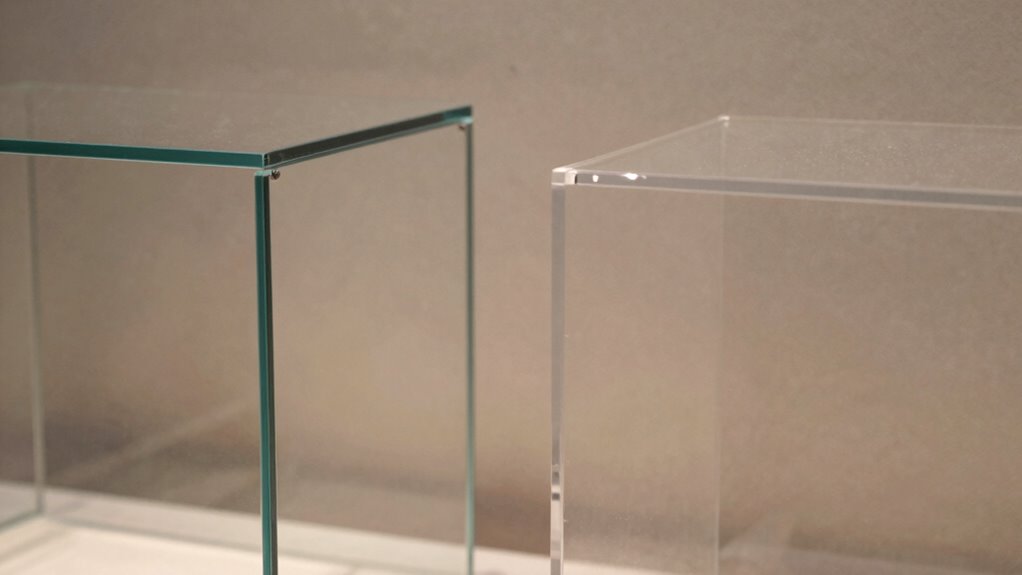
Have you ever wondered what makes museum glass and acrylic different from regular display materials? These specialized materials are designed to enhance art preservation and improve display aesthetics. Museum glass is crafted to minimize reflections and block UV rays, protecting artworks from fading over time. Acrylic, on the other hand, offers a lightweight, shatter-resistant alternative that also reduces glare, making it ideal for various display environments. Both options aim to preserve the integrity of the artwork while offering a clear view for viewers. They are engineered to provide ideal protection without compromising visual appeal. Understanding these materials helps you appreciate their role in safeguarding art and creating stunning, professional displays. This foundation sets the stage for comparing their clarity and glare in detail. Additionally, the choice between museum glass and acrylic often involves considerations of cabling solutions and mounting options to ensure the display remains secure and visually appealing. Furthermore, the optical clarity of each material can significantly influence viewer experience and artwork visibility. For example, advancements in anti-reflective coatings further improve viewing conditions and reduce distractions.

(5 Pack) 11" x 14" Plexiglass Sheets 1mm Thick, Clear Acrylic Sheets Panel Cut to Size Plexiglass Acrylic Board, Cut with Engraver, Power Saw or Hand Tools, No Laser Cut.
【High Quality】: Plexiglass Sheet Panels is crystal clear, excellent transparency which have a good display effect. stronger and…
As an affiliate, we earn on qualifying purchases.
As an affiliate, we earn on qualifying purchases.
How Do Museum Glass and Acrylic Differ in Clarity and Glare?
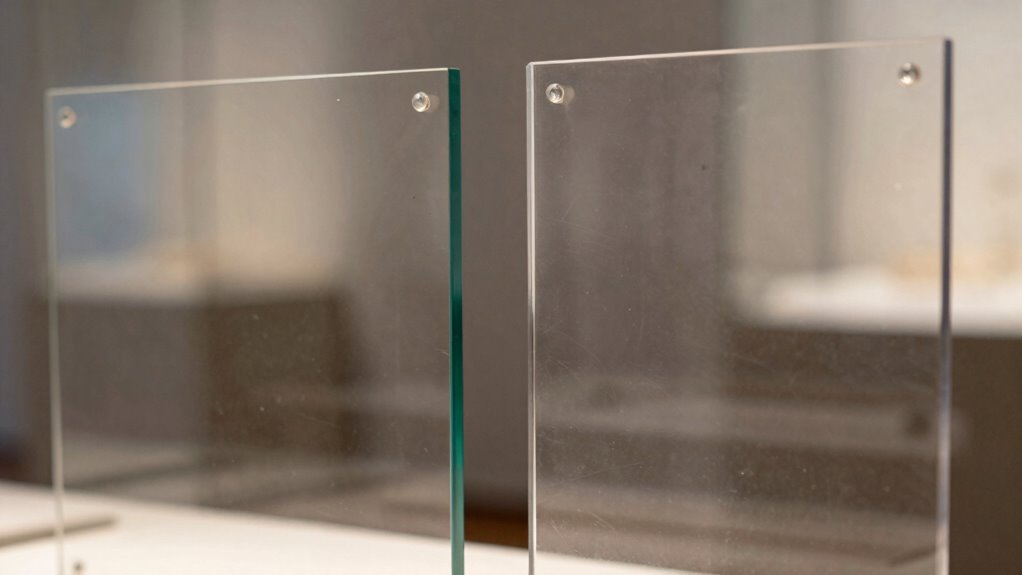
When comparing museum glass and acrylic for display purposes, their differences in clarity and glare become noticeable. Museum glass offers superior clarity, providing a crisp, unobstructed view of your artwork, which is why it’s often preferred for high-end displays. Acrylic, on the other hand, tends to produce more glare, especially in bright lighting, though advancements have improved its clarity over the years. While acrylic is sometimes seen as an artificial alternative to glass, it’s also used for decorative options where weight and shatter resistance matter. If clarity and minimal glare are your priorities, museum glass is the better choice. Additionally, Free Floating displays can benefit from the enhanced visual quality that museum glass provides. However, acrylic’s affordability and versatility make it a common, practical alternative in many settings. Understanding the material properties of each option can help you choose the best display solution for your needs, especially considering how glare reduction techniques can improve acrylic’s performance. Moreover, considering the visual impact of each material can influence your decision based on the desired viewer experience. Recognizing the long-term durability of each material can also help inform your investment decision.
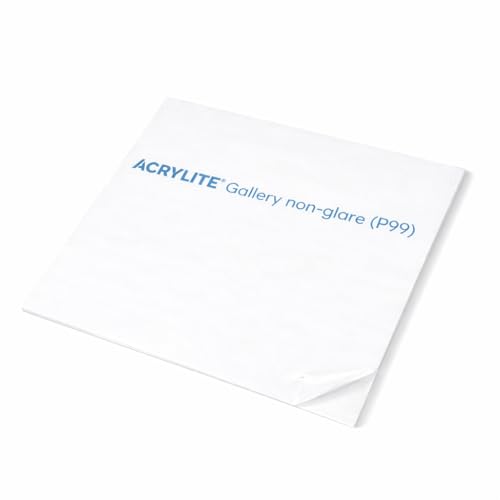
Acrylic Glass Shatterproof 99% UV Protected Conservation Clear OP3 Premium Framing Grade Display For Picture Frame (8 x 10)
Lightweight: Features a lightweight design that makes handling and installation easier compared to traditional glass
As an affiliate, we earn on qualifying purchases.
As an affiliate, we earn on qualifying purchases.
Which Material Offers Better UV Protection for Artworks?
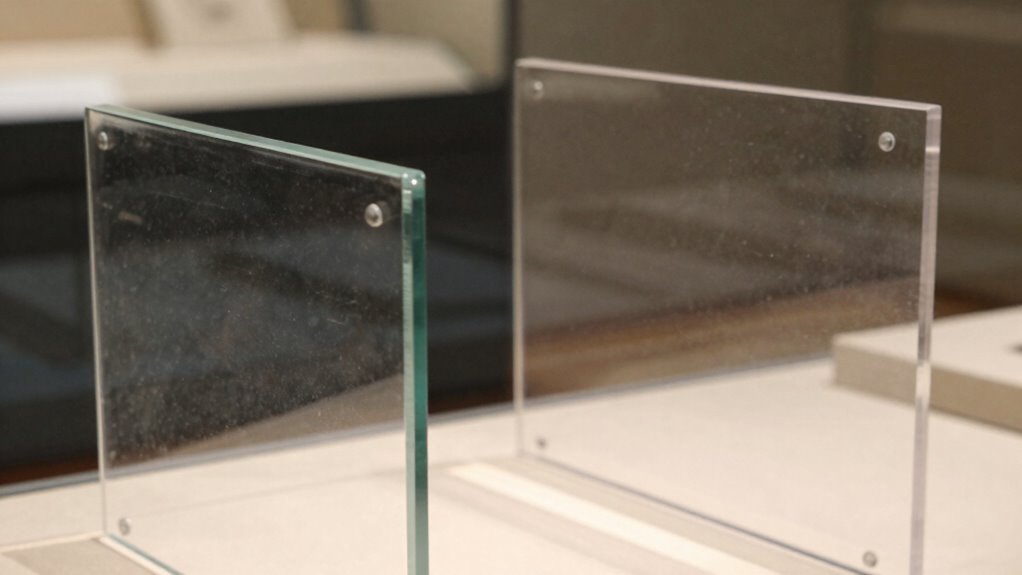
Which material provides better UV protection for your artworks? Museum glass typically offers superior UV filtering compared to acrylic, considerably reducing harmful ultraviolet rays that can cause fading and deterioration. Its advanced coatings block up to 99% of UV light, preserving your pieces over time. Acrylic, on the other hand, has limited UV filtering capabilities unless specially treated, which can add to the cost. When considering light transmission, museum glass maintains high clarity while filtering UV, ensuring your artwork remains vibrant without compromising visibility. Acrylic may transmit more UV light, risking damage but often offers better impact resistance. If UV protection is a top priority for your collection, museum glass’s enhanced UV filtering makes it the more effective choice. Additionally, UV protection technology continues to improve, making modern museum glass even more effective at safeguarding sensitive artworks. As advancements develop, UV filtering effectiveness is becoming increasingly reliable across different materials.
Tru Vue Optium Museum Grade Acrylic Glass Cover For Picture Framing, Anti-Glare 99% UV Blocking Conservation Grade Anti-Abrasion (4 x 6)
Crystal Clear Anti-Reflective Coating
As an affiliate, we earn on qualifying purchases.
As an affiliate, we earn on qualifying purchases.
How Resistant Are Museum Glass and Acrylic to Impact and Damage?
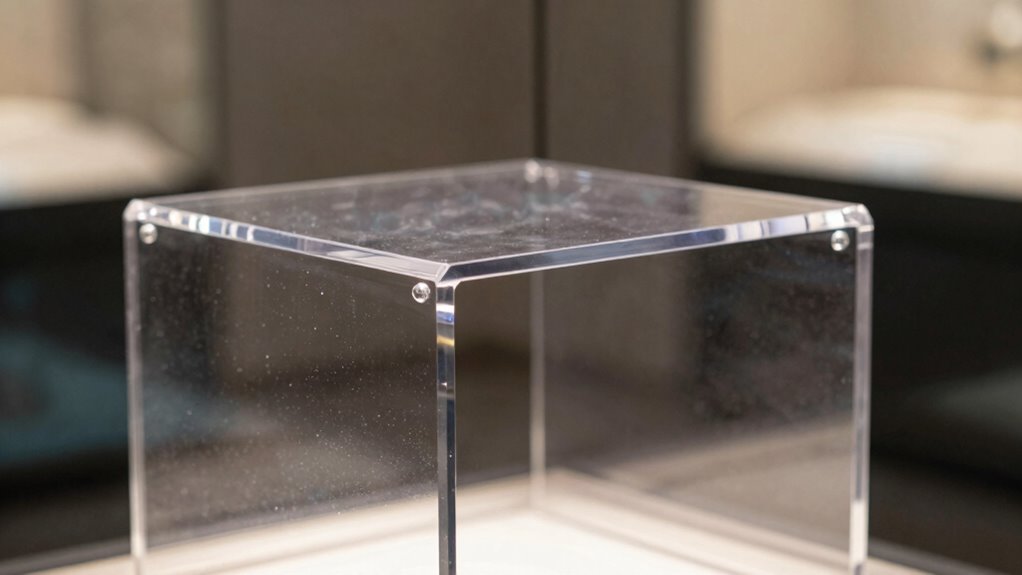
Museum glass generally offers better resistance to impact and damage than acrylic, making it a more durable choice for protecting valuable artworks. Its superior impact resistance helps prevent cracks and shattering from accidental bumps or knocks. Acrylic, while lightweight and shatter-resistant, tends to be more damage susceptible under high force or sharp impacts. You should consider that:
- Museum glass’s hardness reduces scratch vulnerability, though it can still be scratched more easily than acrylic.
- Acrylic’s flexibility makes it less prone to shattering but more prone to dents and surface damage.
- Both materials can be compromised by long-term exposure to certain chemicals or environmental conditions, affecting their overall impact resilience.
Understanding these differences helps you choose the best material for your display needs, balancing impact resistance with other protective qualities.
Is the Higher Cost of Museum Glass Justified?
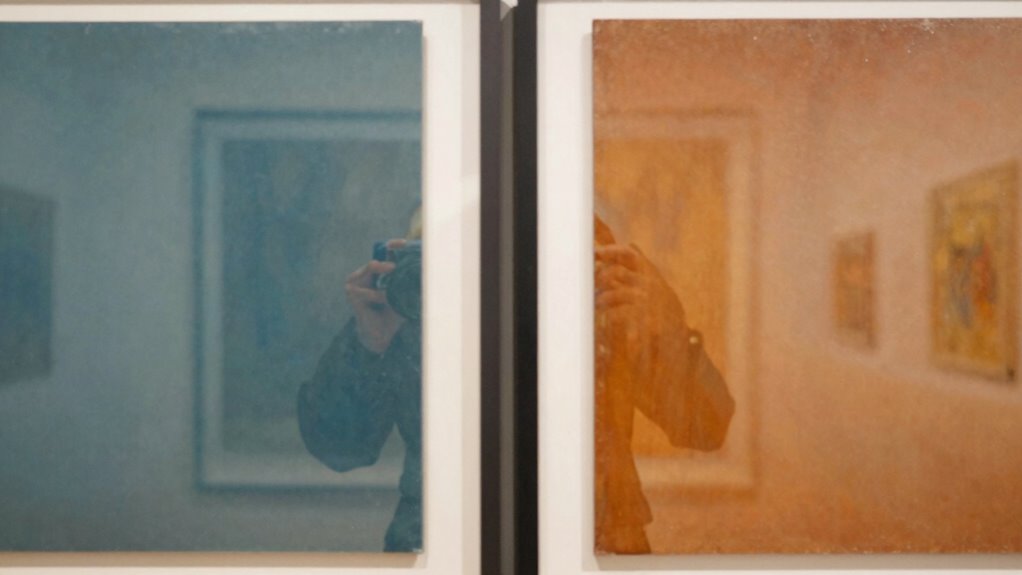
You might wonder if the higher price of museum glass is worth it, given its superior light reflection reduction and UV protection. These features help preserve your artwork better over time, which can justify the initial investment. Considering long-term benefits, museum glass could be a smarter choice if you want ideal clarity and protection. Additionally, gear care tips for your display setup can enhance the longevity of your artwork, making the investment in museum glass even more worthwhile. Proper installation techniques can also maximize the benefits of museum glass and ensure your display remains pristine. Understanding light management can further improve the viewing experience and safeguard your pieces from fading. Implementing proper lighting conditions is crucial to prevent unnecessary damage and optimize the viewing environment. Incorporating display environment controls can further protect your artwork from environmental factors that accelerate deterioration.
Superior Light Reflection Reduction
Although both museum glass and acrylic can reduce reflections, museum glass offers markedly superior light reflection reduction thanks to its specialized coatings. This means you’ll experience less glare and clearer viewing of your artwork or collectibles. The advanced coatings minimize surface reflections, ensuring your display looks true to life without unwanted light distortions. You’ll notice a significant difference in environments with bright lighting or direct sunlight. Additionally, museum glass often incorporates regional flavors, enhancing the overall viewing experience by preserving the integrity of the display under various lighting conditions.
Enhanced UV Protection Benefits
Enhanced UV protection is one of the key advantages that justifies the higher cost of museum glass. By offering superior UV blocking, it effectively prevents harmful ultraviolet rays from reaching your artwork, which can cause fading and deterioration over time. This high level of light filtration preserves the integrity of your pieces, ensuring they stay vibrant and intact for decades. Unlike standard glass or acrylic, museum glass minimizes UV exposure without sacrificing clarity or color accuracy. If you’re investing in valuable or irreplaceable artwork, paying extra for enhanced UV protection makes sense. It provides an added layer of defense against light damage, helping your collection maintain its beauty and value long-term. Additionally, understanding the essential survival gear involved in maintaining your artwork’s preservation can further protect your investment. Incorporating proper storage conditions and regular assessments can also extend the lifespan of your collection. Moreover, choosing the right display glass can contribute to the overall long-term preservation of your artwork. Considering environmental controls like humidity and temperature further enhances your protection strategy. The importance of energetic alignment in ensuring the longevity of your collection can also not be overlooked. Ultimately, the benefits of UV blocking and light filtration make museum glass a worthwhile investment.
Long-Term Investment Value
Investing in museum glass can be justified by its long-term benefits, even if it comes with a higher initial cost. Its superior clarity and minimal color distortion enhance display aesthetics, making your artwork more vivid over time. Additionally, museum glass offers exceptional protection for art conservation, reducing the risk of damage from UV rays and environmental factors. Over years, this preservation helps retain the artwork’s original integrity and value. You’ll also save money in the long run by avoiding frequent replacements or restoration efforts.
- Maintains excellent display quality without compromising visual impact
- Provides better protection against environmental damage, supporting art conservation
- Ensures lasting clarity that preserves the artwork’s original appearance
How Easy Is It to Maintain and Clean Museum Glass and Acrylic?

Cleaning museum glass and acrylic requires different approaches to keep them looking their best. You’ll need to follow specific tips to avoid scratches and maintain clarity over time. Let’s compare their ease of maintenance, scratch resistance, and how well they hold up long-term. Using the proper DIY tools and safety tips can help you safely and effectively care for both materials, ensuring your display cases remain pristine. Additionally, understanding the material properties can guide you in choosing the appropriate cleaning methods for each surface.
Cleaning Procedures and Tips
Maintaining the clarity of museum glass and acrylic requires careful attention, as their cleaning processes differ markedly. To keep them pristine, you should follow proper conservation techniques and use appropriate cleaning chemicals. For museum glass, gentle, non-abrasive cleaners and soft microfiber cloths prevent scratches and damage, while acrylic needs milder solutions to avoid clouding or scratching. Always avoid ammonia-based cleaners, which can harm both materials.
- Use distilled water to prevent mineral deposits
- Avoid paper towels that can scratch surfaces
- Regularly dust with a soft, dry cloth before cleaning with liquids
Scratch Resistance Levels
Understanding the scratch resistance of museum glass and acrylic is essential for their long-term maintenance. Surface hardness determines how well each material resists scratches from everyday contact or cleaning tools. Museum glass typically has a higher surface hardness, making it more resistant to scratches and maintaining clarity over time. Acrylic, on the other hand, has a lower surface hardness, which means it’s more prone to scratches from accidental contact or improper cleaning. If you want a material that stays pristine longer with less effort, museum glass offers superior scratch resistance. However, acrylic’s softer surface can be easier to polish if scratches occur. Knowing these differences helps you choose the right material based on how much you prioritize scratch resistance for your display.
Long-Term Clarity Maintenance
When it comes to keeping your display clear over time, how easily museum glass and acrylic can be cleaned plays a big role. Museum glass typically resists smudges and fingerprints better, making maintenance simpler and helping preserve art quality. Acrylic, however, can be more prone to streaks and surface scratches if not cleaned carefully, potentially affecting display aesthetics. Proper cleaning routines are essential for long-term clarity and art preservation.
- Museum glass often requires gentle, specialized cleaners to prevent damage
- Acrylic surfaces need soft cloths and non-abrasive solutions to avoid scratches
- Regular dusting and avoid harsh chemicals help maintain ideal clarity and preserve the viewing experience
How to Decide Between Museum Glass and Acrylic for Your Collection?
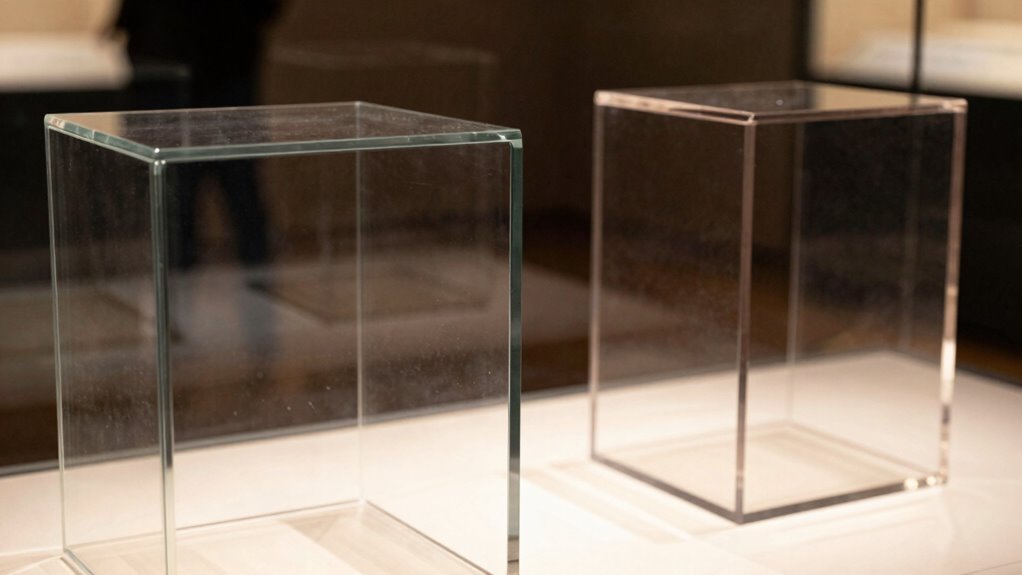
Choosing between museum glass and acrylic for your collection depends on several key factors. First, consider art conservation; museum glass offers superior UV protection and reduces glare, helping preserve your artwork’s integrity over time. If preserving the original appearance and color accuracy is essential, museum glass is the better choice. On the other hand, acrylic provides a lightweight, impact-resistant option, ideal if safety or ease of handling is a priority. Think about your interior aesthetics as well—museum glass’s clarity enhances visual appeal without distraction, while acrylic’s affordability makes it appealing for casual displays. Ultimately, your decision hinges on balancing preservation needs, safety considerations, and how the display complements your space’s look.
Final Tips: Choosing the Best Material for Your Needs and Budget

Selecting the right display material involves weighing both your specific needs and your budget. To make the best choice, consider the cost comparison between museum glass and acrylic, as well as installation considerations. Museum glass offers superior clarity and scratch resistance but comes at a higher price. Acrylic is more affordable and easier to install, but it scratches more easily and may yellow over time. Think about:
Choosing between museum glass and acrylic depends on your budget, clarity needs, and installation ease.
- Your budget constraints and long-term expenses
- The importance of scratch resistance versus cost savings
- Ease of installation and handling
Frequently Asked Questions
Can Museum Glass Be Used Outdoors or Only Indoors?
Museum glass is primarily designed for indoor use because it offers excellent clarity and UV resistance but isn’t built for outdoor durability. If you plan to display art or collectibles outdoors, you should consider materials specifically made for outdoor exposure. These materials provide better outdoor durability and UV resistance, protecting your items from weather damage and harmful sunlight. So, museum glass isn’t suitable outdoors, but there are other options to keep your pieces safe outside.
How Does the Weight of Museum Glass Compare to Acrylic?
Museum glass is incredibly lighter than you might expect, making it feel almost weightless in your hands, thanks to its lower material density. When comparing weight, museum glass is considerably lighter than acrylic, which is dense and hefty. This lighter weight makes handling and installation easier, reducing strain and risk of damage. So, if you want a sleek, elegant display without the bulk, museum glass wins easily over acrylic in the weight department.
Are There Eco-Friendly Options for Museum Glazing Materials?
You can choose sustainable options like recycled acrylic or glass made from eco-friendly materials. Look for eco-friendly materials that are durable and offer good UV protection, reducing environmental impact while protecting your artwork. Some companies now produce museum glazing with environmentally conscious processes, so you can prioritize sustainability without sacrificing quality. By opting for these eco-friendly materials, you support environmental efforts while ensuring your collection stays well-preserved.
What Are the Installation Requirements for Each Material?
You should consider installation considerations and handling procedures for each material. Museum glass requires careful handling to prevent scratches and is best installed with professional tools to avoid damage. Acrylic is lighter and easier to install but needs gentle handling to prevent scratching or warping. Guarantee proper support and framing, and follow manufacturer’s instructions closely for both, to assure safety, durability, and excellent display quality.
How Do Repair and Replacement Processes Differ for Glass and Acrylic?
When it comes to repair and replacement, you’ll find museum glass’s durability means fewer issues, making replacements rare and straightforward if needed. Acrylic, however, requires more attentive maintenance, as scratches and clouding can occur over time, leading to more frequent repairs. You’ll need to handle acrylic with care and consider professional help for scratches or cracks. Overall, museum glass offers peace of mind, while acrylic demands ongoing upkeep to stay pristine.
Conclusion
Choosing between museum glass and acrylic is like selecting between a sturdy knight and a nimble fox—each has its strengths. Consider your artwork’s needs, your budget, and how much you value clarity and protection. Remember, no one-size-fits-all solution, so weigh your options carefully. By making an informed choice, you’ll protect your treasures just as a wise guardian would, ensuring they shine brightly for generations to come.