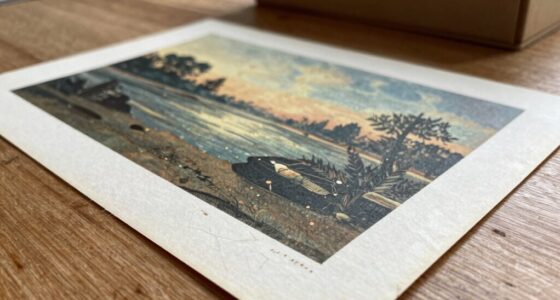
Operation Night Watch showcases the Rijksmuseum’s transparent conservation approach, using scientific methods like laser cleaning, infrared imaging, and chemical analysis to restore Rembrandt’s masterpiece. This process is carefully documented and openly shared, allowing you to see each step taken to preserve the artwork’s original integrity. By emphasizing openness and verifiability, the museum guarantees trust and understanding in its techniques. If you keep exploring, you’ll discover how these innovative methods truly protect and honor cultural heritage.
Key Takeaways
- The Rijksmuseum employs innovative, transparent conservation techniques like laser cleaning and infrared imaging for “Operation Night Watch.”
- Conservation processes are openly documented, allowing public verification and understanding of each restoration step.
- Scientific methods, including chemical analysis, ensure fidelity to Rembrandt’s original work and assess damage accurately.
- Ethical practices focus on maintaining the artwork’s cultural story while ensuring reversibility and minimal invasiveness.
- Transparent conservation at the Rijksmuseum sets a global standard, fostering public trust and ongoing dialogue about cultural heritage preservation.
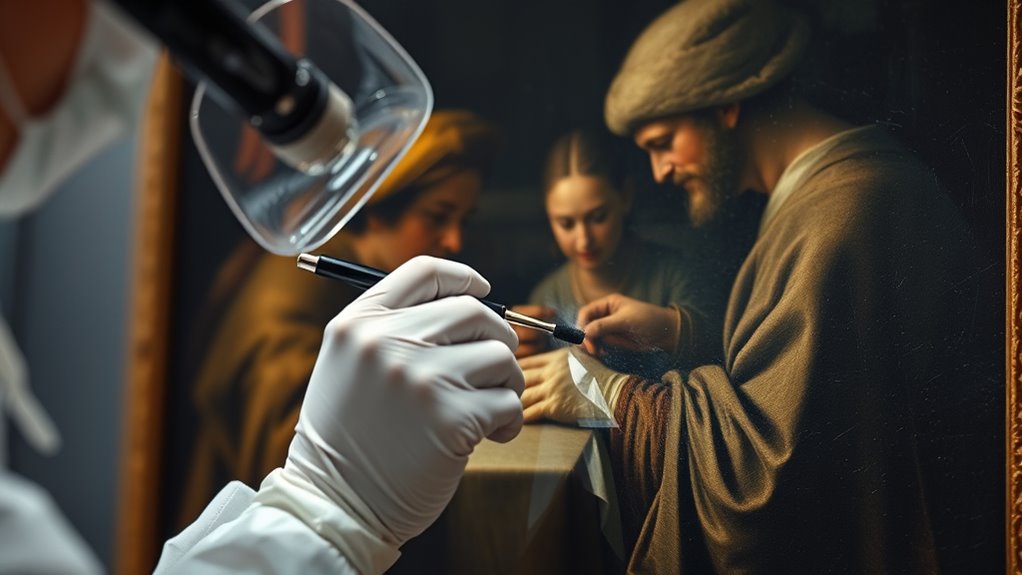
Have you ever wondered how covert operations can change the course of history? When it comes to art preservation, the stakes are often just as high, even if the methods are less clandestine. At the Rijksmuseum, a quiet revolution is taking place through innovative restoration techniques that blend transparency with precision. This approach ensures that every piece of art is preserved with integrity, allowing both experts and the public to understand the process without suspicion. Instead of traditional, opaque conservation methods, the team employs techniques that are open and verifiable, fostering trust and collaboration among specialists and visitors alike. You might not see it, but behind the scenes, delicate procedures like laser cleaning, infrared imaging, and chemical analysis are carefully documented and shared. These steps help identify the original materials, assess damage, and plan restorations that respect the artist’s intent and the artwork’s history. Incorporating scientific methods into conservation further enhances the accuracy and effectiveness of preservation efforts.
Art preservation isn’t just about fixing what’s broken; it’s about maintaining the story embedded in each piece. The Rijksmuseum’s focus on transparency means you can trace a work’s journey from damage to restoration, gaining insight into the decisions made during the process. This openness demystifies conservation work, showing you that even the most delicate interventions are grounded in science and respect for the original creation. Restoration techniques are continuously evolving, and the museum stays at the forefront by adopting methods that minimize invasiveness while maximizing authenticity. Techniques like micro-abrasion for cleaning and reversible consolidants ensure that future restorers can revisit the work without permanent alterations.
By integrating transparency into every step of art preservation, the Rijksmuseum sets a standard for ethical conservation. You’re not just an observer; you become a participant in the ongoing dialogue about cultural heritage. This approach fosters a deeper appreciation for the meticulous craft behind each restored masterpiece. It also reassures the public that preservation isn’t about hiding imperfections but about showcasing the artist’s intent as faithfully as possible. You can see the results in the museum’s restored paintings, sculptures, and textiles, where every detail is preserved with care and honesty.
In this way, Operation Night Watch exemplifies a new era of conservation—one where transparency, trust, and innovation go hand in hand. The use of advanced restoration techniques ensures that artworks endure for generations, and that their stories remain vivid and accessible. As you explore the museum, remember that behind every beautifully preserved piece lies a commitment to open, artful preservation that respects history while embracing the future.
laser cleaning art restoration kit
As an affiliate, we earn on qualifying purchases.
As an affiliate, we earn on qualifying purchases.
Frequently Asked Questions
What Specific Conservation Techniques Are Used During Operation Night Watch?
During Operation Night Watch, you use specialized conservation techniques like delicate cleaning with preservation materials to remove dirt and grime without damaging the paint. You also employ advanced restoration methods to stabilize the artwork, ensuring its integrity. By carefully selecting preservation materials, you prevent further deterioration. These techniques help maintain the painting’s original appearance, allowing you to protect and preserve this masterpiece for future generations effectively.
How Does Transparency Improve the Overall Preservation Process?
Think of transparency as a clear window into the conservation process, illuminating every step and decision. By embracing transparency, you uphold restoration ethics, ensuring honesty and accountability. It also boosts public engagement, inviting viewers to witness the meticulous work behind preserving art. This openness fosters trust, making the preservation journey a shared experience, where everyone feels connected and informed—transforming silent conservation into a collective act of cultural stewardship.
Were There Any Unexpected Challenges Faced During the Operation?
During the operation, you might have faced unexpected challenges like managing museum lighting to prevent damage while ensuring visibility. Staff training proved essential, as you had to quickly adapt to new transparent conservation techniques without compromising artwork safety. Unexpected issues with lighting adjustments or staff unfamiliarity tested your team’s flexibility, but through effective communication and training, you overcame these hurdles, ensuring the preservation process remained transparent and successful.
How Long Does the Entire Conservation Process Typically Take?
The restoration timeline varies depending on the artwork’s condition and complexity. For example, a detailed case study might take several months. Typically, you can expect the conservation process to span weeks to a few months, depending on the methods used. More intricate conservation methods require additional time to guarantee careful cleaning, stabilization, and preservation, all aimed at maintaining the piece’s integrity while respecting its historical significance.
Are Visitors Allowed to Observe the Conservation Work in Progress?
Yes, visitors are allowed to observe conservation work in progress, enhancing their engagement with the art. This openness promotes conservation transparency, giving you a unique behind-the-scenes look at the delicate process of preserving masterpieces. During your visit, you’ll see experts carefully restoring artworks, deepening your appreciation. This interactive experience makes conservation efforts more accessible, fostering a stronger connection between you and the museum’s ongoing efforts to protect cultural heritage.
infrared imaging camera for art analysis
As an affiliate, we earn on qualifying purchases.
As an affiliate, we earn on qualifying purchases.
Conclusion
Remember, a stitch in time saves nine. By supporting transparent conservation efforts like Operation Night Watch at the Rijksmuseum, you’re helping preserve masterpieces for generations to come. Your involvement guarantees that these treasures remain vibrant and insightful, revealing stories of the past. Stay engaged and spread awareness—because when it comes to art preservation, every small effort counts. Together, we can keep history alive, proving that an ounce of prevention is worth a pound of cure.
chemical analysis tools for paintings
As an affiliate, we earn on qualifying purchases.
As an affiliate, we earn on qualifying purchases.
art conservation microscope
As an affiliate, we earn on qualifying purchases.
As an affiliate, we earn on qualifying purchases.