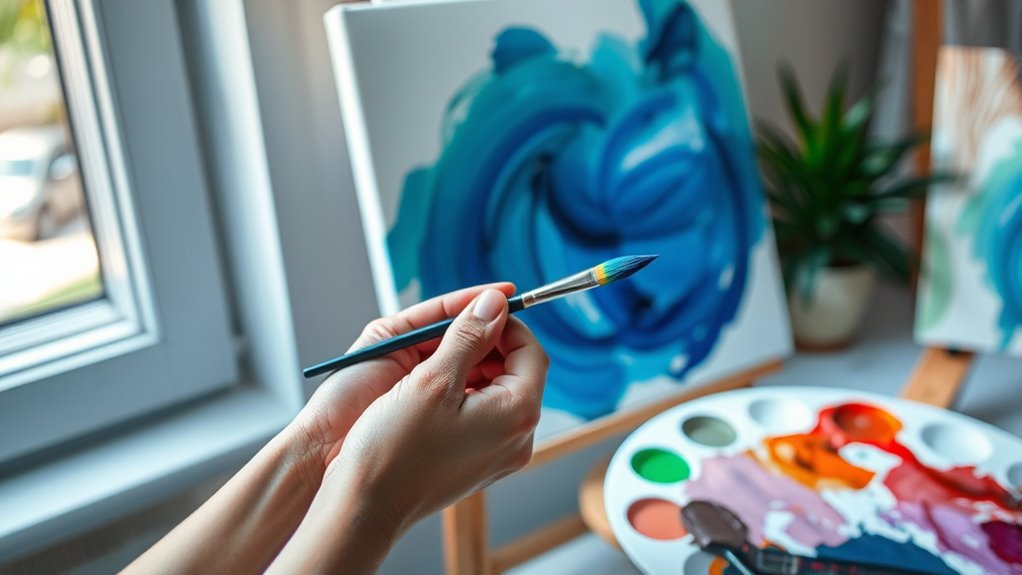

Engaging in art therapy by painting helps rewire your brain for calm and resilience. When you create art, you shift your focus from stress to the act of making, triggering neural pathways tied to emotional regulation. This repetitive process releases feel-good chemicals like dopamine and lowers stress hormones, calming your nervous system. Over time, these neural changes strengthen resilience and mindfulness. Keep exploring, and you’ll uncover how consistent art practice can transform your mental well-being.

Get art and craft supplies delivered free with Prime
- Fast, free delivery on millions of items
- Prime Video, Amazon Music and more included
- Member-only deals all year
Key Takeaways
- Painting shifts focus from stress to creation, promoting emotional processing and neural pathways associated with regulation.
- Completing artwork releases dopamine, improving mood and fostering positive neural connections for calmness.
- Repetitive painting motions stimulate neural circuits linked to relaxation and meditative states.
- Regular art practice enhances resilience by strengthening neural pathways involved in emotional regulation.
- Incorporating mindfulness during painting fosters presence and reduces anxiety, rewiring the brain for calm responses.
Art Therapy
Have you ever considered how creating art can heal your mind and soul? Engaging in artistic activities allows you to tap into your innate creativity, providing a powerful outlet for emotional processing. When you pick up a brush and start to paint, you’re not just making images—you’re revealing a form of self-expression that can help you understand and manage complex feelings. This process of creative expression isn’t just about producing beautiful visuals; it’s a therapeutic tool that rewires your brain for calm and resilience.
Creating art unlocks emotional healing and rewires the brain for calm and resilience.
As you immerse yourself in painting, your brain begins to shift its focus from anxious or stressful thoughts to the act of creation. This shift promotes emotional processing, giving you a safe space to explore and release emotions that might be difficult to verbalize. When words fall short, colors, shapes, and textures become your language. The act of translating feelings into visual art helps you gain insight into your inner world, reducing mental clutter and fostering clarity. Over time, this practice strengthens neural pathways associated with emotional regulation, making it easier to stay calm during challenging moments. Additionally, the repetitive motions involved in painting can stimulate the brain’s reward system, further reinforcing positive emotional responses.
Creating art also stimulates the brain’s reward system. Completing a painting or even making progress on a piece triggers the release of dopamine, the feel-good neurotransmitter. This boost of positive feelings can improve your overall mood and reduce anxiety, reinforcing the habit of turning to art as a form of self-care. The rhythmic, repetitive motions involved in painting can further induce a meditative state, calming your nervous system and lowering stress hormones like cortisol. This physiological response helps rewire your brain to associate creative activities with relaxation and emotional safety.
Moreover, engaging regularly in art therapy can strengthen your resilience. When you develop a habit of expressing yourself creatively, you build a mental toolkit for coping with future stressors. The process encourages mindfulness, helping you stay present and grounded. As you observe your progress and reflect on your artwork, you cultivate a sense of achievement and self-compassion. Over time, these positive emotional associations can lead to lasting changes in how your brain responds to adversity, making you more adaptable and emotionally balanced. Exploring neural pathways related to emotional regulation can deepen your understanding of how art influences mental health.
Additionally, choosing names inspired by dog breeds like Labradoodles or Huskies can enhance your connection with your pet and reflect their personality traits, which can be a comforting and grounding practice during your creative process.
In essence, painting isn’t just about making pretty images; it’s a transformative activity that rewires your brain for calm. Through creative expression and emotional processing, you give yourself permission to explore your inner landscape, releasing tension and fostering a sense of peace. The more you engage with art, the more you nurture your mental health, creating a resilient, calm mind that can face life’s challenges with greater ease. Incorporating mindfulness techniques into your art practice—such as focusing fully on each stroke or moment—can further enhance the calming benefits of your creative endeavors.
Popular right now

Vitamix 5200 Professional-Grade Blender, 64 oz. Container, Black

Ninja Foodi DZ201 8-Quart DualZone 6-in-1 Air Fryer

Vitamix Propel Series 750 Professional-Grade Blender, 4 Programs, Black
As an affiliate, we earn on qualifying purchases.
Frequently Asked Questions
Can Anyone Benefit From Art Therapy Regardless of Artistic Skill?
You don’t need artistic confidence or experience to benefit from art therapy. It’s about creative accessibility, allowing you to express yourself without judgment. Whether you’re a seasoned artist or a complete beginner, painting helps you process emotions and reduce stress. You’ll find that engaging in art boosts your mood, enhances self-awareness, and rewires your brain for calm, proving that anyone can gain from the therapeutic power of art.
How Long Does It Typically Take to See Brain Changes From Painting?
Think of your brain as a garden that benefits from consistent care. Typically, noticeable neuroplasticity benefits and improved emotional regulation appear after about 4 to 8 weeks of regular painting practice. The more you engage, the quicker your brain rewires itself, creating new pathways for calm and focus. Stay committed, and you’ll nurture these mental blossoms, transforming your emotional landscape one brushstroke at a time.
Are There Specific Types of Painting That Are More Effective for Calming?
You might find that abstract landscapes and watercolor therapy are particularly effective for calming. These styles allow you to express emotions freely and focus on the soothing process rather than perfection. Abstract landscapes can evoke tranquility through natural imagery, while watercolor therapy offers gentle, flowing movements that help reduce stress. Engaging regularly in these painting types can enhance your mood and promote a calm, centered mind.
Is Art Therapy Suitable for Children and Elderly Individuals?
Think of art therapy as a bridge connecting hearts and minds. It’s perfectly suitable for children and elderly individuals, offering developmental benefits and a safe space for emotional expression. For kids, it sparks creativity and improves motor skills. For seniors, it promotes mental agility and emotional well-being. You’ll find that painting helps all ages process feelings, build confidence, and stay connected, making it a valuable tool across generations.
Can Digital Art Methods Provide Similar Brain Benefits as Traditional Painting?
You wonder if digital creativity and virtual therapy can offer similar brain benefits as traditional painting. While digital art allows you to express yourself and engage in calming activities, it may not fully replicate the tactile, sensory experiences of physical painting. However, virtual therapy can still promote mindfulness and emotional regulation, making it a valuable alternative. Both approaches help rewire your brain for calm, especially when tailored to your preferences.
Conclusion
So, when you pick up that brush and let your emotions flow, you’re not just creating art—you’re transforming your entire brain. With each stroke, you could be rewiring your mind so profoundly that calm becomes your new default, making chaos tremble before your newfound serenity. Think about it: painting isn’t just therapy; it’s a superpower that can turn your wildest storms into tranquil seas. Embrace it, and watch your mind change in ways you never imagined possible.