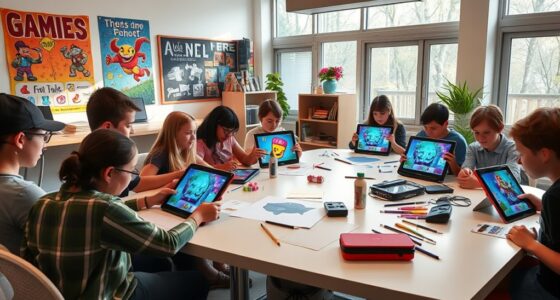
Implementing art therapy programs in educational settings helps you create a supportive environment where students can express emotions, build resilience, and develop creativity. These programs provide a safe space for emotional exploration, reduce stress, and improve social skills, especially for those facing behavioral challenges. They also foster inclusivity and personal growth, turning classrooms into nurturing spaces. To discover how you can bring these benefits into your school, explore more about effective art therapy strategies.
Key Takeaways
- Art therapy programs create safe spaces for emotional expression, helping students process emotions and promote mental well-being in educational settings.
- These programs enhance creativity, problem-solving skills, and confidence, supporting academic and personal growth.
- Art therapy supports students with emotional and behavioral challenges by improving focus, reducing anxiety, and fostering social skills.
- Implementing art therapy fosters inclusive, empathetic classroom environments that nurture emotional health and creative development.
- Long-term, these programs develop resilience, self-awareness, and positive thinking strategies essential for students’ overall success.

Have you ever wondered how art therapy can enhance learning environments? When integrated into schools, art therapy offers a powerful way to support students’ emotional well-being and foster their creativity. It provides a safe space where students can explore and express their feelings through visual arts, which can be especially beneficial for those who struggle to communicate verbally. By engaging in art-making, you help students develop emotional expression, allowing them to process complex emotions and reduce stress. This process not only promotes mental health but also creates a more inclusive, empathetic classroom atmosphere. As students translate their feelings into drawings, paintings, or sculptures, they gain insight into their own emotional worlds, which can lead to increased self-awareness and emotional resilience.
Art therapy helps students express emotions, reduce stress, and build self-awareness in a safe, inclusive classroom environment.
Additionally, art therapy profoundly boosts creativity development. When students are encouraged to experiment with colors, shapes, and textures, they access their creative potential. This active engagement nurtures divergent thinking, problem-solving skills, and innovation—all essential competencies in today’s fast-changing world. As you facilitate these artistic experiences, students learn to think outside the box and approach challenges with a more flexible mindset. Art therapy doesn’t impose strict rules; instead, it promotes exploration and personal expression, giving students confidence to trust their ideas and instincts. Over time, this creative confidence can spill over into other academic areas, improving their ability to brainstorm, plan, and adapt. Incorporating positive thinking strategies can further enhance students’ resilience and motivation during their artistic and academic pursuits.
Implementing art therapy programs in educational settings also supports students who face emotional or behavioral challenges. When traditional classroom strategies fall short, art therapy offers an alternative way to connect and communicate. This approach can reduce anxiety, improve focus, and enhance social skills, making classrooms more harmonious and conducive to learning. By addressing emotional needs through art, you help students build a stronger sense of identity and belonging, which boosts their motivation and engagement.
In essence, integrating art therapy into schools transforms the learning environment into a place where emotional health and creative growth go hand in hand. It empowers students to express themselves authentically, develop crucial skills, and navigate their emotional worlds more effectively. As you incorporate these programs, you’re not just enriching academic experiences—you’re nurturing well-rounded individuals capable of handling the complexities of life with confidence and creativity. Ultimately, art therapy becomes an essential tool in creating supportive, dynamic educational settings where every student can thrive both emotionally and intellectually.
art therapy supplies for schools
As an affiliate, we earn on qualifying purchases.
As an affiliate, we earn on qualifying purchases.
Frequently Asked Questions
How Do Art Therapy Programs Differ Across Age Groups?
You’ll find that art therapy programs differ across age groups by tailoring activities to developmental stages. For children, they focus on simple, playful projects to foster creative expression and emotional understanding. Adolescents might work on more complex themes, encouraging self-awareness. Adults often use art therapy for coping and personal growth. These adaptations guarantee each age group benefits from developmentally appropriate methods that promote healing and self-exploration through creative expression.
What Qualifications Are Required to Become an Art Therapist in Schools?
Think of becoming an art therapist in schools as building a sturdy bridge. You need an art therapy certification, which involves completing specialized training in mental health and art techniques. Additionally, having school counselor qualifications helps you understand the educational environment. You typically need a master’s degree in art therapy or a related field, plus supervised clinical experience. These credentials make sure you’re equipped to support students’ emotional and artistic growth effectively.
How Are Art Therapy Outcomes Measured in Educational Settings?
You measure art therapy outcomes in educational settings through a mix of quantitative assessments and qualitative feedback. Quantitative assessments involve standardized tools to track changes in emotional or behavioral metrics over time. Meanwhile, qualitative feedback from students, teachers, and parents provides insights into personal growth and emotional well-being. By combining these methods, you gain an all-encompassing understanding of how art therapy impacts students’ development and overall school experience.
What Challenges Do Schools Face When Implementing Art Therapy Programs?
You might find it surprising, but schools often struggle with funding barriers and staff training when implementing art therapy programs. Limited budgets mean securing dedicated resources becomes a challenge, while staff may lack the necessary training to effectively support students’ emotional needs through art. These obstacles can hinder program success, making it essential for schools to seek partnerships and professional development opportunities to overcome them and fully realize art therapy’s benefits.
Are There Specific Art Therapy Techniques Tailored for Diverse Student Populations?
Yes, there are specific art therapy techniques tailored for diverse student populations. You should consider cultural considerations to guarantee activities respect students’ backgrounds, beliefs, and traditions. Using individualized approaches allows you to adapt techniques to meet each student’s unique needs, fostering comfort and engagement. Incorporating cultural awareness and personalized methods helps you create a supportive environment where all students can express themselves effectively through art.
visual art therapy kits for students
As an affiliate, we earn on qualifying purchases.
As an affiliate, we earn on qualifying purchases.
Conclusion
Incorporating art therapy programs into educational settings can truly transform students’ lives, offering a creative sanctuary amid the chaos. As you embrace this innovative approach, remember that even in the age of smartphones, the power of self-expression remains timeless—like a trusty quill in a digital world. By supporting these programs, you help cultivate resilience, empathy, and emotional growth, ensuring students have the tools to navigate both today’s challenges and future adventures with confidence.
emotional expression art therapy tools
As an affiliate, we earn on qualifying purchases.
As an affiliate, we earn on qualifying purchases.
art therapy materials for classrooms
As an affiliate, we earn on qualifying purchases.
As an affiliate, we earn on qualifying purchases.