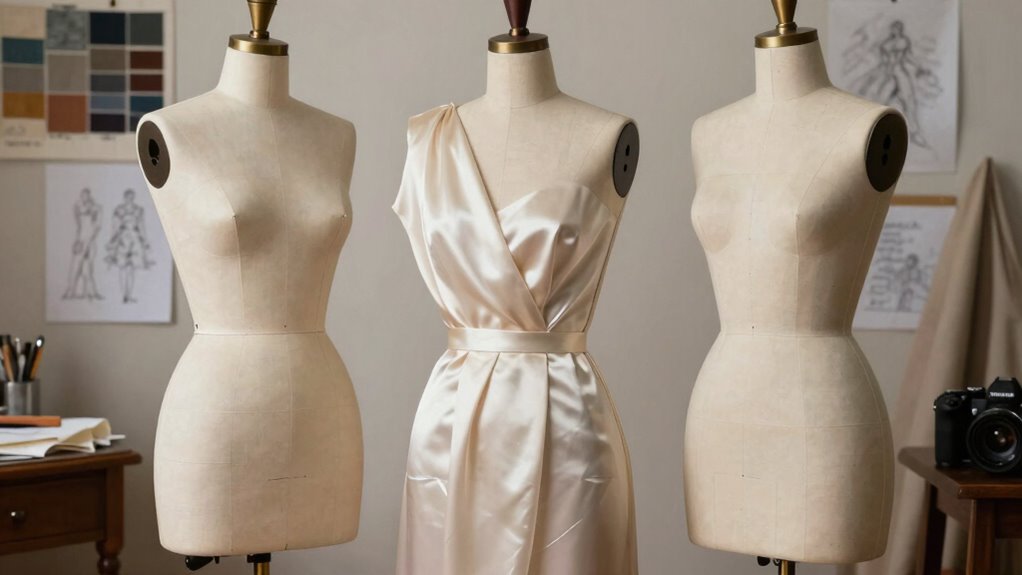

Dress forms are crucial tools in fashion design that help you achieve perfectly fitting garments. They allow you to visualize your designs, make quick adjustments, and test how fabrics drape. By customizing and properly maintaining your dress form, you’ll improve fit accuracy and boost your confidence. Many students discover late how important these forms are for professional results. Keep going, and you’ll uncover more tips to master their use and elevate your creations.
Key Takeaways
- Dress forms help visualize garment drape, fit, and design details, making them essential for accurate pattern development.
- They are constructed with internal frameworks and outer coverings that can be customized for precise fitting.
- Adjustable features like dials and removable panels allow designers to simulate various body shapes and perfect the fit.
- Proper measurement techniques and consistent adjustments ensure garments are well-fitted and reduce fitting issues.
- Regular maintenance and tailored customization enhance the durability of dress forms and improve overall design accuracy.
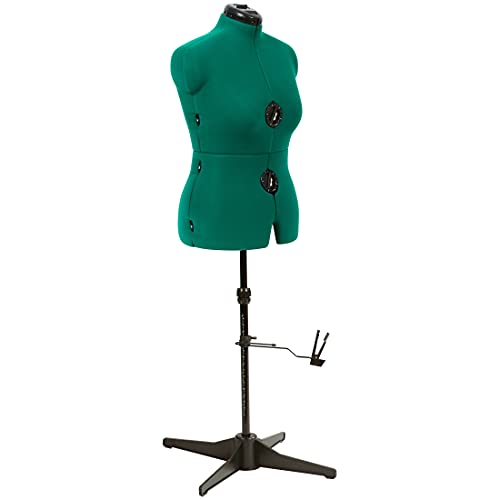
Dritz Sew You Adjustable Dress Form M/L, Sizes US 12–18, Female Sewing Mannequin with Pinnable Body Torso, 12 Dials for Accurate Fitting & 360 Hem Guide
Custom Fit: 9 easy-turn wheels at the bust, waist, and hips adjust in ½" increments by simply squeezing…
As an affiliate, we earn on qualifying purchases.
As an affiliate, we earn on qualifying purchases.
How to Use a Dress Form to Improve Garment Fit
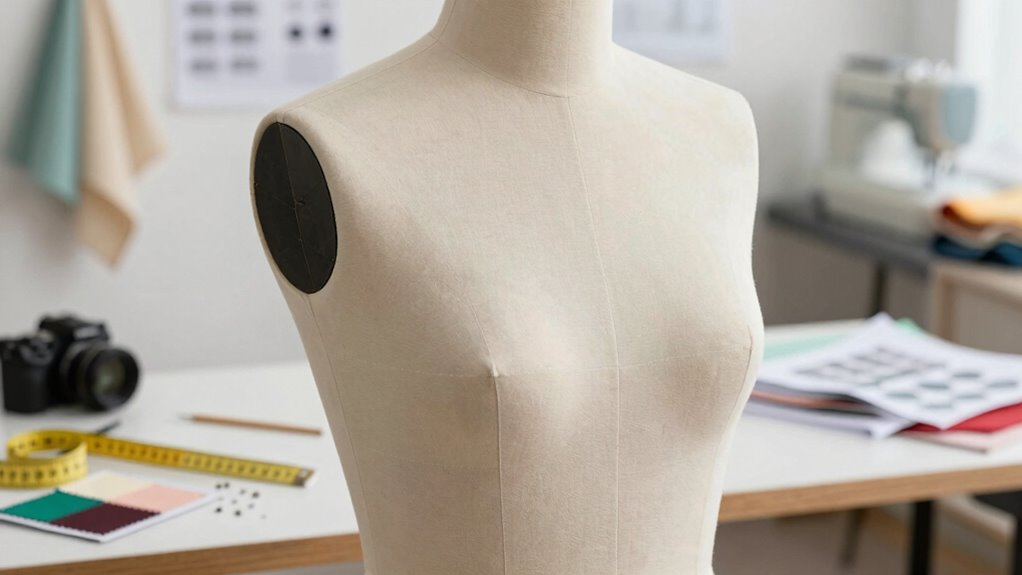
Using a dress form is a practical way to enhance your garment fit because it allows you to see how your clothing will look and behave on a three-dimensional surface. When you’re working with fabric selection, the dress form helps you visualize how different fabrics drape and respond to body contours. This insight is vital during pattern drafting, as it enables you to make real-time adjustments for better fit and proportion. As you pin or drape fabric onto the form, you can identify areas that need tweaking, such as shoulder angles or waist shaping. This hands-on approach reduces guesswork and ensures your finished garment aligns with your design vision. Additionally, understanding digital concepts related to dress forms can further refine your fitting process and allow for more precise pattern adjustments. For example, modern dress forms with adjustable features can simulate different body shapes, providing even greater insight during fitting. Furthermore, incorporating clothing simulation technology can help visualize how garments will behave in real-world scenarios, leading to better design decisions. Staying informed about creative storytelling techniques can also inspire innovative design details that resonate with your audience, making your garments stand out. Exploring 3D body scanning technology can enhance the accuracy of your dress forms and streamline the fitting process. Ultimately, a dress form becomes an invaluable tool for translating flat patterns into well-fitting, professional-looking clothing.
Dritz Sew You Adjustable Dress Form M/L, Sizes US 12–18, Female Sewing Mannequin with Pinnable Body Torso, 12 Dials for Accurate Fitting & 360 Hem Guide
Custom Fit: 9 easy-turn wheels at the bust, waist, and hips adjust in ½" increments by simply squeezing…
As an affiliate, we earn on qualifying purchases.
As an affiliate, we earn on qualifying purchases.
What Are Dress Forms and How Do They Work?
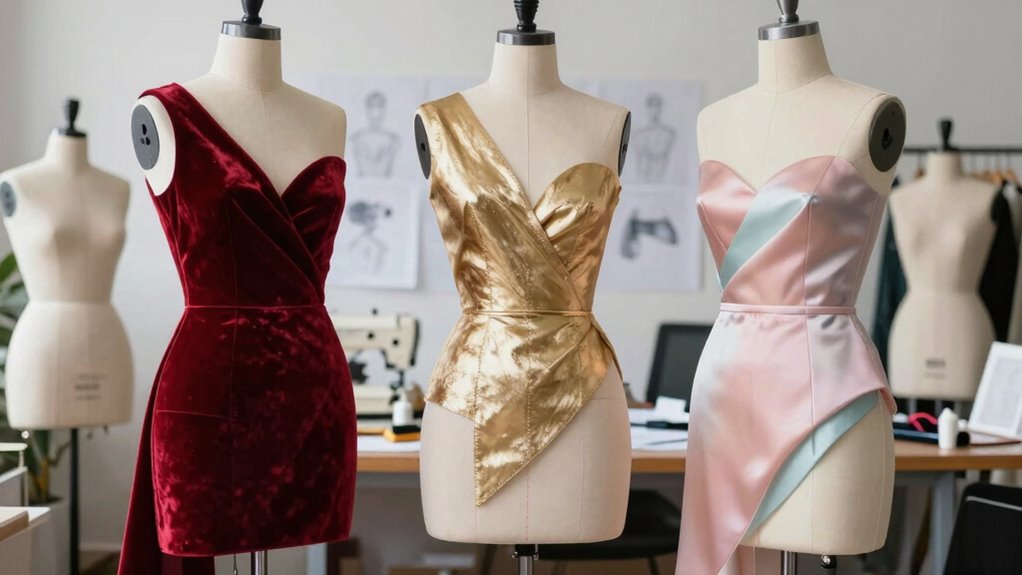
Dress forms are constructed from various materials like foam, plastic, or fabric-covered shells that mimic body shape. You can adjust most dress forms with knobs or dials to fit different sizes and measurements. Understanding their structure and adjustment features helps you use them effectively for fitting and designing garments. Incorporating knowledge of auditory processing can also assist in better understanding feedback during fitting sessions. Recognizing how sensory feedback impacts fitting accuracy can further enhance your use of dress forms for precise garment creation. Additionally, understanding the material composition of dress forms can influence their durability and suitability for different textile projects. Being aware of regional fabric trends can help you select the most appropriate materials for your designs and ensure they align with current fashion preferences. Moreover, considering ergonomic design can improve comfort and usability during long fitting sessions.
Structure and Materials
Dress forms are typically made from a combination of sturdy internal frameworks and outer coverings that mimic the human body’s contours. The internal framework provides stability and shape, often constructed from metal or plastic, ensuring durability. The outer covering is usually foam or padding, wrapped in fabric to resemble skin. Fabric selection is important because it affects how easily you can pin fabric and make pattern adjustments. The materials’ quality influences the dress form’s responsiveness to adjustments, making it easier to achieve the perfect fit. Additionally, the material properties of the outer covering affect how well the fabric responds to pinning and patterning, ensuring accurate fitting. The choice of materials also impacts the dress form’s durability, ensuring it withstands repeated adjustments over time. Properly selecting the outer covering materials is essential for long-term use and consistent results. The flexibility of the outer covering can also influence how comfortable it is to work with, especially when making intricate adjustments. Moreover, material selection plays a crucial role in the overall functionality and longevity of the dress form. Overall, the structure and materials of a dress form are designed to support accurate fitting, allowing you to refine your designs efficiently without compromising the form’s integrity.
How They Adjust
Adjustability is what makes a dress form truly versatile. It allows you to tailor the fit and simulate different body types through various adjustment techniques. By modifying key areas, you can achieve precise fit modification and better garment fitting. Most dress forms feature adjustable components such as:
- Dials or knobs to alter bust, waist, and hip measurements
- Removable or movable panels for contour adjustments
- Adjustable shoulder and neck sections
- Tension straps to tighten or loosen specific zones
- Interchangeable inserts for height and depth customization
These features make it easier to test design details, perfect fitting techniques, and adapt to different sizes quickly. Mastering adjustment techniques enhances your ability to create garments that fit perfectly, saving time and improving overall craftsmanship. Understanding how these adjustments impact fit can lead to more professional-looking garments, especially when considering solar panel technology that continues to evolve for better efficiency and adaptability. Additionally, understanding adjustable components helps in designing versatile forms that accommodate various styles and body types, further improving fitting accuracy. Recognizing the importance of modification techniques can facilitate more precise tailoring and customization. Moreover, precise adjustments are essential for achieving consistency in mass production or custom fittings.
Dritz Sew You Adjustable Dress Form M/L, Sizes US 12–18, Female Sewing Mannequin with Pinnable Body Torso, 12 Dials for Accurate Fitting & 360 Hem Guide
Custom Fit: 9 easy-turn wheels at the bust, waist, and hips adjust in ½" increments by simply squeezing…
As an affiliate, we earn on qualifying purchases.
As an affiliate, we earn on qualifying purchases.
Why Dress Forms Are Key to Perfect Fit in Fashion Design
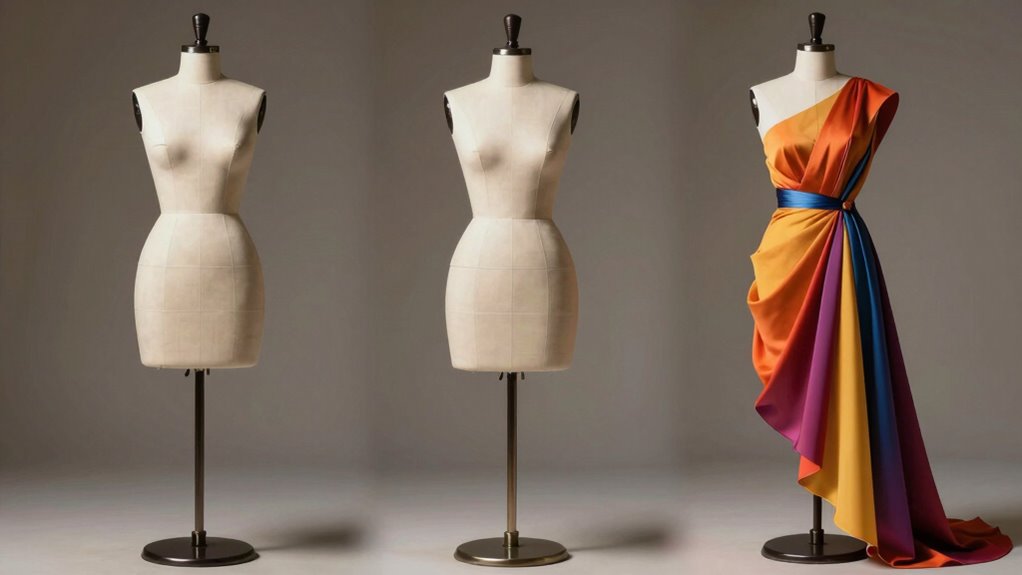
Dress forms help you achieve accurate body measurements, making it easier to create well-fitting garments. They streamline the fitting process by allowing you to make adjustments quickly and precisely. Plus, they serve as a valuable design visualization tool, helping you see how your ideas come to life. Incorporating luxury lifestyle products like high-end dress forms can elevate your design experience and ensure the best quality for your garments. Using proper dress form selection techniques ensures the form matches your target fit and enhances the overall design process. Additionally, choosing the right airless paint sprayer can significantly improve your painting efficiency, providing a smooth finish and saving time on large projects.
Accurate Body Measurements
Accurate body measurements are essential for creating garments that fit perfectly, and dress forms play a crucial role in ensuring this precision. Your success depends on understanding your unique body shape and applying precise measurement techniques. To achieve this, focus on:
- Using a flexible measuring tape for accuracy
- Measuring key points like bust, waist, and hips
- Recording measurements consistently at the same time of day
- Considering body shape differences to adjust fitting strategies
- Double-checking measurements for reliability
These steps help you capture your body’s true proportions, ensuring the dress form reflects your shape accurately. Precise measurements are the foundation for designing garments that fit perfectly, reducing fitting issues and enhancing overall craftsmanship. Mastering measurement techniques empowers you to create garments that look and feel exceptional.
Seamless Fitting Process
Because a well-fitting garment depends on precise tailoring, dress forms are essential tools that streamline the fitting process. They allow you to practice fabric draping, where you manipulate fabric directly on the form to see how it flows and fits. This hands-on approach helps identify issues early, saving time in pattern drafting by adjusting patterns before sewing. With a dress form, you can tweak seams, darts, and fit points accurately, ensuring the final garment conforms perfectly to the body’s contours. This seamless fitting process minimizes the need for multiple prototypes and alterations. Ultimately, using a dress form bridges the gap between your initial pattern ideas and the finished garment, making the entire process more efficient and precise.
Design Visualization Tool
Have you ever wondered how designers visualize the final look of a garment before it hits the runway or rack? The dress form acts as a vital design visualization tool, enabling you to see how fabric draping influences the overall silhouette. It allows you to refine pattern drafting, ensuring the fit aligns with your creative vision. Using a dress form, you can:
- Experiment with fabric draping techniques for natural fall and movement
- Adjust pattern pieces for better fit and proportion
- Visualize how design details will translate into the final garment
- Make real-time modifications before cutting fabric
- Test different fabric choices to see their impact on the design
This process saves time, reduces waste, and brings your design ideas to life with precision and confidence.
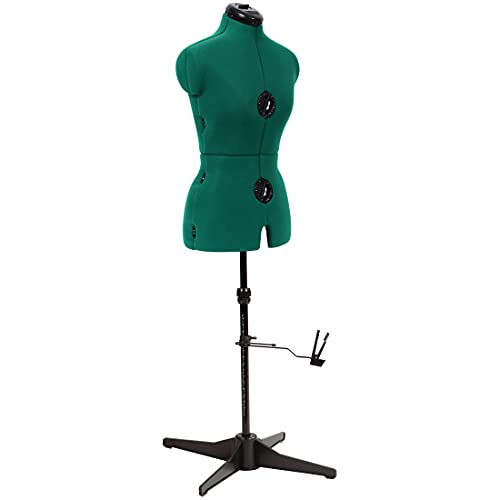
Dritz Sew You Adjustable Dress Form S/M, Sizes US 4–12, Female Sewing Mannequin with Pinnable Body Torso, 12 Dials for Accurate Fitting & 360 Hem Guide
Custom Fit: 9 easy-turn wheels at the bust, waist, and hips adjust in ½" increments by simply turning…
As an affiliate, we earn on qualifying purchases.
As an affiliate, we earn on qualifying purchases.
Types of Dress Forms and Which One Is Right for You
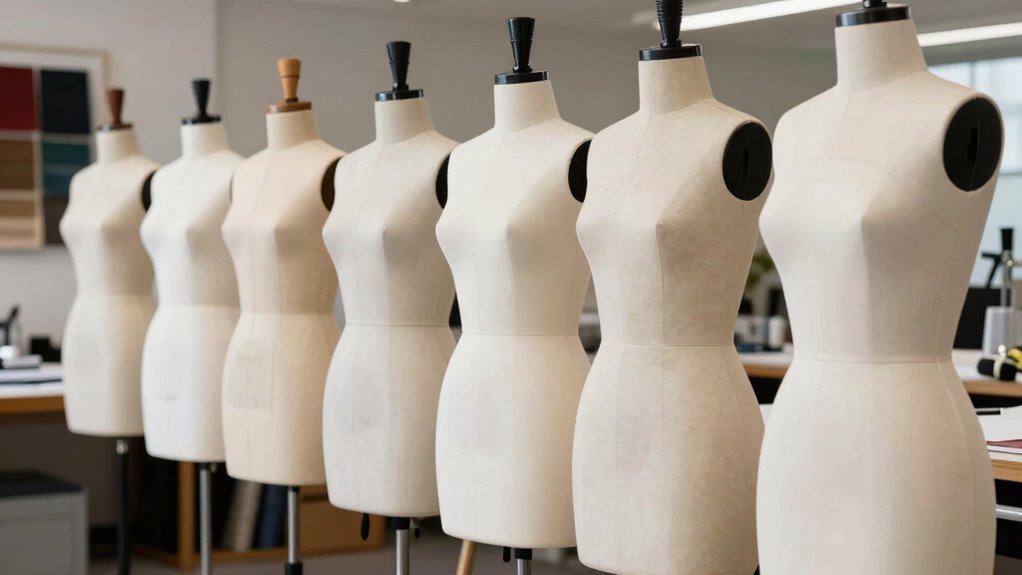
Choosing the right dress form depends on your specific needs and skill level. If you’re just starting out, a basic adjustable dress form offers versatility and ease of use, making fabric selection and dress form maintenance straightforward. For advanced projects, a professional-grade, custom-fitted dress form provides more accurate measurements and better support. Consider whether you need a stand-alone model or a mannequin that can be padded or modified. If you work with delicate fabrics, choose a form that’s easy to cover and maintain. Proper dress form maintenance guarantees longevity and consistent fit. Knowing which type suits your projects helps streamline your workflow, saves time, and improves your overall design process. Select wisely to match your skill level and project requirements.
Common Mistakes When Using Dress Forms: And How to Avoid Them
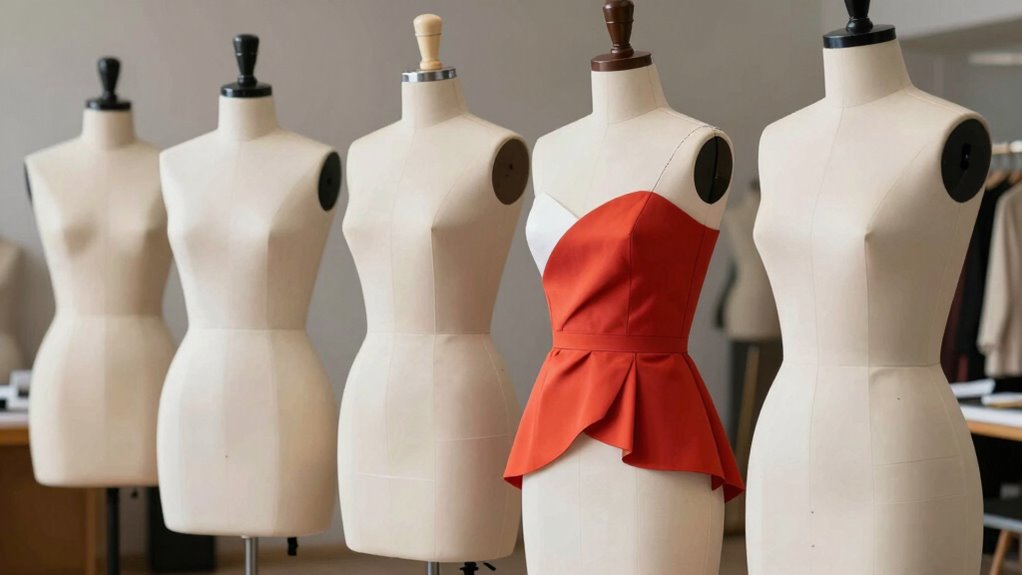
Using a dress form incorrectly can lead to ill-fitting garments and wasted time, so it’s essential to be aware of common mistakes. One frequent error is neglecting proper measurement accuracy, which results in poor fit adjustments. Another mistake is not securing the form tightly, causing shifting during fitting. Failing to check proportions and scale can distort your design process. Overlooking the importance of consistent posture and alignment affects the outcome. Additionally, using a dress form that doesn’t match your body type hampers precision. To avoid these issues, remember to:
- Regularly verify measurement accuracy
- Keep the dress form stable and secure
- Match the form’s proportions to your target fit
- Make precise fit adjustments consistently
- Ensure proper posture during fittings
Customizing Your Dress Form for Better Accuracy
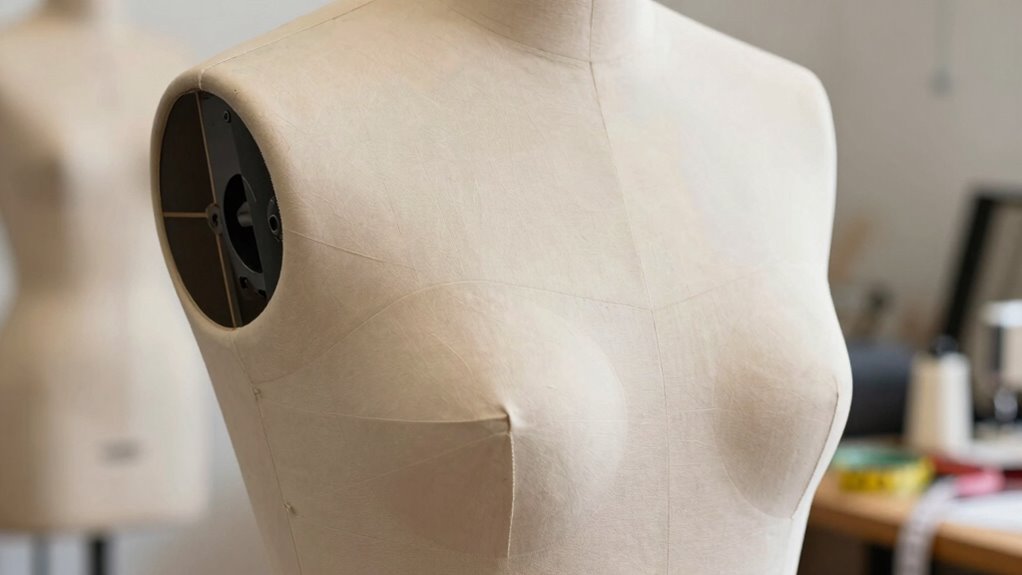
To achieve better accuracy, customizing your dress form to match your specific measurements and body shape is essential. Start by selecting the right fabric for covering your form; a lightweight, flexible fabric like muslin or jersey works best for easy pattern adjustments. Once covered, you can fine-tune the form by pinning and adjusting your pattern directly on it, ensuring a perfect fit. Use the table below to guide your customization process:
| Step | Action | Tips |
|---|---|---|
| Measure | Take precise body measurements | Use a flexible tape measure |
| Cover | Wrap form with suitable fabric | Avoid stiff fabrics |
| Mark | Pin pattern adjustments and fit points | Use fabric chalk or pins |
| Adjust | Tweak fabric and shape as needed | Keep checking fit |
| Finalize | Secure fabric and note adjustments | Keep records for future |
This method guarantees your dress form closely aligns with your body, improving fit accuracy.
Picking the Best Dress Form for Your Needs
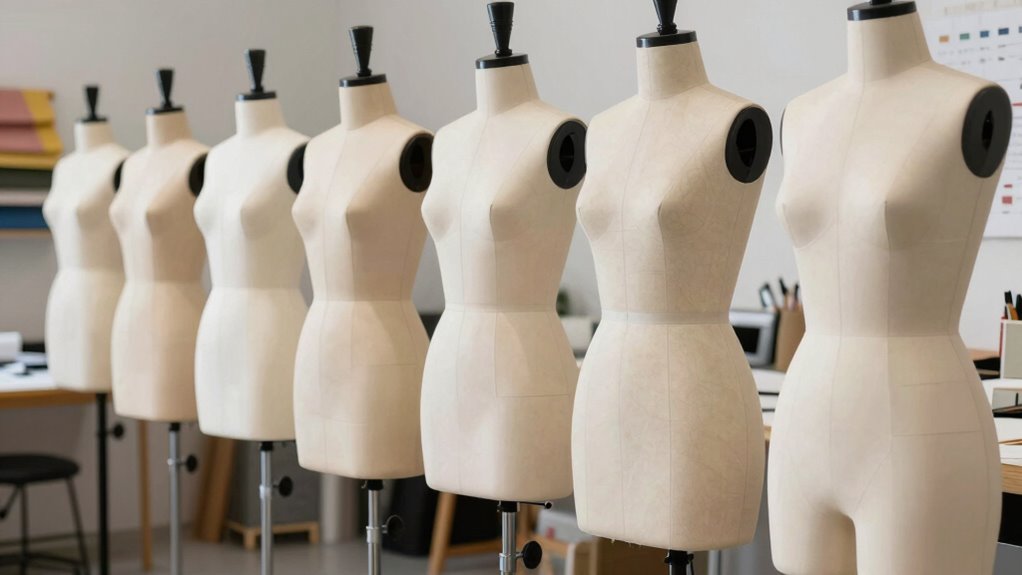
Selecting the right dress form is essential to achieving the best fit for your projects, and understanding your specific needs helps narrow down your options. Consider your goals—whether you focus on fabric selection, style versatility, or specific garment types. A versatile dress form with adjustable features offers flexibility across multiple projects, while a fixed form may suit dedicated patterns. Think about the following when choosing:
- Compatibility with your fabric selection
- Range of size adjustments
- Ability to replicate various styles
- Durability for frequent use
- Ease of customization for fit accuracy
Matching these factors ensures you select a dress form that enhances your workflow and helps you craft garments with precision. Ultimately, the right choice supports your creative process and elevates your design quality.
Frequently Asked Questions
Can Dress Forms Be Adjusted to Different Body Sizes?
Yes, dress forms can be adjusted to different body sizes thanks to their adjustable features. You can customize the form to match specific measurements, making it easier to fit and design garments accurately. These adjustable features allow you to modify the bust, waist, and hips, ensuring the dress form fits a variety of body sizes. This flexibility is essential for creating well-fitting clothing and streamlining your sewing process.
Are There Digital or Electronic Dress Forms Available?
Yes, digital or electronic dress forms are available. You can use virtual fitting technology and 3D modeling to create customizable, adjustable dress forms that match your specific measurements. These advanced tools allow you to simulate different body sizes and shapes easily, making fitting and designing garments more precise and efficient. With digital dress forms, you can experiment with styles and fit virtually before creating physical prototypes, saving time and resources.
How Often Should I Update or Replace My Dress Form?
You should update or replace your dress form when it shows signs of wear or no longer matches your measurements, typically every 5 to 10 years. Regular dress form maintenance, like cleaning and adjusting, extends its lifespan, but over time, materials can degrade. Keep an eye on its structure and fit accuracy. Replacing it guarantees your designs stay precise, helping you achieve professional results every time.
What Materials Are Best for Durable Dress Forms?
Did you know that high-quality dress forms can last up to 10 years with proper care? For durability, opt for a sturdy foam core combined with fabric options like canvas or polyester, which resist wear and tear. These materials provide a solid structure and a smooth surface for fitting. Using a foam core guarantees the form maintains its shape, making it an excellent choice for long-term use and consistent fittings.
Can Dress Forms Be Used for Clothing Alterations?
Yes, you can use dress forms for clothing alterations. They’re perfect for fabric draping, allowing you to see how the fabric will fit and fall on a body. Plus, they’re great for display purposes, showcasing your work professionally. Using a dress form helps you make precise adjustments and visualize the final look, making alterations easier and more accurate. It’s an essential tool for any sewing or tailoring project.
Conclusion
Now that you know how dress forms can transform your design process, don’t be afraid to get your hands dirty and experiment. Remember, a stitch in time saves nine—perfecting your fit early on saves headaches later. With the right form and a little patience, you’ll be sewing like a pro in no time. So, take the plunge and turn those fashion dreams into reality—practice makes perfect!