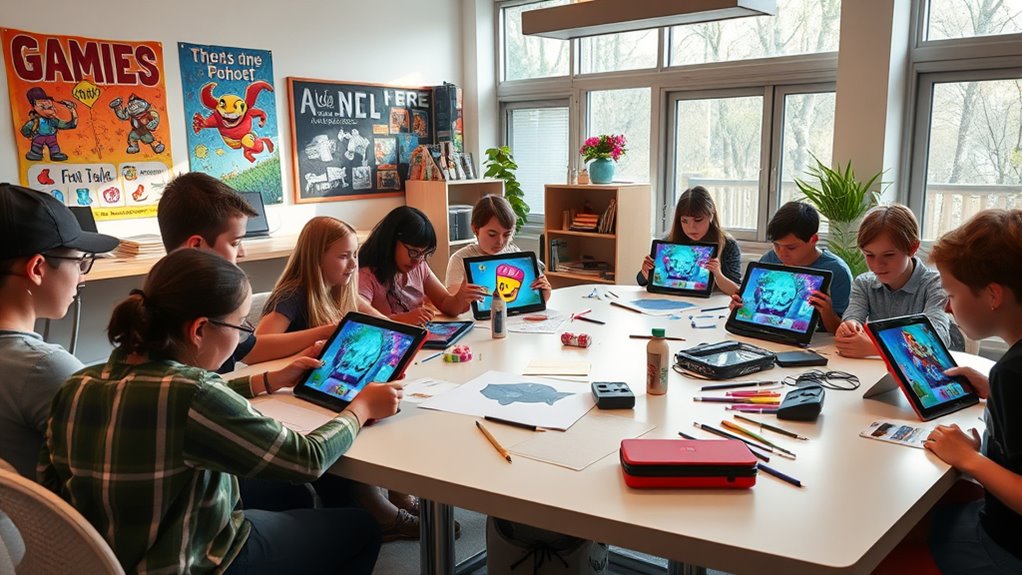

Gamification in art learning uses game design principles like rewards, challenges, and interactive activities to boost your creativity and engagement. By creating digital storytelling projects, virtual galleries, and collaborative challenges, you can explore art in exciting new ways. These methods make learning more fun, foster critical thinking, and encourage ongoing progress. Keep exploring how these strategies can transform your artistic journey and help you open your full potential.

Get art and craft supplies delivered free — and shop member deals
- Fast, free delivery on millions of items
- Access to Prime Big Deal Days deals on October 6–7
- Prime Video, Amazon Music and more included
Key Takeaways
- Incorporating game mechanics like badges and leaderboards motivates learners to engage actively with artistic challenges.
- Using storytelling within games fosters creative thinking and helps students develop unique artistic narratives.
- Virtual galleries with interactive features encourage exploration, reflection, and innovative presentation of artwork.
- Reward systems and progress tracking incentivize continuous improvement and mastery of artistic skills.
- Collaborative game-based activities promote peer feedback, community building, and shared creative problem-solving.

Have you ever wondered how incorporating game elements can transform the way you learn art? When you introduce gamification into your artistic journey, you tap into engaging methods that make learning both fun and meaningful. One powerful way to do this is through digital storytelling, which lets you craft narratives around your artwork. Instead of just creating images or sculptures, you embed your pieces into stories that give them context and emotional depth. This process encourages you to think critically about the message you want to convey and how viewers will interpret your work. Digital storytelling turns static art into an interactive experience, making your creative process more immersive and personal.
Additionally, virtual galleries serve as dynamic platforms that elevate your artistic learning. Unlike traditional art classes or physical exhibitions, virtual galleries allow you to showcase your work in a digital space that’s accessible worldwide. They can be designed with game-like features, such as interactive walkthroughs, clickable information panels, or even scavenger hunts for hidden details within your art. These elements turn the process of displaying your work into an engaging activity that encourages exploration and curiosity. As you navigate through virtual galleries, you’re prompted to reflect on your pieces more deeply, which enhances your understanding of composition, storytelling, and visual impact.
Gamification also motivates you to set goals and earn rewards as you progress in your art education. For instance, completing a digital storytelling project or curating a virtual gallery can *access* new levels of skill or recognition, encouraging continuous improvement. These incentives foster a sense of achievement, making the sometimes solitary journey of learning art feel more like an exciting quest. *Furthermore*, integrating game mechanics such as badges or leaderboards can create a community of learners who share feedback, challenge each other, and celebrate milestones together. This social aspect boosts your confidence and keeps you committed to honing your craft.
Moreover, understanding the role of digital tools in modern art education highlights how technology enhances engagement and learning outcomes.
digital art storytelling software
As an affiliate, we earn on qualifying purchases.
As an affiliate, we earn on qualifying purchases.
Frequently Asked Questions
How Does Gamification Impact Long-Term Creativity Development?
Gamification boosts your motivation, encouraging you to explore new ideas and persist through challenges, which enhances long-term creativity development. By making learning engaging and rewarding, it helps you retain skills more effectively over time. As you enjoy the process, you’re more likely to practice consistently, deepening your artistic abilities and inspiring innovative thinking that lasts well beyond initial lessons.
Can Gamified Art Lessons Suit All Learning Styles?
Yes, gamified art lessons can suit all learning styles by addressing diverse learning preferences and promoting engagement diversity. You can tailor activities with visual, auditory, or kinesthetic elements, ensuring everyone stays involved and motivated. By incorporating varied game mechanics, you help students connect with the material in ways that resonate with their individual strengths, fostering inclusivity and enhancing creativity across different learning preferences.
What Are the Challenges of Integrating Gamification Into Traditional Art Curricula?
You might face hurdles like resource allocation and curriculum adaptation. Implementing gamification requires time, money, and trained instructors, which can strain existing budgets. You must also modify traditional curricula, balancing game elements with core art principles. This challenge demands careful planning to guarantee engagement doesn’t compromise skill development. Overcoming these obstacles is vital to open the full potential of gamified art education, making it both exciting and effective.
How Do Students Perceive Gamified Art Education Compared to Conventional Methods?
You find that students perceive gamified art education as more engaging and motivating than traditional methods. They appreciate interactive challenges and immediate feedback, which boost their student engagement and confidence. Unlike conventional lessons, gamification makes learning fun and dynamic, encouraging creativity and risk-taking. However, perceptions vary; some students prefer familiar approaches, but overall, many feel more inspired and motivated to explore their artistic potential through gamified experiences.
What Are Effective Assessment Strategies for Gamified Art Projects?
You should implement peer assessment and digital portfolios to evaluate gamified art projects effectively. Peer assessment encourages students to critique each other’s work, fostering reflection and collaborative learning. Digital portfolios provide an all-encompassing view of progress, showcasing creativity and skills over time. Combining these strategies helps you gauge student engagement and understanding, ensuring that assessments are meaningful, inclusive, and aligned with the gamified learning experience.
As an affiliate, we earn on qualifying purchases.
Conclusion
By incorporating gamification into art learning, you can boost creativity and engagement. Studies show that students who participate in game-based activities are 30% more likely to retain artistic concepts. This approach transforms traditional lessons into exciting challenges, making art education more enjoyable and effective. So, next time you teach or learn art, consider adding game design elements—your creativity and motivation will thank you for it.
As an affiliate, we earn on qualifying purchases.
As an affiliate, we earn on qualifying purchases.
Halloween Picks
halloween
As an affiliate, we earn on qualifying purchases.