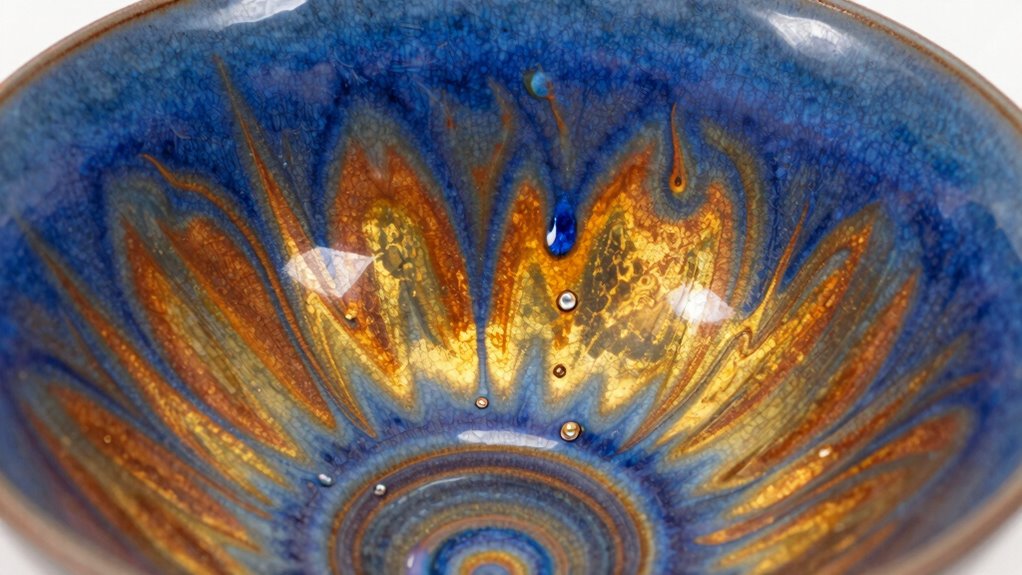

When you fire glazed pottery, chemical reactions change the way metal oxides reflect light, causing color shifts. Temperature, atmosphere, and ingredient ratios influence these changes, making colors deepen, lighten, or shift hues unexpectedly. Oxidation brightens and stabilizes colors, while reduction can intensify or alter them. Understanding these chemical processes helps you predict and control your glaze colors better. If you keep exploring, you’ll discover how to master your firing results more reliably.
Key Takeaways
- Chemical reactions at high temperatures alter metal oxides’ oxidation states, changing glaze colors.
- Firing temperature and atmosphere (oxidation or reduction) influence how colors develop or shift.
- Small recipe adjustments can lead to unexpected color changes due to chemical interactions during firing.
- Melting and interaction of glaze components create new compounds that affect hue and saturation.
- Proper control and understanding of kiln conditions help predict and stabilize desired glaze colors.

Dual Temperature Controller Jewelry Casting Burnout Furnace Oven Kiln Machine
Technical Parameter Voltage: 110V/220V Frequency: 60/50 HZ Power: 1500W Maximum Temperature: 800℃ Max Steel Bell Size: 4*7Inch Heating…
As an affiliate, we earn on qualifying purchases.
As an affiliate, we earn on qualifying purchases.
Why Do Glaze Colors Change After Firing?
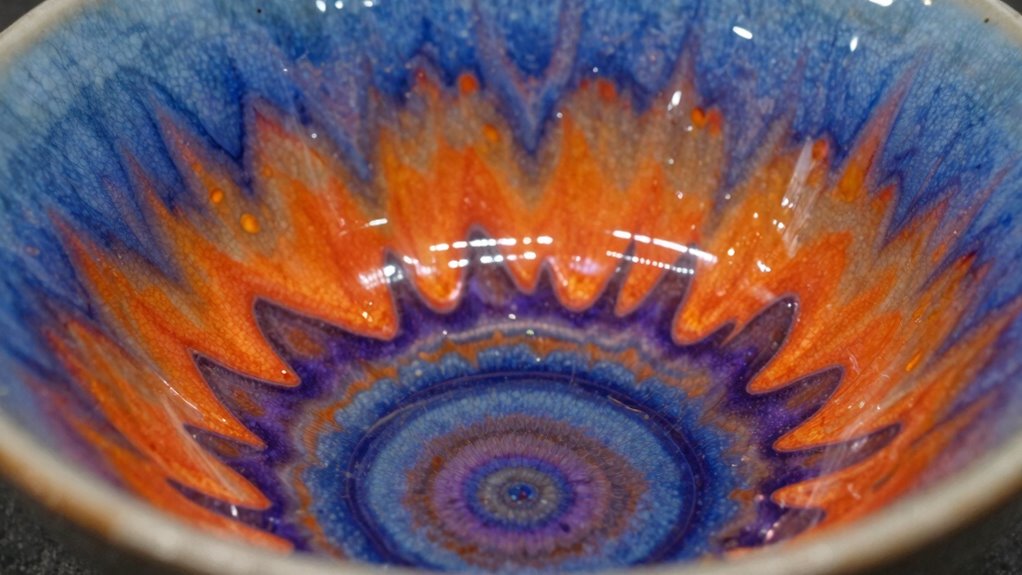
Glaze colors often change after firing because the chemical reactions that occur at high temperatures alter the way certain compounds reflect and absorb light. In ceramic art, understanding how glaze recipes respond to firing is key to achieving desired colors. When you heat a glaze, its components melt and interact, creating new compounds that influence color outcomes. These reactions can deepen, lighten, or shift hues unexpectedly. The specific ingredients in your glaze recipe determine how it reacts during firing, so small adjustments can lead to different results. Recognizing firing temperature effects helps you experiment and refine your ceramic art. Additionally, glaze chemistry explains why certain color shifts happen, allowing you to better control the final appearance. The thermal expansion properties of glazes also play a significant role in how colors develop during cooling, impacting the final look. Understanding chemical interactions within the glaze provides insight into the color transformation process, and temperature control is crucial for consistent results, giving you more predictability in your work. Knowing that color changes are a natural part of the process helps you experiment and refine your ceramic art. Ultimately, mastering how glaze recipes transform in the kiln allows you to create vibrant, consistent finishes.

Lustre (Ceramics Handbooks)
As an affiliate, we earn on qualifying purchases.
As an affiliate, we earn on qualifying purchases.
Understanding Glaze Chemistry and Its Impact on Color
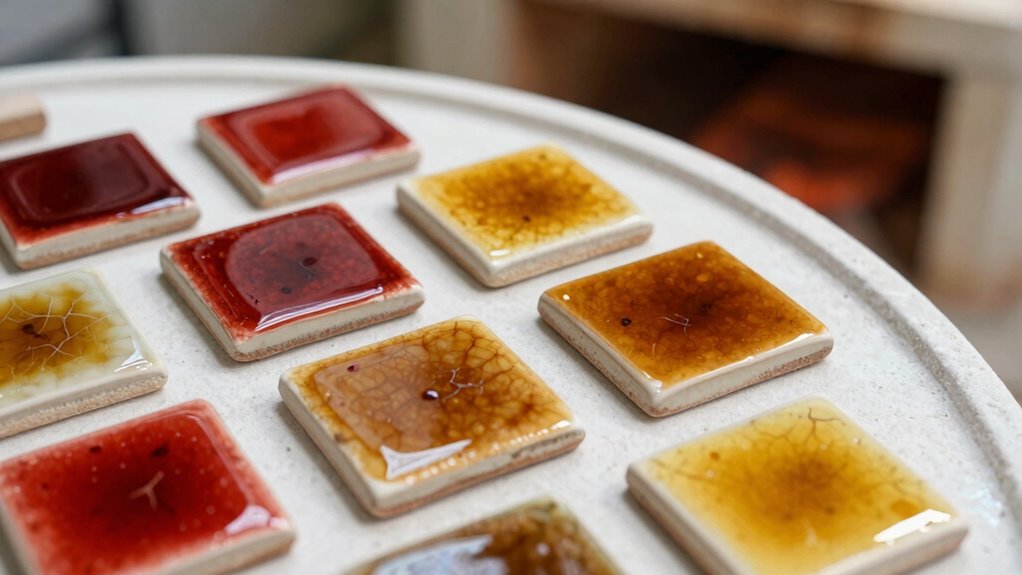
When you understand the chemistry behind your glazes, you gain insight into how their colors develop and change during firing. Glaze formulas are made up of specific ingredients that influence color, texture, and stability. The chemical interactions among these ingredients determine how a glaze reacts under different firing atmospheres. For example, some oxides produce vibrant colors in oxidation but turn dull or shift hues in reduction. Knowing the chemistry helps you predict these outcomes and adjust your glaze recipes accordingly. By understanding how elements like copper or cobalt behave chemically, you can better control color responses. Additionally, vetted glaze ingredients are essential for achieving consistent and predictable results. This knowledge allows you to experiment confidently, creating desired effects and avoiding unexpected color shifts caused by changes in firing conditions or glaze composition. Recognizing the chemical behavior of oxides enables you to fine-tune your firing techniques for optimal color development. Moreover, understanding oxidation and reduction reactions can help you manipulate firing atmospheres to achieve specific color outcomes. Developing a familiarity with firing atmosphere control can further enhance your ability to produce the colors you envision. Gaining a deeper understanding of glaze chemistry fundamentals also helps in troubleshooting unexpected color changes during firing.

VEVOR 1500W Programmable Electric Kiln, Digital Melting Furnace with Multi-Stage Temperature Control, Stainless Steel 2192°F/1200℃ for Jewelry, Metal, Glass, Ceramics, Wax Casting & DIY Crafts
Professional Desktop Kiln: This tabletop kiln melter combines portability, functionality, and performance. It provides precise temperature control, smart…
As an affiliate, we earn on qualifying purchases.
As an affiliate, we earn on qualifying purchases.
How Firing Temperature Affects Your Glaze Colors
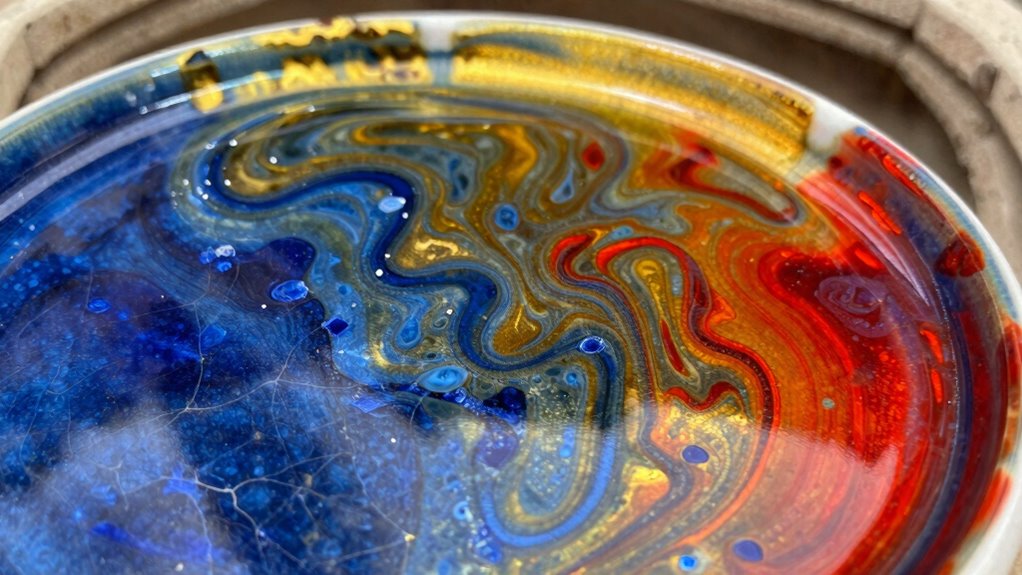
Firing temperature plays a crucial role in determining the final colors of your glaze. As you adjust your firing schedules, you’ll notice subtle shifts in hue and intensity. Higher temperatures often deepen or darken colors, making reds more vibrant or turning certain shades to ash tones. Conversely, lower temperatures can preserve delicate pastel shades or create softer effects. Different glaze recipes respond uniquely to temperature changes, so it’s essential to understand their firing ranges. Precise control over firing schedules ensures you achieve consistent results and avoid unwanted color shifts. Experimenting with temperature variations helps you discover new effects and refine your glaze palette. Remember, the key to vibrant, stable colors lies in matching your glaze recipes to the appropriate firing temperature. Understanding glaze chemistry is essential for predicting how colors will develop during firing. Additionally, knowing the firing atmosphere can influence oxidation or reduction conditions, further affecting color outcomes. For beginners, familiarizing yourself with firing schedules can help you better control the final appearance of your glazes. Being aware of temperature effects enables you to intentionally manipulate color outcomes during the firing process. Exploring how material composition interacts with temperature can also provide deeper insights into color development.

Asbestos Test Kit – (2 Samples) Emailed Results Within 3 to 5 Business Days – Includes Return Mailer and Expert Consultation. Required Lab Fee for NVLAP Analysis
Easy and Safe Testing: Utilize our asbestos testing kit to safely collect 2 samples for analysis. Simple to…
As an affiliate, we earn on qualifying purchases.
As an affiliate, we earn on qualifying purchases.
The Role of Metal Oxides in Creating Bright, Vivid Glazes

Metal oxides are key ingredients in achieving bright, vivid glaze colors because they react uniquely during firing to produce intense hues. When you add specific metal oxides—like copper, cobalt, or chromium—they each contribute distinct and vibrant colors to your glaze. These oxides interact with the glass matrix, creating complex chromophores that enhance color vibrancy. For example, cobalt oxide yields deep blues, while copper can produce greens or reds depending on the atmosphere. The presence and concentration of these oxides influence the brightness and intensity of the final color. Understanding how metal oxides behave during firing allows you to manipulate glaze recipes effectively, resulting in more vivid, striking finishes. Proper firing conditions also play a crucial role in achieving the desired color outcomes. Ultimately, metal oxides are essential for artists seeking bright, lively glazes that stand out.
Oxidation vs. Reduction: How Atmospheres Change Glaze Colors
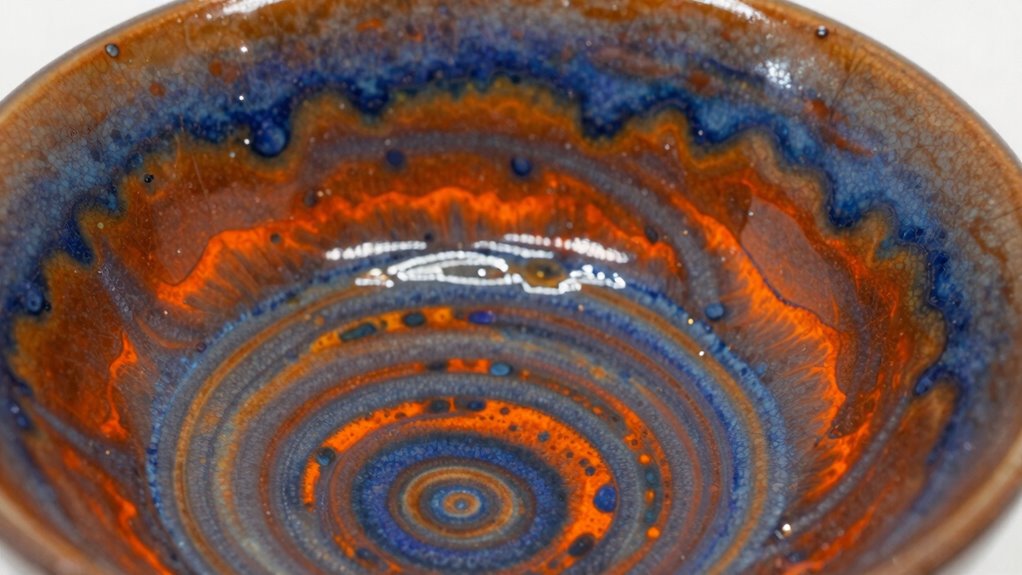
The atmosphere in your kiln considerably influences your glaze colors, either brightening or muting them. When oxygen is plentiful, oxidation occurs, often resulting in vibrant, stable hues. In contrast, a reduction environment strips oxygen away, creating different, sometimes more complex colors in your glazes. Understanding the oxidation and reduction processes helps you predict and control your glaze outcomes more effectively. Additionally, controlling the atmosphere in the kiln allows for precise color outcomes and creative effects in your ceramic work. Being aware of oxidation states can further enhance your ability to achieve desired glaze results, especially when experimenting with new formulations. Recognizing how atmospheric conditions influence chemical reactions in your kiln can lead to more consistent and successful firing results. As the demand for skilled AI Ethicist Jobs grows, mastering these environmental factors becomes increasingly important for achieving consistent results.
Atmosphere’s Impact on Colors
Atmospheres during firing play a pivotal role in determining the final colors of your glaze. The amount of atmospheric oxygen influences whether your kiln atmosphere is oxidizing or reducing, which directly impacts color development. In an oxidizing environment, ample atmospheric oxygen allows certain metal oxides to produce bright, predictable hues. Conversely, a reducing atmosphere limits oxygen, causing metal oxides to shift colors, often resulting in richer, more complex shades. Visualize this scene:
- Oxygen filling the kiln, brightening glaze colors
- Limited oxygen creating deep, sometimes smoky effects
- Metal oxides changing hues based on atmosphere
- The kiln atmosphere shifting during firing
- Precise control altering final glaze appearance
Understanding how your kiln atmosphere affects color helps you manipulate firing conditions for consistent, desired results. Color development is also influenced by temperature and firing duration, further complicating the process but offering more creative possibilities.
Oxidation Process Explained
When oxygen levels in the kiln change, they trigger a chemical process called oxidation, which directly affects your glaze’s colors. Oxidation effects occur when oxygen reacts with metal oxides in your glaze, often resulting in brighter, more stable colors. This process promotes color stability, making your glazes appear consistent and predictable. During oxidation, certain elements like copper or iron can produce specific hues, depending on their chemical state. Since oxidation maintains a steady atmosphere, your colors tend to stay true to their expected shades. Understanding this process helps you control color outcomes and achieve desired results. By managing oxygen levels, you can influence oxidation effects, ensuring your glaze colors remain vibrant and stable after firing.
Effects of Reduction Environment
A reduction environment occurs when oxygen levels in the kiln decrease, causing metal oxides in your glaze to react differently than they do during oxidation. This change alters oxidation effects, often resulting in richer, more vibrant glaze colors. Under reduction, metal oxides like copper and iron produce different hues compared to oxidation. This environment can also impact glaze stability, sometimes causing irregularities or crawling if not managed properly. To visualize this, consider:
- Metal oxides shifting from bright to muted tones
- Color intensification or shifts in reds and greens
- Changes in glaze surface texture
- Variations in transparency
- Increased risk of glaze defects if poorly controlled
Understanding how reduction influences oxidation effects helps you predict color outcomes and maintain glaze stability during firing. Additionally, controlling firing atmosphere is crucial to achieving consistent and predictable glaze results.
Chemical Reactions That Make Glaze Colors Shift During Firing
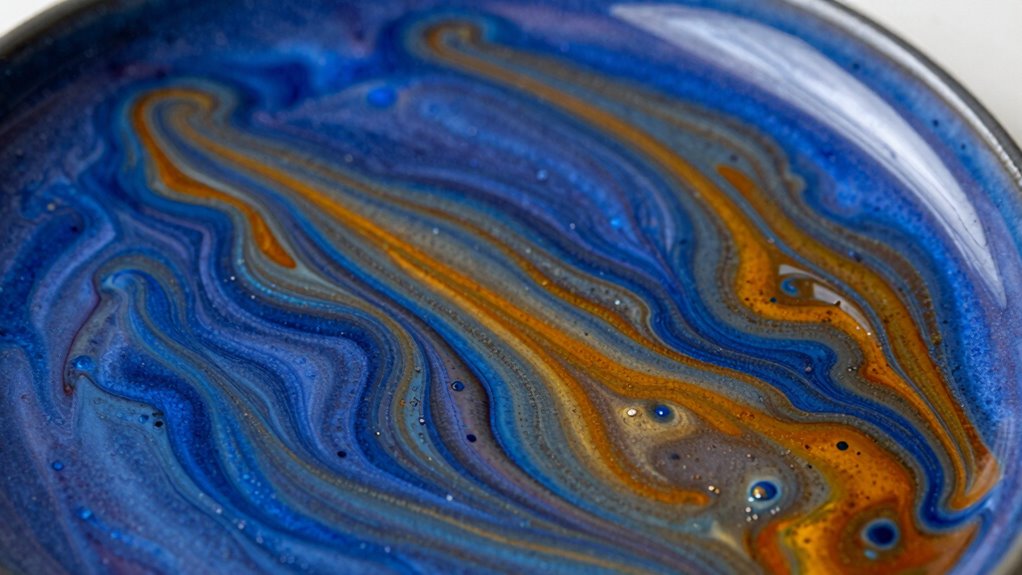
Chemical reactions within your glaze during firing cause its colors to shift, often unexpectedly. These reactions depend heavily on your glaze composition and how its ingredients interact at high temperatures. For example, certain metal oxides may change oxidation states, producing different colors as the chemical stability of compounds varies with temperature and atmosphere. When firing, some components may oxidize or reduce, altering the way they reflect light and consequently changing your glaze’s appearance. Additionally, silica and fluxes can react to form new mineral phases, affecting color intensity and hue. Understanding these chemical reactions helps you predict and control color shifts. Recognizing how different ingredients react during firing allows you to fine-tune your glaze recipes for consistent and desired visual results.
Reading Glaze Labels: What They Tell You About Color Outcomes

Reading glaze labels reveals important details about the ingredients, helping you ascertain the final color. Firing range indicators guide you on the ideal temperature to achieve consistent results. Clear information about colorants ensures you understand how specific oxides influence your glaze’s hue.
Ingredient Labels’ Insights
By examining glaze labels carefully, you can gain valuable insights into how their ingredients influence color outcomes. Understanding glaze formulations helps you predict how a piece will look after firing. Ingredient variations, such as different metal oxides or fluxes, can lead to unexpected color shifts. When you read labels, pay attention to:
- Presence of copper or cobalt, which produce vibrant blues and greens
- The amount of iron, influencing earthy browns or reds
- Use of rutile or titania, affecting glaze opacity and shimmer
- Specific fluxes that alter melting points and color stability
- Additives like selenium or vanadium that create unique hues
Recognizing these details allows you to select or adjust glazes intentionally, giving you more control over color outcomes after firing.
Firing Range Indicators
Glaze labels often include firing range indicators, which reveal the temperatures at which a glaze is formulated to mature. These ranges help you understand glaze stability and guarantee firing consistency. For example, a label might show a range like 1040–1060°C (2000–1940°F). This tells you the ideal temperature window for the glaze to develop its intended color and surface.
| Low End (°C) | High End (°C) |
|---|---|
| 1040°C | 1060°C |
| 1920°F | 1940°F |
| Firing Range | Maturation Point |
Knowing these indicators helps you predict how your glaze will behave, reducing surprises and ensuring consistent results. Proper attention to firing ranges maintains glaze stability and vibrant color outcomes.
Colorant Information Clarity
Understanding the colorant information on glaze labels is essential for predicting the final color of your piece. It helps you interpret how glaze additives and colorant stability affect the outcome. Clear labels often include details like the type of colorant, concentration, and recommended firing range. Look for notes on how stable the colorant is during firing, as some ingredients change color or fade. Labels may also specify if the colorant is sensitive to glaze chemistry or oxidation conditions. This clarity lets you choose the right additives for consistent results.
- Precise colorant descriptions
- Stability notes during firing
- Recommendations for glaze chemistry
- Information on glaze additives influencing color
- Firing range suitability and effects
Tips for Experimenting With Glaze Chemistry to Get the Colors You Want
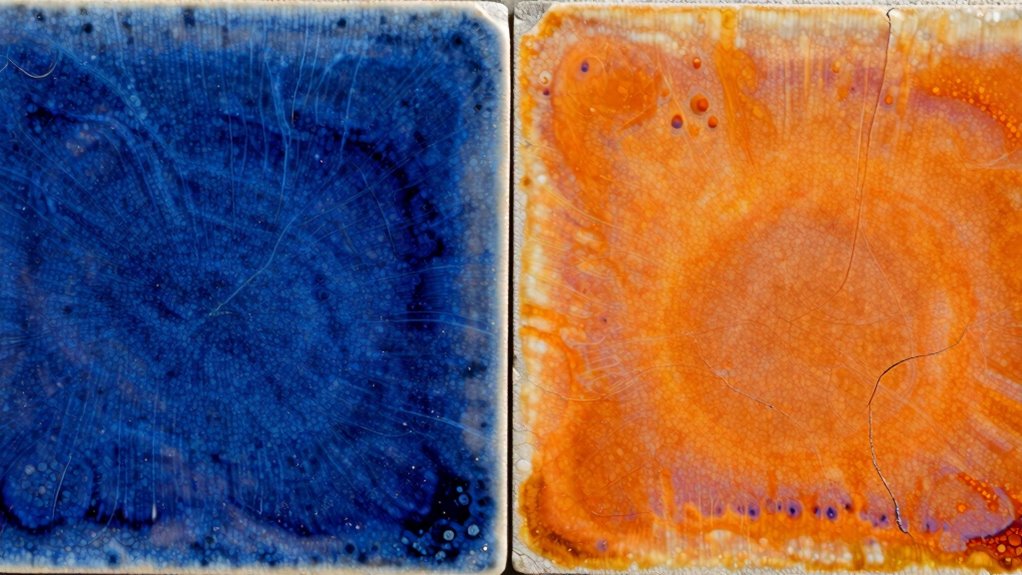
Experimenting with glaze chemistry to achieve the colors you want can be both exciting and rewarding. Start by practicing glaze blending—mix small batches to discover new hues and effects. Use color layering to build depth; apply different glazes in stages to influence the final color. Keep detailed notes on each test firing to track what works best. Don’t hesitate to tweak formulas or firing temps to refine results. Combining techniques like glaze blending and color layering unravels endless possibilities.
| Technique | Effect |
|---|---|
| Glaze Blending | Creates unique, personalized shades |
| Color Layering | Adds depth and complexity |
| Firing Adjustment | Alters color intensity and tone |
| Test Batches | Prevents waste, guides future choices |
Troubleshooting Unexpected Color Changes in Your Fired Glazes
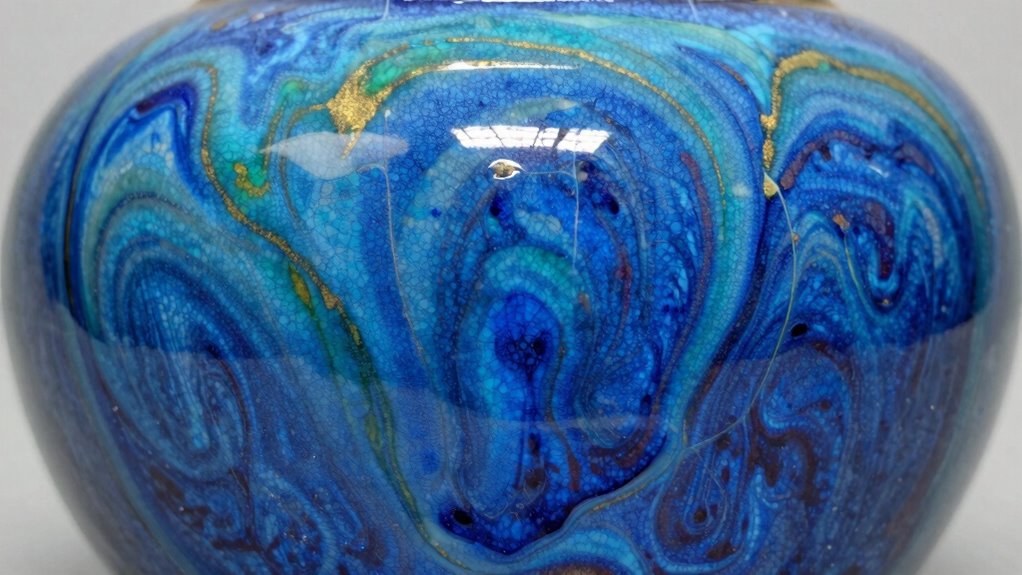
When your carefully crafted glaze results in unexpected color shifts after firing, it can be frustrating. Variations often stem from inconsistencies in glaze recipes or firing schedules. To troubleshoot, consider these factors:
- Check if your glaze recipes contain precise ingredient ratios.
- Ensure consistent application thickness on your pieces.
- Review your firing schedule, especially the temperature and cooling rate.
- Verify your kiln’s temperature calibration for accuracy.
- Observe how oxidation or reduction atmospheres influence color outcomes.
Small changes in these areas can cause significant color variations. Keep detailed records of your glaze recipes and firing schedules to identify patterns. Adjustments like modifying firing temperature or atmosphere often help restore expected colors, making your results more predictable and controlled.
How Learning Chemistry Helps You Master Glaze Colors
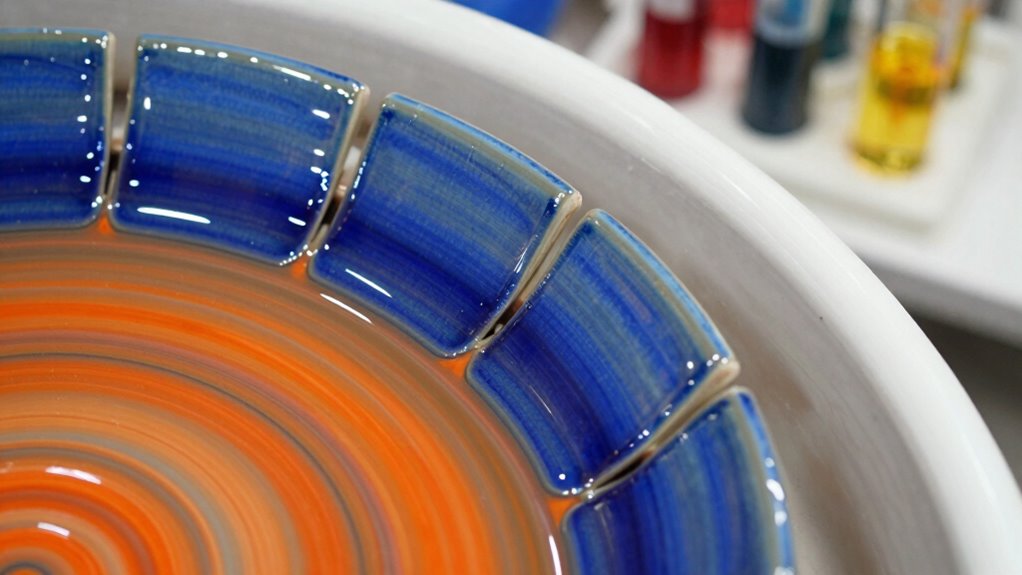
Learning chemistry gives you the tools to predict and control glaze colors more effectively. By understanding ceramic stability, you can anticipate how different glaze ingredients interact during firing, helping you achieve consistent, vibrant results. Knowing the chemistry behind glaze formulation allows you to troubleshoot color shifts and adjust recipes for better glaze consistency. When you grasp the chemical reactions that produce specific colors, you gain confidence in creating predictable outcomes every time. This knowledge also helps prevent unexpected changes caused by impurities or firing variables. Ultimately, mastering the chemistry behind glazes empowers you to fine-tune your techniques, craft stable and beautiful finishes, and elevate your pottery with greater precision and artistry.
Frequently Asked Questions
Can Glaze Colors Vary Between Different Clay Bodies?
Yes, glaze colors can vary between different clay bodies. The clay body influence plays a significant role, as its composition and firing temperature effects can alter how the glaze reacts during firing. Some clay bodies may contain elements that change the appearance of the glaze, resulting in different colors or finishes. Always test your specific clay and glaze combination to predict and achieve consistent results.
How Do Glaze Thickness and Application Methods Influence Color?
You might think glaze thickness and application don’t matter, but they actually control color outcomes. Thicker layers can intensify or mute hues, while thin coats reveal underlying clay or slip colors. Your application technique, like layering glazes, influences how colors interact and develop after firing. Experimenting with different thicknesses and layering methods helps you achieve consistent, vibrant results, making your pottery truly stand out.
Are There Safe Ways to Test Glaze Color Changes at Home?
Yes, you can safely test glaze color changes at home by mixing small batches and firing them in your kiln. Always wear safety gear like gloves and goggles, guarantee proper ventilation, and follow manufacturer instructions. Use test tiles or scrap pieces to observe color shifts after firing. This way, you minimize risks and get accurate results, helping you plan your final pottery pieces with confidence.
What Are the Best Practices for Documenting Glaze Recipes and Results?
You should prioritize thorough recipe recording and systematic glaze testing. Use detailed logs to document each glaze recipe, including ingredients, proportions, and firing conditions. When testing, take clear photos and note any color changes or surface effects. Keep organized records of results, noting alterations and outcomes after firing. This approach helps you track what works best, refine your techniques, and understand how different factors influence color shifts in your glazes.
How Do Environmental Factors Like Humidity Affect Glaze Firing Outcomes?
Imagine your kiln as a diva, demanding perfect conditions. Humidity effects sneer at your plans, causing uneven glaze melts or unexpected color drips. Environmental influence can turn a smooth firing into a chaotic splash fest, making you wonder if Mother Nature’s mood swings are to blame. Too much humidity introduces moisture that disrupts glaze chemistry, leading to unpredictable results. Keep your studio dry, or risk your masterpiece becoming a puddle of frustration.
Conclusion
Understanding glaze chemistry is like revealing a secret recipe—colors dance and shift like a vibrant sunset, revealing their true beauty only after firing. When you grasp how temperature, atmospheres, and metal oxides work together, you’ll see your ceramics transform into stunning works of art. Embrace the experimentation and enjoy the journey, knowing each firing brings new surprises—like a colorful sunrise emerging from a quiet horizon, waiting to inspire your next creation.