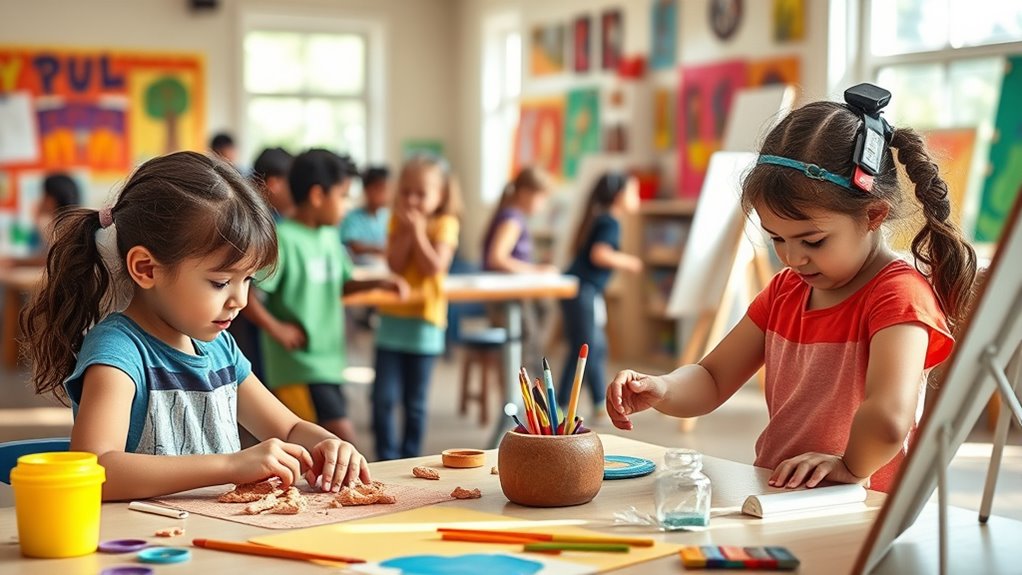

To create an inclusive art classroom, you should design spaces that make all students feel valued and comfortable expressing themselves. Use adaptive tools like textured brushes or ergonomic scissors to assist students with diverse abilities. Incorporate sensory elements such as textured surfaces and calming lighting to support sensory needs. Be flexible by offering alternative materials and allowing breaks. Embracing diversity and patience encourages creativity and confidence—keep exploring ways to make your classroom truly accessible for every learner.
Key Takeaways
- Incorporate adaptive tools like textured brushes and ergonomic scissors to accommodate diverse motor skills.
- Design sensory-friendly spaces with varied textures, lighting, and calming elements to support sensory needs.
- Foster patience and flexibility by offering alternative materials and allowing personalized pacing.
- Create an inclusive environment that values each student’s unique creative expression and encourages participation.
- Ensure accessibility by modifying spaces and materials to enable full engagement regardless of physical or sensory abilities.
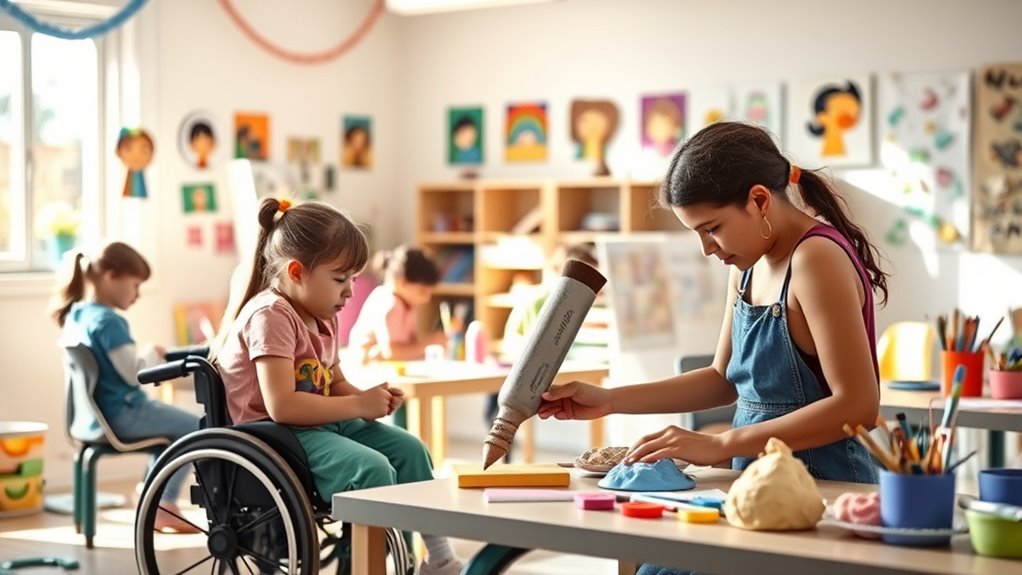
Creating inclusive art classrooms means designing learning environments where every student feels valued and empowered to express themselves creatively. When you focus on adapting your space and materials, you make it possible for students with diverse abilities to participate fully. One effective way to do this is by incorporating adaptive tools. These specialized supplies help students overcome physical or sensory challenges, allowing them to engage more comfortably and confidently. For example, textured brushes or ergonomic scissors can accommodate different motor skills, giving students the freedom to explore their creativity without frustration. Adaptive tools serve as bridges, removing barriers that might otherwise hinder expression and helping students develop their artistic skills at their own pace.
In addition, selecting tools with high color accuracy ensures that students can see their work represented as vividly and true-to-life as possible, which can be especially motivating. Sensory integration plays a *vital* role in creating an accessible art environment. Many students with sensory processing differences benefit from thoughtfully designed spaces that address their unique needs. You can incorporate various textures, lighting options, and calming elements to support sensory regulation. For instance, providing tactile surfaces, soft lighting, or noise-reducing materials can help students feel more at ease and focused during activities. When sensory input is balanced and intentional, students are better able to concentrate on their art, express themselves freely, and develop confidence in their abilities. It’s important to observe and understand each student’s sensory preferences, then adapt your classroom accordingly to foster comfort and engagement.
By integrating adaptive tools and sensory considerations into your teaching approach, you create a more equitable art space. This involves not just providing physical resources but also fostering an atmosphere of patience and understanding. Encourage students to communicate their needs and preferences, and be flexible in your methods. For example, if a student finds traditional brushes overwhelming, offer alternative tools such as sponges, stamps, or digital media. If sensory overload occurs, allow breaks or create a designated calming corner. These adjustments show that you value each student’s experience and are committed to their artistic growth. When students see that their needs are acknowledged and accommodated, they feel more motivated and willing to take creative risks.
Ultimately, designing an inclusive art classroom isn’t about making one-size-fits-all modifications; it’s about embracing diversity and recognizing that every student’s creative journey is unique. By thoughtfully incorporating adaptive tools and sensory integration strategies, you can cultivate a space where all students feel safe, inspired, and empowered to express themselves through art. This approach not only benefits students with disabilities but enriches the entire classroom community, fostering empathy, collaboration, and a deeper appreciation for individual differences.

Adaptive Foam Grip Set – The Kind Mind Company™. Adaptive Art Tools, Accessibility Aid for Kids & Adults, Mobility Aid for Painting, Drawing, Crafts – Assorted Sizes, 3-Pack
Customizable Grip for Comfort – This set of 3 adaptive foam grips features varying diameters and ports to…
As an affiliate, we earn on qualifying purchases.
As an affiliate, we earn on qualifying purchases.
Frequently Asked Questions
How Can I Assess Individual Student Needs Effectively?
To assess individual student needs effectively, you should use differentiated instruction tailored to each student’s abilities. Observe their engagement and skill levels during activities, and incorporate student self-assessment to gain insights into their comfort and preferences. Regular check-ins and feedback help you adjust your approach, ensuring each student’s needs are met. This combination fosters a supportive environment where students feel valued and motivated to express their creativity.
What Are Affordable Adaptive Art Tools for Classrooms?
Did you know that 85% of teachers find budget-friendly tools effective? You can use inexpensive adaptive art tools like textured brushes, foam grips, and adjustable easels. DIY adaptations, such as creating custom grips from everyday materials, also work wonders. These options make art accessible without breaking the bank and allow you to tailor tools to each student’s needs, fostering a more inclusive and engaging classroom environment.
How Do I Involve Families in Adaptive Art Education?
You involve families in adaptive art education by actively encouraging family engagement through regular updates, workshops, and collaborative projects. Invite families to share their cultural perspectives, fostering cultural inclusivity and enriching the classroom experience. Communicate openly about their child’s progress and modify activities to honor different backgrounds. This approach builds trust, ensures support at home, and creates a more inclusive, culturally responsive environment where every student feels valued and empowered to express themselves creatively.
What Training Is Available for Teachers on Inclusive Art Practices?
Like a wise mentor guiding a hero, you can access various training programs on inclusive art practices. Many workshops and online courses focus on assistive technology and developing an inclusive curriculum. Organizations such as the National Art Education Association and local universities offer professional development that equips you to create accessible, engaging art experiences for all students. These resources help you foster creativity while ensuring every student feels valued and supported.
How Can I Prevent Stigma Around Differently-Abled Students?
To prevent stigma around differently-abled students, you should foster an inclusive mindset by promoting awareness and understanding among your students. Encourage open conversations about disabilities, celebrate diverse abilities, and highlight each student’s strengths. Practice stigma reduction by challenging stereotypes and demonstrating respect in all interactions. When you model acceptance and empathy, you create a safe environment where all students feel valued and understood, reducing stigma effectively.
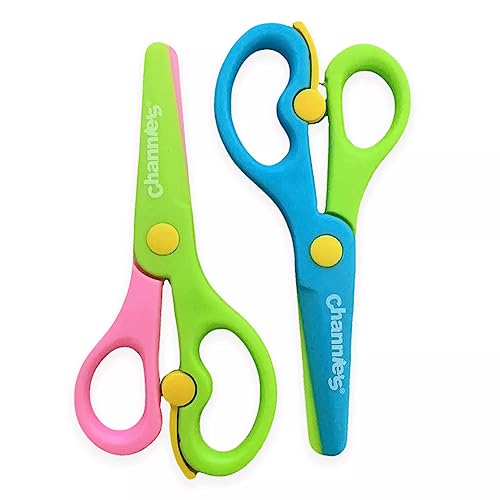
Channie's Safety Scissors for Small Hands (Ages 3-5) – Kid-Safe Plastic Training Scissors for Preschoolers, Child Hand-Eye Coordination Development, Kids Scissors, Toddler Safety Scissors (2 pack)
Kid-Friendly Design: Our toddler scissors are specifically designed for kids ages 3-5, with safety features like a blunt…
As an affiliate, we earn on qualifying purchases.
As an affiliate, we earn on qualifying purchases.
Conclusion
Just like a vibrant garden blooms when every flower gets the right care, your classroom thrives when every student’s needs are met. By adapting your teaching methods, you create a space where all talents can flourish, turning challenges into opportunities for growth. Remember, your inclusive classroom is a mosaic—each piece unique, yet essential to the whole. Embrace these differences, and watch your students create a masterpiece of creativity and understanding together.

READY 2 LEARN Textured Art Tools – Set of 4 – Jumbo Paint Brushes for Toddlers and Kids – Set 1 – DIY Patterns and Effects
4 TEXTURES FOR LITTLE PICASSOS — These paint texture tools feature grippy, plastic handles with 4 different tips:…
As an affiliate, we earn on qualifying purchases.
As an affiliate, we earn on qualifying purchases.

Arts & Crafts Supplies Kits & Materials Set for Kids, Toddler – Carl & Kay
ALL INCLUSIVE CRAFT KIT: Looking for a fun one-stop, ready-for-anything craft supply bundle that covers all the basics?…
As an affiliate, we earn on qualifying purchases.
As an affiliate, we earn on qualifying purchases.