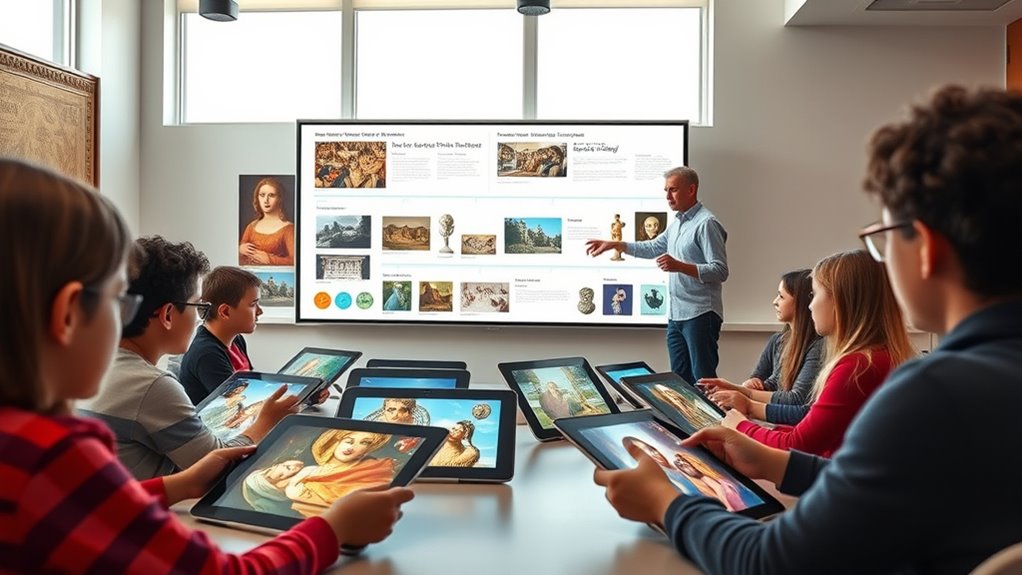

Using interactive digital tools, you can make art history more engaging and accessible by showcasing high-resolution images of artworks worldwide. These tools enable students to zoom in on details, explore from multiple angles, and access contextual information instantly. They foster active investigation, collaboration in virtual spaces, and personalized review, transforming passive learning into dynamic exploration. Continuing to explore these methods will reveal how they can revolutionize your teaching approach and deepen student understanding.
Key Takeaways
- Utilize virtual galleries to provide high-resolution, multi-angle views of artworks, enhancing visual understanding.
- Incorporate artifact analysis tools with annotations to encourage active examination and stylistic identification.
- Engage students with interactive features like zooming, contextual info, and layered details for deeper exploration.
- Promote collaboration through digital breakout rooms, shared spaces, and group projects analyzing artworks.
- Use real-time digital assessments and feedback to monitor comprehension and personalize learning experiences.

In today’s digital age, teaching art history has become more engaging and accessible thanks to interactive digital tools. One of the most effective ways to immerse students in the subject is through virtual galleries. These online platforms allow you to showcase high-resolution images of artworks from around the world, eliminating geographical barriers. Instead of flipping through textbooks or static images, you can guide students through a dynamic experience, where they navigate a digital space filled with diverse artworks. Virtual galleries enable students to zoom in on intricate details, explore artworks from different angles, and access contextual information instantly. This interactivity sparks curiosity and deepens understanding, making art history feel more tangible and immediate.
Artifact analysis is another key method enabled by digital tools. Digital platforms allow you to present detailed images of artifacts, often with annotations highlighting specific features or inscriptions. You can encourage students to examine these artifacts closely, identify stylistic elements, or interpret symbols, fostering critical thinking. Digital artifact analysis also offers the advantage of layering information—students can toggle between different views or supplementary data, such as historical context or conservation techniques. This layered approach helps students appreciate the complexity and significance of each piece, transforming passive observation into active investigation. Engaging students in artifact analysis digitally makes the process more interactive and personalized, as they can work at their own pace and revisit details as needed.
Moreover, these tools facilitate collaboration. Students can work together in virtual breakout rooms or shared digital spaces to analyze artworks or artifacts collectively. This collaborative approach encourages discussion, debate, and the sharing of insights, which deepens their understanding. You can assign group projects where students create digital exhibitions or presentations, further integrating technology into their learning experience. Additionally, digital tools often include quizzes, annotations, and comment features, allowing you to assess comprehension in real-time or gather feedback to adapt your teaching methods.

Abacus Brands Virtual Reality History! – Illustrated Interactive VR Book and STEM Learning Activity Set – for Ages 8 and Up
THE ULTIMATE HISTORY EXPERIENCE – Travel Through Time in VR! Embark on a historical journey with VR HISTORY!…
As an affiliate, we earn on qualifying purchases.
As an affiliate, we earn on qualifying purchases.
Frequently Asked Questions
How Do Digital Tools Accommodate Diverse Learning Styles?
Digital tools accommodate diverse learning styles by offering multisensory engagement, allowing you to see, hear, and interact with art history content. They enable personalized learning, so you can explore topics at your own pace and focus on what interests you most. This flexibility helps you better understand and retain information, making the learning experience more inclusive and effective for everyone, regardless of their preferred learning style.
What Are the Best Practices for Integrating Digital Tools Into Curricula?
You should start by aligning digital tools like virtual museum tours and interactive timelines with your learning objectives. Incorporate them gradually, ensuring students engage actively with the content. Encourage exploration and discussion, and provide guidance on how to navigate these tools effectively. Regularly assess their impact, gather feedback, and adapt your approach to enhance understanding and keep students motivated. This way, digital tools enrich your curriculum seamlessly.
How Can Students’ Digital Literacy Be Effectively Assessed?
You can effectively assess students’ digital literacy by designing tasks that test their technology proficiency and problem-solving skills. Use quizzes, practical projects, or reflections that reveal how comfortably they navigate digital tools. Incorporate real-world scenarios to see how they apply their skills. Keep them engaged with interactive assessments that challenge their understanding, and watch for signs of confidence and independence — the true indicators of digital literacy mastery.
What Are the Costs Associated With Implementing These Tools?
You’ll need to take into account software expenses and maintenance costs when implementing these tools. Software expenses include licensing fees or subscriptions, which can vary based on the platform’s features and user capacity. Maintenance costs cover regular updates, technical support, and training to keep the tools running smoothly. These expenses can add up over time, so plan your budget accordingly to ensure the digital tools remain effective and accessible for your students.
How Do Digital Tools Impact Students’ Critical Thinking Skills?
Digital tools like virtual museums and interactive timelines boost your critical thinking by encouraging deeper analysis of artworks and their historical contexts. You actively engage with diverse perspectives, question details, and make connections, enhancing your interpretive skills. These tools foster curiosity and independent thought, empowering you to evaluate sources critically. As you explore virtual museums and interactive timelines, your ability to assess information becomes sharper, enriching your understanding of art history.

Digital Forensics with Open Source Tools
Used Book in Good Condition
As an affiliate, we earn on qualifying purchases.
As an affiliate, we earn on qualifying purchases.
Conclusion
By integrating interactive digital tools into your art history lessons, you make learning engaging and memorable. Imagine guiding students through a virtual gallery tour, where they can analyze masterpieces up close and participate in quizzes. For example, a university increased student engagement by 30% simply by incorporating AR apps that brought famous paintings to life. Embrace these technologies to inspire curiosity, deepen understanding, and transform your teaching experience into an immersive art adventure.

Elements of Art & Principles of Design Art Poster 5" X 16" (Set of 16)
Elements of Art & Principles of Design Posters
As an affiliate, we earn on qualifying purchases.
As an affiliate, we earn on qualifying purchases.
Feminist Digital Humanities: Intersections in Practice (Topics in the Digital Humanities)
As an affiliate, we earn on qualifying purchases.
As an affiliate, we earn on qualifying purchases.